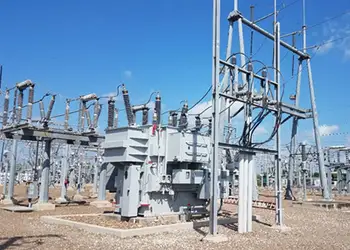
Substation Protection Training - Protect Transformers, Buses and Lines
Our customized live online or in‑person group training can be delivered to your staff at your location.
- Live Online
- 12 hours Instructor-led
- Group Training Available
Regular Price:
$799
Coupon Price:
$699
Is there a hole in the law designed to protect the environment when plans that could damage it come up for consideration? The Greens think so. They believe the Environmental Assessment (Scotland) Act 2005 is something of a sham. It was not meant to be. It was intended to build on EU directives which said developments should not be allowed without considering the environmental impact.
According to Ross Finnie, the Environment Minister, the Scottish law is good for people, places and developments as it raises awareness of the impact of public plans on habitats, culture, landscape, climate change and the health of people. But not in the thorny area of nuclear development, according to the Greens. Allan Wilson, the Environment Minister, has confirmed to the party that an application to build a nuclear power station in Scotland would fall under older, weaker UK laws. This is because nuclear policy is reserved for the Westminster government, which recently concluded a wide-ranging energy review.
While Scottish Ministers have a say in UK energy strategy, Mr. Wilson also confirmed that the commercial developer of a nuclear plant would decide whether its plans should be subject to an assessment under the more stringent Scottish law. Bearing in mind that turkeys tend not to vote for Christmas, we think we know the answer. At the same time, however, the executive would apply the Holyrood legislation to any business planning a development which required an assessment in Scotland, for instance in renewable energy. The aim is to force public bodies to look strategically at Scotland's use of resources and the impact on the environment.
There would be no opt-out for business.
This raises important considerations. Building a new generation of nuclear power stations is on the UK government's agenda as a result of the energy review. In Scotland, the Holyrood government has a challenging target to meet for electricity generated by renewable sources (40-per cent of the total by 2020). Future windfarm, wave- and tidal-power developments would face a tough assessment on all counts identified by Mr. Finnie, and would be analysed strategically to take account of their cumulative impact. Building a new nuclear plant in Scotland potentially would be momentous for the environment.
Yet, if developers opted out of the Scottish test (as Mr. Wilson says they can) the environmental impact would be assessed on softer law superseded in and by Scotland. Also, the strategic overview would be British. With Scotland's energy needs being met by increasingly diverse non-nuclear sources, that would seem unusual, to say the least. The anomaly should be addressed.
Related News

Electricity Shut-Offs in a Pandemic: How COVID-19 Leads to Energy Insecurity, Burdensome Bills
COVID-19 Energy Burden drives higher electricity bills as income falls, intensifying energy poverty, utility shut-offs,…
View more
Class-action lawsuit: Hydro-Québec overcharged customers up to $1.2B
Hydro-QuE9bec Class-Action Lawsuit alleges overbilling and monopoly abuse, citing RE9gie de l'E9nergie rate increases, Quebec…
View more
Turkish powership to generate electricity from LNG in Senegal
Karpowership LNG powership in Senegal will supply 15% of the grid, a 235 MW floating…
View more
BC Hydro completes major milestone on Site C transmission line work
Site C 500 kV transmission lines strengthen the BC Hydro grid, linking the new substation…
View more

Share of coal in UK's electricity system falls to record lows
UK Coal Phase-Out marks record-low coal generation as the UK grid shifts to renewable power,…
View more

Criminals posing as Toronto Hydro are sending out fraudulent messages
Toronto Hydro Scam Warning urges customers to spot phishing emails, fraudulent texts, fake bills, and…
View more
Sign Up for Electricity Forum’s Newsletter
Stay informed with our FREE Newsletter — get the latest news, breakthrough technologies, and expert insights, delivered straight to your inbox.
Electricity Today T&D Magazine Subscribe for FREE

Stay informed with the latest T&D policies and technologies.
- Timely insights from industry experts
- Practical solutions T&D engineers
- Free access to every issue

