By For more information on CMS Energy, please visit our web site at: www.cmsenergy.com


NFPA 70e Training - Arc Flash

Our customized live online or in‑person group training can be delivered to your staff at your location.

  • Live Online
  • 6 hours Instructor-led
  • Group Training Available
Regular Price:
$199
Coupon Price:
$149
Reserve Your Seat Today
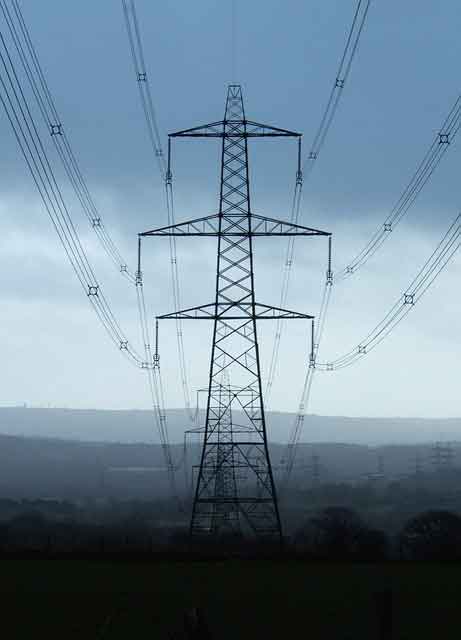
DEARBORN, Mich. -- CMS Energy Corporation (NYSE: CMS) announced today that the U.S. Federal Energy Regulatory Commission (FERC) has accepted a letter of compliance from its principle subsidiary, Consumers Energy, addressing conditions FERC had previously established for the approval of the sale by the utility of its electric transmission system. With today's FERC action, Consumers Energy expects to close early in May on the sale of its transmission system for approximately $300 million to a limited partnership whose general partner is Washington, D.C.-based Trans-Elect.

Cash proceeds from the sale will be used to reduce debt and improve CMS' consolidated balance sheet. CMS and Trans-Elect signed a definitive agreement for sale of Consumers Energy's electric transmission system last November. Upon closing of the sale, CMS Energy will have received approximately $2.4 billion of cash from asset sales, securitization proceeds and proceeds from LNG monetization out of its $2.9 billion program to improve its balance sheet.

CMS Energy Corporation has annual sales of $10 billion and assets of $16 billion throughout the U.S. and in selected foreign markets. In the U.S., where it has 85 percent of its assets, it owns and operates an electric and natural gas distribution company with 1.7 million electric customers and 1.6 million gas customers; a 15,000 mile natural gas pipeline system and associated storage facilities; the nation's largest LNG import facility; approximately 8,000 megawatts of power plants; a midstream natural gas gathering and processing company with 700 million cubic feet per day of capacity; an oil and gas exploration and production company with significant domestic gas reserves; and a leading energy marketing, trading and services company marketing 750 billion cubic feet of natural gas and 52 million megawatt-hours of electricity annually.

Related News

Don't be taken in by scammers threatening to shut off electricity: Manitoba Hydro

Manitoba Hydro Phone Scam targets small businesses with disconnection threats, prepaid card payments, caller ID spoofing, phishing texts, and door-to-door fraud; hang up, verify your account directly, and never share banking information.


Key Points

A scam where callers threaten disconnection and demand prepaid cards; verify account status directly with Manitoba Hydro.

✅ Hang up and call Manitoba Hydro at 1-888-624-9376 to verify.

✅ Never pay by prepaid cards, gift cards, or crypto.

✅ Hydro will not cut power on one-hour notice.


Manitoba Hydro is warning customers, particularly small business owners, to be wary of high-pressure scammers, as Ontario utilities warn of scams in other provinces, threatening to shut off their electricity.

The callers demand the customer to make immediate payment by a prepaid card. Often, the calls are made in the middle of the day at a busy time, frightening the customer with aggressive threats about disconnection, as hydro disconnections have made headlines elsewhere, says hydro spokesman Bruce Owen.

"They tell them 'we have a truck on the way to cut off your power. If you don't pay in the next hour you're out of luck,'" he said.

"And because these folks have inventory in freezers and they have customers … they're willing to fork over several hundred or even several thousand dollars on a prepaid card to somebody they don't know to keep the lights on."

Maybe the business owners can't recall, with everything happening, including discussions about Hydro One peak rates in Ontario, if they've made their payments on time. They start second-guessing and believing the person on the other line, Owen says.

And they worry about losing thousands of dollars in business if they lose power. So they're more than willing to run out to a store, buy a prepaid debit card and provide the number to the caller.

"Their goal is to manipulate you into sending money before you figure out it's a scam," said Chris McColm, hydro's security and investigations supervisor. "These people are crooks and you should hang up on them."

For any customers that are in arrears, hydro will work with them to resolve the issue, Owen said.

"We do not have to take that extreme measure of cutting off or disconnecting anybody. That's not the business we're in — we don't strong arm people that way," he said.

"Anybody who's threatening to cut off your power with an hour or half-an-hour notice, well it's it's no better than someone waiting around the corner, waiting the club you over the head in the dark of night. That's what they are."


Fraud reports soar

The power utility has recorded a nearly-300 per cent jump in the number of fraud-related complaints this year over 2017. There have been 862 phone, text and e-mail scams and that could still go much higher.

The current statistics from 2018 have only calculated up to Oct. 31. In 2017, there were 221.

That jump in numbers doesn't necessarily mean there are more scammers out there.

It could simply mean people are finally getting wise to fraudsters and reporting it more, Owen says.

"At the same token, we don't hear of everybody who's been taking advantage of because once they've found out that they've been hoodwinked they don't want to tell anybody because they're so embarrassed," he said.

"These scammers can be very convincing and anyone can be victimized," McColm said.

If you are able to think clearly when some high-pressure caller gets you on the line, Owen suggests asking a few simple questions to challenge their legitimacy:

  • What street am I on?
  • What does my business look like? 
  • What's the weather outside right now?

Phone scammers can falsify their caller ID information to make it appear they're calling from a local number, but what you'll find is most of them aren't in Winnipeg or Manitoba and likely not even this country or continent, Owen says.

The key to being safe is simply to never give out banking information, Owen says. It's a message that has been stressed for years and 80-90 per cent of people understand it, but it's that other 10-20 per cent that are still being victimized.And it's not just phone calls. Many other fraud-related complaints to Manitoba Hydro this year concerned unsolicited text messages to customers saying they had been overbilled, or faced retroactive charges elsewhere, and were eligible for a refund.

This scam is also aimed at getting a customer's personal banking information, under the guise of having money put back into their account.

Also, many people, especially seniors living alone, continue to be targeted by aggressive door-to-door fraudsters, and cases like the electricity theft ring in Montreal underscore the risks, McColm says. However, he adds, hydro employees always display photo ID and will never demand to come into a home. 

If you're unsure whether a phone call, text or email is real or a scam, contact Manitoba Hydro at 1-888-624-9376.


Related News

View more

Amazon launches new clean energy projects in US, UK

Amazon Renewable Energy Projects advance net zero goals with a Scotland wind farm PPA and US solar farms in North Carolina and Virginia, delivering clean power, added capacity, and lower carbon emissions across cloud operations.


Key Points

Amazon initiatives adding wind and solar capacity in the UK and US to cut carbon and power cloud operations.

✅ Largest UK corporate wind PPA on Scotland Kintyre Peninsula

✅ Two US solar farms in North Carolina and Virginia

✅ 265 MW added capacity, 668,997 MWh clean power annually


Amazon is launching three renewable energy projects in the United States and the United Kingdom that support Amazon’s commitment to using net zero carbon energy by 2040.

The U.K. project is a wind farm on the Kintyre Peninsula in Scotland, aligned with a 10 GW renewables contract boosting the U.K. grid. It will generate 168,000 megawatt hours (MWh) of clean energy each year, enough to power 46,000 U.K. homes. It will be the largest corporate wind power purchase agreement (PPA) in the U.K.

Offshore wind energy in the UK is powering up rapidly, complementing onshore developments.

The other two are solar projects – one in Warren County, N.C, and the other in Prince George County, Va, reflecting broader US solar and wind growth trends nationwide. Together, they are expected to generate 500,997 MWh of energy annually. It is Amazon’s second renewable energy project in North Carolina, following the Amazon Wind Farm US East operated by Avangrid Renewables, and eighth in Virginia.

The three new Amazon wind and solar projects – which are expected to be in operation in 2012 — will provide 265 MW of additional renewable capacity, and align with U.K. wind power lessons for the U.S. market nationwide.

“In addition to the environmental benefits inherently associated with running applications in the cloud, Amazon is committed to minimizing our carbon emissions and reaching 80% renewable energy use across the company by 2024. We’ve announced eight projects this year and have more projects on the horizon – and we’re committed to investing in renewable energy as a critical step toward addressing our carbon footprint globally,” Kara Hurst, director of sustainability at Amazon, said. “With nearly 70 renewable energy projects around the globe – including 54 solar rooftops – we are making significant progress towards reaching Amazon’s company-wide commitment to reach 100% renewable energy by 2030.”

Amazon has launched 18 utility-scale wind and solar renewable energy projects to date, and in parallel, Duke Energy Renewables has acquired three California solar projects, underscoring sector momentum. They will generate over 1,600 MW of renewable capacity and deliver more than 4.6 million MWh of clean energy annually. Amazon has also installed more than 50 solar rooftops on fulfillment centers and sort centers around the world. They generate 98 MW of renewable capacity and deliver 130,000 MWh of clean energy annually.

“Today’s announcement by Amazon is another important step for North Carolina’s clean energy plan that will increase our reliance on renewables and reduce our greenhouse gas emissions,” North Carolina Governor Roy Cooper said. “Not only is this the right thing to do for our planet, it’s the right thing to do for our economy. More clean energy jobs means better jobs for North Carolina families.”

Amazon reports on its sustainability commitments, initiatives, and performance on a new web site the company recently launched. It includes information on Amazon’s carbon footprint and other metrics and updates the company’s progress towards reaching The Climate Pledge. 

“It’s wonderful to see the announcement of these new projects, helping bring more clean energy to the Commonwealth of Virginia where Amazon is already recognized as a leader in bringing renewable energy projects online,” Virginia Governor Ralph Northam said. “These solar farms help reaffirm the Commonwealth’s role as a leading producer of clean energy in the U.S., helping take the nation forward in responding to climate change.”


Related News

View more

Germany turns its back on nuclear for good despite Europe's energy crisis

Germany nuclear phase-out underscores a high-stakes energy transition, trading reactors for renewables, LNG imports, and grid resilience to secure supply, cut emissions, and navigate climate policy, public opinion shifts, and post-Ukraine supply shocks.


Key Points

Germany's nuclear phase-out retires reactors, shifting to renewables, LNG, and grid upgrades for low-carbon power.

✅ Last three reactors: Neckarwestheim, Isar 2, and Emsland closed

✅ Supply secured via LNG imports, renewables, and grid flexibility

✅ Policy accelerated post-Fukushima; debate renewed after Ukraine war


The German government is phasing out nuclear power despite the energy crisis. The country is pulling the plug on its last three reactors, betting it will succeed in its green transition without nuclear power.

On the banks of the Neckar River, not far from Stuttgart in south Germany, the white steam escaping from the nuclear power plant in Baden-Württemberg will soon be a memory.

The same applies further east for the Bavarian Isar 2 complex and the Emsland complex, at the other end of the country, not far from the Dutch border.

While many Western countries depend on nuclear power, Europe's largest economy is turning the page, even if a possible resurgence of nuclear energy is debated until the end.

Germany is implementing the decision to phase out nuclear power taken in 2002 and accelerated by Angela Merkel in 2011, after the Fukushima disaster.

Fukushima showed that "even in a high-tech country like Japan, the risks associated with nuclear energy cannot be controlled 100 per cent", the former chancellor justified at the time.

The announcement convinced public opinion in a country where the powerful anti-nuclear movement was initially fuelled by fears of a Cold War conflict, and then by accidents such as Chernobyl.

The invasion of Ukraine on 24 February 2022 brought everything into question. Deprived of Russian gas, the flow of which was essentially interrupted by Moscow, Germany found itself exposed to the worst possible scenarios, from the risk of its factories being shut down to the risk of being without heating in the middle of winter.

With just a few months to go before the initial deadline for closing the last three reactors on 31 December, the tide of public opinion began to turn, and talk of a U-turn on the nuclear phaseout grew louder. 

"With high energy prices and the burning issue of climate change, there were of course calls to extend the plants," says Jochen Winkler, mayor of Neckarwestheim, where the plant of the same name is in its final days.

Olaf Scholz's government, which the Green Party - the most hostile to nuclear power - is part of, finally decided to extend the operation of the reactors to secure the supply until 15 April.

"There might have been a new discussion if the winter had been more difficult if there had been power cuts and gas shortages nationwide. But we have had a winter without too many problems," thanks to the massive import of liquefied natural gas, notes Mr Winkler.


Related News

View more

Neo-Nazi, woman accused of plotting 'hate-fueled attacks' on power stations, federal complaint says

Baltimore Substation Attack Plot highlights alleged neo-Nazi plans targeting electrical substations and the power grid, as FBI and DHS warn of domestic extremism threats to critical infrastructure, with arrests in Maryland disrupting potential sniper attacks.


Key Points

An alleged extremist plot to disable Baltimore's power grid by shooting substations, thwarted by federal arrests.

✅ Two suspects charged in Maryland conspiracy

✅ Targets included five substations around Baltimore

✅ FBI cites domestic extremism threat to infrastructure


A neo-Nazi in Florida and a Maryland woman conspired to attack several electrical substations in the Baltimore area, federal officials say.

Sarah Beth Clendaniel and Brandon Clint Russell were arrested and charged in a conspiracy to disable the power grid by shooting out substations via "sniper attacks," according to a criminal complaint from the U.S. Attorney's Office for the District of Maryland.

Clendaniel allegedly said she wanted to "completely destroy this whole city" and was planning to target five substations situated in a "ring" around Baltimore, the complaint said. Russell is part of a violent extremist group that has cells in multiple states, and he previously planned to attack critical infrastructure in Florida, the complaint said.

"This planned attack threatened lives and would have left thousands of Marylanders in the cold and dark," Maryland U.S. Attorney Erek Barron said in a press release. "We are united and committed to using every legal means necessary to disrupt violence, including hate-fueled attacks."

The news comes as concerns grow about an increase in targeted substation attacks on U.S. substations tied to domestic extremism.


What to know about substation attacks

Federal data shows vandalism and suspicious activities at electrical facilities soared nationwide last year, and cyber actors have accessed utilities' control rooms as well.

At the end of the year, attacks or potential attacks were reported on more than a dozen substations and one power plant across five states, and Symantec documented Russia-linked Dragonfly activity targeting the energy sector earlier. Several involved firearms.

In December, targeted attacks on substations in North Carolina left tens of thousands without power amid freezing temperatures, spurring renewed focus on protecting the U.S. power grid among officials. The FBI is investigating.

Vandalism at facilities in Washington left more than 21,000 without electricity on Christmas Day, even as hackers breached power-plant systems in other states. Two men were arrested, and one told police he planned to disrupt power to commit a burglary.

The Department of Homeland Security last year said domestic extremists had been developing "credible, specific plans" since at least 2020 and would continue to "encourage physical attacks against electrical infrastructure," and the U.S. government has condemned Russia for power grid hacking as well.

Last February, three neo-Nazis pleaded guilty to federal crimes related to a scheme to attack the grid with rifles, with each targeting a substation in a different region of the U.S., even as reports that Russians hacked into US electric utilities drew widespread attention.


Related News

View more

Starting Texas Schools After Labor Day: Power Grid and Cost Benefits?

Texas After-Labor Day School Start could ease ERCOT's power grid strain by shifting peak demand, lowering air-conditioning loads in schools, improving grid reliability, reducing electricity costs, and curbing emissions during extreme heat the summer months.


Key Points

A proposed calendar shift to start school after Labor Day to lower ERCOT peak demand, costs, and grid risk.

✅ Cuts school HVAC loads during peak summer heat

✅ Lowers costly peaker plant use and electricity rates

✅ Requires calendar changes, testing and activities shifts


As Texas faces increasing demands on its power grid, a new proposal is gaining traction: starting the school year after Labor Day. This idea, reported by the Dallas News, suggests that delaying the start of the academic year could help alleviate some of the pressure on the state’s electricity grid during the peak summer months, potentially leading to both grid stability and financial savings. Here’s an in-depth look at how this proposed change could impact Texas’s energy landscape and education system.

The Context of Power Grid Strain

Texas's power grid, operated by the Electric Reliability Council of Texas (ERCOT), has faced significant challenges in recent years. Extreme weather events, record-breaking temperatures, and high energy demand have strained the grid, and some analyses argue that climate change, not demand is the biggest challenge today, leading to concerns about reliability and stability. The summer months are particularly taxing, as the demand for air conditioning surges, often pushing the grid to its limits.

In this context, the idea of adjusting the school calendar to start after Labor Day has been proposed as a potential strategy to help manage electricity demand. By delaying the start of school, proponents argue that it could reduce the load on the power grid during peak usage periods, thereby easing some of the stress on energy resources.

Potential Benefits for the Power Grid

The concept of delaying the school year is rooted in the potential benefits for the power grid. During the hottest months of summer, the demand for electricity often spikes as families use air conditioning to stay cool, and utilities warn to prepare for blackouts as summer takes hold. School buildings, typically large and energy-intensive facilities, contribute significantly to this demand when they are in operation.

Starting school later could help reduce this peak demand, as schools would be closed during the hottest months when the grid is under the most pressure. This reduction in demand could help prevent grid overloads and reduce the risk of power outages, at a time when longer, more frequent outages are afflicting the U.S. power grid, ultimately contributing to a more stable and reliable electricity supply.

Additionally, a decrease in peak demand could help lower electricity costs. Power plants, particularly those that are less efficient and more expensive to operate, are often brought online during periods of high demand. By reducing the peak load, the state could potentially minimize the need for these costly power sources, leading to lower overall energy costs.

Financial and Environmental Considerations

The financial implications of starting school after Labor Day extend beyond just the power grid. By reducing energy consumption during peak periods, the state could see significant savings on electricity costs. This, in turn, could lead to lower utility bills for schools, businesses, and residents alike, a meaningful relief as millions risk electricity shut-offs during summer heat.

Moreover, reducing the demand for electricity from fossil fuel sources can have positive environmental impacts. Lower peak demand may reduce the reliance on less environmentally friendly energy sources, and aligns with calls to invest in a smarter electricity infrastructure nationwide, thereby decreasing greenhouse gas emissions and contributing to overall environmental sustainability.

Challenges and Trade-offs

While the proposal offers potential benefits, it also comes with challenges and trade-offs. Adjusting the school calendar would require significant changes to the academic schedule, potentially affecting extracurricular activities, summer programs, and family plans, and comparisons to California's reliability challenges underscore the complexity. Additionally, there could be resistance from various stakeholders, including parents, educators, and students, who are accustomed to the current school calendar.

There are also logistical considerations to address, such as how a delayed start might impact standardized testing schedules and the academic calendar for higher education institutions. These factors would need to be carefully evaluated to ensure that the proposed changes do not adversely affect educational outcomes or create unintended consequences.

Looking Ahead

The idea of starting Texas schools after Labor Day represents an innovative approach to addressing the challenges facing the state’s power grid. By potentially reducing peak demand and lowering energy costs, and alongside efforts to connect Texas's grid to the rest of the nation, this proposal could contribute to greater grid stability and financial savings. However, careful consideration and planning will be essential to navigate the complexities of altering the school calendar and to ensure that the benefits outweigh the challenges.

As Texas continues to explore solutions for managing its power grid and energy resources, the proposal to shift the school year schedule provides an intriguing possibility. It reflects a broader trend of seeking creative and multifaceted approaches to balancing energy demand, environmental sustainability, and public needs.

In conclusion, starting schools after Labor Day could offer tangible benefits for Texas’s power grid and financial well-being. As discussions on this proposal advance, it will be important to weigh all factors and engage stakeholders to ensure a successful and equitable implementation.


Related News

View more

IAEA Warns of Nuclear Risks from Russian Attacks on Ukraine Power Grids

Ukraine nuclear safety risks escalate as IAEA warns of power grid attacks threatening reactor cooling, diesel generators, and Zaporizhzhia oversight, prompting UN calls for demilitarized zones to prevent radioactive releases and accidents.


Key Points

Escalating threats from grid attacks and outages that jeopardize reactor cooling, IAEA oversight, and public safety.

✅ Power grid strikes threaten reactor cooling systems.

✅ Emergency diesel generators are last defense lines.

✅ Calls grow for demilitarized zones around plants.


In early February 2025, Rafael Grossi, Director General of the International Atomic Energy Agency (IAEA), expressed grave concerns regarding the safety of Ukraine's nuclear facilities amid ongoing Russian attacks on the country's power grids, as Kyiv warned of a difficult winter without power after deadly strikes on energy infrastructure. Grossi's warnings highlight the escalating risks to nuclear safety and the potential for catastrophic accidents.

The Threat to Nuclear Safety

Ukraine's nuclear infrastructure, including the Zaporizhzhia Nuclear Power Plant—the largest in Europe—relies heavily on a stable power supply to maintain critical cooling systems and other safety measures. Russian military operations targeting Ukraine's energy infrastructure have led to power outages, and created hazards akin to those highlighted in downed power line safety guidance during emergency repairs, jeopardizing the safe operation of these facilities. Grossi emphasized that such disruptions could result in severe nuclear accidents if cooling systems fail.

IAEA's Response and Actions

In response to these threats, the IAEA has been actively involved in monitoring and assessing the situation. Grossi visited Kyiv to inspect electrical substations and discuss safety measures with Ukrainian officials. He underscored the necessity of ensuring uninterrupted power to nuclear plants and the critical role of emergency diesel generators as a last line of defense, and noted that maintaining staffing continuity, including measures such as staff living on site at critical facilities, may be necessary. The IAEA has also postponed the rotation of its mission at the Zaporizhzhia plant due to security concerns, as reported by Reuters.

International Concerns and Diplomatic Efforts

The international community has expressed deep concern over the potential for nuclear accidents in Ukraine, echoing earlier grid overseer warnings about systemic risks in other crises that stress energy systems. The United Nations and various countries have called for the establishment of a demilitarized zone around nuclear facilities to prevent military activities that could compromise their safety. Diplomatic efforts are ongoing to facilitate dialogue between Russia and Ukraine, aiming to ensure the protection of nuclear sites and the safety of surrounding populations.

The Zaporizhzhia Nuclear Power Plant

The Zaporizhzhia Nuclear Power Plant, located in southeastern Ukraine, has been under Russian control since early in the conflict, with Rosatom cooperation agreements reflecting broader nuclear policy priorities that frame Moscow's approach to the sector. The plant consists of six reactors and has been a focal point of international concern due to its size and the potential consequences of any incident. The IAEA has been working to maintain oversight and ensure the plant's safety amid the ongoing conflict.

Potential Consequences of Nuclear Accidents

A nuclear accident at any of Ukraine's nuclear facilities could have catastrophic consequences, including the release of radioactive materials, displacement of populations, and long-term environmental damage, with communities potentially facing weeks without electricity and basic services in the aftermath. The proximity of these plants to densely populated areas further amplifies the risks. The international community continues to monitor the situation closely, emphasizing the need for immediate action to safeguard nuclear facilities.

The ongoing conflict in Ukraine has introduced unprecedented challenges to nuclear safety. The IAEA's warnings and actions underscore the critical need for international cooperation to protect nuclear facilities from the dangers posed by military activities. Ensuring the safety of these sites is paramount to prevent potential disasters that could have far-reaching humanitarian and environmental impacts, and sustained attention to nuclear workers' safety concerns helps maintain operational readiness under strain.


Related News

View more

Sign Up for Electricity Forum’s Newsletter

Stay informed with our FREE Newsletter — get the latest news, breakthrough technologies, and expert insights, delivered straight to your inbox.

Electricity Today T&D Magazine Subscribe for FREE

Stay informed with the latest T&D policies and technologies.
  • Timely insights from industry experts
  • Practical solutions T&D engineers
  • Free access to every issue

Live Online & In-person Group Training

Advantages To Instructor-Led Training – Instructor-Led Course, Customized Training, Multiple Locations, Economical, CEU Credits, Course Discounts.

Request For Quotation

Whether you would prefer Live Online or In-Person instruction, our electrical training courses can be tailored to meet your company's specific requirements and delivered to your employees in one location or at various locations.