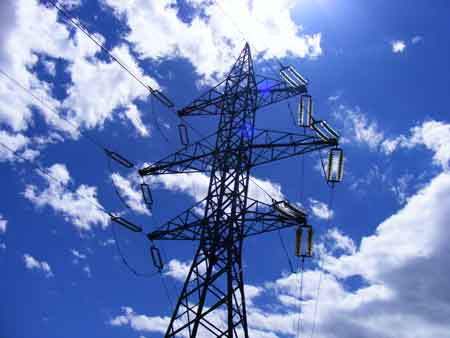
Substation Relay Protection Training
Our customized live online or in‑person group training can be delivered to your staff at your location.
- Live Online
- 12 hours Instructor-led
- Group Training Available
Regular Price:
$699
Coupon Price:
$599
CHICAGO
—
Midwest Data Center Regulation accelerates as counties adopt moratoria and state lawmakers weigh measures to protect the grid, T&D capacity, water supplies, and utility rates amid AI-driven load growth and siting concerns.
Essential Takeaways
-
Counties enact moratoria to study energy and water impacts.
-
States weigh new limits; Missouri raised rates for big users.
-
Illinois seeks a two-year pause on new tax credits.
Communities across the Midwest are pressing state lawmakers to set clearer ground rules for large data center development, with a central focus on who bears the infrastructure strain on electric T&D networks and local water systems. Following an influx of proposals, several county boards are invoking temporary pauses to allow time for standards and impact reviews. As legislators revisit utility oversight, related debates, such as TVA's federal scrutiny, illustrate how major loads can reshape system planning and rate design in ways that resonate beyond any single project.
In Champaign County, Illinois, residents packed an April 23, 2026, board meeting to support a one-year moratorium to give a task force time to draft zoning guidance for previously undeveloped sites. Supporters pointed to high electricity consumption, substantial water demand for cooling, and concerns about noise and neighborhood compatibility. The push mirrors action elsewhere: recent pauses have passed in parts of Texas, Wisconsin, and Michigan as communities weigh cumulative resource impacts. Public unease about bills and cost allocation echoes our coverage of Manitoba Hydro rate protest, reflecting a broader conversation about who pays for growth in essential infrastructure.
Statehouses are moving in parallel. Lawmakers in several states, including Illinois, Iowa, Minnesota, Oklahoma, and Wisconsin, introduced measures this year to tighten siting and oversight. Missouri enacted a law last year that raises rates for very high-usage customers, while petitioners in Ohio are seeking to place a proposed constitutional amendment on the ballot to block new large-scale facilities. Many states still court projects with incentives, but strategies are shifting. In Illinois, the governor has proposed a two-year pause on the authorization of new data center tax credits. For cross-border industrial signals, see Ontario electricity manufacturing for additional context on power and manufacturing priorities.
Local officials say these choices carry consequences beyond a single jurisdiction, ranging from potential effects on shared aquifers to upward pressure on utility rates for households and small businesses. That is prompting calls for clearer statewide guardrails so that local boards are not left to adjudicate complex infrastructure and cost-recovery issues on a case-by-case basis. Evolving rate strategies, such as those discussed in Ontario rate reductions, underscore how pricing design and incentives can shape large-load siting outcomes across regions.
The emerging policy theme is accountability: advocates want high-consumption developments to shoulder the incremental infrastructure and resource costs their operations trigger, rather than shifting them to existing customers. Over the next year, moratorium windows will be used to write standards for land use, water use, and mitigation of operational noise, while legislatures consider where to draw bright lines on permitting and incentives. Structural questions, including how market frameworks evolve in major jurisdictions, remain active; debates captured in California power privatization reflect the scale of choices confronting planners and regulators as data center demand accelerates.
Related News
Related News

Ex-SpaceX engineers in race to build first commercial electric speedboat
Arc One Electric Speedboat delivers zero-emission performance, quiet operation, and reduced maintenance, leveraging battery propulsion,…
View more
U.S. Senate Looks to Modernize Renewable Energy on Public Land
PLREDA 2019 advances solar, wind, and geothermal on public lands, guiding DOI siting, improving transmission…
View more
Opinion: Now is the time for a western Canadian electricity grid
Western Canada Electric Grid could deliver interprovincial transmission, reliability, peak-load support, reserve sharing, and wind…
View more
Groups clash over NH hydropower project
Northern Pass Hydropower Project Rehearing faces review by New Hampshire's Site Evaluation Committee as Eversource…
View more
Niagara Falls Powerhouse Gets a Billion-Dollar Upgrade for the 21st Century
Sir Adam Beck I refurbishment boosts hydropower capacity in Niagara, upgrading turbines, generators, and controls…
View more

No time to be silent on NZ's electricity future
New Zealand Renewable Energy Strategy examines decarbonisation, GHG emissions, and net energy as electrification accelerates,…
View more
Sign Up for Electricity Forum’s Newsletter
Stay informed with our FREE Newsletter — get the latest news, breakthrough technologies, and expert insights, delivered straight to your inbox.
Electricity Today T&D Magazine Subscribe for FREE

Stay informed with the latest T&D policies and technologies.
- Timely insights from industry experts
- Practical solutions T&D engineers
- Free access to every issue

