British Power Giant National Grid Shares Dive on New York Exchange

By London Standard


Electrical Testing & Commissioning of Power Systems

Our customized live online or in‑person group training can be delivered to your staff at your location.

  • Live Online
  • 12 hours Instructor-led
  • Group Training Available
Regular Price:
$599
Coupon Price:
$499
Reserve Your Seat Today
More than UKpound 500 million was wiped off the value of British power giant National Grid Transco today, as investors fretted it could become the target for litigation over the massive power blackout in New York and the north eastern US.

NGT is the owner of Niagara Mohawk, the US electricity transmission and distribution company on whose patch the massive blackout is believed to have been sparked.

With analysts warning that NGT may face huge legal bills if it is found to have been responsible for the biggest power cut in US history, traders sold down the shares 1734 pence to 37914 pence.

More than 30 million shares had changed hands by midday, nearly 10 times the normal volume, as the price fell close to a five-year low.

In New York, Mayor Michael Bloomberg promised: "There will be a real post-mortem on why this did happen."

The Grid's US boss, however, refused to admit responsibility. In a hastily arranged Press conference, Bill Edwards said: "We, like other utilities and officials across the country, do not know the cause of the outage. Many potential causes have been speculated on -- including a potential on Niagara Mohawk's system -- but such speculation is uninformed and premature.

"It is going to take a significant period of time for experts to analyse the data so that a root cause can be determined."

Fraser McLaren, utilities analyst at ING, indicated NGT could be in trouble if it were to be found "grossly negligent". He said: "We have spoken with the company twice this morning which currently maintains there there is no reason to believe Niagara Mohawk was at fault.

"Until the cause is established, however, investors are likely to be nervous and the shares may come under pressure."

Niagara Mohawk, which supplies much of the US north east, was bought by National Grid for UKpound 2 billion in 2000, as a key part of its expansion strategy in North America, having seen its investments in South America go awry.

Despite the crippling of Manhattan, which was not expected to see the lights back on by the start of the working day, the New York Stock Exchange said it would open as usual at 2:30 p.m. London time. It, like many Wall Street banks, will again be relying on emergency back-up generators which kicked into action almost immediately after the power cut around 4 p.m. New York time Thursday.

Related News
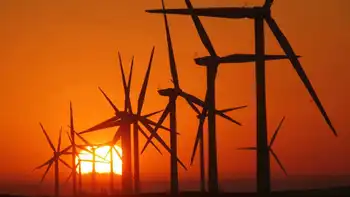
Enel kicks off 90MW Spanish wind build

Enel Green Power España Aragon wind farms advance Spain's renewable energy transition, with 90MW under construction in Teruel, Endesa investment of €88 million, 25-50MW turbines, and 2017 auction-backed capacity enhancing grid integration and clean power.


Key Points

They are three Teruel wind projects totaling 90MW, part of Endesa's 2017-awarded plan expanding Spain's clean energy.

✅ 90MW across Sierra Costera I, Allueva, and Sierra Pelarda

✅ €88m invested; 14+7+4 turbines; Endesa-led build in Teruel

✅ Part of 2017 tender: 540MW wind, 339MW solar, nationwide


Enel Green Power Espana, part of Enel's wind projects worldwide, has started constructing three wind farms in Aragon, north-east Spain, which are due online by the end of the year.

The projects, all situated in the Teruel province, are worth a total investment of €88 million.

The biggest of the facilities, Sierra Costera I, will have a 50MW and will feature 14 turbines.

The wind farm is spread across the municipalities of Mezquita de Jarque, Fuentes Calientes, Canada Vellida and Rillo.

The Allueva wind facility will feature seven turbines and will exceed 25MW.

Sierra Pelarda, in Fonfria, will have four turbines and a capacity of 15MW, as advances in offshore wind turbine technology continue to push scale elsewhere.

The projects bring the total number of wind farms that Enel Green Power Espana has started building in the Teruel province to six, equal to an overall capacity of 218MW.

Endesa chief executive Jose Bogas said: “These plants mark the acceleration on a new wave of growth in the renewable energy space that Endesa is committed to pursue in the next years, driving the energy transition in Spain.”

The six wind farms under construction in Teruel are part of the 540MW that Enel Green Power Espana was awarded in the Spanish government's renewable energy tender held in May 2017.

In Aragon, the company will invest around €434 million euros, reflecting broader European wind power investment trends in recent years, to build 13 wind farms with a total installed capacity of more than 380MW.

The remaining 160MW of wind capacity will be located in Andalusia, Castile-Leon, Castile La Mancha and Galicia, even as some Spanish turbine factories closed during pandemic restrictions.

Enel Green Power Espana was also awarded 339MW of solar capacity in the Spanish government's auction held in July 2017, while other Spanish developers advance CSP projects abroad in markets like Chile.

Once all wind and solar under the 2017 tender are complete they will boost the company’s capacity by around 52%.


Related News

View more

Elizabeth May wants a fully renewable electricity grid by 2030. Is that possible?

Green Party Mission Possible 2030 outlines a rapid transition to renewable energy, electric vehicles, carbon pricing, and grid modernization, phasing out oil and gas while creating green jobs, public transit upgrades, and building retrofits.


Key Points

A Canadian climate roadmap to decarbonize by 2030 via renewables, EVs, carbon pricing, and grid upgrades.

✅ Ban on new gas cars by 2030; accelerate EV adoption and charging.

✅ 100 percent renewable-powered grid with interprovincial links.

✅ Just transition: retraining, green jobs, and building retrofits.


Green Party Leader Elizabeth May has a vision for Canada in 2030. In 11 years, all new cars will be electric. A national ban will prohibit anyone from buying a gas-powered vehicle. No matter where you live, charging stations will make driving long distances easy and affordable. Alberta’s oil industry will be on the way out, replaced by jobs in sectors such as urban farming, renewable energy and retrofitting buildings for energy efficiency. The electric grid will be powered by 100 per cent renewable energy as Canada’s race to net-zero accelerates.

It’s all part of the Greens’ “Mission Possible” – a detailed plan released Monday with a level of ambition made clear by its very name. May insists it’s the only way to confront the climate crisis head-on before it’s too late.

“We have to set our targets on what needs to be done. You can’t negotiate with physics,” May told CTV’s Power Play on Monday.

But is that 2030 vision realistic?

CTVNews.ca spoke with experts in economics, political policy, renewable energy and climate science to explore how feasible May’s plan is, how much it would cost and what transitioning to an environmentally-centred economy would look like for everyday Canadians.


MOVING TO A GREEN ECONOMY

Recent polling from Nanos Research shows that the environment and climate change is the top issue among voters this election.

If the Greens win a majority on Oct. 21 – an outcome that May herself acknowledged isn’t likely – it would signal a major restructuring of the Canadian economy.

According to the party’s platform, jobs in the fuels sectors, such as oil and gas production in Alberta, would eventually disappear. The Greens say those job losses would be replaced by opportunities in a variety of fields including renewable energy, farming, public transportation, manufacturing, construction and information technology.

The party would also introduce a guaranteed livable income and greater support for technical and educational training to help workers transition to new jobs.

But Jean-Thomas Bernard, an economist who specializes in energy markets, said plenty of people in today’s energy sector, such as oil and gas workers, wouldn’t have the skills to make that transition.

“Quite a few of these jobs have low technical requirements. Driving a truck is driving a truck. So quite few of these people will not have the capacity to be recycled into well-paid jobs in the renewable sector,” he said.

“Maybe this would be for the young generation, but not people who are 40, 45, 50.”

Ryan Katz-Rosene is an associate professor at the University of Ottawa who researches environmental policy. He says May’s overall pitch is technically possible but would require a huge amount of enthusiasm on behalf of the public. 

“The plan in itself is not physically impossible. It is theoretically achievable. But it would require a major, major change in the urgency and the level of action, the level of investment, the level of popular urgency, the level of political commitment,” he said.

“But it’s not completely fantastical in it being theoretically impossible.”


PHASING OUT BITUMEN PRODUCTION

Katz-Rosene said that, under the Greens’ plan, Canadians would need to pay for a bold carbon pricing plan that helps shift the country away from fossil fuels and has significant implications for electricity grids, he said. It would also mean dramatically upscaling the capacity of Canada’s existing electrical grid to account for millions of new electric cars, reflecting the need for more electricity to hit net-zero as demand grows.

 “Given Canada’s slow attempt to climate action and pretty lacklustre results in these years, to be frank, this plan is very, very difficult to achieve. We’re talking 11 years from now. But things change, people change, and sometimes that change can occur very quickly. Just look at the type of climate mobilization we’re seen among young people in the last year, or the last five years.”

Bernard, the economist, is less optimistic. He cited international agreements such as the Kyoto Protocol from 1997 and the more recent Paris Climate Agreement and said that little has come of those plans.

A climate solution with teeth, he suggests, would need to be global – something that no federal government can completely control.

“I find a lot this talk to be overly optimistic. I don’t know why we keep having this talk that is overly optimistic,” he said, adding that he believes humankind is already beyond the point of being able to stop irreversible climate change. 

“I think we are moving toward a mess, but the effort to control that is still not there.”

As for transitioning away from Canada’s oil industry, Bernard said May’s plan simply wouldn’t work.

“Trying to block some oil production here and there means more oil will be produced elsewhere,” he said. “Canada could become a clean country, but worldwide it would not be much.”

Mike Hudema, a climate organizer with Greenpeace Canada, thinks the Green Party’s promises for 2030 are big – and that’s kind of the point.

“They are definitely ambitious, but ambition is exactly what these times call for.  Unfortunately our government has delayed acting on this problem for so long that we have a very short timeline which we have to turn the ship,” he said.

“So this is the type of ambition that the science is calling for. So yes, I believe that if we here in Canada were to put our minds to addressing this problem, then we have the ability to reach it in that 2030 timeframe.”

In a statement to CTVNews.ca, a Green Party spokesperson said the 2030 timeline is intended to meet the 45 per cent reduction in emissions by 2030 as laid out by the Intergovernmental Panel on Climate Change.

“If we miss the 2030 target, we risk triggering runaway global warming,” the spokesperson said.


GREENING THE GRID BY 2030

Greening Canada’s existing electric grid – a goal May has pegged to 2030 – is quite feasible, Katz-Rosene said, and cleaning up Canada’s electricity is critical to meeting climate pledges. Already, 82 per cent of the country’s electric grid is run off of renewable resources, which makes Canada a world leader in the field, he said.

Hudema agrees.

“It is feasible. Canada does have a grid already that has a lot of renewables in it. So yes we can definitely make it over the hump and complete the transition. But we do need investments in our electric grid infrastructure to ensure a certain capability. That comes with tremendous job growth. That’s the exciting part that people keep missing,” Hudema said.

But Bernard said switching the grid to 100 per cent renewables would be quite difficult. He suggested that the Greens’ 2030 vision would require Ontario and Quebec’s hydro production to help power the Prairies.

“To think we could boost (hydro production) much more in order to meet Saskatchewan and Alberta’s needs? Oh boy. To do this before 2030? I think that’s not reasonable, not feasible.”

In a statement to CTV News, the Greens said their strategy includes building new connections between eastern Manitoba and western Ontario to transmit clean energy. They would also upgrade existing connections between New Brunswick and Nova Scotia and between B.C. and Alberta to boost reliability.

A number of “micro-grids” in local communities capable of storing clean energy would help reduce the dependency on nationwide distribution systems, the party said.

Even so, the Greens acknowledged that, by 2030, some towns and cities will still be using some fossil fuels, and that even by 2050 – the goal for achieving overall carbon neutrality – some “legacy users” of fossil fuels will remain.

However, according to party projections, the emissions of these “legacy users” would be at most 8 per cent of today’s levels and those emissions would be “more than completely offset” by re-forestation and new technologies, such as CO2 capture and storage.


ELECTRIC VEHICLE REVOLUTION

The Green Party’s platform promises to revolutionize the Canadian auto sector. By 2030, all new cars made in Canada would be electric and federal EV sales regulations would prohibit the sale of cars powered by gasoline.

Danny Harvey, a geography professor with the University of Toronto who specializes in renewable energy, said he thinks May’s plan for making a 100 per cent renewable-powered electric grid is feasible.

On cars, however, he thinks the emphasis on electric vehicles is “misplaced.”

“At this point in time we should be requiring automobiles to transition, by 2030, to making cars that can go three times further on a litre of gasoline than at present. This would require selling only advanced hybrid-electric vehicles (HEVs), which would run entirely on gasoline (like current HEVs),” he said.

“After that, and when the grid is fully ready, we could make the transition to fully electric or plugin hybrid electric vehicles, possibly using H2 for long-distance driving.”

At the moment, zero-emissions vehicles account for just over 2 per cent of annual vehicle sales in Canada. Katz-Rosene said that “isn’t a whole lot,” but the industry is on an exponential growth curve that doesn’t show any signs of slowing.

The trouble with May’s 2030 goal on electric vehicles, he said, has to do with Canadians’ taste in vehicles. In short: Canadians like trucks.

“The biggest obstacle I see is that I don’t even think it’s possible to get a light-duty truck, a Ford F150, in an electric model in Canada. And that’s the most popular type of vehicle,” he said.

However, if a zero emissions truck were on the market – something that automakers are already working on – then that could potentially shake things up, especially if the government introduces incentives for electric vehicles and higher taxes on gasoline, he said.


WHAT ABOUT THE COST?

CTVNews.ca reached out to the Green Party to ask how it would pay to revamp the electrical grid. The party did not give a precise figure but said that the plan “has been estimated to cost somewhat less” than the Trans Mountain Pipeline expansion.

The Greens have vowed to scrap the expansion and put that money toward the project.

Upgrading the electric grid to 100 per cent sustainable energy would also be a cost-effective, long-term solution, the Greens believe, though critics say Ottawa is making electricity more expensive for Albertans amid the transition.

“Current projects for renewable energy in Canada and worldwide are consistently at lower capital and operating costs than any type of fossil, hydro or nuclear energy project,” the party spokesperson said.

The party’s platform includes other potential sources of money, including closing tax loopholes for the wealthy, cracking down on offshore tax dodging and a new corporate tax on e-commerce companies, such as Facebook, Amazon and Netflix. The Greens have also vowed to eliminate all fossil fuel subsidies.

As for the economic realities, Katz-Rosene acknowledged that May’s plan may appeal to “radical” voters who view economic growth as anathema to addressing climate change.

But while May’s plan would be disruptive, it isn’t anti-capitalist, he said.

“It’s restrained capitalism. But it by no means an anti-capitalist platform, and none of the parties have an anti-capitalist platform by any stretch of the imagination,” Katz-Rosene said.

From an economist’s perspective, Bernard said the plan is still “very costly” and that taxes can only go so far.

“In the end, no corporation operates at a loss. At some stage, these taxes have to go to the users,” he said.

But conversations around money must also consider the cost of inaction on climate change, Hudema said.

“Costing (Elizabeth May) is always a concern and how we’re going to afford these things is something we definitely need to keep top of mind. But within that conversation we need to look at what is the cost of not doing what is in line with what the science is saying. I would say that cost is much more substantial.”

“The forecast, if we don’t act – it’s astronomical.”


Related News

View more

As California enters a brave new energy world, can it keep the lights on?

California Grid Transition drives decarbonization with renewable energy, EV charging, microgrids, and energy storage, while tackling wildfire risk, aging infrastructure, and cybersecurity threats to build grid resilience and reliability across a rapidly electrifying economy.


Key Points

California Grid Transition is the statewide shift to renewables, storage, EVs, and resilient, secure infrastructure.

✅ Integrates solar, wind, storage, and demand response at scale

✅ Expands microgrids and DERs to enhance reliability and resilience

✅ Addresses wildfire, aging assets, and cybersecurity risks


Gretchen Bakke thinks a lot about power—the kind that sizzles through a complex grid of electrical stations, poles, lines and transformers, keeping the lights on for tens of millions of Californians who mostly take it for granted.

They shouldn’t, says Bakke, who grew up in a rural California town regularly darkened by outages. A cultural anthropologist who studies the consequences of institutional failures, she says it’s unclear whether the state’s aging electricity network and its managers can handle what’s about to hit it, as U.S. blackout risks continue to mount.

California is casting off fossil fuels to become something that doesn’t yet exist: a fully electrified state of 40 million people. Policies are in place requiring a rush of energy from renewable sources such as the sun and wind and calling for millions of electric cars that will need charging—changes that will tax a system already fragile, unstable and increasingly vulnerable to outside forces.

“There is so much happening, so fast—the grid and nearly everything about energy is in real transition, and there’s so much at stake,” said Bakke, who explores these issues in a book titled simply, “The Grid.”

The state’s task grew more complicated with this week’s announcement that Pacific Gas and Electric, which provides electricity for more than 5 million customer accounts, intends to file for bankruptcy in the face of potentially crippling liabilities from wildfires. But the reshaping of California’s energy future goes far beyond the woes of a single company.

The 19th-century model of one-way power delivery from utility companies to customers is being reimagined. Major utilities—and the grid itself—are being disrupted by rooftops paved with solar panels and the rise of self-sufficient neighborhood mini-grids. Whole cities and counties are abandoning big utilities and buying power from wholesalers and others of their choosing.

With California at the forefront of a new energy landscape, officials are racing to design a future that will not just reshape power production and delivery but also dictate how we get around and how our goods are made. They’re debating how to manage grid defectors, weighing the feasibility of an energy network that would expand to connect and serve much of the West and pondering how to appropriately regulate small power producers.

“We are in the depths of the conversation,” said Michael Picker, president of the state Public Utilities Commission, who cautions that even as the system is being rebooted, like repairing a car while driving in practice, there’s no real plan for making it all work.

Such transformation is exceedingly risky and potentially costly. California still bears the scars of having dropped its regulatory reins some 20 years ago, leaving power companies to bilk the state of billions of dollars it has yet to completely recover. And utility companies will undoubtedly pass on to their customers the costs of grid upgrades to defend against natural and man-made threats.

Some weaknesses are well known—rodents and tree limbs, for example, are common culprits in power outages, even as longer, more frequent outages afflict other parts of the U.S. A gnawing squirrel squeezed into a transformer on Thanksgiving Day three years ago, shutting off power to parts of Los Angeles International Airport. The airport plans to spend $120 million to upgrade its power plant.

But the harsh effects of climate change expose new vulnerabilities. Rising seas imperil coastal power plants. Electricity infrastructure is both threatened by and implicated in wildfires. Picker estimates that utility operations are related to one in 10 wildland fires in California, which can be sparked by aging equipment and winds that send tree branches crashing into power lines, showering flammable landscapes with sparks.

California utilities have been ordered to make their lines and equipment more fire-resistant as they’re increasingly held accountable for blazes they cause. Pacific Gas and Electric reported problems with some of its equipment at a starting point of California’s deadliest wildfire, which killed at least 86 people in November in the town of Paradise. The cause of the fire is under investigation.

New and complex cyber threats are more difficult to anticipate and even more dangerous. Computer hackers, operating a world away, can—and have—shut down electricity systems, toggling power on and off at will, and even hijacked the computers of special teams dispatched to restore control.

Thomas Fanning, CEO of Southern Co., one of the country’s largest utilities, recently disclosed that his teams have fended off multiple attempts to hack a nuclear power plant the firm operates. He called grid hacking “the most important under-reported war in American history.”

However, if you’ve got what seems like an insoluble problem requiring a to-the-studs teardown and innovative rebuild, California is a good place to start. After all, the first electricity grid was built in San Francisco in 1879, three years before Thomas Edison’s power station in New York City. (Edison’s plant burned to the ground a decade later.)

California’s energy-efficiency regulations have helped reduce statewide energy use, which peaked a decade ago and is on the decline, somewhat easing pressure on the grid. The major utilities are ahead of schedule in meeting their obligation to obtain power from renewable sources.

California’s universities are teaming with national research labs to develop cutting-edge solutions for storing energy produced by clean sources. California is fortunate in the diversity of its energy choices: hydroelectric dams in the north, large-scale solar operations in the Mojave Desert to the east, sprawling windmill farms in mountain passes and heat bubbling in the Geysers, the world’s largest geothermal field north of San Francisco. A single nuclear-power plant clings to the coast near San Luis Obispo, but it will be shuttered in 2025.

But more renewable energy, accessible at the whims of weather, can throw the grid off balance. Renewables lack the characteristic that power planners most prize: dispatchability, ready when called on and turned off when not immediately needed. Wind and sun don’t behave that way; their power is often available in great hunks—or not at all, as when clouds cover solar panels or winds drop.

In the case of solar power, it is plentiful in the middle of the day, at a time of low demand. There’s so much in California that most days the state pays its neighbors to siphon some off,  lest the excess impede the grid’s constant need for balance—for a supply that consistently equals demand.

So getting to California’s new goals of operating on 100 percent clean energy by 2045 and having 5 million electric vehicles within 12 years will require a shift in how power is acquired and managed. Consumers will rely more heavily on battery storage, whose efficiency must improve to meet that demand.


Related News

View more

Ford Threatens to Cut U.S. Electricity Exports Amid Trade Tensions

Ontario Electricity Export Retaliation signals tariff-fueled trade tensions as Doug Ford leverages cross-border energy flows to the U.S., risking grid reliability, higher power prices, and escalating a Canada-U.S. trade war over protectionist policies.


Key Points

A policy threat by Ontario to cut power exports to U.S. states in response to tariffs, leveraging grid dependence.

✅ Powers about 1.5M U.S. homes in NY, MI, and MN

✅ Risks price spikes, shortages, and legal challenges

✅ Part of Canada's CAD 30B retaliatory tariff package


In a move that underscores the escalating trade tensions between Canada and the United States, Ontario Premier Doug Ford has threatened to halt electricity exports to U.S. states in retaliation for the Trump administration's recent tariffs. This bold stance highlights Ontario's significant role in powering regions across the U.S. and serves as a warning about the potential consequences of trade disputes.

The Leverage of Ontario's Electricity

Ontario's electricity exports are not merely supplementary; they are essential to the energy supply of several U.S. states. The province provides power to approximately 1.5 million homes in states such as New York, Michigan, and Minnesota, even as it eyes energy independence through domestic initiatives. This substantial export positions Ontario as a key player in the regional energy market, giving the province considerable leverage in trade negotiations.

Premier Ford's Ultimatum

Responding to the Trump administration's imposition of a 25% tariff on Canadian imports, Premier Ford, following a Washington meeting, declared, "If they want to play tough, we can play tough." He further emphasized his readiness to act, stating, "I’ll cut them off with a smile on my face." This rhetoric underscores Ontario's willingness to use its energy exports as a bargaining chip in the trade dispute.

Economic and Political Ramifications

The potential cessation of electricity exports to the U.S. would have profound economic implications. U.S. states that rely on Ontario's power could face energy shortages, leading to increased prices, particularly New York energy prices, and potential disruptions. Such an action would not only strain the energy supply but also escalate political tensions, potentially affecting other areas of bilateral cooperation.

Canada's Retaliatory Measures

Ontario's threat is part of a broader Canadian strategy to counteract U.S. tariffs. Prime Minister Justin Trudeau has announced retaliatory tariffs on U.S. goods worth approximately CAD 30 billion, targeting products such as food, textiles, and furniture. These measures aim to pressure the U.S. administration into reconsidering its trade policies.

The Risk of Escalation

While leveraging energy exports provides Ontario with a potent tool, it also carries significant risks, as experts warn against cutting Quebec's energy exports amid tariff tensions. Such actions could lead to a full-blown trade war, with both countries imposing tariffs and export restrictions. The resulting economic fallout could affect various sectors, from manufacturing to agriculture, and lead to job losses and increased consumer prices.

International Trade Relations

The dispute also raises questions about the stability of international trade agreements and the rules governing cross-border energy transactions. Both Canada and the U.S. are signatories to various trade agreements that promote the free flow of goods and services, including energy. Actions like export bans could violate these agreements and lead to legal challenges.

Public Sentiment and Nationalism

The trade tensions have sparked a surge in Canadian nationalism, with public sentiment largely supporting tariffs on energy and minerals as retaliatory measures. This sentiment is evident in actions such as boycotting American products and expressing discontent at public events. However, while national pride is a unifying force, it does not mitigate the potential economic hardships that may result from prolonged trade disputes.

The Path Forward

Navigating this complex situation requires careful diplomacy and negotiation. Both Canada and the U.S. must weigh the benefits of trade against the potential costs of escalating tensions. Engaging in dialogue, seeking compromise, and adhering to international trade laws are essential steps to prevent further deterioration of relations and to ensure the stability of both economies.

Ontario's threat to cut off electricity exports to the U.S. serves as a stark reminder of the interconnectedness of global trade and the potential consequences of protectionist policies. While such measures can be effective in drawing attention to grievances, they also risk significant economic and political fallout. As the situation develops, it will be crucial to monitor the responses of both governments and the impact on industries and consumers alike, including growing support for Canadian energy projects among stakeholders.


Related News

View more

The Impact of AI on Corporate Electricity Bills

AI Energy Consumption strains corporate electricity bills as data centers and HPC workloads run nonstop, driving carbon emissions. Efficiency upgrades, renewable energy, and algorithm optimization help control costs and enhance sustainability across industries.


Key Points

AI Energy Consumption is the power used by AI compute and data centers, impacting costs and sustainability.

✅ Optimize cooling, hardware, and workloads to cut kWh per inference

✅ Integrate on-site solar, wind, or PPAs to offset data center power

✅ Tune models and algorithms to reduce compute and latency


Artificial Intelligence (AI) is revolutionizing industries with its promise of increased efficiency and productivity. However, as businesses integrate AI technologies into their operations, there's a significant and often overlooked impact: the strain on corporate electricity bills.

AI's Growing Energy Demand

The adoption of AI entails the deployment of high-performance computing systems, data centers, and sophisticated algorithms that require substantial energy consumption. These systems operate around the clock, processing massive amounts of data and performing complex computations, and, much like the impact on utilities seen with major EV rollouts, contributing to a notable increase in electricity usage for businesses.

Industries Affected

Various sectors, including finance, healthcare, manufacturing, and technology, rely on AI-driven applications for tasks ranging from data analysis and predictive modeling to customer service automation and supply chain optimization, while manufacturing is influenced by ongoing electric motor market growth that increases electrified processes.

Cost Implications

The rise in electricity consumption due to AI deployments translates into higher operational costs for businesses. Corporate entities must budget accordingly for increased electricity bills, which can impact profit margins and financial planning, especially in regions experiencing electricity price volatility in Europe amid market reforms. Managing these costs effectively becomes crucial to maintaining competitiveness and sustainability in the marketplace.

Sustainability Challenges

The environmental impact of heightened electricity consumption cannot be overlooked. Increased energy demand from AI technologies contributes to carbon emissions and environmental footprints, alongside rising e-mobility demand forecasts that pressure grids, posing challenges for businesses striving to meet sustainability goals and regulatory requirements.

Mitigation Strategies

To address the escalating electricity bills associated with AI, businesses are exploring various mitigation strategies:

  1. Energy Efficiency Measures: Implementing energy-efficient practices, such as optimizing data center cooling systems, upgrading to energy-efficient hardware, and adopting smart energy management solutions, can help reduce electricity consumption.

  2. Renewable Energy Integration: Investing in renewable energy sources like solar or wind power and energy storage solutions to enhance flexibility can offset electricity costs and align with corporate sustainability initiatives.

  3. Algorithm Optimization: Fine-tuning AI algorithms to improve computational efficiency and reduce processing times can lower energy demands without compromising performance.

  4. Cost-Benefit Analysis: Conducting thorough cost-benefit analyses of AI deployments to assess energy consumption against operational benefits and potential rate impacts, informed by cases where EV adoption can benefit customers in broader electricity markets, helps businesses make informed decisions and prioritize energy-saving initiatives.

Future Outlook

As AI continues to evolve and permeate more aspects of business operations, the demand for electricity will likely intensify and may coincide with broader EV demand projections that increase grid loads. Balancing the benefits of AI-driven innovation with the challenges of increased energy consumption requires proactive energy management strategies and investments in sustainable technologies.

Conclusion

The integration of AI technologies presents significant opportunities for businesses to enhance productivity and competitiveness. However, the corresponding surge in electricity bills underscores the importance of proactive energy management and sustainability practices. By adopting energy-efficient measures, leveraging renewable energy sources, and optimizing AI deployments, businesses can mitigate cost impacts, reduce environmental footprints, and foster long-term operational resilience in an increasingly AI-driven economy.


Related News

View more

Mercury in $3 billion takeover bid for Tilt Renewables

Mercury Energy Tilt Renewables acquisition signals a trans-Tasman energy push as PowAR and Mercury split assets via a scheme of arrangement, offering $7.80 per share and a $2.96b valuation across Australia and New Zealand.


Key Points

A PowAR-Mercury deal to buy Tilt Renewables, splitting Australian and New Zealand assets via a court-approved scheme.

✅ $7.80 per share, valuing Tilt at $2.96b

✅ PowAR takes AU assets; Mercury gets NZ business

✅ Infratil and Mercury to vote for the scheme


Mercury Energy and an Australian partner appear to have won the race to buy Tilt Renewables, an Australasian wind farm developer which was spun out of TrustPower, bidding almost $3 billion, amid wider utility consolidation such as the Peterborough Distribution sale to Hydro One.

Yesterday Tilt Renewables announced that it had entered a scheme implementation agreement under which it was proposed that PowAR would acquire its Australian business and Mercury would acquire the New Zealand business, mirroring cross-border approvals where U.S. antitrust clearance shaped Hydro One's bid for Avista.

Conducted through a scheme of arrangement, Tilt shareholders will be offered $7.80 a share, valuing Tilt at $2.96b.

Yesterday morning shares in Tilt opened about 18 per cent up at $7.65, though regulatory outcomes can swing valuations as seen when Hydro One-Avista reconsideration of a U.S. order came into play.

In early December Infratil, which owns around two thirds of Tilt's shares, announced it was undertaking a review of its investment after receiving approaches, with investor sentiment sensitive to governance shifts as when Hydro One shares fell after leadership changes in Ontario.

According to a report in the Australian Financial Review, the transtasman bid beat out other parties including ASX-listed APA Group, Canadian pension fund CDPQ and Australian fund manager Infrastructure Capital Group, as Canadian investors like Ontario Teachers' Plan pursue similar infrastructure deals.

“This compelling acquisition proposal is a result of Tilt Renewables’ constant focus on delivering long-term value for shareholders and the board is pleased that, with these new owners, the transition to renewables in Australia and New Zealand will continue to accelerate,” Tilt’s chairman Bruce Harker said.

Comparable community-led clean energy partnerships, such as initiatives with British Columbia First Nations highlighted in clean-energy generation, underscore the broader momentum.

Just prior to the announcement, Tilt shares had been trading for less than $4. Such repricing reflects how utilities can face perceived uncertainties, as one investor argued too many unknowns at the time.

Mercury is already Tilt’s second largest shareholder, at just under 20 per cent. Both Infratil and Mercury have agreed to vote in favour of the scheme. The deal values Tilt’s New Zealand business at $770m, however the value of Mercury’s existing shareholding is around $585m, meaning the company will increase debt by around $185m.


Related News

View more

Sign Up for Electricity Forum’s Newsletter

Stay informed with our FREE Newsletter — get the latest news, breakthrough technologies, and expert insights, delivered straight to your inbox.

Electricity Today T&D Magazine Subscribe for FREE

Stay informed with the latest T&D policies and technologies.
  • Timely insights from industry experts
  • Practical solutions T&D engineers
  • Free access to every issue

Download the 2025 Electrical Training Catalog

Explore 50+ live, expert-led electrical training courses –

  • Interactive
  • Flexible
  • CEU-cerified