Bush Touts Experimental CO2-Free Plant

By Greenwire


NFPA 70b Training - Electrical Maintenance

Our customized live online or in‑person group training can be delivered to your staff at your location.

  • Live Online
  • 12 hours Instructor-led
  • Group Training Available
Regular Price:
$699
Coupon Price:
$599
Reserve Your Seat Today
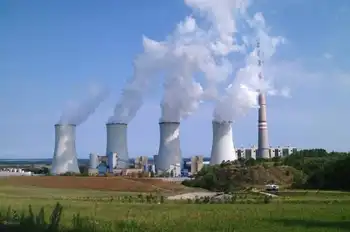
The Bush administration unveiled plans for an experimental coal-fired power plant free of carbon dioxide emissions that could be built within 10 years.

The FutureGen project is expected to cost $1 billion and would be financed by the Energy Department, other countries and private companies. Bush administration officials will ask about 20 countries in June to become involved with the project.

The plant would turn coal into a gas for hydrogen fuel cells. The prototype will explore several technologies to attempt emissions-free coal energy, including using a membrane to remove CO2 from the coal gas and storing the CO2 underground in geological formations.

"There is no doubt coal is going to be a principal fuel source in the 21st century," Energy Secretary Spencer Abraham said, adding that the project "will help turn coal from an environmentally challenging energy resource into an environmentally benign one."

Some environmentalists said they doubted the initiative would be groundbreaking if the Bush administration continues to push voluntary measures to reduce emissions. "A large-scale demonstration of carbon-capture technology is a good idea, but without a requirement to limit carbon emissions the market won't use it," said David G. Hawkins, a climate policy expert at the Natural Resources Defense Council.

Related News
Europe's stunted hydro & nuclear output may hobble recovery drive

Europe 2023 Energy Shortfall underscores how weak hydro and nuclear offset record solar and wind, tightening grids as natural gas supplies shrink and demand rebounds, heightening risks of electricity shortages across key economies.


Key Points

A regional gap as weak hydro and nuclear offset record solar and wind, straining supply as gas stays tight.

✅ Hydro and nuclear output fell sharply in early 2023

✅ Record solar and wind could not offset the deficit

✅ Industrial demand rebound pressures limited gas supplies


Shortfalls in Europe's hydro and nuclear output have more than offset record electricity generation from wind and solar power sites over the first quarter of 2023, leaving the region vulnerable to acute energy shortages for the second straight year.

European countries fast-tracked renewable energy capacity development in 2022 in the wake of Russia's invasion of Ukraine last February, which upended natural gas flows to the region and sent power prices soaring.

Europe lifted renewable energy supply capacity by a record 57,290 megawatts in 2022, or by nearly 9%, according to the International Energy Agency (IRENA), amid a scramble to replace imported Russian gas with cleaner, home-grown energy.

However, steep drops in both hydro and nuclear output - two key sources of non-emitting energy - mean Europe's power producers have limited ways to lift overall electricity generation, as the region is losing nuclear power at a critical moment, just as the region's economies start to reboot after last year's energy shock.

POWER PLATEAU
Europe's total electricity generation over the first quarter of 2023 hit 1,213 terawatt hours, or roughly 6.4% less than during the same period in 2022, according to data from think tank Ember.

At the same time, European power hits records during extreme heat as plants struggle to cool, exacerbating supply risks.

As Europe's total electricity demand levels were in post-COVID-19 expansion mode in early 2022 before Russia's so-called special operation sent power costs to record highs amid debates over how electricity is priced in Europe, it makes sense that overall electricity use was comparatively stunted in early 2023.

However, efforts are now underway to revive activity at scores of European factories, industrial plants and production lines that were shuttered or curtailed in 2022, so Europe's collective electricity consumption totals are set to trend steadily higher over the remainder of 2023.

With Russian natural gas unavailable in the previous quantities due to sanctions and supply issues, Europe's power producers will need to deploy alternative energy sources, including renewables poised to eclipse coal globally, to feed that increase in power demand.

And following the large jump in renewable capacity brought online in 2022, utilities can deploy more low-emissions energy than ever before across Europe's electricity grids.


Related News

View more

The Phillipines wants nuclear power to be included in the country's energy mix as the demand for electricity is expected to rise.

Philippines Nuclear Energy Policy aims to add nuclear power to the energy mix via executive order, meeting rising electricity demand with 24/7 baseload while balancing safety, renewables, and imported fuel dependence in the Philippines.


Key Points

A government plan to include nuclear power in the energy mix to meet demand, ensure baseload, and uphold safety.

✅ Executive order proposed by Energy Secretary Alfonso Cusi

✅ Targets 24/7 baseload, rising electricity demand

✅ Balances safety, renewables, and energy security


Phillipines Presidential spokesman Salvador Panelo said Energy Secretary Alfonso Cusi made the proposal during last Monday's Cabinet meeting in Malacaaang. "Secretary Cusi likewise sought the approval of the issuance of a proposed executive order for the inclusion of nuclear power, including next-gen nuclear options in the country's energy mix as the Philippines is expected to the rapid growth in electricity and electricity demand, in which, 24/7 power is essential and necessary," Panelo said in a statement.

Panelo said Duterte would study the energy chief's proposal, as China's nuclear development underscores regional momentum. In the 1960s until the mid 80s, the late president Ferdinand Marcos adopted a nuclear energy program and built the Bataan Nuclear Plant.

The nuclear plant was mothballed after Corazon Aquino became president in 1986. There have been calls to revive the nuclear plant, saying it would help address the Philippines' energy supply issues. Some groups, however, said such move would be expensive and would endanger the lives of people living near the facility, citing Three Mile Island as a cautionary example.

Panelo said proposals to revive the Bataan Nuclear Plant were not discussed during the Cabinet meeting, even as debates like California's renewable classification continue to shape perceptions. Indigenous energy sources natural gas, hydro, coal, oil, geothermal, wind, solar, biomassand ethanol constitute more than half or 59.6%of the Philippines' energy mix.

Imported oil make up 31.7% while imported coal, reflecting the country's coal dependency, contribute about 8.7%.

Imported ethanol make up 0.1% of the energy mix, even as interest in atomic energy rises globally.

In 2018, Duterte said safety should be the priority when deciding whether to tap nuclear energy for the country's power needs, as countries like India's nuclear restart proceed with their own safeguards.


Related News

View more

The gloves are off - Alberta suspends electricity purchase talks with B.C.

Alberta-BC Pipeline Dispute centers on Trans Mountain expansion, diluted bitumen shipments, federal approval, spill response capacity, and electricity trade, as Alberta suspends power talks and Ottawa insists the Kinder Morgan project proceeds in national interest.


Key Points

Dispute over Trans Mountain expansion, bitumen limits, and jurisdiction between Alberta, B.C., and Canada.

✅ Alberta suspends BC electricity talks as leverage

✅ Ottawa affirms federal approval and spill response

✅ BC plans advisory panel on diluted bitumen risks


Alberta Premier Rachel Notley says her government is suspending talks with British Columbia on the purchase of electricity from the western province.

It’s the first step in Alberta’s fight against the B.C. government’s proposal to obstruct the Kinder Morgan oil pipeline expansion project by banning increased shipments of diluted bitumen to the province’s coast.

Up to $500 million annually for B.C.’s coffers from electricity exports hangs in the balance, Notley said.

“We’re prepared to do what it takes to get this pipeline built — whatever it takes,” she told a news conference Thursday after speaking with Prime Minister Justin Trudeau on the phone.

Notley said she told Trudeau, who’s in Edmonton for a town-hall meeting, that the federal government needs to act decisively to end the dispute.

Speaking on Edmonton talk radio station CHED earlier in the day, Trudeau said the pipeline expansion is in the national interest and will go ahead, even as the federal government undertakes a study on electrification across sectors.

“That pipeline is going to get built,” Trudeau said. “We will stand by our decision. We will ensure that the Kinder Morgan pipeline gets built.”

B.C.’s environment minister has said his minority government plans to ban increased shipments until it can determine that shippers are prepared and able to properly clean up a spill, and, separately, has implemented an electricity rate freeze affecting consumers. He said he will establish an independent scientific advisory panel to study the issue.

The move infuriated Notley, who has accused B.C. of trying to change the rules after the federal government gave the project the green light. B.C. has the right to regulate how any spills would be cleaned up, but can’t dictate what flows through pipelines, she said.

Trudeau said Canada needs to get Alberta’s oil safely to markets other than the U.S. energy market today. He said the federal government did the research and has spent billions on spill response.

“The Kinder Morgan pipeline is not a danger to the B.C. coast,” he said.

Notley said she thanked Trudeau for his assurance that the project will go ahead, but the federal government has to do more to ensure the pipeline’s expansion.

“This is not an Alberta-B.C. issue. This is a Canada-B.C. issue,” she said. “This kind of uncertainty is bad for investment and bad for working people

“Enough is enough. We need to get these things built.”

B.C. Premier John Horgan said his government consulted Alberta and Ottawa about his province’s intentions, noting that Columbia River Treaty talks also shape regional electricity policy.

“I don’t see what the problem is,” Horgan said Thursday at a school opening north of Kelowna, B.C. “It’s within our jurisdiction to put in place regulations to protect the public interest.

“That’s what we are doing.”

He downplayed any possibility of court action or sanctions by Alberta.

“There’s nothing to take to court,” Horgan said. “We are consulting with the people of B.C. It’s way too premature to talk about those sorts of issues.

“Sabre-rattling doesn’t get you very far.”

Speaking in Ottawa, Natural Resources Minister Jim Carr wouldn’t say what Canada might do if British Columbia implements its regulation.

“That’s speculative,” said Carr.

He noted at this point, B.C. has just pledged to consult. He said the federal government heard from thousands of people before the pipeline was approved.

“That’s what they have announced — an intention to consult. We have already consulted.”

B.C.’s proposal creates more uncertainty for Kinder Morgan’s already-delayed Trans Mountain expansion project that would nearly triple the capacity of its pipeline system to 890,000 barrels a day.


Related News

View more

EU outlines $300 billion plan to dump Russian energy

REPowerEU Plan accelerates the EU's shift from Russian fossil fuels with renewable energy, energy efficiency, solar, wind, heat pumps, faster permits, and energy security measures by 2027, backed by grants, loans, and grid investments.


Key Points

EU plan to quit Russian fossil fuels via renewables and efficiency, with faster permits, by 2027.

✅ €300bn in grants and loans for efficiency and renewables

✅ Streamlined permits; solar mandate on new buildings

✅ Targets 2027 independence; cuts Russian gas, oil, coal


The European Union’s executive arm moved Wednesday to jump-start plans for the 27-nation bloc to abandon Russian energy amid the Kremlin’s war in Ukraine, proposing a nearly 300 billion-euro ($315 billion) package that includes more efficient use of fuels and faster rollout of renewable power, even as rolling back electricity prices remains challenging.

The European Commission’s investment initiative is meant to help the 27 EU countries start weaning themselves off Russian fossil fuels this year, a move many see as a wake-up call to ditch fossil fuels across Europe. The goal is to deprive Russia, the EU’s main supplier of oil, natural gas and coal, of tens of billions in revenue and strengthen EU climate policies.

“We are taking our ambition to yet another level to make sure that we become independent from Russian fossil fuels as quickly as possible,” European Commission President Ursula von der Leyen said in Brussels when announcing the package, dubbed REPowerEU.

With no end in sight to Russia’s war in Ukraine and European energy security shaken, amid what some describe as an energy nightmare for the region, the EU is rushing to align its geopolitical and climate interests for the coming decades. It comes amid troubling signs that have raised concerns about energy supplies that the EU relies on and have no quick replacements for, including Russia cutting off member nations Poland and Bulgaria after they refused a demand to pay for natural gas in rubles.

The bloc’s dash to ditch Russian energy stems from a combination of voluntary and mandatory actions. Both reflect the political discomfort of helping fund Russia’s military campaign in a country that neighbors the EU and wants to join the bloc.

An EU ban on coal from Russia is due to start in August, and the bloc has pledged to try to reduce demand for Russian gas by two-thirds by year's end, while debating gas price cap strategies to curb volatility. Meanwhile, a proposed EU oil embargo has hit a roadblock from Hungary and other landlocked countries that worry about the cost of switching to alternative sources.

In a bid to swing Hungary behind the oil phaseout, the REPowerEU package expects oil investment funding of around 2 billion euros for member nations highly dependent on Russian oil.

Energy savings and renewables form the cornerstones of the package, which would be funded mainly by an economic stimulus program put in place to help member countries overcome the slump triggered by the coronavirus pandemic.

The European Commission said the price tag for abandoning Russian fossil fuels completely by a 2027 target date is 210 billion euros. Its package includes 56 billion euros for energy efficiency and 86 billion euros for renewables.

Von der Leyen cited a total funding pot of 72 billion euros in grants and 225 billion euros for loans.

The European Commission also proposed ways to streamline the approval processes in EU countries for renewable projects, which can take up to a decade to get through red tape, as part of a broader effort to revamp the electricity market across Europe. The commission said approval times need to fall to as little as a year or less.

It put forward a specific plan on solar energy, seeking to double photovoltaic capacity by 2025 and pushing for a phased-in obligation to install solar panels on new buildings.

Simone Tagliapietra, an energy expert at the Bruegel think tank in Brussels, called REPowerEU a “jumbo package” whose success will ultimately depend on political will in the bloc’s national capitals, with examples such as Germany’s 200 billion euro energy price shield illustrating the scale of national responses.

“Most of the actions entailed in the plan require either national implementation or strong coordination among member states,” Tagliapietra said. “The extent to which countries really engage is going to be defining.”

The German energy think tank Agora Energiewende said the EU’s plan “gives too little attention to concrete initiatives that reduce fossil fuel demand in the short term and thereby misses the opportunity to simultaneously enhance Europe’s energy security and meet Europe’s climate objectives.”

The group's research shows rapidly expanding solar, wind parks and use of heat pumps for low-temperature heat in industry and buildings could be done faster than constructing new liquefied natural gas terminals or gas infrastructure, said Matthias Buck, its director for Europe.

The European Commission’s recommendations on short-term national actions to cut demand for Russian energy, which include potential emergency measures to limit electricity prices as well, coincide with deliberations underway in the bloc since last year on setting more ambitious EU energy-efficiency and renewable targets for 2030.

Those targets, being negotiated by the European Parliament and national governments, are part of the bloc’s commitments to a 55% cut in greenhouse gases by decade's end, compared with 1990 emissions, and to climate neutrality by 2050.

Von der Leyen urged the European Parliament and national governments to deepen the commission’s July proposal for an energy efficiency target of 9% and renewable energy goal of 40% by 2030. She said those objectives should be 13% and 45%, respectively.

Belgium, the Netherlands, Germany and Denmark plan to build North Sea wind farms to help cut carbon emissions.


Related News

View more

Reload.Land 2025: Berlin's Premier Electric Motorcycle Festival Returns

Reload.Land 2025 returns to Berlin with electric motorcycles, e-scooters, test rides, a conference on sustainability, custom builds, a silent ride, networking, innovators, brands, enthusiasts, and an electronic afterparty, spotlighting Europe's cutting-edge electromobility scene.


Key Points

Reload.Land 2025 is Berlin's electric motorcycle festival with test rides, panels, custom bikes, and a city silent ride.

✅ Test rides for electric motorcycles and e-scooters

✅ Conference on technology, sustainability, and policy

✅ Custom exhibition, Silent Ride, and electronic afterparty


Reload.Land, Europe's pioneering festival dedicated to electric motorcycles, is set to return for its third edition on June 7–8, 2025. Held at the Napoleon Komplex in Berlin, a city advancing sustainable mobility initiatives, this event promises to be a significant gathering for enthusiasts, innovators, and industry leaders in the realm of electric mobility.

A Hub for Electric Mobility Enthusiasts

Reload.Land serves as a platform for showcasing the latest advancements in electric two-wheelers, reflecting broader electricity innovation trends, including motorcycles, e-scooters, and custom electric bikes. Attendees will have the opportunity to test ride a diverse selection of electric vehicles from various manufacturers, providing firsthand experience of the evolving landscape of electromobility.

Highlights of the Festival

  • Custom Exhibition: A curated display of unique electric motorcycles and vehicles, highlighting the creativity and innovation within the electric mobility sector, from custom builders to Daimler's electrification plan shaping supply chains.

  • Reload.Land Conference: Engaging panel discussions and presentations from industry experts, focusing on topics such as cutting-edge technology, sustainability, including electricity demand from e-mobility projections, and the future of electric transportation.

  • Silent Ride: A group electric-only ride through the streets of Berlin, alongside projects like the city's electric flying ferry initiative, offering participants a unique experience of the city while promoting the quiet and clean nature of electric vehicles.

  • Official Afterparty: An evening celebration featuring electronic music, providing attendees with an opportunity to unwind and network in a vibrant atmosphere.
     

Community and Networking Opportunities

Reload.Land is not just an event; it's a movement that brings together a global community of riders, innovators, and brands. The festival fosters an environment where like-minded individuals can connect, share ideas, and collaborate on shaping the future of electric mobility, with similar gatherings like Everything Electric in Vancouver amplifying awareness worldwide. 

Event Details

  • Dates: June 7–8, 2025

  • Location: Napoleon Komplex, Modersohnstraße 35–45, 10245 Berlin, Germany.

  • Entry Fee: €10 (Children up to 14 years free)

Reload.Land 2025 promises to be a landmark event in the electric mobility calendar, offering a comprehensive look at the innovations shaping the future of transportation, echoing the public enthusiasm seen at EV events in Regina this year. Whether you're a seasoned rider, an industry professional, or simply curious about electric vehicles, Reload.Land provides a unique opportunity to immerse yourself in the world of electric motorcycles.


Related News

View more

Russia to triple electricity supplies to China

Amur-Heihe ETL Power Supply Tripling will expand Russia-China electricity exports, extending 750 MW DC full-load hours to stabilize northeast China grids amid coal shortages, peak demand spikes, and cross-border energy security concerns.


Key Points

Russia will triple electricity via Amur-Heihe ETL, boosting 750 MW DC operations to relieve shortages in northeast China.

✅ 500 kV converter station increases full-load hours from 5 to 16

✅ Supports Heilongjiang, Liaoning, and Jilin grids amid coal shortfall

✅ Cross-border 750 MW DC link enhances reliability, peak demand coverage


Russia will triple electricity supplies via the Amur-Heihe electric transmission line (ETL) starting October 1, China Central Television has reported, a move seen within broader shifts in China's electricity sector by observers.

"Starting October 1, the overhead convertor substation of 500 kW (750 MW DC) will increase its daily time of operation with full loading from 5 to 16 hours per day," the TV channel said.

"This measure will make it possible to dramatically ease the situation with the electricity supply," the report said. Electricity from this converting station is used in three northeastern provinces of China - Heilongjiang, Liaoning and Jilin, while regional markets are strained as India rations coal supplies amid surging demand today. In 29 years, Russia supplied over 30 bln kilowatt hours of electricity, according to the channel.

The Amur-Heihe overhead transnational power line was constructed for increasing electricity exports to China, where projections see electricity to meet 60% of energy use by 2060 according to Shell. It was commissioned in 2012. Its maximum capacity is 750 MW.

China’s Jiemian News reported on September 27 that, amid nationwide power cuts affecting grids, 20 regions were limited in electricity supplies to a various extent due to the ongoing coal deficit. In particular, in China’s northeastern provinces, restrictions on power consumption were imposed not only on industrial enterprises, but also on households, as well as on office premises, raising concerns for U.S. solar supply chains among downstream manufacturers.

Later, China’s financial media Zhongxin Jingwei noted that the coal deficit had been triggered by price hikes brought on by tightened national environmental standards and efforts to reduce coal power production across the country. Reduced coal imports amid disruptions in the work of foreign suppliers due to the coronavirus pandemic was an additional reason, and earlier power demand drops as factories shuttered compounded imbalances.


Related News

View more

Sign Up for Electricity Forum’s Newsletter

Stay informed with our FREE Newsletter — get the latest news, breakthrough technologies, and expert insights, delivered straight to your inbox.

Electricity Today T&D Magazine Subscribe for FREE

Stay informed with the latest T&D policies and technologies.
  • Timely insights from industry experts
  • Practical solutions T&D engineers
  • Free access to every issue

Download the 2025 Electrical Training Catalog

Explore 50+ live, expert-led electrical training courses –

  • Interactive
  • Flexible
  • CEU-cerified