State Power Agency To Help Generators

By New York Business (Crain)


Arc Flash Training CSA Z462 - Electrical Safety Essentials

Our customized live online or in‑person group training can be delivered to your staff at your location.

  • Live Online
  • 6 hours Instructor-led
  • Group Training Available
Regular Price:
$249
Coupon Price:
$199
Reserve Your Seat Today
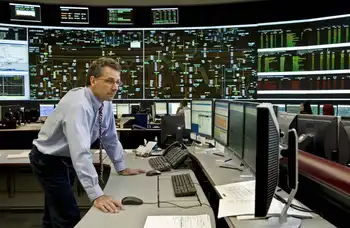
The New York Independent System Operator, which runs the state power grid, is expected to approve a pricing change in the wholesale electric markets aimed at providing more revenue to struggling power generators.

Opponents, led by consumer groups and utilities like Consolidated Edison, say the move will lead to higher electric prices.

Though critics originally argued that the price rise would be eight per cent a year, they now say the annual hike would probably be around 2.5 per cent for retail bills. That amounts to an estimated $160 million for city users. Plant operators say the change is needed to spur construction of new plants and phase out older, dirtier ones. They say that need would become particularly acute if Indian Point is forced to close or if some upstate plants, which are struggling financially, go bankrupt.

The change involves putting a floor and a ceiling on the price for installed capacity, which is factored into the price of wholesale electricity. By putting in a floor, generators would be guaranteed a certain amount of money for their installed capacity, giving them a financial boost and making it easier for them to get loans from the capital market to build new plants. The NYISO first turned down the plan late last year. But insiders say Gov. Pataki has thrown his weight behind it and that was enough to turn the tide at the NYISO.

Related News
The nuclear power dispute driving a wedge between France and Germany

Franco-German Nuclear Power Divide shapes EU energy policy, electricity market reform, and decarbonization strategies, as Paris backs reactors and state subsidies while Berlin prioritizes renewables, hydrogen, and energy security after Russian gas shocks.


Key Points

A policy rift over nuclear shaping EU market reform, subsidies, and the balance between reactors and renewables.

✅ Nuclear in EU targets vs. renewables-first strategy

✅ Market design disputes over long-term power prices

✅ Energy security after Russian gas; hydrogen definitions


Near the French village of Fessenheim, facing Germany across the Rhine, a nuclear power station stands dormant. The German protesters that once demanded the site’s closure have decamped, in a sign of Europe's nuclear decline, and the last watts were produced three years ago. 

But disagreements over how the plant from 1977 should be repurposed persist, speaking to a much deeper divide over nuclear power, which Eon chief's warning to Germany underscored, between the two countries on either side of the river’s banks.

German officials have disputed a proposal to turn it into a centre to treat metals exposed to low levels of radioactivity, Fessenheim’s mayor Claude Brender says. “They are not on board with anything that might in some way make the nuclear industry more acceptable,” he adds.

France and Germany’s split over nuclear power is a tale of diverging mindsets fashioned over decades, including since the Chernobyl disaster in USSR-era Ukraine. But it has now become a major faultline in a touchy relationship between Europe’s two biggest economies.

Their stand-off over how to treat nuclear in a series of EU reforms has consequences for how Europe plans to advance towards cleaner energy. It will also affect how the bloc secures power supplies as the region weans itself off Russian gas, even though nuclear would do little for the gas issue, and how it provides its industry with affordable energy to compete with the US and China. 

“There can be squabbles between partners. But we’re not in a retirement home today squabbling over trivial matters. Europe is in a serious situation,” says Eric-André Martin, a specialist in Franco-German relations at French think-tank IFRI. 

France, which produces two-thirds of its power from nuclear plants and has plans for more reactors, is fighting for the low-carbon technology to be factored into its targets for reducing emissions and for leeway to use state subsidies to fund the sector.

For Germany, which closed its last nuclear plants this year and, having turned its back on nuclear, has been particularly shaken by its former reliance on Russian gas, there’s concern that a nuclear drive will detract from renewable energy advances.

But there is also an economic subtext in a region still reeling from an energy crisis last year, reviving arguments for a needed nuclear option for climate in Germany, when prices spiked and laid bare how vulnerable households and manufacturers could become.

Berlin is wary that Paris would benefit more than its neighbours if it ends up being able to guarantee low power prices from its large nuclear output as a result of new EU rules on electricity markets, amid talk of a possible U-turn on the phaseout, people close to talks between the two countries say.

Ministers on both sides have acknowledged there is a problem. “The conflict is painful. It’s painful for the two governments as well as for our [EU] partners,” Sven Giegold, state secretary at the German economy and climate action ministry, where debates about whether a nuclear resurgence is possible persist, tells the Financial Times. 

Agnès Pannier-Runacher, France’s energy minister, says she wants to “get out of the realm of the emotional and move past the considerable misunderstandings that have accumulated in this discussion”.

In a joint appearance in Hamburg last week, German chancellor Olaf Scholz and French president Emmanuel Macron made encouraging noises over their ability to break the latest deadlock: a disagreement over the design of the EU’s electricity market. Ministers had been due to agree a plan in June but will now meet on October 17 to discuss the reform, aimed at stabilising long-term prices.

But the French and German impasse on nuclear has already slowed down debates on key EU policies such as rules on renewable energy and how hydrogen should be produced. Smaller member states are becoming impatient. The delay on the market design is “a big Franco-German show of incompetence again”, says an energy ministry official from another EU country who requested anonymity. 


Related News

View more

Europe's EV Slump Sounds Alarm for Climate Goals

Europe EV Sales Slowdown signals waning incentives, economic uncertainty, and supply chain constraints, threatening climate targets and net-zero emissions goals while highlighting the need for charging infrastructure, affordable batteries, and policy support across key markets.


Key Points

Europe's early-2024 EV registrations fell as incentives waned and supply gaps persisted, putting climate targets at risk.

✅ Fewer subsidies and tax breaks cut EV affordability

✅ Inflation and recession fears dampen car purchases

✅ Supply-chain and lithium constraints limit availability


A recent slowdown in Europe's electric vehicle (EV) sales raises serious concerns about the region's ability to achieve its ambitious climate targets.  After years of steady growth, new EV registrations declined in key markets like Norway, Germany, and the U.K. in early 2024. Experts are warning that this slump jeopardizes the transition away from fossil fuels and could undermine Europe's commitment to a net-zero emissions future.


Factors Behind the Decline

Several factors are contributing to the slowdown in EV sales:

  • Reduced Incentives: Many European countries have scaled back generous subsidies and tax breaks for EV purchases. While these incentives played a crucial role in driving early adoption, their reduction has made EVs less financially attractive for some consumers, with many U.K. buyers citing higher prices even after discounts.
  • End of ICE Ban Support: Public support for phasing out gasoline and diesel-powered cars by 2035, a key European Union policy, appears to be waning in some areas. Without robust support for this measure, consumers may be less inclined to embrace the transition to electric vehicles.
  • Economic Uncertainty: Rising inflation and fears of a recession in Europe have made consumers hesitant to invest in big-ticket purchases like new cars, regardless of fuel type. This economic uncertainty is impacting both electric and conventional vehicle sales.
  • Supply Chain Constraints: Ongoing supply chain disruptions and shortages of raw materials like lithium continue to impact the availability of affordable electric vehicles. This means potential buyers face long wait times or inflated prices even when they're ready to embrace EVs.


Consequences for Europe's Green Agenda

The decline in EV sales threatens Europe's plans to reduce carbon emissions and become the first climate-neutral continent by 2050, aligning with a broader push for electricity to address the climate dilemma across Europe. The transportation sector is a major contributor to greenhouse gas emissions, and the rapid electrification of vehicles is a pillar of Europe's decarbonization strategy.

The current slump highlights the need for continued policy support for the EV market, as EVs still trail gas models in many markets today, to ensure long-term growth and affordability for consumers. Without action, experts fear that Europe may find itself locked into a dependence on fossil fuels for decades to come, making its climate targets unreachable.


A Global Concern

Europe is a leader in electric vehicle policies and technology, during a period when global EV sales climbed markedly. The recent slowdown, however, sends a worrying signal to other regions around the world aiming to accelerate their transition to electric vehicles, including the U.S. market's Q1 dip as a cautionary example. It underscores the importance of sustained government support, investment in charging infrastructure and overcoming supply chain challenges to secure a future of widespread electric vehicle use, with many forecasts suggesting mass adoption within a decade if support continues.


Related News

View more

Funding Approved for Bruce C Project Exploration

Bruce C Project advances Ontario clean energy with NRCan funding for nuclear reactors, impact assessment, licensing, and Indigenous engagement, delivering reliable baseload power and low-carbon electricity through pre-development studies at Bruce Power.


Key Points

A proposed nuclear build at Bruce Power, backed by NRCan funding for studies, licensing, and impact assessment to expand clean power.

✅ Up to $50M NRCan support for pre-development

✅ Focus: feasibility, impact assessment, licensing

✅ Early Indigenous and community engagement


Canada's clean energy landscape received a significant boost recently with the announcement of federal funding for the Bruce Power's Bruce C Project. Natural Resources Canada (NRCan) pledged up to $50 million to support pre-development work for this potential new nuclear build on the Bruce Power site. This collaboration between federal and provincial governments signifies a shared commitment to a cleaner energy future for Ontario and Canada.

The Bruce C Project, if it comes to fruition, has the potential to be a significant addition to Ontario's clean energy grid. The project envisions constructing new nuclear reactors at the existing Bruce Power facility, located on the shores of Lake Huron. Nuclear energy is a reliable source of clean electricity generation, as evidenced by Bruce Power's operating record during the pandemic, producing minimal greenhouse gas emissions during operation.

The funding announced by NRCan will be used to conduct crucial pre-development studies. These studies will assess the feasibility of the project from various angles, including technical considerations, environmental impact assessments, and Indigenous and community engagement, informed by lessons from a major refurbishment that required a Bruce reactor to be taken offline, to ensure thorough planning. Obtaining a license to prepare the site and completing an impact assessment are also key objectives for this pre-development phase.

This financial support from the federal government aligns with both national and provincial clean energy goals. The "Powering Canada Forward" plan, spearheaded by NRCan, emphasizes building a clean, reliable, and affordable electricity system across the country. Ontario's "Powering Ontario's Growth" plan echoes these objectives, focusing on investment options, such as the province's first SMR project, to electrify the province's economy and meet its growing clean energy demand.

"Ontario has one of the cleanest electricity grids in the world and the nuclear industry is leading the way," stated Mike Rencheck, President and CEO of Bruce Power. He views this project as a prime example of collaboration between federal and provincial entities, along with the private sector, where recent manufacturing contracts underscore industry capacity.

Nuclear energy, however, remains a topic of debate. While proponents highlight its role in reducing greenhouse gas emissions and providing reliable baseload power, opponents raise concerns about nuclear waste disposal and potential safety risks. The pre-development studies funded by NRCan will need to thoroughly address these concerns as part of the project's evaluation.

Transparency and open communication with local communities and Indigenous groups will also be crucial for the project's success. Early engagement activities facilitated by the funding will allow for open dialogue and address any potential concerns these stakeholders might have.

The Bruce C Project is still in its early stages. The pre-development work funded by NRCan will provide valuable data to determine the project's viability. If the project moves forward, it has the potential to significantly contribute to Ontario's clean energy future, while also creating jobs and economic benefits for local communities and suppliers.

However, the project faces challenges. Public perception of nuclear energy and the lengthy regulatory process are hurdles that will need to be addressed, as debates around the Pickering B refurbishment have highlighted in Ontario. Additionally, ensuring cost-effectiveness and demonstrating the project's long-term economic viability will be critical for securing broader support.

The next few years will be crucial for the Bruce C Project. The pre-development work funded by NRCan will be instrumental in determining its feasibility. If successful, this project could be a game-changer for Ontario's clean energy future, building on the province's Pickering life extensions to strengthen system adequacy, offering a reliable, low-carbon source of electricity for the province and beyond.


Related News

View more

Hydro-Quebec shocks cottage owner with $5,300 in retroactive charges

Hydro-Quebec back-billing arises from analogue meter errors and estimated consumption, leading to arrears for electricity usage; disputes over access, payment plans, and potential power diversion reviews can impact cottage owners near Gatineau.


Key Points

Hydro-Quebec back-billing recovers underbilled electricity from analogue meter errors or prolonged estimated use.

✅ Triggered by inaccurate analogue meters or missed readings

✅ Based on actual usage versus prior estimated consumption

✅ Payment plans may spread arrears; theft checks may adjust


A relaxing lakefront cottage has become a powerful source of stress for an Ottawa woman who Hydro-Quebec is charging $5,300 to cover what it says are years of undercharging for electricity usage.

The utility said an old analogue power meter is to blame for years of inaccurate electricity bills for the summer getaway near Gatineau, Que.

Separate from individual billing issues, Hydro-Quebec has also reported pandemic-related losses earlier this year.

Owner Jan Hodgins does not think she should be held responsible for the mistake, nor does she understand how her usage could have surged over the years.

“I’m very hydro conscious, because I was raised that way. When you left a room, you always turned the light out,” she told CTV Montreal on Wednesday, relating her shock after receiving some hefty bills from Hydro-Quebec on Sept. 22.

Hodgins said she mainly uses the cottage on weekends, does not heat the place when she is not there, and does not use a washer or dryer, to keep her energy footprint as small as possible. She’s owned the cottage for 14 years, during which she says her monthly bill has hovered around $40.

Hydro-Quebec said it has not had an accurate reading of her usage for several years, relying instead on consumption estimates to determine what she pays. The company recently reviewed her energy consumption back to 2014, and found their estimates were not accurate.

“In the past, she was consuming about 10 to 15 kilowatt hours per day. This summer she was more around 40 kilowatt hours per day,” Marc-Antoine Pouliot with Hydro-Quebec told CTV Ottawa.

Hodgins said that means her regular bill will now be more than twice the $200 her neighbours are paying for hydro each month, even with peak hydro rates in place.

Hydro-Quebec said it will correct the bill if its technicians discover that someone is illegally diverting power nearby.

Hodgins said it’s not her fault that technicians did not check her meter in person, and chose to rely on inaccurate estimates. Pouliot argues that reaching her cottage was too difficult.

“There was too much snow. There were conditions during the winter disconnection ban period, and the consequence was that people, our workers, were not able to reach the meter,” he said.

Hydro-Quebec said it is willing to stretch out the debt into monthly payments over a year, which Hodgins said amount to $440 per month on top of her regular bill.

Utilities also caution customers about scammers threatening shutoffs during billing disputes.

“I’m on a fixed income. I don’t have that kind of money. I’m completely distraught,” she said. “I don’t know what I’m going to do.”


Related News

View more

Hydro-Québec to Invest $750 Million in Carillon Generating Station

Hydro-Québec Carillon Refurbishment delivers a $750M hydropower modernization, replacing six turbines and upgrading civil works, water passageways, and grid equipment to extend run-of-river, renewable energy output for peak demand near Montréal.


Key Points

A $750M project replacing six units and upgrading civil, water and electrical systems to supply power for 50 years.

✅ Replaces six generating units with Andritz turbines.

✅ Upgrades civil works, water passageways, and electrical gear.

✅ Extends run-of-river output for 50 years; boosts peak supply.


Hydro-Québec will invest $750 million to refurbish its Carillon generating station with a major powerhouse upgrade that will mainly replace six generating units. The investment also covers the cost of civil engineering work, including making adjustments to water passageways, upgrading electrical equipment and replacing the station roof. Work will start in 2021, aligning with Hydro-Québec's capacity expansion plans for 2021, and continue until 2027.

Carillon generating station is a run-of-river power plant consisting of 14 generating units with a total installed capacity of 753 MW. Built in the early 1960s, it is a key part of Hydro-Québec's hydroelectric generating fleet, which includes the La Romaine complex as well. The station is close to the greater Montréal area and feeds power into the grid to support industrial demand growth during peak consumption periods.

The selected supplier, turbine manufacturer Andritz, has been asked to maximize the project's economic spinoffs in Québec, as Canada continues investing in new turbines across the country to modernize assets. Once the work is completed, the new generating units will be able to provide clean, renewable energy, supporting Hydro-Québec's strategy to reduce fossil fuel reliance for the next 50 years.

"Carillon generating station is a symbol of our hydroelectric development and plays a strategic role in our production fleet. However, most of the generating units' main components date back to the station's original construction from 1959 to 1962. Hydropower generating stations have long service lives - with this refurbishment, Carillon will be producing clean renewable energy for decades to come." said David Murray, Chief Innovation Officer and President, Hydro-Québec Production.

"In light of today's economic situation, this is an important announcement that clearly reaffirms Hydro-Québec's role in relaunching Québec's economy and strengthening interprovincial electricity partnerships that open new markets. Over 600,000 hours of work will be required for everything from the engineering work to component assembly, creating many new high-quality skilled jobs for Québec industries."


Related News

View more

Data Show Clean Power Increasing, Fossil Fuel Decreasing in California

California clean electricity accelerates with renewables as solar and wind surge, battery storage strengthens grid resilience, natural gas declines, and coal fades, advancing SB 100 targets, carbon neutrality goals, and affordable, reliable power statewide.


Key Points

California clean electricity is the state's transition to renewable, zero-carbon power, scaling solar, wind and storage.

✅ Solar generation up nearly 20x since 2012

✅ Natural gas power down 20%; coal nearly phased out

✅ Battery storage shifts daytime surplus to evening demand


Data from the California Energy Commission (CEC) highlight California’s continued progress toward building a more resilient grid, achieving 100 percent clean electricity and meeting the state’s carbon neutrality goals.

Analysis of the state’s Total System Electric Generation report shows how California’s power mix has changed over the last decade. Since 2012:

Solar generation increased nearly twentyfold from 2,609 gigawatt-hours (GWh) to 48,950 GWh.

  • Wind generation grew by 63 percent.
  • Natural gas generation decreased 20 percent.
  • Coal has been nearly phased-out of the power mix, and renewable electricity surpassed coal nationally in 2022 as well.

In addition to total utility generation, rooftop solar increased by 10 times generating 24,309 GWh of clean power in 2022. The state’s expanding fleet of battery storage resources also help support the grid by charging during the day using excess renewable power for use in the evening.

“This latest report card showing how solar energy boomed as natural gas powered electricity experienced a steady 20 percent decline over the last decade is encouraging,” said CEC Vice Chair Siva Gunda. “Even as climate impacts become increasingly severe, California remains committed to transitioning away from polluting fossil fuels and delivering on the promise to build a future power grid that is clean, reliable and affordable.”

Senate Bill 100 (2018) requires 100 percent of California’s electric retail sales be supplied by renewable and zero-carbon energy sources by 2045. To keep the state on track, last year Governor Gavin Newsom signed SB 1020, establishing interim targets of 90 percent clean electricity by 2035 and 95 percent by 2040.

The state monitors progress through the Renewables Portfolio Standard (RPS), which tracks the power mix of retail sales, and regional peers such as Nevada's RPS progress offer useful comparison. The latest data show that in 2021 more than 37 percent of the state’s electricity came from RPS-eligible sources such as solar and wind, an increase of 2.7 percent compared to 2020. When combined with other sources of zero-carbon energy such as large hydroelectric generation and nuclear, nearly 59 percent of the state’s retail electricity sales came from nonfossil fuel sources.

The total system electric generation report is based on electric generation from all in-state power plants rated 1 megawatt (MW) or larger and imported utility-scale power generation. It reflects the percentage of a specific resource compared to all power generation, not just retail sales. The total system electric generation report accounts for energy used for water conveyance and pumping, transmission and distribution losses and other uses not captured under RPS.


Related News

View more

Sign Up for Electricity Forum’s Newsletter

Stay informed with our FREE Newsletter — get the latest news, breakthrough technologies, and expert insights, delivered straight to your inbox.

Electricity Today T&D Magazine Subscribe for FREE

Stay informed with the latest T&D policies and technologies.
  • Timely insights from industry experts
  • Practical solutions T&D engineers
  • Free access to every issue

Live Online & In-person Group Training

Advantages To Instructor-Led Training – Instructor-Led Course, Customized Training, Multiple Locations, Economical, CEU Credits, Course Discounts.

Request For Quotation

Whether you would prefer Live Online or In-Person instruction, our electrical training courses can be tailored to meet your company's specific requirements and delivered to your employees in one location or at various locations.