Protective Relay Training - Basic
Our customized live online or in‑person group training can be delivered to your staff at your location.

- Live Online
- 12 hours Instructor-led
- Group Training Available
Regular Price:
$699
Coupon Price:
$599
TORONTO - Ontario's giant electricity distributor, Hydro One, could be transformed into a non-profit entity instead of a fully privatized commercial company under a new plan being studied by the provincial government.
A spokeswoman for the Ontario's Energy Ministry confirmed Friday that the non-profit option was now being considered.
Previously it had been thought that the government-owned transmission company, the largest in Canada and one of the biggest in North America, would be put on the market next spring in a public share offering, or be acquired by another company.
``(The non-profit) plan is just one of the options on the table. No decisions have been made,'' said Energy Ministry spokeswoman Christine Smith. ``That has to go to cabinet and if people are thinking it's the only option, it's not. It's one of many options.''
The alternative plan came to light in a story in the Globe and Mail newspaper Friday. The Globe said Premier Mike Harris and a select few government and financial insiders were studying the non-profit option, which would be modeled on Nav Canada, the country's non-profit civil air navigation service.
Ontario SuperBuild Corp., the government's privatization advisor, is leading the work on the project. ``We're looking at all options,'' a spokesman in SuperBuild's office, told Reuters.
Hydro One is one of two main spinoffs of Ontario Hydro, the sprawling provincial power utility. The other is Ontario Power Generation, which has also been slated to be turned into a commercial company.
The breakup and planned privatization of Ontario Hydro left C$21 billion ($13 billion) in stranded debt that had been built up over decades by the utility and which the province is ultimately responsible for.
The Globe reported that if the non-profit option was chosen, Hydro One would raise about C$10 billion ($6.29 billion) through the sale of bonds.
The option would be attractive to the government because funds from the debt issue could be used to pay down the stranded debt, and Hydro One's electricity sales would be used to pay interest on the bonds.
But, the Globe said, the non-profit option would derail plans for Hydro One to expand and become a major player in the deregulated North American electricity market.
``Any decision that is made is entirely up to the shareholder. It would be the government's decision to make,'' said Hydro One spokesman Terry Young.
Whatever decision is made will not affect the province's plans to open the market to competition next year, Smith said.
Ontario, Canada's most populous province, has already pushed back its original November 2000 deadline for electricity-system deregulation by 18 months.
Earlier this year, it said it would open the market by May 2002. A target date will be set in late December or January following the completion of a key report.
``What SuperBuild is doing to look at privatizing different government assets is totally separate from us opening the market,'' Smith said. ``It will not affect market opening.''
($1-$1.59 Canadian)
Related News

EV Fires Raise Health Concerns for Firefighters
EV Firefighter Cancer Risks: lithium-ion battery fires, toxic metals like nickel and chromium, hazardous smoke…
View more
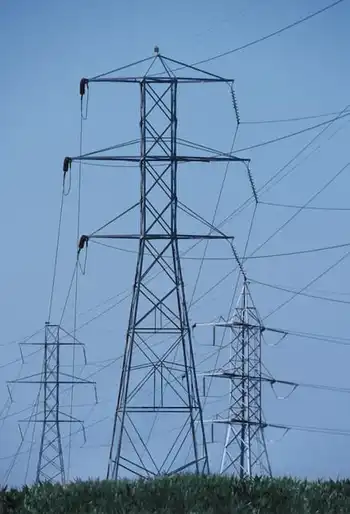
Alberta Electricity market needs competition
Alberta Electricity Market faces energy-only vs capacity debate as transmission, distribution, and administration fees surge;…
View more
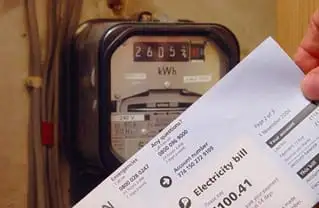
During this Pandemic, Save Money - How To Better Understand Your Electricity Bill
Commercial Electric Tariffs explain utility rate structures, peak demand charges, kWh vs kW pricing, time-of-use…
View more

Energy chief says electricity would continue uninterrupted if coal phased out within 30 years
Australia Energy Policy Debate highlights IPCC warnings, Paris Agreement goals, coal phase-out, emissions reduction, renewables,…
View more
Electric Ferries Power Up B.C. with CIB Help
BC Ferries Electrification accelerates zero-emission vessels, Canada Infrastructure Bank financing, and fast charging infrastructure to…
View more

Fire in manhole leaves thousands of Hydro-Québec customers without power
Montreal Power Outage linked to Hydro-Que9bec infrastructure after an underground explosion and manhole fire in…
View more
Sign Up for Electricity Forum’s Newsletter
Stay informed with our FREE Newsletter — get the latest news, breakthrough technologies, and expert insights, delivered straight to your inbox.
Electricity Today T&D Magazine Subscribe for FREE

Stay informed with the latest T&D policies and technologies.
- Timely insights from industry experts
- Practical solutions T&D engineers
- Free access to every issue
