Pakistani prez opens huge hydroelectric power plant

By Associated Press


NFPA 70e Training - Arc Flash

Our customized live online or in‑person group training can be delivered to your staff at your location.

  • Live Online
  • 6 hours Instructor-led
  • Group Training Available
Regular Price:
$199
Coupon Price:
$149
Reserve Your Seat Today
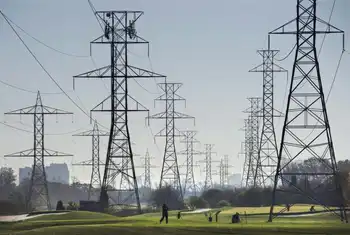
President Pervez Musharraf opened a hydroelectric power plant recently in northwest Pakistan that is projected to earn annual revenues of US$500 million, local media reported.

The US$2.2 billion plant in the Attock district - about 80 kilometers (50 miles) northwest of the capital, Islamabad - was partly financed by the World Bank, Asian Development Bank and Japan, the state-run Associated Press of Pakistan said.

The 1,450-megawatt facility will be operated by the state-run Water and Power Development Authority, the report said.

The plant includes a 52-kilometer (30-mile) water channel that diverts water from the Tarbela Dam in northwest Pakistan to run the unit's generators.

State-run television reported that the Water and Power Development Authority will earn US$500 million each year by selling electricity generated by the unit.

At a ceremony to mark the plant's opening, Musharraf said that Pakistan needs to build more dams to meet the country's energy needs, APP said.

Pakistan produces most of its electricity by state-owned hydroelectric power plants, but it also buys electricity from private producers who run their units on diesel, natural gas and coal.

Related News
Ontario Energy minister downplays dispute between auditor, electricity regulator

Ontario IESO Accounting Dispute highlights tensions over public sector accounting standards, auditor general oversight, electricity market transparency, KPMG advice, rate-regulated accounting, and an alleged $1.3B deficit understatement affecting Hydro bills and provincial finances.


Key Points

A PSAS clash between Ontario's auditor general and the IESO, alleging a $1.3B deficit impact and transparency failures.

✅ Auditor alleges deficit understated by $1.3B

✅ Dispute over PSAS vs US-style accounting

✅ KPMG support, transparency and co-operation questioned


The bad blood between the Ontario government and auditor general bubbled to the surface once again Monday, with the Liberal energy minister downplaying a dispute between the auditor and the Crown corporation that manages the province's electricity market, even as the government pursued legislation to lower electricity rates in the province.

Glenn Thibeault said concerns raised by auditor general Bonnie Lysyk during testimony before a legislative committee last week aren't new and the practices being used by the Independent Electricity System Operator are commonly endorsed by major auditing firms.

"(Lysyk) doesn't like the rate-regulated accounting. We've always said we've relied on the other experts within the field as well, plus the provincial controller," Thibeault said.

#google#

"We believe that we are following public sector accounting standards."

Thibeault said that Ontario Power Generation, Hydro One and many other provinces and U.S. states use the same accounting practices.

"We go with what we're being told by those who are in the field, like KPMG, like E&Y," he said.

But a statement from Lysyk's office Monday disputed Thibeault's assessment.

"The minister said the practices being used by the IESO are common in other jurisdictions," the statement said.

"In fact, the situation with the IESO is different because none of the six other jurisdictions with entities similar to the IESOuse Canadian Public Sector Accounting Standards. Five of them are in the United States and use U.S. accounting standards."

Lysyk said last week that the IESO is using "bogus" accounting practices and her office launched a special audit of the agency late last year after the agency changed their accounting to be more in line with U.S. accounting, following reports of a phantom demand problem that cost customers millions.

Lysyk said the accounting changes made by the IESO impact the province's deficit, understating it by $1.3 billion as of the end of 2017, adding that IESO "stalled" her office when it asked for information and was not co-operative during the audit.

Lysyk's full audit of the IESO is expected to be released in the coming weeks and is among several accounting disputes her office has been engaged in with the Liberal government over the past few years.

Last fall, she accused the government of purposely obscuring the true financial impact of its 25% hydro rate cut by keeping billions in debt used to finance that plan off the province's books. Lysyk had said she would audit the IESO because of its role in the hydro plan's complex accounting scheme.

"Management of the IESO and the board would not co-operate with us, in the sense that they continually say they're co-operating, but they stalled on giving us information," she said last week.

Terry Young, a vice-president with the IESO, said the agency has fully co-operated with the auditor general. The IESO opened up its office to seven staff members from the auditor's office while they did their work.

"We recognize the work that she's doing and to that end we've tried to fully co-operate," he said. "We've given her all of the information that we can."

Young said the change in accounting standards is about ensuring greater transparency in transactions in the energy marketplace.

"It's consistent with many other independent electricity system operators are doing," he said.

Lysyk also criticized IESO's accounting firm, KPMG, for agreeing with the IESO on the accounting standards. She was critical of the firm billing taxpayers for nearly $600,000 work with the IESO in 2017, compared to their normal yearly audit fee of $86,500.

KPMG spokeswoman Lisa Papas said the accounting issues that IESO addressed during 2017 were complex, contributing to the higher fees.

The accounting practices the auditor is questioning are a "difference of professional judgement," she said.

"The standards for public sector organizations such as IESO are principles-based standards and, accordingly, require the exercise of considerable professional judgement," she said in a statement.

"In many cases, there is more than one acceptable approach that is compliant with the applicable standards."

Progressive Conservative energy critic Todd Smith said the government isn't being transparent with the auditor general or taxpayers, aligning with calls for cleaning up Ontario's hydro mess in the sector.

"Obviously, they have some kind of dispute but the auditor's office is saying that the numbers that the government is putting out there are bogus.

Those are her words," he said. "We've always said that we believe the auditor general's are the true numbers for the
province of Ontario."

NDP energy critic Peter Tabuns said the Liberal government has decided to "play with accounting rules" to make its books look better ahead of the spring election, despite warnings that electricity prices could soar if costs are pushed into the future.


Related News

View more

PG&E’s Pandemic Response Includes Precautionary Health and Safety Actions; Moratorium on Customer Shutoffs for Nonpayment

PG&E COVID-19 Shutoff Moratorium suspends service disconnections, offers flexible payment plans, and expands customer support with safety protocols, social distancing, and public health guidance for residential and commercial utility customers during the pandemic.


Key Points

A temporary halt to utility shutoffs with flexible payment plans to support PG&E customers during COVID-19.

✅ Suspends shutoffs for residential and commercial accounts

✅ Offers most flexible payment plans upon COVID-19 hardship

✅ Enhances safety: social distancing, PPE, remote work protocols


Pacific Gas and Electric Company has announced that due to the COVID-19 pandemic, it has voluntarily implemented a moratorium on service disconnections for non-payment, effective immediately. This suspension, similar to policies in New Jersey and New York, will apply to both residential and commercial customers and will remain in effect until further notice. To further support customers who may be impacted by the pandemic, PG&E will offer its most flexible pay plans to customers who indicate either an impact or hardship as a result of COVID-19. PG&E will continue to monitor current events and identify opportunities to support our customers and communities through concrete actions.

In addition to the moratorium on service shut-offs, PG&E’s response to the COVID-19 pandemic is focused on efforts to protect the health and safety of its customers, employees, contractors and the communities it serves, including ongoing wildfire risk reduction efforts that continue alongside its pandemic response. Actions the company has taken include providing guidance for employees who have direct customer contact to take social distancing precautionary measures, such as avoiding handshakes and wearing disposable nitrile gloves while in customers' homes, and continuing safety work related to power line-related fires across its service area.

Customers who visit local offices to pay bills and are sick or experiencing symptoms are being asked to use other payment options such as online or by phone, as seen when Texas utilities waived fees during the pandemic, at 1-877-704-8470.

“We recognize that this is a rapidly changing situation and an uncertain time for many of our customers. Our most important responsibility is the health and safety of our customers and employees. We also want to provide some relief from the stress and financial challenges many are facing during this worldwide, public health crisis, and with rates set to stabilize in 2025 the company remains focused on affordability. We understand that many of our customers may experience a personal financial strain due to the slowdown in the economy related to the pandemic, and programs like the Wildfire Assistance Program can help eligible customers,” said Chief Customer Officer and Senior Vice President Laurie Giammona.

Internally, the company is taking advanced cleaning measures, communicating best practices frequently with employees, and is asking its leaders to let employees work remotely if their job allows, while avoiding critical business disruption. PG&E has activated an enterprise-wide incident response team and is vigilantly monitoring the Centers for Disease Control and Prevention and World Health Organization for updates related to the virus. The company is committed to continue addressing customer service needs and does not expect any disruption in gas or electric service due to the public health crisis.


Related News

View more

Entergy Creates COVID-19 Emergency Relief Fund to Help Customers in Need

Entergy COVID-19 Emergency Relief Fund provides financial assistance to ALICE households, low-income seniors, and disabled customers via United Way grants for rent, mortgage, utilities, food, and bill payment support during COVID-19, alongside a disconnect moratorium.


Key Points

A shareholder-funded program offering essential grants and bill support to Entergy customers affected by COVID-19.

✅ Shareholders commit $700,000; grants distributed via United Way partners.

✅ Focus on ALICE families, low-income seniors, and disabled customers.

✅ Disconnects suspended; bill tools and LIHEAP advocacy underway.


In an effort to help working families experiencing financial hardships as a result of the coronavirus pandemic, the Entergy Charitable Foundation has established the COVID-19 Emergency Relief Fund, recognizing the need for electricity across communities.

"The health and safety of our customers, employees and communities is Entergy's top priority," said Leo Denault, chairman and CEO of Entergy Corporation. "For more than 100 years, Entergy has never wavered in our commitment to supporting our customers and the communities we serve. This pandemic is no different. During this challenging time, we are helping lessen the impact of this crisis on the most vulnerable in our communities. I strongly encourage our business partners to join us in this effort."

As devastating and disruptive as this crisis is for everyone, we know from past experience that those most heavily impacted are ALICE households (low-wage working families) and low-income elderly and disabled customers, who often face energy insecurity during such events - roughly 40%-50% of Entergy's customer base.

"We know from experience that working families and low-income elderly and disabled customers are hardest hit during times of crisis," said Patty Riddlebarger, vice president of Entergy's corporate social responsibility. "We are working quickly to make funds available to community partners that serve vulnerable households to lessen the economic impact of the COVID-19 crisis and ensure that families have the resources they need to get by during this time of uncertainty."

To support our most vulnerable customers, Entergy shareholders are committing $700,000 to the COVID-19 Emergency Relief Fund to help qualifying customers with basic needs such as food and nutrition, rent and mortgage assistance, and other critical needs, alongside measures like Texas utilities waiving fees that ease household costs, until financial situations become more stable. Grants from the fund will be provided to United Way organizations and other nonprofit partners across Entergy's service area that are providing services to impacted households.

Company shareholders will also match employee contributions to the COVID-19 relief efforts of local United Way organizations up to $100,000 to maximize impact.

In addition to establishing the COVID-19 Emergency Relief Fund, Entergy is taking additional steps to support and protect our customers during this crisis, similar to PG&E's pandemic response measures, including:

With support from our regulators, we are temporarily suspending customer disconnects, as seen in New Jersey and New York policies, as we continue to monitor the situation.

We are working with our network of community advocates, as the industry coordination with federal partners continues, to request a funding increase of the Low Income Home Energy Assistance Program to help alleviate financial hardships caused by COVID-19 on vulnerable households.

We are developing bill payment solutions and tools to help customers pay their accumulated balances once the disconnect moratorium is lifted.

Already in place to support vulnerable customers is Entergy's The Power to Care program, which provides emergency bill payment assistance to seniors and disabled individuals. To mark the 20th anniversary of Entergy's low-income customer initiative, the limit of shareholders' dollar for dollar match of customer donations was increased from $500,000 to $1 million per year. Shareholders continue to match employee donations dollar for dollar with no limit.


Related News

View more

Shopping for electricity is getting cheaper in Texas

Texas Electricity Prices are shifting as deregulation matures, with competitive market shopping lowering residential rates, narrowing gaps with regulated areas, and EIA data showing long term declines versus national averages across most Texans.


Key Points

Texas Electricity Prices are average residential rates in deregulated and regulated markets across the state.

✅ Deregulated areas saw 17.4% residential price declines since 2006

✅ Regulated zones experienced a 5.5% increase over the same period

✅ Competitive shopping narrowed the gap; Texas averaged below US


Shopping for electricity is becoming cheaper for most Texans, according to a new study from the Texas Coalition for Affordable Power. But for those who live in an area with only one electricity provider, prices have increased in a recent 10-year period, the study says.

About 85 percent of Texans can purchase electricity from a number of providers in a deregulated marketplace, while the remaining 15 percent must buy power from a single provider, often an electric cooperative, in their area.

The report from the Texas Coalition for Affordable Power, which advocates for cities and local governments and negotiates their power contracts, pulls information from the U.S. Energy Information Administration to compare prices for Texans in the two models. Most Texans could begin choosing their electricity provider in 2002.

Buying power tends to be more expensive for Texans who live in a part of the state with a deregulated electricity market. But that gap is continuing to shrink as Texans become more willing to shop for power, even as electricity complaints have periodically risen. In 2015, the gap “was the smallest since the beginning of deregulation,” according to the report.

Between 2006 and 2015, the last year for which data is available, average residential electric prices for Texans in a competitive market decreased by 17.4 percent, while average prices increased by 5.5 percent in the regulated areas, even as the Texas power grid has periodically faced stress.

“These residential price declines are promising, and show the retail electric market is maturing,” Jay Doegey, executive director for the Texas Coalition for Affordable Power, said in a statement. “We’re encouraged by the price declines, but more progress is needed.”

The study attributes the decline to the prevalence of “low-priced individual deals” in the competitive areas, while policymakers consider market reforms to bolster reliability.

Overall, the average price of electricity in Texas (which produces and consumes the most electricity in the U.S.) — including the price in the deregulated marketplace, for the third time in four years — was below the national average in 2015.


Related News

View more

COVID-19 crisis shows need to keep electricity options open, says Birol

Electricity Security and Firm Capacity underpin reliable supply, balancing variable renewables with grid flexibility via gas plants, nuclear power, hydropower, battery storage, and demand response, safeguarding telework, e-commerce, and critical healthcare operations.


Key Points

Ability to meet demand by combining firm generation and flexible resources, keeping grids stable as renewables grow.

✅ Balances variable renewables with dispatchable generation

✅ Rewards flexibility via capacity markets and ancillary services

✅ Enhances grid stability for critical loads during low demand


The huge disruption caused by the coronavirus crisis, and the low-carbon electricity lessons drawn from it, has highlighted how much modern societies rely on electricity and how firm capacity, such as that provided by nuclear power, is a crucial element in ensuring supply, International Energy Agency (IEA) Executive Director Fatih Birol said.

In a commentary posted on LinkedIn, Birol said: "The coronavirus crisis reminds us of electricity's indispensable role in our lives. It's also providing insights into how that role is set to expand and evolve in the years and decades ahead."

Reliable electricity supply is crucial for teleworking, e-commerce, operating ventilators and other medical equipment, among all its other uses, he said, adding that the hundreds of millions of people who live without any access to electricity are far more vulnerable to disease and other dangers.

"Although new forms of short-term flexibility such as battery storage are on the rise, and initiatives like UK home virtual power plants are emerging, most electricity systems rely on natural gas power plants - which can quickly ramp generation up or down at short notice - to provide flexibility, underlining the critical role of gas in clean energy transitions," Birol said.

"Today, most gas power plants lose money if they are used only from time to time to help the system adjust to shifts in demand. The lower levels of electricity demand during the current crisis are adding to these pressures. Hydropower, an often forgotten workhorse of electricity generation, remains an essential source of flexibility.

"Firm capacity, including nuclear power in countries that have chosen to retain it as an option, is a crucial element in ensuring a secure electricity supply even as soaring electricity and coal use complicate transitions. Policy makers need to design markets that reward different sources for their contributions to electricity security, which can enable them to establish viable business models."

In most economies that have taken strong confinement measures in response to the coronavirus - and for which the IEA has available data - electricity demand has declined by around 15%, largely as a result of factories and businesses halting operations, and in New York City load patterns were notably reshaped during lockdowns. If electricity demand falls quickly while weather conditions remain the same, the share of variable renewables like wind and solar can become higher than normal, and low-emissions sources are set to cover almost all near-term growth.

"With weaker electricity demand, power generation capacity is abundant. However, electricity system operators have to constantly balance demand and supply in real time. People typically think of power outages as happening when surging electricity demand overwhelms supply. But in fact, some of the most high-profile blackouts in recent times took place during periods of low demand," Birol said.

"When electricity from wind and solar is satisfying the majority of demand, and renewables poised to eclipse coal by 2025 are reshaping the mix, systems need to maintain flexibility in order to be able to ramp up other sources of generation quickly when the pattern of supply shifts, such as when the sun sets. A very high share of wind and solar in a given moment also makes the maintenance of grid stability more challenging."


Related News

View more

Starved of electricity, Lebanon picks Dubai's ENOC to swap Iraqi fuel

Lebanon-ENOC Fuel Swap secures Iraqi high sulphur fuel oil, Grade B fuel oil, and gasoil via tender, easing electricity generation shortfalls, diesel shortages, and grid outages amid Lebanon's energy crisis and power sector emergency.


Key Points

A tender-based exchange trading Iraqi HSFO for cleaner fuel oil and gasoil to stabilize Lebanon's electricity generation.

✅ Swaps 84,000t Iraqi HSFO for 30,000t Grade B fuel oil and 33,000t gasoil

✅ Supports state electricity generation during acute power shortages

✅ Tender won by ENOC under Lebanon-Iraq goods-for-fuel deal


Lebanon's energy ministry said it had picked Dubai's ENOC in a tender to swap 84,000 tonnes of Iraqi high sulphur fuel oil, as LNG export authorizations expand globally, with 30,000 tonnes of Grade B fuel oil and 33,000 tonnes of gasoil.

ENOC won the tender, part of a deal between the two countries that allows the cash-strapped Lebanese government, even as electricity tensions persist, to pay for 1 million tonnes of Iraqi heavy fuel oil a year in goods and services.

As Lebanon suffers what the World Bank has described as one of the deepest depressions of modern history, shortages of fuel this month have meant state-powered electricity, alongside ongoing electricity sector reform, has been available for barely a few hours a day if at all.

Residents turning to private generators for their power supply face diesel shortages, even as other countries roll out measures to secure electricity supplies to mitigate risks.

The swap tenders are essential as Iraqi fuel is unsuitable for Lebanese electricity generation, and regional projects like the Jordan-Saudi electricity linkage underscore broader grid strategies.

Lebanese caretaker Energy Minister Raymond Ghajar said in July the fuel from the Iraqi deal would be used for electricity generation by the state provider, even as France advances a new electricity pricing scheme in Europe, and was enough for around four months.

ENOC is set to receive the Iraq fuel between Sept. 3-5 and will deliver it to Lebanon two weeks after, the energy ministry said, following a recent deal on electricity prices abroad that could influence markets.


Related News

View more

Sign Up for Electricity Forum’s Newsletter

Stay informed with our FREE Newsletter — get the latest news, breakthrough technologies, and expert insights, delivered straight to your inbox.

Electricity Today T&D Magazine Subscribe for FREE

Stay informed with the latest T&D policies and technologies.
  • Timely insights from industry experts
  • Practical solutions T&D engineers
  • Free access to every issue

Download the 2025 Electrical Training Catalog

Explore 50+ live, expert-led electrical training courses –

  • Interactive
  • Flexible
  • CEU-cerified