Iran produced plutonium, UN agency reports

By Associated Press


Protective Relay Training - Basic

Our customized live online or in‑person group training can be delivered to your staff at your location.

  • Live Online
  • 12 hours Instructor-led
  • Group Training Available
Regular Price:
$699
Coupon Price:
$599
Reserve Your Seat Today
Vienna — A report by the International Atomic Energy Agency said Iran has produced small amounts of plutonium as part of covert nuclear activities. But the report added there was "no evidence" that Tehran tried to make atomic arms.

The significance of the plutonium extraction was unclear. The report by the IAEA criticized Iran for not reporting its processing activities, listing it among dozens of cases where Tehran had covert programs in place.

"Neither the (processing) activities nor the separated plutonium had been previously reported to the agency," said the report, which was obtained by The Associated Press.

Plutonium can be used in nuclear weapons but it also has uses in peaceful programs to generate power — which is what Iran says is the sole purpose of its nuclear activities.

The 29-page report, prepared for a Nov. 20 meeting of the IAEA board of governors, praised Iran's recent cooperation with the agency but also faulted the country for past concealment of its nuclear programs.

The United States accuses Iran of pursuing nuclear weapons and has pressed for the IAEA to declare Tehran in violation of the Nuclear Nonproliferation Treaty — a move that would lead to U.N. Security Council involvement and possible sanctions.

The report credited Iran for a change of heart since September, when the agency demanded it explain contradictions and ambiguities in its nuclear activities.

"To date, there is no evidence that the previously undeclared nuclear material and activities ... were related to a nuclear weapons program," said the report, drawn up by IAEA Director General Mohammed ElBaradei.

"However, given Iran's previous pattern of concealment, it will take some time before the agency is able to conclude that Iran's nuclear program is exclusively for peaceful purposes," it added.

U.S. officials will likely seize on a passage in the report saying that Tehran's recent disclosures "clearly show that in the past, Iran had concealed many aspects of its nuclear activities, which resulted in breaches of its obligations of the safeguard agreement."

The safeguards, which are meant to ensure all nuclear activities are peaceful, are a key part of the nonproliferation treaty.

Under international pressure, Iran recently gave the agency what it said was a complete declaration of its nuclear activities just days ahead of an Oct. 31 deadline. On Monday, it also handed over two letters pledging to sign an additional agreement throwing open its program to inspection on demand by agency experts and announcing it had suspended uranium enrichment.

The concessions were announced in Moscow by Hasan Rowhani, the head of Iran's powerful Supreme National Security Council.

"Atomic weapons are not important to our defense doctrine," Mr. Rowhani said before meeting Russian President Vladimir Putin, whose government helped build Tehran's nuclear program.

Washington has urged Moscow to freeze an $800 million deal to help build Iran's first nuclear reactor, saying the facility in Bushehr on the shore of the Persian Gulf could help Iran develop weapons. The Kremlin has said it shares some of the U.S. concerns and has prodded Tehran to accept tighter IAEA controls.

Tehran promised weeks ago to suspend its enrichment activities, a key concern, but the timeframe was unclear.

Iran has affirmed that it enriched uranium covertly at a sophisticated facility at Natanz, about 300 miles south of Tehran. But it maintains enrichment was only to non-weapons levels, as part of nuclear programs to generate electricity.

Traces of weapons-grade uranium have been found on enrichment centrifuges at two Iranian facilities, but Iranian officials say the imported equipment was contaminated abroad before Iran received it.

"Iran has now acknowledged that it has been developing, for 18 years, a uranium centrifuge program, and, for 12 years, a laser enrichment program," the report said.

U.S. intelligence reports focus on the Natanz enrichment programs in arguing that Iran has been pursuing a clandestine nuclear weapons program.

The ElBaradei report did not make a judgment on the source of the highly enriched uranium, saying more investigation was needed.

The report also welcomed Iran's "active cooperation and openness" implemented since the last IAEA board meeting.

Before that, however, Iran "failed in a number of instances over an extended period of time to meet its obligations" on honouring its safeguards agreements, said the report. "Iran's policy of concealment continued until last month, with cooperation being limited and reactive and information being slow in coming."

By making his announcement in Moscow, Mr. Rowhani bolstered the prestige of the Kremlin, which had taken a position between Washington and Tehran in the dispute.

Mr. Putin said "we are pleased to note that Iran has itself resolved to limit itself" on uranium enrichment, and he suggested it cleared the way for further Russian-Iranian nuclear cooperation.

Mr. Rowhani added that Iran already had a project in mind.

Related News
Canadian Scientists say power utilities need to adapt to climate change

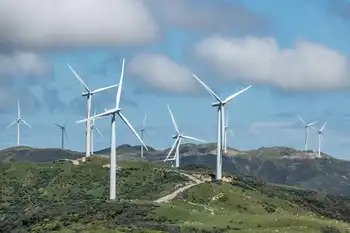
Canada Power Grid Climate Resilience integrates extreme weather planning, microgrids, battery storage, renewable energy, vegetation management, and undergrounding to reduce outages, harden infrastructure, modernize utilities, and safeguard reliability during storms, ice events, and wildfires.


Key Points

Canada's grid resilience hardens utilities against extreme weather using microgrids, storage, renewables, and upgrades.

✅ Grid hardening: microgrids, storage, renewable integration

✅ Vegetation management reduces storm-related line contact

✅ Selective undergrounding where risk and cost justify


The increasing intensity of storms that lead to massive power outages highlights the need for Canada’s electrical utilities to be more robust and innovative, climate change scientists say.

“We need to plan to be more resilient in the face of the increasing chances of these events occurring,” University of New Brunswick climate change scientist Louise Comeau said in a recent interview.

The East Coast was walloped this week by the third storm in as many days, with high winds toppling trees and even part of a Halifax church steeple, underscoring the value of storm-season electrical safety tips for residents.

Significant weather events have consistently increased over the last five years, according to the Canadian Electricity Association (CEA), which has tracked such events since 2003.

#google#

Nearly a quarter of total outage hours nationally in 2016 – 22 per cent – were caused by two ice storms, a lightning storm, and the Fort McMurray fires, which the CEA said may or may not be classified as a climate event.

“It (climate change) is putting quite a lot of pressure on electricity companies coast to coast to coast to improve their processes and look for ways to strengthen their systems in the face of this evolving threat,” said Devin McCarthy, vice president of public affairs and U.S. policy for the CEA, which represents 40 utilities serving 14 million customers.

The 2016 figures – the most recent available – indicate the average Canadian customer experienced 3.1 outages and 5.66 hours of outage time.

McCarthy said electricity companies can’t just build their systems to withstand the worst storm they’d dealt with over the previous 30 years. They must prepare for worse, and address risks highlighted by Site C dam stability concerns as part of long-term planning.

“There needs to be a more forward looking approach, climate science led, that looks at what do we expect our system to be up against in the next 20, 30 or 50 years,” he said.

Toronto Hydro is either looking at or installing equipment with extreme weather in mind, Elias Lyberogiannis, the utility’s general manager of engineering, said in an email.

That includes stainless steel transformers that are more resistant to corrosion, and breakaway links for overhead service connections, which allow service wires to safely disconnect from poles and prevents damage to service masts.

Comeau said smaller grids, tied to electrical systems operated by larger utilities, often utilize renewable energy sources such as solar and wind as well as battery storage technology to power collections of buildings, homes, schools and hospitals.

“Capacity to do that means we are less vulnerable when the central systems break down,” Comeau said.

Nova Scotia Power recently announced an “intelligent feeder” pilot project, which involves the installation of Tesla Powerwall storage batteries in 10 homes in Elmsdale, N.S., and a large grid-sized battery at the local substation. The batteries are connected to an electrical line powered in part by nearby wind turbines.

The idea is to test the capability of providing customers with back-up power, while collecting data that will be useful for planning future energy needs.

Tony O’Hara, NB Power’s vice-president of engineering, said the utility, which recently sounded an alarm on copper theft, was in the late planning stages of a micro-grid for the western part of the province, and is also studying the use of large battery storage banks.

“Those things are coming, that will be an evolution over time for sure,” said O’Hara.

Some solutions may be simpler. Smaller utilities, like Nova Scotia Power, are focusing on strengthening overhead systems, mainly through vegetation management, while in Ontario, Hydro One and Alectra are making major investments to strengthen infrastructure in the Hamilton area.

“The number one cause of outages during storms, particularly those with high winds and heavy snow, is trees making contact with power lines,” said N.S. Power’s Tiffany Chase.

The company has an annual budget of $20 million for tree trimming and removal.

“But the reality is with overhead infrastructure, trees are going to cause damage no matter how robust the infrastructure is,” said Matt Drover, the utility’s director for regional operations.

“We are looking at things like battery storage and a variety of other reliability programs to help with that.”

NB Power also has an increased emphasis on tree trimming and removal, and now spends $14 million a year on it, up from $6 million prior to 2014.

O’Hara said the vegetation program has helped drive the average duration of power outages down since 2014 from about three hours to two hours and 45 minutes.

Some power cables are buried in both Nova Scotia and New Brunswick, mostly in urban areas. But both utilities maintain it’s too expensive to bury entire systems – estimated at $1 million per kilometre by Nova Scotia Power.

The issue of burying more lines was top of mind in Toronto following a 2013 ice storm, but that’s city’s utility also rejected the idea of a large-scale underground system as too expensive – estimating the cost at around $15 billion, while Ontario customers have seen Hydro One delivery rates rise in recent adjustments.

“Having said that, it is prudent to do so for some installations depending on site specific conditions and the risks that exist,” Lyberogiannis said.

Comeau said lowering risks will both save money and disruption to people’s lives.

“We can’t just do what we used to do,” said Xuebin Zhang, a senior climate change scientist at Environment and Climate Change Canada.

“We have to build in management risk … this has to be a new norm.”


Related News

View more

Report: Duke Energy to release climate report under investor pressure

Duke Energy zero-coal 2050 plan outlines a decarbonized energy mix, aligning with Paris goals, cutting greenhouse gas emissions, driven by investor pressure, shifting to natural gas, extending nuclear power, and phasing out coal.


Key Points

An investor-driven scenario to end coal by 2050, shift to natural gas, extend nuclear plants, and manage climate risk.

✅ Eliminates coal from the generation mix by 2050

✅ Prioritizes natural gas transitions without CCS breakthroughs

✅ Extends nuclear plant licenses to limit carbon emissions


One of America’s largest utility companies, Duke Energy, is set to release a report later this month that sketches a drastically changed electricity mix in a carbon-constrained future.

The big picture: Duke is the latest energy company to commit to releasing a report about climate change in response to investor pressure, echoing shifts such as Europe's oil majors going electric across the sector, conveyed by non-binding but symbolically important shareholder resolutions. Duke provides electricity to more than seven million customers in the Carolinas, the Midwest and Florida.

Gritty details: The report is expected to find that coal, currently 33% of Duke’s mix, gone entirely from its portfolio by 2050 in a future scenario where the world has taken steps to cut greenhouse gas emissions, and where global coal-fired electricity use is falling markedly, to a level consistent with keeping global temperatures from rising two degrees Celsius. That’s the big ambition of the 2015 Paris climate deal, but the current commitments aren’t close to reaching that.

What they're saying: “What’s difficult about this is we are trying to overlay what we understand currently about technology,” Lynn Good, Duke CEO, told Axios in an interview on the sidelines of a major energy conference here.

She went on to say that this scenario of zero coal by 2050 doesn’t assume any breakthroughs in technology that captures carbon emissions from coal-fired power plants. “We don’t see that technology today, and we need to make economic decisions to get those units moving and replacing them with natural gas.”

Good also stressed the benefits of its several nuclear power plants, highlighting the role of sustaining U.S. nuclear power in decarbonization, which emit no carbon emissions. She said Duke isn’t considering investing in new nuclear plants, but plans to seek federal relicensing of current plants.

“If I turn them off, the resource that would replace them today is natural gas, so carbon will go up,” Good said. “Our objective is to continue to keep those plants as long as possible.”

What’s next: A spokesman said the other details of their 2050 scenario estimates will be available when the report is officially released by month’s end.

Axios reports that Duke Energy will release a report later this month that detail the utility's efforts to mitigate climate change risks and plan carbon-free electricity investments across its operations. The report includes a scenario that eliminates coal entirely from the company's power mix by 2050. Coal currently makes up about a third of Duke's generation.

Duke CEO Lynn Good told the news outlet the scenario ending coal-fired generation assumes no technological advances in emissions capture, seemingly leaving open the possibility.

Last year, a report by the Union of Concerned Scientists concluded one in four of the remaining operating coal-fired plants in the U.S. are slated for closure or conversion to natural gas, amid falling power-sector carbon emissions across the country. Duke's report is expected to be released by the end of the month.

Duke's report on its carbon plans comes at the behest of shareholders, a trend utility companies have seen growing among investors who are increasingly concerned about companies' sustainability and their financial exposure to climate policy.

Last year, a majority of shareholders of Pennsylvania utility PPL Corp. called on company management to publish a report on how climate change policies and technological innovations will affect the company's bottom line. Almost 60% of shareholders voted in favor of the non-binding proposal.

The vote, reportedly a first for the power sector, followed a similar decision by shareholders of Occidental Petroleum, which was supported by about 66% of shareholders.

Duke's Good told Axios that right now the utility does not see the coal technology on the horizon that would keep it operating plants. “We don't see that technology today, and we need to make economic decisions to get those units moving and replacing them with natural gas," Good said. However, it does not mean the utility is making near-term efforts to erase coal from its power mix. However, some utilities are taking those steps as they prepare for en energy landscape with more carbon regulations.

In addition to the 25% of coal plants heading for closure or conversion, the UCS report also said that another 17% of the nation’s operating coal plants are uneconomic compared with natural gas-fired generation, and could face retirement soon. But there is plenty of ongoing research into "clean coal" possibilities, and the federal government has expressed an interest in smaller, modular coal units.


Related News

View more

Britain Goes Full Week Without Coal Power

Britain Coal-Free Week signals a historic shift to clean energy, with zero coal power, increased natural gas and renewables, lower greenhouse gas emissions, and ambitious UK energy policy targeting a 2025 coal phase-out and decarbonization.


Key Points

A seven-day period with no coal power in the UK, signaling cleaner energy and progress on emission reductions.

✅ Seven days of zero coal generation in the UK

✅ Natural gas and renewables dominated the electricity mix

✅ Coal phase-out targeted by 2025; emissions cuts planned


For the first time in a century, Britain weaned itself off of coal consumption for an entire week, a coal-free power record for the country.

Reuters reported that Britain went seven days without relying on any power generated by coal-powered stations as the share of coal in the grid continued to hit record lows.

The accomplishment is symbolic of a shift to more clean energy sources, with wind surpassing coal in 2016 and the UK leading the G20 in wind share as of recent years; Britain was home to the first coal-powered plant back in the 1880s.

Today, Britain has some aggressive plans in place to completely eliminate its coal power generation permanently by 2025, with a plan to end coal power underway. In addition, Britain aims to cut its total greenhouse gas emissions by 80 percent from 1990 levels within the next 30 years.

Natural gas was the largest source of power for Britain in 2018, providing 39 percent of the nation's total electricity, as the Great Britain generation dashboard shows. Coal contributed only about 5 percent, though low-carbon generation stalled in 2019 according to reports. Burning natural gas also produces greenhouse gases, but it is much more efficient and greener than coal.

In the U.S., 63.5 percent of electricity generated in 2018 came from fossil fuels. About 35.1 percent was produced from natural gas and 27.4 percent came from coal. In addition, 19.3 percent of electricity came from nuclear power and 17.1 percent came from renewable energy sources, according to the U.S. Energy Information Administration.


Related News

View more

Atlantic grids, forestry, coastlines need rethink in era of intense storms: experts

Atlantic Canada Hurricane Resilience focuses on climate change adaptation: grid hardening, burying lines, coastline resiliency to sea-level rise, mixed forests, and aggressive tree trimming to reduce outages from hurricane-force winds and post-tropical storms.


Key Points

A strategy to harden grids, protect coasts, and manage forests to limit hurricane damage across Atlantic Canada.

✅ Grid hardening and selective undergrounding to cut outage risk.

✅ Coastal defenses: seawalls, dikes, and shoreline vegetation upgrades.

✅ Mixed forests and proactive tree trimming to reduce windfall damage.


In an era when storms with hurricane-force winds are expected to keep battering Atlantic Canada, experts say the region should make major changes to electrical grids, power utilities and shoreline defences and even the types of trees being planted.

Work continues today to reconnect customers after post-tropical storm Dorian knocked out power to 80 per cent of homes and businesses in Nova Scotia. By early afternoon there were 56,000 customers without electricity in the province, compared with 400,000 at the storm's peak on the weekend, a reminder that major outages can linger long after severe weather.

Recent scientific literature says 35 hurricanes -- not including post-tropical storms like Dorian -- have made landfall in the region since 1850, an average of one every five years that underscores the value of interprovincial connections like the Maritime Link for reliability.

Heavy rains and strong winds batter Shelburne, N.S. on Saturday, Sept. 7, 2019 as Hurricane Dorian approaches, making storm safety practices crucial for residents. (Suzette Belliveau/ CTV Atlantic)

Anthony Taylor, a forest ecologist scientist with Natural Resources Canada, wrote in a recent peer-reviewed paper that climate change is expected to increase the frequency of severe hurricanes.

He says promoting more mixed forests with hardwoods would reduce the rate of destruction caused by the storms.

Erni Wiebe, former director of distribution at Manitoba Hydro, says the storms should cause Atlantic utilities to rethink their view that burying lines is too expensive and to contemplate other long-term solutions such as the Maritime Link that enhance grid resilience.

Blair Feltmate, head of the Intact Centre on Climate Change at the University of Waterloo, says Atlantic Canada should also develop standards for coastline resiliency due to predictions of rising sea levels combining with the storms, while considering how delivery rate changes influence funding timelines.

He says that would mean a more rapid refurbishing of sea walls and dike systems, along with more shoreline vegetation.

Feltmate also calls for an aggressive tree-trimming program to limit power outages that he says "will otherwise continue to plague the Maritimes," while addressing risks like copper theft through better security.


Related News

View more

Manitoba Hydro's burgeoning debt surpasses $19 billion

Manitoba Hydro Debt Load surges past $19.2B as the Crown corporation faces shrinking net income, restructuring costs, and PUB rate decisions, driven by Bipole III, Keeyask construction, aging infrastructure, and rising interest rate risks.


Key Points

Manitoba Hydro Debt Load refers to the utility's escalating borrowings exceeding $19B, pressuring rates and finances.

✅ Debt rose to $19.2B; projected near $25B within five years.

✅ Major drivers: Bipole III, Keeyask, aging assets, restructuring.

✅ Rate hikes sought; PUB approved 3.6% vs 7.9% request.


Manitoba Hydro's debt load now exceeds $19 billion as the provincial Crown corporation grapples with a shrinking net income amid ongoing efforts to slay costs.

The utility's annual report, to be released publicly on Tuesday, also shows its total consolidated net income slumped from $71 million in 2016-2017 to $37 million in the last fiscal year, mirroring a Hydro One profit drop as electricity revenue fell.

It said efforts to restructure the utility and reduce costs are partly to blame for the $34 million drop in year-over-year income.

These earnings come nowhere close, however, to alleviating Hydro's long-term debt problem, a dynamic also seen in a BC Hydro deferred costs report about customer exposure. The figure is pegged at $19.2 billion this fiscal year, up from $16.1 billion the previous year and $14.2 billion in 2016.

The utility projects its debt will grow to about $25 billion in the next five years. Its largest expenses include finishing the Bipole III line, working on the Keeyask Generating System that is halfway done and rebuilding aging wood poles and substations, the report said.

"This level of debt increases the potential financial exposure from risks facing the corporation and is a concern for both

the corporation and our customers who may be exposed to higher rate increases in the event of rising interest rates, a prolonged drought or a major system failure," outgoing president and CEO Kelvin Shepherd wrote.

The income drop is primarily a result of the $50 million spent in the form of restructuring charges associated with the utility's efforts to streamline the organization and drive down costs, amid NDP criticism of Hydro changes related to government policy.

Those efforts included the implementation of buyouts for employees through what the utility dubbed its "voluntary departure program."

Among the changes, Manitoba Hydro reduced its workforce by 800 employees, which is expected to save the utility over $90 million per year. It also reduced its management positions by 26 per cent, a Monday news release said, while Hydro One leadership upheaval in Ontario drove its shares down during comparable governance turmoil.

To improve its financial situation, Hydro has applied for rate increases, even as the Consumers Coalition pushes to have the proposal rejected. The Public Utilities Board offered a 3.6 per cent average rate hike, instead of the 7.9 per cent jump the utility asked for.

In May, when the PUB rendered its decision, it made several recommendations as an alternative to raising rates, including receiving a share of carbon tax revenue and asking the government to help pay for Bipole III.

Hydro is projecting a net income of $70 million for 2018-2019, which includes the impact of the recent rate increase. That total reflects an approximately 20 per cent reduction in net income from 2017-18 after restructuring costs are calculated.


Related News

View more

Renewable power surpasses fossil fuels for first time in Europe

EU Renewable Power Overtakes Fossil Fuels, reflecting a greener energy mix as wind, solar, and hydro expand, cutting CO2 emissions and curbing coal while negative prices rise amid pandemic-driven demand drops.


Key Points

A milestone as renewables surpass fossil power in the EU, driven by wind, solar, hydro growth and pandemic demand.

✅ 40% renewables vs 34% fossil in H1 across 27 EU states

✅ Wind, solar, hydro rose; coal generation fell 32% year-on-year

✅ Lower demand, carbon prices, grid priority boosted clean output


Renewable power for the first time contributed a bigger share in the European generation mix than fossil fuels, as described in Europe's green surge as the fallout from the pandemic cut energy demand.

About 40 percent of the electricity in the first half in the 27 EU countries came from renewable sources, exceeding the global renewables share reported elsewhere, compared with 34 percent from plants burning fossil fuels, according to environmental group Ember in London. As a result, carbon dioxide emissions from the power sector fell 23 percent.

The rise is significant and encouraging for law makers as Europe prepares to spend billions of euros to recover from the virus, with wind power investments underscoring the momentum, and set the bloc on track to neutralize its carbon footprint by the middle of the century.

“This marks a symbolic moment ​in the transition of Europe’s electricity sector,” said Dave Jones, an electricity analyst at Ember. “For countries like Poland and Czech Republic grappling with how to get off coal, there is now a clear way out.”

While power demand slumped, output from wind and solar farms increased, reflecting global wind and solar gains, because more plants came online in breezy and sunny weather. At the same time, wet conditions boosted hydro power in Iberia and the Nordic markets.

Those conditions helped renewables become a rare bright spot throughout the economic tumult this year. In many areas, renewable sources of electricity have priority to the grid, meaning they could keep growing even as demand shrank and other power plants were turned off.

Electricity demand in the EU fell 7 percent overall. Fossil-fuel power generation plunged 18 percent in the first half compared with a year earlier. Renewable generation grew by 11 percent, according to Ember.

Coal was by far the biggest loser in 2020. It’s one of the most-polluting sources of power and its share is slumping in Europe as the price of carbon increases, with renewables surpassing coal in the US illustrating the broader shift, and governments move to cut emissions. Power from coal fell 32 percent across the EU.

Despite the economics, the decision to shut off coal for good will come down to political agreements between producers and governments, while reducing reliance on Russian energy reshapes policy debates.

One consequence of the jump in renewables is that negative prices have increased, as solar is reshaping prices in Northern Europe in similar ways. On particularly windy or sunny days when there isn’t much demand, the grid can be flooded with power. That’s leading wind farms to be shut off and customers to be paid to consume electricity.


Related News

View more

Sign Up for Electricity Forum’s Newsletter

Stay informed with our FREE Newsletter — get the latest news, breakthrough technologies, and expert insights, delivered straight to your inbox.

Electricity Today T&D Magazine Subscribe for FREE

Stay informed with the latest T&D policies and technologies.
  • Timely insights from industry experts
  • Practical solutions T&D engineers
  • Free access to every issue

Live Online & In-person Group Training

Advantages To Instructor-Led Training – Instructor-Led Course, Customized Training, Multiple Locations, Economical, CEU Credits, Course Discounts.

Request For Quotation

Whether you would prefer Live Online or In-Person instruction, our electrical training courses can be tailored to meet your company's specific requirements and delivered to your employees in one location or at various locations.