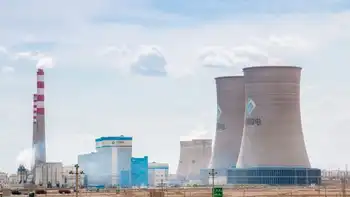
Utilities Bring More Power to California

By Edison Mission Energy


CSA Z463 Electrical Maintenance -

Our customized live online or in‑person group training can be delivered to your staff at your location.

  • Live Online
  • 6 hours Instructor-led
  • Group Training Available
Regular Price:
$249
Coupon Price:
$199
Reserve Your Seat Today
Edison Mission Energy, an Edison International company, and ChevronTexaco Worldwide Power & Gasification, a ChevronTexaco company, announced that the expansion of their Sunrise Power Project has been completed and the enlarged facility is now providing reasonably priced electricity to the people of California. The second phase, or expansion, of the project was completed more than a month ahead of schedule -- just in time for the long, hot summer.

"The recent Stage One power alert in California illustrates how critical such new sources of power continue to be to the state's consumers," said Thomas R. McDaniel, chairman, president and CEO of EME. "Edison is committed to helping fill that need."

The power generated by the Sunrise plant is purchased by the state at cost-based rates under a contract that extends through 2012. This provides reliable power to the state's consumers at stable, reasonable costs -- helping California avoid potential power alerts and blackouts.

Located in western Kern County, the Sunrise Power Project was built in two phases. Phase 1, completed in June 2001, consists of a 325-megawatt (MW), simple-cycle peaking facility. Phase 2 converts that peaking facility to a 570-MW, combined-cycle operation. Even though the facility was built in record time, it meets or exceeds all pertinent environmental and safety standards.

The project was planned and constructed in two phases in response to the state's energy crisis. "This plan not only increased the eventual total output of the facility to 570 MW," McDaniel added, "but the two-phase approach allowed for a critical summer 2001 start-up for Phase 1 -- helping mitigate the significant shortfalls in available power in California at the height of the crisis." The first phase was completed -- from groundbreaking to the production of the first commercial megawatt -- in an astonishingly short six months.

Edison International companies include Edison Mission Energy, Southern California Edison and Edison Capital.

Related News
E.ON to Commission 2500 Digital Transformer Stations

E.ON Digital Transformer Stations modernize distribution grids with smart grid monitoring, voltage control, and remote switching, enabling bidirectional power flow, renewables integration, and rapid fault isolation from centralized grid control centres.


Key Points

Remotely monitored grid nodes enhancing smart grid stability and speedier fault response.

✅ Real-time voltage and current data along feeders and laterals

✅ Remote switching cuts outage duration and truck rolls

✅ Supports renewables and bidirectional power flows


E.ON plans to commission 2500 digital transformer stations in the service areas of its four German distribution grid operators - Avacon, Bayernwerk, E.DIS and Hansewerk - by the end of 2019. Starting this year, E.ON will solely install digital transformer stations in Germany, aligning with 2019 grid edge trends seen across the sector. This way, the digital grid is quite naturally being integrated into E.ON's distribution grids.

With these transformer stations as the centrepiece of the smart grid, it is possible to monitor and control using synchrophasors in the power grid from the grid control centre. This helps to maintain a more balanced utilisation of the grid and, with increasing complexity, ensures continued security of supply.

Until now, the current and voltage parameters required for safe grid operation could usually only be determined at the beginning of a power line, where there is usually a grid substation in place. Controlling current flow and voltage in the downstream system was physically impossible.

In the future, grids will have to function in both directions: they will bring electricity to the customer while at the same time collecting and transmitting more and more green electricity via HVDC technology where appropriate. This requires physical data to be made available along the entire route. To ensure security of supply, voltage fluctuations must be kept within narrowly defined limits and the current flow must not exceed the specified value, while reducing line losses with superconducting cables remains an important consideration. To manage this challenge, it is necessary to install digital technology.

The possibility of remotely controlling grids also reduces downtimes in the event of faults and supports a smarter electricity infrastructure approach. With the new technology, our grid operators can quickly and easily access the stations of the affected line. The grid control centres can thus limit and eliminate faults on individual line sections within a very short space of time.


Related News

View more

Looming Coal and Nuclear Plant Closures Put ‘Just Transition’ Concept to the Test

Just Transition for Coal and Nuclear Workers explains policy frameworks, compensation packages, retraining, and community support during decarbonization, plant closures, and energy shifts across Europe and the U.S., including Diablo Canyon and Uniper strategies.


Key Points

A policy approach to protect and retrain legacy power workers as coal and nuclear plants retire during decarbonization.

✅ Germany and Spain fund closures with compensation and retraining.

✅ U.S. lacks federal support; Diablo Canyon is a notable exception.

✅ Firms like Uniper convert coal sites to gas and clean energy roles.


The coronavirus pandemic has not changed the grim reality facing workers at coal and nuclear power plants in the U.S. and Europe. How those workers will fare in the years ahead will vary greatly based on where they live and the prevailing political winds.

In Europe, the retirement of aging plants is increasingly seen as a matter of national concern. Germany this year agreed to a €40 billion ($45 billion) compensation package for workers affected by the country's planned phaseout of coal generation by 2038, amid its broader exit from nuclear power as part of its energy transition. Last month the Spanish authorities agreed on a just transition plan affecting 2,300 workers across 12 thermal power plants that are due to close this year.

In contrast, there is no federal support plan for such workers in the U.S., said Tim Judson, executive director at the Maryland-based Nuclear Information and Resource Service, which lobbies for an end to nuclear and fossil-fuel power.

For all of President Donald Trump’s professed love of blue-collar workers in sectors such as coal, “where there are economic transitions going on, we’re terrible at supporting workers and communities,” Judson said of the U.S. Even at the state level, support for such workers is "almost nonexistent,” he said, “although there are a lot of efforts going on right now to start putting in place just transition programs, especially for the energy sector.”

One example that stands out in the U.S. is the support package secured for workers at utility PG&E's Diablo Canyon Power Plant, California's last operating nuclear power plant that is scheduled for permanent closure in 2025. “There was a settlement between the utility, environmental groups and labor unions to phase out that plant that included a very robust just transition package for the workers and the local community,” Judson said.

Are there enough clean energy jobs to replace those being lost?
Governments are more likely to step in with "just transition" plans where they have been responsible for plant closures in the first place. This is the case for California, Germany and Spain, all moving aggressively to decarbonize their energy sectors and pursue net-zero emissions policy goals.

Some companies are beginning to take a more proactive approach to helping their workers with the transition. German energy giant Uniper, for example, is working with authorities to save jobs by seeking to turn coal plants into lower-emissions gas-fired units.

Germany’s coal phaseout will force Uniper to shut down 1.5 gigawatts of hard-coal capacity by 2022, but the company has said it is looking at "forward-looking" options for its plants that "will be geared toward tomorrow's energy world and offer long-term employment prospects."

Christine Bossak, Uniper’s manager of external communications, told GTM this approach would be adopted in all the countries where Uniper operates coal plants.

Job losses are usually inevitable when a plant is closed, Bossak acknowledged. “But the extent of the reduction depends on the alternative possibilities that can be created at the site or other locations. We will take care of every single employee, should he or she be affected by a closure. We work with the works council and our local partners to find sustainable solutions.”

Diana Junquera Curiel, energy industry director for the global union federation IndustriALL, said such corporate commitments looked good on paper — but the level of practical support depends on the prevailing political sentiment in a country, as seen in Germany's nuclear debate over climate strategy.

Even in Spain, where the closure of coal plants was being discussed 15 years ago, a final agreement had to be rushed through at the last minute upon the arrival of a socialist government, Junquera Curiel said. An earlier right-wing administration had sat on the plan for eight years, she added.

The hope is that heel-dragging over just transition programs will diminish as the scale of legacy plant closures grows.

Nuclear industry facing a similar challenge as coal
One reason why government support is so important is there's no guarantee a burgeoning clean energy economy will be able to absorb all the workers losing legacy generation jobs. Although the construction of renewable energy projects requires large crews, it often takes no more than a handful of people to operate and maintain a wind or solar plant once it's up and running, Junquera Curiel observed.

Meanwhile, the job losses are unlikely to slow. In Europe, Austria and Sweden both closed their last coal-fired units recently, even as Europe loses nuclear capacity in key markets.

In the U.S., the Energy Information Administration's base-case prediction is that coal's share of power generation will fall from 24 percent in 2019 to 13 percent in 2050, while nuclear's will fall from 20 percent to 12 percent over that time horizon. The EIA has long underestimated the growth trajectory of renewables in the mix; only in 2020 did it concede that renewables will eventually overtake natural gas as the country's largest source of power.

The Institute for Energy Economics and Financial Analysis has predicted that even a coronavirus-inspired halt to renewables is unlikely to stop a calamitous drop in coal’s contribution to U.S. generation.

The nuclear sector faces a similar challenge as coal, albeit over a longer timeline. Last year saw the nuclear industry starting to lose capacity worldwide in what could be the beginning of a terminal decline, highlighted by Germany's shutdown of its last three reactors in 2023. Last week, the Indian Point Energy Center closed permanently after nearly half a century of cranking out power for New York City.*

“Amid ongoing debates over whether to keep struggling reactors online in certain markets, the industry position would be that governments should support continued operation of existing reactors and new build as part of an overall policy to transition to a sustainable clean energy system,” said Jonathan Cobb, senior communication manager at the World Nuclear Association.

If this doesn’t happen, plant workers will be hoping they can at least get a Diablo Canyon treatment. Based on the progress of just transition plans so far, that may depend on how they vote just as much as who they work for.


Related News

View more

As New Zealand gets serious about climate change, can electricity replace fossil fuels in time?

New Zealand Energy Transition will electrify transport and industry with renewables, grid-scale solar, wind farms, geothermal, batteries, demand response, pumped hydro, and transmission upgrades to manage dry-year risk and winter peak loads.


Key Points

A shift to renewables and smart demand to decarbonise transport and industry while ensuring reliable, affordable power.

✅ Electrifies transport and industrial heat with renewables

✅ Uses demand response, batteries, and pumped hydro for resilience

✅ Targets 99%+ renewable supply, managing dry-year and peak loads


As fossil fuels are phased out over the coming decades, the Climate Change Commission (CCC) suggests electricity will take up much of the slack, aligning with the vision of a sustainable electric planet powering our vehicle fleet and replacing coal and gas in industrial processes.

But can the electricity system really provide for this increased load where and when it is needed? The answer is “yes”, with some caveats.

Our research examines climate change impacts on the New Zealand energy system. It shows we’ll need to pay close attention to demand as well as supply. And we’ll have to factor in the impacts of climate change when we plan for growth in the energy sector.


Demand for electricity to grow
While electricity use has not increased in NZ in the past decade, many agencies project steeply rising demand in coming years. This is partly due to both increasing population and gross domestic product, but mostly due to the anticipated electrification of transport and industry, which could result in a doubling of demand by mid-century.

It’s hard to get a sense of the scale of the new generation required, but if wind was the sole technology employed to meet demand by 2050, between 10 and 60 new wind farms would be needed nationwide.

Of course, we won’t only build wind farms, as renewables are coming on strong and grid-scale solar, rooftop solar, new geothermal, some new small hydro plant and possibly tidal and wave power will all have a part to play.


Managing the demand
As well as providing more electricity supply, demand management and batteries will also be important. Our modelling shows peak demand (which usually occurs when everyone turns on their heaters and ovens at 6pm in winter) could be up to 40% higher by 2050 than it is now.

But meeting this daily period of high demand could see expensive plant sitting idle for much of the time (with the last 25% of generation capacity only used about 10% of the time).

This is particularly a problem in a renewable electricity system when the hydro lakes are dry, as hydro is one of the few renewable electricity sources that can be stored during the day (as water behind the dam) and used over the evening peak (by generating with that stored water).

Demand response will therefore be needed. For example, this might involve an industrial plant turning off when there is too much load on the electricity grid.


But by 2050, a significant number of households will also need smart appliances and meters that automatically use cheaper electricity at non-peak times. For example, washing machines and electric car chargers could run automatically at 2am, rather than 6pm when demand is high.

Our modelling shows a well set up demand response system could mitigate dry-year risk (when hydro lakes are low on water) in coming decades, where currently gas and coal generation is often used.

Instead of (or as well as) having demand response and battery systems to combat dry-year risk, a pumped storage system could be built. This is where water is pumped uphill when hydro lake inflows are plentiful, and used to generate electricity during dry periods.

The NZ Battery project is currently considering the potential for this in New Zealand, and debates such as whether we would use Site C's electricity offer relevant lessons.


Almost (but not quite) 100% renewable
Dry-year risk would be greatly reduced and there would be “greater greenhouse gas emissions savings” if the Interim Climate Change Committee’s (ICCC) 2019 recommendation to aim for 99% renewable electricity was adopted, rather than aiming for 100%.

A small amount of gas-peaking plant would therefore be retained. The ICCC said going from 99% to 100% renewable electricity by overbuilding would only avoid a very small amount of carbon emissions, at a very high cost.

Our modelling supports this view. The CCC’s draft advice on the issue also makes the point that, although 100% renewable electricity is the “desired end point”, timing is important to enable a smooth transition.

Despite these views, Energy Minister Megan Woods has said the government will be keeping the target of a 100% renewable electricity sector by 2030.


Impacts of climate change
In future, the electricity system will have to respond to changing climate patterns as well, becoming resilient to climate risks over time.

The National Institute of Water and Atmospheric Research predicts winds will increase in the South Island and decrease in the far north in coming decades.

Inflows to the biggest hydro lakes will get wetter (more rain in their headwaters), and their seasonality will change due to changes in the amount of snow in these catchments.

Our modelling shows the electricity system can adapt to those changing conditions. One good news story (unless you’re a skier) is that warmer temperatures will mean less snow storage at lower elevations, and therefore higher lake inflows in the big hydro catchments in winter, leading to a better match between times of high electricity demand and higher inflows.


The price is right
The modelling also shows the cost of generating electricity is not likely to increase, because the price of building new sources of renewable energy continues to fall globally.

Because the cost of building new renewables is now cheaper than non-renewables (such as coal-fired plants), investing in carbon-free electricity is increasingly compelling, and renewables are more likely to be built to meet new demand in the near term.

While New Zealand’s electricity system can enable the rapid decarbonisation of (at least) our transport and industrial heat sectors, international efforts like cleaning up Canada's electricity underline the need for certainty so the electricity industry can start building to meet demand everywhere.

Bipartisan cooperation at government level will be important to encourage significant investment in generation and transmission projects with long lead times and life expectancies, as analyses of climate policy and grid implications underscore in comparable markets.

Infrastructure and markets are needed to support demand response uptake, as well as certainty around the Tiwai exit in 2024 and whether pumped storage is likely to be built.

Our electricity system can support the rapid decarbonisation needed if New Zealand is to do its fair share globally to tackle climate change.

But sound planning, firm decisions and a supportive and relatively stable regulatory framework are all required before shovels can hit the ground.


Related News

View more

Tornadoes and More: What Spring Can Bring to the Power Grid

Spring Storm Grid Risks highlight tornado outbreaks, flooding, power outages, and transmission disruptions, with NOAA flood outlooks, coal and barge delays, vulnerable nuclear sites, and distribution line damage demanding resilience, reliability, and emergency preparedness.


Key Points

Spring Storm Grid Risks show how tornadoes and floods disrupt power systems, fuel transport, and plants guide resilience.

✅ Tornado outbreaks and derechos damage distribution and transmission

✅ Flooding drives outages via treefall, substation and plant inundation

✅ Fuel logistics disrupted: rail coal, river barges, road access


The storm and tornado outbreak that recently barreled through the US Midwest, South and Mid-Atlantic was a devastating reminder of how much danger spring can deliver, despite it being the “milder” season compared to summer and winter.  

Danger season is approaching, and the country is starting to see the impacts. 

The event killed at least 32 people across seven states. The National Weather Service is still tallying up the number of confirmed tornadoes, which has already passed 100. Communities coping with tragedy are assessing the damage, which so far includes at least 72 destroyed homes in one Tennessee county alone, and dozens more homes elsewhere. 

On Saturday, April 1–the day after the storm struck–there were 1.1 million US utility customers without power, even as EIA reported a January power generation surge earlier in the year. On Monday morning, April 3, there were still more than 80,000 customers in the dark, according to PowerOutage.us. The storm system brought disruptions to both distribution grids–those networks of local power lines you generally see running overhead to buildings–as well as the larger transmission grid in the Midwest, which is far less common than distribution-level issues. 

While we don’t yet have a lot of granular details about this latest storm’s grid impacts, recent shifts in demand like New York City's pandemic power patterns show how operating conditions evolve, and it’s worth going through what else the country might be in for this spring, as well as in future springs. Moreover, there are steps policymakers can take to prepare for these spring weather phenomena and bolster the reliability and resilience of the US power system. 

Heightened flood risk 
The National Oceanic Atmospheric Administration (NOAA) said in a recent outlook that about 44 percent of the United States is at risk of floods this spring, equating to about 146 million people. This includes most of the eastern half of the country, the federal agency said. 

The agency also sees “major” flood risk potential in some parts of the Upper Mississippi River Basin, and relatively higher risk in the Sierra Nevada region, due in part to a historic snowpack in California.  

Multiple components of the power system can be affected by spring floods. 

Power lines – Floods can saturate soil and make trees more likely to uproot and fall onto power lines. This has been contributing to power outages during California’s recent heavy storms–called atmospheric rivers–that started over the winter. In other regions, soil moisture has even been used as a predictor of where power outages will occur due to hurricanes, so that utility companies are better prepared to send line repair crews to the right areas. Hurricanes are primarily a summer and fall phenomenon, and summer also brings grid stress from air conditioning demand in many states, so for now, during spring, they are less of a concern.  

Fuel transport – Spring floods can hinder the transportation of fuels like coal. While it is a heavily polluting fossil fuel that is set to continue declining as a fuel source for US electricity generation, with the EIA summer outlook for wind and solar pointing to further shifts, coal still accounted for roughly 20 percent of the country’s generation in 2022.   

About 70 percent of US coal is transported at least part of the way by trains. The rail infrastructure to transport coal from the Powder River Basin in Montana and Wyoming–the country’s primary coal source–was proven to be vulnerable to extreme floods in the spring of 2011, and even more extreme floods in the spring of 2019. The 2019 floods’ disruptions of coal shipments to power plants via rail persisted for months and into the summertime, also affecting river shipments of coal by barge. In June 2019, hundreds of barges were stalled in the Mississippi River, through which millions of tons of the fossil fuel are normally transported. 

Power plants – Power plants themselves can also be at risk of flooding, since most of them are sited near a source of water that is used to create steam to spin the plants’ turbines, and conversely, low water levels can constrain hydropower as seen in Western Canada hydropower drought during recent reservoir shortfalls. Most US fossil fuel generating capacity from sources like methane gas, which recently set natural gas power records across the grid, and coal utilizes steam to generate electricity. 

However, much of the attention paid to the flood risk of power plant sites has centered on nuclear plants, a key source of low-carbon electricity discussed in IAEA low-carbon electricity lessons that also require a water source for the creation of steam, as well as for keeping the plant cool in an emergency. To name a notable flood example here in the United States–both visually and substantively–in 2011, the Fort Calhoun nuclear plant in Nebraska was completely surrounded by water due to late-spring flooding along the Missouri River. This sparked a lot of concerns because it was just a few months after the March 2011 meltdown of the Fukushima Daiichi nuclear plant in Japan. The public was thankfully not harmed by the Nebraska incident, but this was unfortunately not an isolated incident in terms of flood risks posed to the US nuclear power fleet. 


Related News

View more

UK Emergency energy plan not going ahead

National Grid Demand Flexibility Service helps stabilise the UK grid during tight supply, offering discounts for smart meter users who shift peak-time electricity use, reducing power cut risks amid low wind and import constraints.


Key Points

A National Grid scheme paying smart homes to cut peak-time use, easing supply pressure and avoiding power cuts.

✅ Pays volunteers with smart meters to reduce peak demand.

✅ Credits discounts for shifting use to off-peak windows.

✅ Manages tight margins and helps avert UK power cuts.


National Grid has decided not to activate a scheme on Tuesday to help the UK avoid power cuts after being poised to do so.

It would have seen some households offered discounts on their electricity bills if they cut peak-time use.

National Grid had been ready to trigger the scheme following a warning that Britain's energy supplies were looking tighter than usual this week.

However, it decided that the measure was not required.

Alerts are sent out automatically when expected supplies drop below a certain level. But they do not mean that blackouts are likely, or that the situation is critical.

National Grid said it was "confident" it would be able to manage margins and "demand is not at risk".

Discounts
Earlier on Monday, the grid operator said it was considering whether to pay households across Britain to reduce their energy use to help out on Tuesday evening.

Under the Demand Flexibility Service (DFS), announced earlier this month, customers that have signed up could get discounts on their bills if they use less electricity in a given window of time.

That could mean delaying the use of a tumble-dryer or washing machine, or cooking dinner in the microwave rather than the oven.

Major suppliers such as Octopus and British Gas are taking part, but only customers that have an electricity smart meter and that have volunteered are eligible. About 14 million UK homes have an electricity smart meter.

The DFS has already been tested twice but has not yet run live.

Octopus, the supplier with the most customers signed up, said that some households had earned more than £4 during the hour-long tests, while the average saving was "well over £1".

It came after forecasts projected a large drop in the amount of power that Britain will be able to import from French nuclear power stations on Monday and Tuesday evenings.

The lack of strong winds to power turbines has also affected how much power can be generated within the UK, and efforts to fast-track grid connections aim to ease constraints.

Such warnings are not unusual - around 12 have been issued and cancelled without issue in the last six years, and other regions such as Canada are seeing grids strained by harsh weather as well.

However, they have become more common this year due to the energy crisis, and the most recent notice was sent out last week.

The situation means that the UK will have to import electricity from other sources on Monday and Tuesday evening.

Supplies are also expected be tight in France, forecasters say.

France has been facing months of problems with its nuclear power plants, which generate around three-quarters of the country's electricity.

More than half of the nuclear reactors run by state energy company EDF have closed due to maintenance problems and technical issues.

It has added to a massive energy crisis in Europe which is facing a winter without gas supplies from Russia.


Related News

View more

BC Hydro activates "winter payment plan"

BC Hydro Winter Payment Plan lets customers spread electricity bills over six months during cold weather, easing costs amid colder-than-average temperatures in British Columbia, with low-income conservation support, energy-saving kits, and insulation upgrades.


Key Points

Allows BC Hydro customers to spread winter electricity bills over six months, with added low-income efficiency support.

✅ Spread Dec-Mar bills across six months

✅ Eases costs during colder-than-average temperatures

✅ Includes low-income conservation and energy-saving kits


As colder temperatures set in across the province again this weekend, BC Hydro says it is activating its winter payment plan to give customers the opportunity to spread out their electricity bills as demand can reach record levels during extreme cold periods.

"Our meteorologists are predicting colder-than-average temperatures will continue over the next of couple of months and we want to provide customers with help to manage their payments," said Chris O'Riley, BC Hydro's president.

All BC Hydro customers will be able to spread payments from the billing period spanning Dec. 1, 2017 to March 31, 2018 over a six-month period.

Cold weather in the second half of December 2017 led to surging electricity demand that was higher than the previous 10-year average and has at times hit all-time highs during peak usage periods, according to BC Hydro.

Hydro operations also respond to summer conditions, as drought and low rainfall can force adjustments in power generation strategies.

People who heat their homes with electricity — about 40 per cent of British Columbians —  have the highest overall bills in the province, $197 more in December than in July, when air conditioning use can affect energy costs.

This is the second year the Crown corporation has activated a cold-weather payment plan, part of broader customer assistance programs it offers.  

BC Hydro has also increased funding for its low-income conservation programs by $2.2 million for a total of $10 million over the next three years. 

The low-income program provides energy-saving kits that include things like free energy assessments, insulation upgrades and weather stripping. 


Related News

View more

Sign Up for Electricity Forum’s Newsletter

Stay informed with our FREE Newsletter — get the latest news, breakthrough technologies, and expert insights, delivered straight to your inbox.

Electricity Today T&D Magazine Subscribe for FREE

Stay informed with the latest T&D policies and technologies.
  • Timely insights from industry experts
  • Practical solutions T&D engineers
  • Free access to every issue

Download the 2025 Electrical Training Catalog

Explore 50+ live, expert-led electrical training courses –

  • Interactive
  • Flexible
  • CEU-cerified