By Associated Press


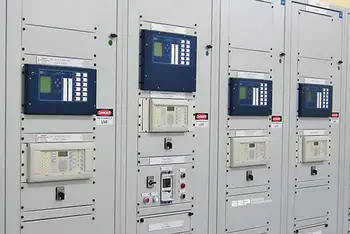
NFPA 70b Training - Electrical Maintenance

Our customized live online or in‑person group training can be delivered to your staff at your location.
  • Live Online
  • 12 hours Instructor-led
  • Group Training Available
Regular Price:
$699
Coupon Price:
$599
Reserve Your Seat Today
Putin, Schroeder Call for Cooperation

YEKATERINBURG, Russia -- German Chancellor Gerhard Schroeder and Russian President Vladimir Putin called recently for stronger economic ties between their nations, and Putin urged Germany to support Moscow in its dispute with the European Union over energy prices.

Putin said the EU demand that Russia raise its domestic energy prices to world levels as a condition for joining the World Trade Organization is unfair and potentially disastrous to the Russian economy.

If Russia yields to pressure to raise prices quickly, ``it will result in the collapse of the entire Russian economy,'' Putin said at a meeting with Russian and German businessmen that was part of bilateral consultations in Yekaterinburg, a large industrial city in the Ural Mountains.

``EU bureaucrats either don't understand it or deliberately put unacceptable conditions for Russia to join the WTO,'' Putin said. ``I can't understand why they are doing it.''

At present, oil and natural gas are supplied to the Russian domestic market at a fraction of their export prices. Foreign producers, especially in the European Union, claim that this amounts to a subsidy to Russian manufacturers and want the same price for all sales.

Putin said Russia was ready to gradually raise its energy prices and discuss the process with EU officials, but added that such consultations must be separate from WTO accession talks.

Russian news agencies quoted Russian Economic Development Minister German Gref, who recently returned from negotiations with EU officials on Russia's WTO accession, as saying the talks were ``very difficult'' and had hit a ``dead end'' over the energy price issue and the use of Russian gas pipelines.

The two-day Russian-German consultations, attended by dozens of top officials and business leaders, were intended to further bolster already burgeoning economic ties.

Delegation members signed agreements on the transit of German troops and cargo across Russia to Afghanistan; expanded cooperation between their rail systems; German assistance in scrapping Russian nuclear submarines; and cultural ties to foster the study of each other's languages. They also signed a statement saying visa requirements for certain groups should be eased.

``We have colossal opportunities to further expand our ties,'' Schroeder said at a news conference with Putin, who said he said he has met with the German leader 20 times since 2000.

Putin and Schroeder have developed friendly ties, eased by the fluent German that Putin polished during his stint as a KGB officer in East Germany in the 1980s. The links between the two leaders grew even stronger this year, when they led the global opposition to the U.S. war in Iraq along with French President Jacques Chirac.

Putin said Thursday that Russia hopes a new U.N. resolution that would boost the role of the United Nations in postwar Iraq can be approved before a donors conference later this month in Madrid, signaling he is ready to work with the United States in efforts to nail down a plan.

``We would like very much to reach an agreement on the U.N. Security Council resolution that would make a good basis for the work of the conference,'' Putin said. He added, ``Of course Iraq needs funds, but they can only be used efficiently if a political settlement is reached.''

Schroeder said he and Putin ``agree on the aim'' of the resolution. He said the transfer of sovereignty to the Iraqis must be carried out ``step by step and in a realistic but determined way.''

Related News
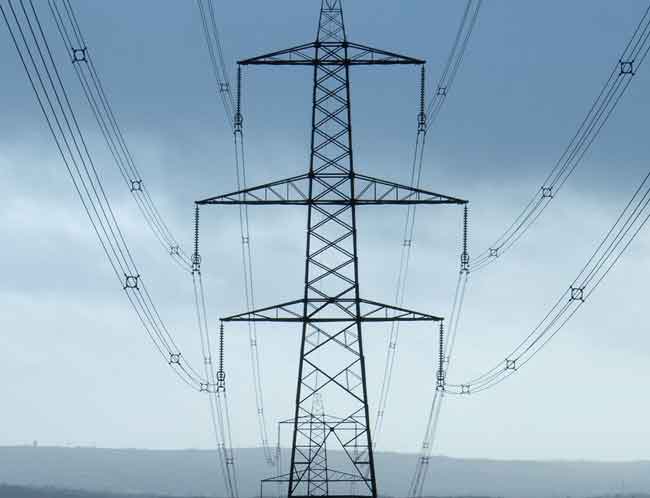
Ukraine has electricity reserves, no more outages planned if no new strikes

Ukraine Electricity Outages may pause as the grid stabilizes, with energy infrastructure repairs, generators, and reserves supporting supply; officials cite no rationing absent new Russian strikes, while Odesa networks recover and Ukrenergo completes restoration works.


Key Points

Planned power cuts in Ukraine paused as grid capacity, repairs, and reserves improve, barring new strikes.

✅ No rationing if Russia halts strikes on energy infrastructure

✅ Grid repairs and reserves meet demand for third straight week

✅ Odesa networks restored; Ukrenergo crews redeploy to repairs


Ukraine plans no more outages to ration electricity if there are no new strikes and has been able to amass some power reserves, the energy minister said on Saturday, as it continues to keep the lights on despite months of interruptions caused by Russian bombings.

"Electricity restrictions will not be introduced, provided there are no Russian strikes on infrastructure facilities," Energy Minister Herman Halushchenko said in remarks posted on the ministry's Telegram messaging platform.

"Outages will only be used for repairs."

After multiple battlefield setbacks and scaling down its troop operation to Ukraine's east and south, Russia in October began bombing the country's energy infrastructure, as winter loomed over the battlefront, leaving millions without power and heat for days on end.

The temperature in winter months often stays below freezing across most of Ukraine. Halushchenko said this heating season has been extremely difficult.

"But our power engineers managed to maintain the power system, and for the third week in a row, electricity generation has ensured consumption needs, we have reserves," Halushchenko said.

Ukraine, which does not produce power generators itself, has imported and received thousands of them over the past few years, with the U.S. pledging a further $10 billion on Friday to aid Kyiv's energy needs, despite ended grid restoration support reported earlier.

Separately, the chief executive of state grid operator Ukrenergo, Volodymyr Kudrytskyi, said that repair works on the damaged infrastructure in the city of Odesa suffered earlier this month, has been finished, highlighting how Ukraine has even helped Spain amid blackouts while managing its own network challenges.

"Starting this evening, there is more light in Odesa," Kudrytskyi wrote on his Facebook page. "The crews that worked on restoring networks are moving to other facilities."

A Feb. 4 fire that broke out at an overloaded power station left hundreds of thousands of residents without electricity, prompting many to adopt new energy solutions to cope with outages.


Related News

View more

Hydro Quebec to increase hydropower capacity to more than 37,000 MW in 2021

Hydro Quebec transmission expansion aims to move surplus hydroelectric capacity from record reservoirs to the US grid via new interties, increasing exports to New England and New York amid rising winter peak demand.


Key Points

A plan to add capacity and intertie links to export surplus hydro power from Quebec's reservoirs to the US grid.

✅ 245 MW added in 2021; portfolio reaches 37,012 MW

✅ Reservoirs at unprecedented levels; export potential high

✅ Lacks US transmission; working on new interties


Hydro Quebec plans to add an incremental 245 MW of hydro-electric generation capacity in 2021 to its expansive portfolio in the north of the province, while Quebec authorized nearly 1,000 MW for industrial projects across the region, bringing the total capacity to 37,012 MW, an official said Friday

Quebec`s highest peak demand of 39,240 MW occurred on January 22, 2014.

A little over 75% of Quebec`s population heat their homes with electricity, Sutherland said, aligning with Hydro Quebec's strategy to wean the province off fossil fuels over time.

The province-owned company produced 205.1 TWh of power in 2017 and its net exports were 34.4 TWh that year, while Ontario chose not to renew a power deal in a separate development.

Sutherland said Hydro Quebec`s reservoirs are currently at "unprecedented levels" and the company could export more of its electricity to New England and New York, but faces transmission constraints that limit its ability to do so.

Hydro Quebec is working with US transmission developers, electric distribution companies, independent system operators and state government agencies to expand that transmission capacity in order to delivery more power from its hydro system to the US, Sutherland said.

Separately, NB Power signed three deals to bring more Quebec electricity into the province, reflecting growing regional demand.

The last major intertie connection between Quebec and the US was completed close to 30 years ago. The roughly 2,000 MW capacity transmission line that connects into the Boston area was completed in the late 1990s, according to Hydro Quebec spokeswoman Lynn St-Laurent.


Related News

View more

Are major changes coming to your electric bill?

California Income-Based Electricity Rates propose a fixed monthly fee set by income as utilities and the CPUC weigh progressive pricing, aiming to cut low-income bills while PG&E, SCE, and SDG&E retain usage-based charges.


Key Points

CPUC plan adds income-tiered fixed fees to lower low-income bills while keeping per-kWh usage charges.

✅ Adds fixed monthly fees by income to complement per-kWh charges

✅ Cuts bills for low-income households; higher earners pay more

✅ Utilities say revenue neutral; conservation signals preserved


California’s electric bills — already some of the highest in the nation — are rising as electricity prices soar across the state, but regulators are debating a new plan to charge customers based on their income level. 

Typically what you pay for electricity depends on how much you use. But the state’s three largest electric utilities — Southern California Edison Company, Pacific Gas and Electric Company and San Diego Gas & Electric Company — have proposed a plan to charge customers not just for how much energy they use, but also based on their household income, moving toward income-based flat-fee utility bills over time. Their proposal is one of several state regulators received designed to accommodate a new law to make energy less costly for California’s lowest-income customers.

Some state Republican lawmakers are warning the changes could produce unintended results, such as weakening incentives to conserve electricity or raising costs for customers using solar energy, and some have introduced a plan to overturn the charges in the Legislature.

But the utility companies say the measure would reduce electricity bills for the lowest income customers. Those residents would save about $300 per year, utilities estimate.

California households earning more than $180,000 a year would end up paying an average of $500 more a year on their electricity bills, according to the proposal from utility companies. 

The California Public Utilities Commission’s deadline for deciding on the suggested changes is July 1, 2024, as regulators face calls for action from consumers and advocates. The proposals come at a time when many moderate and low-income families are being priced out of California by rising housing costs.  

Who wants to change the fee structure?
Lawmakers passed and Gov. Gavin Newsom signed a comprehensive energy bill last summer that mandates restructuring electricity pricing across the state. 

The Legislature passed the measure in a “trailer-bill” process that limited deliberation. Included in the 21,000-word law are a few sentences requiring the public utilities commission to establish a “fixed monthly fee” based on each customer’s household income. 

A similar idea was first proposed in 2021 by researchers at UC Berkeley and the nonprofit thinktank Next 10. Their main recommendation was to split utility costs into two buckets. Fixed charges, which everyone has to pay just to be connected to the energy grid, would be based on income levels. Variable charges would depend on how much electricity you use.

Utilities say that part of customers’ bills still will be based on usage, but the other portion will reduce costs for lower- and middle-income customers, who “pay a greater percentage of their income towards their electricity bill relative to higher income customers,” the utilities argued in a recent filing. 

They said the current billing system is unjust, regressive and fails to recognize differences in energy usage among households,

“When we were putting together the reform proposal, front and center in our mind were customers who live paycheck to paycheck, who struggle to pay for essentials such as energy, housing and food,” Caroline Winn, CEO of San Diego Gas & Electric in a statement. 

The utilities say in their proposal that the changes likely would not reduce or increase their revenues.

James Sallee, an associate professor at UC Berkeley, said the utilities’ prior system of billing customers mostly by measuring their electric use to pay for what are essentially fixed costs for power is inefficient and regressive. 

The proposed changes “will shift the burden, on average, to a more progressive system that recovers more from higher income households and less from lower income households,” he said.


Related News

View more

Manitoba looking to raise electricity rates 2.5 per cent each year for 3 years

Manitoba Hydro Rate Increase sets electricity rates up 2.5% annually for three years via Bill 35, bypassing PUB hearings, citing Crown utility debt and pandemic impacts, with legislature debate and a multi-year regulatory review ahead.


Key Points

A government plan to lift electricity rates 2.5% annually over three years via Bill 35, bypassing PUB hearings.

✅ 2.5% annual hikes for three years set in legislation

✅ Bypasses PUB rate hearings during pandemic recovery

✅ Targets Crown utility debt; multi-year review planned


The Manitoba government is planning to raise electricity rates, with Manitoba Hydro scaling back next year, by 2.5 per cent a year over the next three years.

Finance Minister Scott Fielding says the increases, to be presented in a bill before the legislature, are the lowest in a decade and will help keep rates among the lowest in Canada, even as SaskPower's 8% hike draws scrutiny in a neighbouring province.

Crown-owned Manitoba Hydro had asked for a 3.5 per cent increase this year, similar to BC Hydro's 3% rise, to help pay off billions of dollars in debt.

“The way we figured this out, we looked at the rate increases that were approved by PUB (Public Utilities Board) over the last ten years, (and) we went to 75 per cent of that,” Fielding said during a Thursday morning press conference.

“It’s a pandemic, we know that there’s a lot of people that are unemployed, that are struggling, we know that businesses need to recharge after the business (sic), so this will provide them an appropriate break.”

Electricity rates are normally set by the Public Utilities Board, a regulatory body that holds rate hearings and examines the Crown corporation’s finances.

The Progressive Conservative government has temporarily suspended the regulatory process and has set rates itself, while Ontario rate legislation to lower rates moved forward in its jurisdiction.

Manitoba Liberal leader Dougald Lamont was quick to condemn the move, noting parallels to Ontario price concerns before saying in a news release the PCs “are abusing their power and putting Hydro’s financial future at risk by fixing prices in the hope of buying some political popularity.”

“Hydro’s rates should be set by the PUB after public hearings, not figured out on the back of a napkin in the Premier’s office,” Lamont wrote.

Fielding noted the increase would appear as an amendment to Bill 35, which will appear in the legislature this fall, as BC Hydro plans multi-year increases proceed elsewhere.

“All members of the legislative assembly will vote and debate this rate increase on Bill 35,” Fielding said.

“This will give the PUB time to implement reforms, and allow the utilities to prepare a more rigorous, multi-year review application process.”


Related News

View more

Canada to spend $2M on study to improve Atlantic region's electricity grid

Atlantic Clean Power Superhighway outlines a federally backed transmission grid upgrade for Atlantic Canada, adding 2,000 MW of renewable energy via interprovincial ties, improved hydro access from Quebec and Newfoundland and Labrador, with utility-regulator funding.


Key Points

A federal-provincial plan upgrading Atlantic Canada's grid to deliver 2,000 MW of renewables via interprovincial links.

✅ $2M technical review to rank priority transmission projects

✅ Target: add 2,000 MW renewable power to Atlantic grid

✅ Cost-sharing by utilities, regulators, and federal-provincial funding


The federal government will spend $2 million on an engineering study to improve the Atlantic region's electricity grid.

The study was announced Friday at a news conference held by 10 federal and provincial politicians at a meeting of the Atlantic Growth Strategy in Halifax, which includes ongoing regulatory reform efforts for cleaner power in Atlantic Canada.

The technical review will identify the most important transmission projects including inter-provincial ties needed to move electricity across the region.

Nova Scotia Premier Stephen McNeil said the results are expected in July.

Provinces will apply to the federal government for federal funding to build the infrastructure. Utilities in each province will be expected to pay some portion of the cost by applying to respective regulators, but what share falls to ratepayers is not known.

​Federal Intergovernmental Affairs Minister Dominic LeBlanc characterized the grid improvements as something that will cost hundreds of millions of dollars.

He said the study was the first step toward "a clean power superhighway across the region.

"We have a historic opportunity to quickly get to work on upgrading ultimately a whole series of transmission links of inter-provincial ties. That's something that the government of Canada would be anxious to work with in terms of collaborating with the provinces on getting that right."

Premier McNeil referred specifically to improving hydro access from Quebec and Newfoundland and Labrador.

For context, a massive cross-border hydropower line to New York is planned, illustrating the scale of projects under consideration.


Goal of 2,000 megawatts

McNeil said the goal was to bring an additional 2,000 megawatts of renewable electricity into the region.

"I can't stress to you enough how critical this will be for the future economic success and stability of Atlantic Canada, especially as Atlantic grids face intensifying storms," he said.

Federal Immigration Minister Ahmed Hussen also announced a pilot project to attract immigrant workers will be extended by two years to the end of 2021.

International graduate students will be given 24 months to apply under the program — a one-year increase.


Related News

View more

China to build 2,000-MW Lawa hydropower station on Jinsha River

Lawa Hydropower Station approved on the Jinsha River, a Yangtze tributary, delivers 2,000 MW via four units; 784 ft dam, 12 sq mi reservoir, Sichuan-Tibet site, US$4.59b investment, Huadian stake, renewable energy generation.


Key Points

A 2,000 MW dam project on the Jinsha River with four units, a 784 ft barrier, and 8.36 billion kWh annual output.

✅ Sichuan-Tibet junction on the Jinsha River

✅ 2,000 MW capacity; four turbine-generator units

✅ 8.36 bn kWh/yr; US$4.59b total; Huadian 48% stake


China has approved construction of the 2,000-MW Lawa hydropower station, a Yangtze tributary hydropower project on the Jinsha River, multiple news agencies are reporting.

Lawa, at the junction of Sichuan province and the Tibet autonomous region, will feature a 784-foot-high dam and the reservoir will submerge about 12 square miles of land. The Jinsha River is a tributary of the Yangtze River, and the project aligns with green hydrogen development in China.

The National Development and Reform Commission of the People’s Republic of China, which also guides China's nuclear energy development as part of national planning, is reported to have said that four turbine-generator units will be installed, and the project is expected to produce about 8.36 billion kWh of electricity annually.

Total investment in the project is to be US$4.59 billion, and Huadian Group Co. Ltd. will have a 48% stake in the project, reflecting overseas power infrastructure activity, with minority stakes held by provincial firms, according to China Daily.

In other recent news in China, Andritz received an order in December 2018 to supply four 350-MW reversible pump-turbines and motor-generators, alongside progress in compressed air generation technologies, for the 1,400-MW ZhenAn pumped storage plant in Shaanxi province.


Related News

View more

Sign Up for Electricity Forum’s Newsletter

Stay informed with our FREE Newsletter — get the latest news, breakthrough technologies, and expert insights, delivered straight to your inbox.

Electricity Today T&D Magazine Subscribe for FREE

Stay informed with the latest T&D policies and technologies.
  • Timely insights from industry experts
  • Practical solutions T&D engineers
  • Free access to every issue

Download the 2025 Electrical Training Catalog

Explore 50+ live, expert-led electrical training courses –

  • Interactive
  • Flexible
  • CEU-cerified