NFPA 70B Training - 2026 Edition - Electrical Maintenance Program Compliance
Our customized live online or in‑person group training can be delivered to your staff at your location.

- Live Online
- 12 hours Instructor-led
- Group Training Available
Regular Price:
$699
Coupon Price:
$599
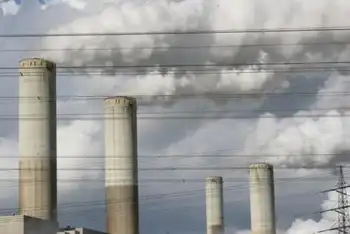
China and Russia, two of the world's major energy consumers and producers, plan to spend US$10 billion over the next five years to build power plants along the Sino-Russian border to satisfy China's surging energy demand.
The planned generators have a total capacity of 10 GW (gigawatts), about 2 per cent of China's installed capacity of 508 GW by the end of last year, according to a statement on the website of the Beijing-based State Grid Corp of China.
"According to the initial plan agreed by both sides, Russian electricity monopoly Unified Energy System (UES) will work with its Chinese counterpart to build a string of power stations in the Far East region bordering China, and export the electricity back to China," the statement said.
If successful, the project will have an annual output of 60 billion kilowatt-hours, twice the current electricity production in Russia' Far East area, it said.
But an unnamed source close to the situation said that the project remains at a preliminary stage, adding that it will take some time for it to bear fruit.
The source said electricity tariffs are a key factor in the two- party negotiations, and a consensus has yet to be reached on the investment and ownership of the power stations to be built in Russia.
Russian daily newspaper Kommersant reported that Russia would pull out of the project if it considered the price at which it would sell the electricity unattractive.
Most of the planned power plants will depend on coal, which will be supplied by the Siberian Coal Energy Co. China will provide the plants with equipment, the Russian newspaper said.
It added that the cross-border power project is being implemented according to a memorandum agreed in March between UES CEO Anatoly Chubais and Liu Zhenya, president of China's State Grid, but is subject to the approval of Russian Prime Minister Mikhail Fradkov during his visit to China in November.
Although industry insiders expect the pressure to ease off from China's electricity supply market in the near future after four straight years of shortages, the nation's demand for power will remain robust.
"China's electricity demand will continue its fast growth in the coming years," said Bai Jianhua, a senior analyst at the Beijing- based State Power Economic Research Centre.
Bai added that, "the relative lack of coal resources in Northeast China means there is a great need to import electricity from neighbouring nations."
The nation's electricity consumption is expected to grow by 12 per cent this year, after the world's fourth-biggest economy expanded 10.9 per cent in the first half of the year, according to figures from the China Electricity Council, the consortium of China's power companies.
In similar moves, State Grid revealed in June that it would import electricity from Mongolia and Kazakhstan by building power plants overseas.
The preliminary plan in Mongolia is to build three power plants, each with an installed capacity of 3.6 GW, with the first plant expected to become operational by 2010, Liu Zhaoshao, State Grid's chief economist said in June.
The combined capacity of the Mongolian plants is similar to those being planned in Russia's Far East.
Related News
Turning thermal energy into electricity
Near-Field Thermophotovoltaics captures radiated energy across a nanoscale gap, using thin-film photovoltaic cells and indium…
View more

A Texas-Sized Gas-for-Electricity Swap
Texas Heat Pump Electrification replaces natural gas furnaces with electric heating across ERCOT, cutting carbon…
View more
Reload.Land 2025: Berlin's Premier Electric Motorcycle Festival Returns
Reload.Land 2025 returns to Berlin with electric motorcycles, e-scooters, test rides, a conference on sustainability,…
View more
Drought, lack of rain means BC Hydro must adapt power generation
BC Hydro drought operations address climate change impacts with hydropower scheduling, reservoir management, water conservation,…
View more
Electric cars will challenge state power grids
Electric Vehicle Grid Integration aligns EV charging with grid capacity using smart charging, time-of-use rates,…
View more
We Need a Total Fossil Fuel Lockdown for a Climate Revolution
Renewables 2020 Global Status Report highlights renewable energy gaps beyond power, urging decarbonization in heating,…
View more
Sign Up for Electricity Forum’s Newsletter
Stay informed with our FREE Newsletter — get the latest news, breakthrough technologies, and expert insights, delivered straight to your inbox.
Electricity Today T&D Magazine Subscribe for FREE
Stay informed with the latest T&D policies and technologies.
- Timely insights from industry experts
- Practical solutions T&D engineers
- Free access to every issue
