CSA Z462 Arc Flash Training - Electrical Safety Compliance
Our customized live online or in‑person group training can be delivered to your staff at your location.

- Live Online
- 6 hours Instructor-led
- Group Training Available
Regular Price:
$249
Coupon Price:
$199
Unionized workers at South Korea's five power generation companies went on strike early September 4 after failing to reach an agreement with management on demands for better working conditions and the reinstatement of fired colleagues.
"As of 0130 (local time), we launched the strike since the management has shown no desire to negotiate and only resorted to government intervention," said a spokesman of the Korean Power Plant Industry Union. The union has been threatening to launch a general strike since last week and has been holding talks with management from August.
The walkout is only the second such action by local power company employees, following a 32-day strike that took place in 2002.
The umbrella union, made up of 6,500 members belonging to five regional power companies, was created after the five - Korea Midland Power Co., Korea Namdong Electrics, Korea Western Power Co., Korea Southern Power Co. and Korea East-West Power Co. - split from state-owned Korea Electric Power Corp. (KEPCO) in 2001.
The spokesman added that the unionized workers are willing to continue talks and maintain a channel with management to discuss outstanding issues.
The strike came despite the National Labour Relations Commission's decision on September 3 to have the government arbitrate the labour dispute, which will require the unionized workers to suspend their walkout.
The move by the labour commission automatically makes it mandatory for workers to suspend any strike for 15 days pending further negotiations. If no breakthrough is made at the talks, both labour and management must accept an arbitration ruling by the commission.
Regarding the strike, the government and the five power companies said most of the key demands were not up for negotiations.
Among the demands, the government said the union's request for the creation of a single power company, removal of the wage cap for state-run companies and a move to a three-shift work system were not acceptable. The reinstatement of laid-off workers was also not possible since their dismissal has been approved by the Supreme Court, it said.
The Ministry of Commerce, Industry and Energy held an emergency meeting of power company representatives Sunday and reiterated its stance that union demands were unacceptable. It added that about 3,500 emergency workers will be mobilized to compensate for striking unionists.
"The government will deal strictly with those that take part in any illegal strike," said vice energy minister Lee Won-geol. He told workers at the emergency situation room set up at KEPCO headquarters in Seoul earlier in the day, that every effort will be made to end the strike as quickly as possible and to make certain that electricity supply will not be disrupted.
The official said more attention should be paid to keep striking workdrs out of key power control stations, including the Korea Power Exchange.
The power companies ordered all striking workers to return to their posts by 1300 (local time) or face disciplinary action, and claimed some union members are have already returned to duty in places like Ulsan. They said judging by past experience, the strike will not affect power supply.
"Even during the last strike in 2002, there were no problems with electricity supply," said a manager at a Incheon power plant.
The police have also requested the court to issue arrest warrants for 20 union leaders who organized the walkout, and said they are preparing to dissolve all illegal gatherings.
Around 2,200 unionists staged a rally in downtown Seoul on September 3, and moved to Korea University campus where they stayed overnight. Police said the workers are currently moving to a local park, with union leaders threatening to call more workers to join the protest.
Related News
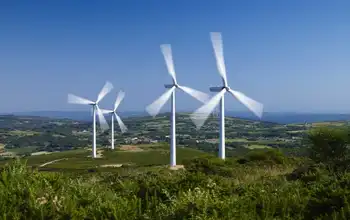
Spain's power demand in April plummets under COVID-19 lockdown
Spain Electricity Demand April 2020 saw a 17.3% year-on-year drop as COVID-19 lockdown curbed activity;…
View more
Hydro One launches Ultra-Low Overnight Electricity Price Plan
Ultra-Low Overnight Price Plan delivers flexible electricity pricing from Hydro One and the Ontario Energy…
View more
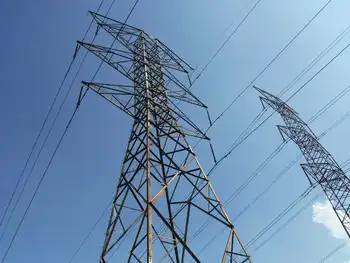
Canada expected to miss its 2035 clean electricity goals
Canada 2035 Clean Electricity Target faces a 48.4GW shortfall as renewable capacity lags; accelerating wind,…
View more
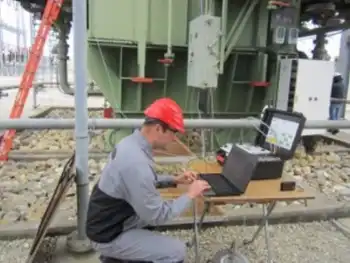
Substation Maintenance Training
Substation Maintenance Training delivers live online instruction on testing switchgear, circuit breakers, transformers, protective relays,…
View more

Group to create Canadian cyber standards for electricity sector IoT devices
Canadian Industrial IoT Cybersecurity Standards aim to unify device security for utilities, smart grids, SCADA,…
View more

Alliant aims for carbon-neutral electricity, says plans will save billions for ratepayers
Alliant Energy Net-Zero Carbon Plan outlines carbon-neutral electricity by 2050, coal retirements by 2040, major…
View more
Sign Up for Electricity Forum’s Newsletter
Stay informed with our FREE Newsletter — get the latest news, breakthrough technologies, and expert insights, delivered straight to your inbox.
Electricity Today T&D Magazine Subscribe for FREE

Stay informed with the latest T&D policies and technologies.
- Timely insights from industry experts
- Practical solutions T&D engineers
- Free access to every issue
