Squirrel causes hourlong outage

By Fairbanks Daily NewsMiner


NFPA 70b Training - Electrical Maintenance

Our customized live online or in‑person group training can be delivered to your staff at your location.
  • Live Online
  • 12 hours Instructor-led
  • Group Training Available
Regular Price:
$699
Coupon Price:
$599
Reserve Your Seat Today
A trespassing squirrel caused an hourlong power outage in west Fairbanks recently that left 1,300 Golden Valley Electric Association members without electricity and shut down the University of Alaska FairbanksÂ’ computer system most of the day.

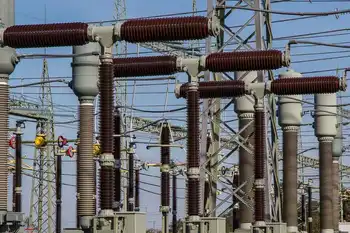
The squirrel, which was electrocuted, caused a short circuit in the electric companyÂ’s University Avenue substation, according GVEA public relations officer Corinne Bradish. A small fire was extinguished quickly, she said.

The outage occurred at 10:17 a.m., and all 1,300 GVEA members affected were back on line by 11:20 a.m., Bradish said.

“The substation was quickly isolated, and loads were switched to adjacent substations to help us restore power,” Bradish wrote in an email. “Arcing caused damage to bushings in the substation, which our crews replaced.”

The outage triggered an unfortunate domino effect for UAF, spokeswoman Marmian Grimes said.

Several people were trapped in elevators in Moore and Signers halls, but the fire department got them out quickly, she said.

Shortly after the outage, the main turbine in the UAF power plant overheated and had to be shut down, Grimes said. The power plant was trying to feed power into the Golden Valley grid, but a relay didnÂ’t open because of the outage and the turbine overheated, she said.

The loss of the main turbine caused UAFÂ’s central heating, which supplies heat and hot water to campus buildings, to go off line, forcing UAF to switch to Golden Valley for all its electrical needs. Backup turbines were employed to recharge the steam system, a process that was expected to be complete this month. The main turbine has already returned to service, Grimes said.

The outage also caused UAFÂ’s computer system to crash because the electric cooling system for the main computers went down. The schoolÂ’s information technology department was working to get the systemÂ’s servers back on line.

The outage also knocked out six traffic lights on the west side of town, according to state Department of Transportation spokeswoman Meadow Bailey.

Lights at the intersections of the Johansen Expressway and Peger Road, University Avenue and Airport Way, Airport Way and Washington Drive, University Avenue and College Road, Farmers Loop and North Tanana Drive, and Farmers Loop and Ballaine Road were out of commission for about an hour.

No accidents were reported as a result of the lights being out of service, Bailey said.

While squirrels commonly cause problems by running along electrical wires around town, Bradish said it’s “very uncommon” to have problems inside substations because they are fenced in and there are no trees.

“Squirrel activity is more common out on our distribution lines, as they will run along the wires,” Bradish wrote.

GVEA installs “squirrel guards” on distribution lines to reduce outages caused by squirrels stepping from the wire to the pole, which causes a short circuit because they become a conductor for electricity. The squirrel guard is an insulator on the wire that the squirrel crawls over to prevent it from touching the hot wire and the pole at the same time.

Related News

Energy authority clears TEPCO to restart Niigata nuclear plant

TEPCO Kashiwazaki-Kariwa restart plan clears NRA fitness review, anchored by a seven-point safety code, Niigata consent, Fukushima lessons, seismic risk analysis, and upgrades to No. 6 and No. 7 reactors, each rated 1.35 GW.


Key Points

TEPCO's plan to restart Kashiwazaki-Kariwa under NRA rules, pending Niigata consent and upgrades to Units 6 and 7.

✅ NRA deems TEPCO fit; legally binding seven-point safety code

✅ Local consent required: Niigata review of evacuation and health impacts

✅ Initial focus on Units 6 and 7; 1.35 GW each, seismic upgrades


Tokyo Electric Power Co. cleared a major regulatory hurdle toward restarting a nuclear power plant in Niigata Prefecture, but the utility’s bid to resume its operations still hangs in the balance of a series of political approvals.

The government’s nuclear watchdog concluded Sept. 23 that the utility is fit to operate the plant, based on new legally binding safety rules TEPCO drafted and pledged to follow, even as nuclear projects worldwide mark milestones across different regulatory environments today. If TEPCO is found to be in breach of those regulations, it could be ordered to halt the plant’s operations.

The Nuclear Regulation Authority’s green light now shifts the focus over to whether local governments will agree in the coming months to restart the Kashiwazaki-Kariwa plant.

TEPCO is keen to get the plant back up and running. It has been financially reeling from the closure of its nuclear plants in Fukushima Prefecture following the triple meltdown at the Fukushima No. 1 nuclear plant in 2011 triggered by the earthquake and tsunami disaster.

In parallel, Japan is investing in clean energy innovations such as a large hydrogen system being developed by Toshiba, Tohoku Electric Power and Iwatani.

The company plans to bring the No. 6 and No. 7 reactors back online at the Kashiwazaki-Kariwa nuclear complex, which is among the world’s largest nuclear plants, amid China’s nuclear energy continuing on a steady development track in the region.

The two reactors each boast 1.35 gigawatts in output capacity, while Kenya’s nuclear plant aims to power industry as part of that country’s expansion. They are the newest of the seven reactors there, first put into service between 1996 and 1997.

TEPCO has not revealed specific plans yet on what to do with the older five reactors.

In 2017, the NRA cleared the No. 6 and No. 7 reactors under the tougher new reactor regulations established in 2013 in response to the Fukushima nuclear disaster, while jurisdictions such as Ontario support continued operation at Pickering under strict oversight.

It also closely scrutinized the operator’s ability to run the Niigata Prefecture plant safely, given its history as the entity responsible for the nation’s most serious nuclear accident.

After several rounds of meetings with top TEPCO managers, the NRA managed to hold the utility’s feet to the fire enough to make it pledge, in writing, to abide by a new seven-point safety code for the Kashiwazaki-Kariwa plant.

The creation of the new code, which is legally binding, is meant to hold the company accountable for safety measures at the facility.

“As the top executive, the president of TEPCO will take responsibility for the safety of nuclear power,” one of the points reads. “TEPCO will not put the facility’s economic performance above its safety,” reads another.

The company promised to abide by the points set out in writing during the NRA’s examination of its safety regulations.

TEPCO also vowed to set up a system where the president is directly briefed on risks to the nuclear complex, including the likelihood of earthquakes more powerful than what the plant is designed to withstand. It must also draft safeguard measures to deal with those kinds of earthquakes and confirm whether precautionary steps are in place.

The utility additionally pledged to promptly release public records on the decision-making process concerning crucial matters related to nuclear safety, and to preserve the documents until the facility is decommissioned.

TEPCO plans to complete its work to reinforce the safety of the No. 7 reactor in December. It has not set a definite deadline for similar work for the No. 6 reactor.

To restart the Kashiwazki-Kariwa plant, TEPCO needs to obtain consent from local governments, including the Niigata prefectural government.

The prefectural government is studying the plant’s safety through a panel of experts, which is reviewing whether evacuation plans are adequate as off-limits areas reopen and the health impact on residents from the Fukushima nuclear disaster.

Niigata Governor Hideyo Hanazumi said he will not decide on the restart until the panel completes its review.

The nuclear complex suffered damage, including from fire at an electric transformer, when an earthquake it deemed able to withstand hit in 2007.


Related News

View more

Norway Considers Curbing Electricity Exports to Avoid Shortages

Norway Electricity Export Limits weigh hydro reservoirs, energy security, EU-UK interconnectors, and record power prices amid Russia gas cuts; Statnett grid constraints and subsidies debate intensify as reservoir levels fall, threatening winter supply.


Key Points

Rules to curb Norway's power exports when reservoirs are very low, protecting supply security and easing extreme prices.

✅ Triggered by low hydro levels and record day-ahead prices

✅ Considers EU/UK cables, Statnett operations, seasonal thresholds

✅ Aims to secure winter supply and expand subsidies


Norway, one of Europe’s biggest electricity exporters, is considering measures to limit power shipments to prevent domestic shortages amid surging prices, according to local media reports.

The government may propose a rule to limit exports if the water level for Norway’s hydro reservoirs drops to “very low” levels, to ensure security of supply, said Energy Minister Terje Aasland, according NTB newswire. The limit would take account of seasonality and would differ across the about 1,800 hydro reservoirs, he said. 

Russia’s gas supply cuts in retaliation for European sanctions over the war in Ukraine have triggered the continent’s worst energy crisis in decades, with demand surging for cheap Norwegian hydro electricity. Yet the government faces increasing calls from the public and opposition to limit flows abroad. Prices are near record levels in some parts of the Nordic nation as hydro-reservoir levels have plunged in the south after a drier-than-normal spring. 

The government has been under pressure to do something about exports since before April. Flows on the cables are regulated by deals with both the European Union and the UK energy market and Norway can’t simply cut flows. It’s the latest test of European solidarity and a wake-up call for Europe when it comes to energy supplies. Hungary is trying to ban energy exports after it declared an energy emergency.

Back in May, grid operator Statnett SF warned that Norway could face a strained power situation after less snowfall than usual during the winter. At the end of last week, the level of filling in Norwegian hydro reservoirs was 66.5%, compared with a median 74.9% for the corresponding time in 2002-2021, regulator NVE said. Day-ahead electricity prices in southwest Norway soared to a record 423 euros per megawatt-hour late last month, partly due to bottlenecks in the grid limiting supply from the northern regions.

The grid operator has been asked to present by Oct. 1 possible measures that need to be taken to secure supply and infrastructure security ahead of the winter. Statnett operates cables to the UK and Germany aimed at selling surplus electricity and would likely take a financial hit if curbs were introduced. “Operations of these will always follow current laws and regulations,” Irene Meldal, a company spokeswoman, said Friday by email. 

Premier Jonas Gahr Store signaled his minority government will file proposals that also include more subsidies to families and companies and align with Europe’s emergency price measures during August, according to an interview with TV2 on Thursday. Meanwhile, opposition politicians plan to hold an extraordinary parliament meeting to discuss boosting the subsidies.

Aasland will summon the parties’ representatives to a meeting on Monday on the electricity crisis, the Aftenposten newspaper reported on Friday, without citing anyone. He intends to inform the parties about the ongoing work and aims to “avoid rushed decisions” by the parliamentary majority.

Norway Faces Pressure to Curb Power Exports as Prices Surge (1)

The nation gets almost all of its electricity from its vast hydro resources. Historically, it has been able to export a hefty surplus and still have among the lowest prices in Europe. 


Related News

View more

Electricity Payouts on Biggest U.S. Grid Fall 64 Per Cent in Auction

PJM Capacity Auction Price Drop signals PJM Interconnection capacity market shifts, with $50/MW-day clearing, higher renewables and nuclear participation, declining coal, natural gas pressure, and zone impacts in ComEd and EMAAC, amid 21% reserve margins.


Key Points

A decline to $50 per MW-day in PJM capacity prices, shifting resource mix, zonal rates, and reserve margins.

✅ Clearing price fell to $50/MW-day from $140 in 2018

✅ Renewables and nuclear up; coal units down across PJM

✅ Zonal prices: ComEd $68.96, EMAAC $97.86; 21% reserves


Power-plant owners serving the biggest U.S. grid will be paid 64% less next year for being on standby to keep the lights on from New Jersey to Illinois.

Suppliers to PJM Interconnection LLC’s grid, which serves more than 65 million people, will get $50 a megawatt-day to provide capacity for the the year starting June 2022, according to the results of an auction released Wednesday. That’s down sharply from $140 in the previous auction, held in 2018. Analysts had expected the price would fall to about $85.

“Renewables, nuclear and new natural gas generators saw the greatest increases in cleared capacity, while coal units saw the largest decrease,” PJM said in a statement.

The PJM auction is the single most important event for power generators across the eastern U.S., including Calpine Corp., NRG Energy Inc. and Exelon Corp., because it dictates a big chunk of their future revenue. It also plays a pivotal role in shaping the region’s electricity mix, determining how much the region is willing to stick with coal and natural gas plants or replace them with wind and solar even as the aging grid complicates progress nationwide.

The results showed that the capacity price for the Chicago-area zone, known as ComEd, was $68.96 compared with $195.55 in the last auction. The price for the Pennsylvania and New Jersey zone, known as EMAAC, fell to $97.86 percent, from $165.73. All told, 144,477 megawatts cleared, representing a reserve margin of 21%.

Exelon shares fell 0.4% after the results were released. Vistra fell 1.5%. NRG was unchanged.

Blackouts triggered by extreme weather in Texas and California over the last year have reignited a debate over whether other regions should institute capacity systems similar to the one used by PJM, and whether to adopt measures like emergency fuel stock programs in New England as well. The market, which pays generators to be on standby in case extra power is needed, has long been a source of controversy. While it makes the grid more reliable, the system drives up costs for consumers. In the area around Chicago, for instance, these charges total more than $1.7 billion per year, accounting for 20% of customer bills, according to the Illinois Clean Jobs Coalition.

In the 2018 auction, PJM contracted supplies that were about 22% in excess of the peak demand projection at the time. This year, the grid is projected to start summer with a reserve margin of about 26%, as COVID-19 demand shifts persist, according to the market monitor -- far higher than the 16% most engineers say is needed to prevent major outages.

“This certainly doesn’t seem fair to ratepayers,” said Ari Peskoe, director of Harvard Law School’s Electricity Law Initiative.

Fossil-Fuel Advantage
Heading into the auction, analysts expected coal and gas plants to have the advantage. Nuclear reactors and renewables, they said, were poised to struggle amid coal and nuclear disruptions nationwide.

That’s because this is the first PJM auction run under a major pricing change imposed by federal regulators during the Trump administration. The new structure creates a price floor for some bidders, effectively hobbling nuclear and renewables that receive state subsidies while making it easier for fossil fuels to compete.

Those rules triggered contentious wrangling between power providers, PJM and federal regulators, delaying the auction for two years. The new system, however, may be short lived. The Biden administration is moving to overhaul the rules in time for the next auction in December.

Also See: Biden Climate Goals to Take Backseat in Biggest U.S. Power Grid

Dominion Energy Inc., one of the biggest U.S. utility owners, pulled out of the market over the rules. The Virginia-based company, which has a goal to have net-zero carbon emissions by 2050, said the new PJM format will “make renewables more expensive” than delivering clean energy through alternative markets.

Illinois, New Jersey and Maryland have also threatened to leave the capacity market unless the new price floor is eliminated, and Connecticut is leading a market overhaul in New England as well. PJM has already launched a process to do it.

PJM is already one of the most fossil-fuel intensive grids, with 60% of its electricity coming from coal and gas. Power plants that bid into the auction rely on it for the bulk of their revenue. That means plants that win contracts have an incentive to continue operating for as long as they can, even amid a supply-chain crisis this summer.


Related News

View more

Iceland Cryptocurrency mining uses so much energy, electricity may run out

Iceland Bitcoin Mining Energy Shortage highlights surging cryptocurrency and blockchain data center electricity demand, as hydroelectric and geothermal power strain to cool servers, stabilize grid, and meet rapid mining farm growth amid Arctic-friendly conditions.


Key Points

Crypto mining data centers in Iceland are outpacing renewable power, straining the grid and exceeding residential electricity demand.

✅ Hydroelectric and geothermal capacity nearing allocation limits

✅ Cooling-friendly climate draws energy-hungry mining farms

✅ Grid planning and regulation lag rapid data center growth


The value of bitcoin may have stumbled in recent months, but in Iceland it has known only one direction so far: upward. The stunning success of cryptocurrencies around the globe has had a more unexpected repercussion on the island of 340,000 people: It could soon result in an energy shortage in the middle of the Atlantic Ocean.

As Iceland has become one of the world's prime locations for energy-hungry cryptocurrency servers — something analysts describe as a 21st-century gold-rush equivalent — the industry’s electricity demands have skyrocketed, too. For the first time, they now exceed Icelanders’ own private energy consumption, and energy producers fear that they won’t be able to keep up with rising demand if Iceland continues to attract new companies bidding on the success of cryptocurrencies, a concern echoed by policy moves like Russia's proposed mining ban amid electricity deficits.

Companies have flooded Iceland with requests to open new data centers to “mine” cryptocurrencies in recent months, even as concerns mount that the country may have to slow down investments amid an increasingly stretched electricity generation capacity, a dynamic seen in BC Hydro's suspension of new crypto connections in Canada.

“There was a lot of talk about data centers in Iceland about five years ago, but it was a slow start,” Johann Snorri Sigurbergsson, a spokesman for Icelandic energy producer HS Orka, told The Washington Post. “But six months ago, interest suddenly began to spike. And over the last three months, we have received about one call per day from foreign companies interested in setting up projects here.”

“If all these projects are realized, we won’t have enough energy for it,” Sigurbergsson said.

Every cryptocurrency in the world relies on a “blockchain” platform, which is needed to trade with digital currencies. Tracking and verifying a transaction on such a platform is like solving a puzzle because networks are often decentralized, and there is no single authority in charge of monitoring payments. As a result, a transaction involves an immense number of mathematical calculations, which in turn occupy vast computer server capacity. And that requires a lot of electricity, as analyses of bitcoin's energy use indicate worldwide.

The bitcoin rush may have come as a surprise to locals in sleepy Icelandic towns that are suddenly bustling with cryptocurrency technicians, but there’s a simple explanation. “The economics of bitcoin mining mean that most miners need access to reliable and very cheap power on the order of 2 or 3 cents per kilowatt hour. As a result, a lot are located near sources of hydro power, where it’s cheap,” Sam Hartnett, an associate at the nonprofit energy research and consulting group Rocky Mountain Institute, told the Washington Post.

Top financial regulators briefed a Senate panel on Feb. 6 about their work with cryptocurrencies like Bitcoin, and the risks to potential investors. (Reuters)

Located in the middle of the Atlantic Ocean and famous for its hot springs and mighty rivers, Iceland produces about 80 percent of its energy in hydroelectric power stations, compared with about 6 percent in the United States, and innovations such as underwater kites illustrate novel ways to harness marine energy. That and the cold climate make it a perfect location for new data-mining centers filled with servers in danger of overheating.

Those conditions have attracted scores of foreign companies to the remote location, including Germany's Genesis Mining, which moved to Iceland about three years ago. More have followed suit since then or are in the process of moving. 

While some analysts are already sensing a possible new revenue source for the country that is so far mostly known abroad as a tourist haven and low-budget airline hub, others are more concerned by a phenomenon that has so far mostly alarmed analysts because of its possible financial unsustainability, alongside issues such as clean energy's dirty secret that complicate the picture. Some predictions have concluded that cryptocurrency computer operations may account for “all of the world’s energy by 2020” or may already account for the equivalent of Denmark's energy needs. Those predictions are probably too alarmist, though. 

Most analysts agree that the real energy-consumption figure is likely smaller, and several experts recently told the Washington Post that bitcoin — currently the world's biggest cryptocurrency — used no more than 0.14 percent of the world’s generated electricity, as of last December. Even though global consumption may not be as significant as some have claimed, it still presents a worrisome drain for a tiny country such as Iceland, where consumption suddenly began to spike with almost no warning — and continues to grow fast.

Some networks are considering or have already pushed through changes to their protocols, designed to reduce energy use. But implementing such changes for the leading currency, bitcoin, won't be as easy because it is inherently decentralized. The companies that provide the vast amounts of computing power needed for these transactions earn a small share, comparable to a processing fee or a reward.

They are the source of the Icelandic bitcoin miners’ income — a revenue source that many Icelanders are still not quite sure what to make of, especially if the lights start flickering.


Related News

View more

Seven small UK energy suppliers must pay renewables fees or risk losing licence

Ofgem Renewables Obligations drive supplier payments for renewables fees, feed-in tariffs, and renewable generation, with non-payment risking supply licences amid the price cap and volatile wholesale prices across the UK energy market.


Key Points

Mandatory payments by suppliers funding renewables via feed-in tariffs; non-payment can trigger supply licence revoking.

✅ Covers Renewables Obligation and Feed-in Tariff scheme compliance.

✅ Non-payment can lead to Ofgem action and licence loss.

✅ Affected by price cap and wholesale price volatility.


Seven small British energy suppliers owe a total of 34 million pounds ($43.74 million) in renewables fees, amid a renewables backlog that has stalled projects, and could face losing their supply licences if they cannot pay, energy regulator Ofgem reports.

Under Britain’s energy market rules, suppliers of energy must meet so-called renewables obligations and feed-in tariffs, including households' ability to sell solar power back to energy firms, which are imposed on them by the government to help fund renewable power generation.

Several small energy companies have gone bust over the past two years, a trend echoed by findings from a global utility study on renewable priorities, as they struggled to pay the renewables fees and as their profits were affected by a price cap on the most commonly used tariffs and fluctuating wholesale prices, even as a 10 GW contract brings new renewable capacity onto the UK grid.

Ofgem has called on the companies to make necessary payments by Oct. 31, as moves to offer community-generated power to all UK customers progress.

“If they do not pay Ofgem could start the process of revoking their licences to supply energy,” it said in a statement, as offshore wind power continues to scale nationwide.

The seven suppliers are, amid debates over clean energy impacts, Co-Operative Energy Limited; Flow Energy Limited; MA Energy Limited; Nabuh Energy Limited; Robin Hood Energy Limited; Symbio Energy Limited and Tonik Energy Limited. ($1 = 0.7773 pounds)


Related News

View more

California electricity pricing changes pose an existential threat to residential rooftop solar

California Rooftop Solar Rate Reforms propose shifting net metering to fixed access fees, peak-demand charges, and time-of-use pricing, aligning grid costs, distributed generation incentives, and retail rates for efficient, least-cost electricity and fair cost recovery.


Key Points

Policies replacing net metering with fixed fees, demand charges, and time-of-use rates to align costs and incentives.

✅ Large fixed access charge funds grid infrastructure

✅ Peak-demand pricing reflects capacity costs at system peak

✅ Time-varying rates align marginal costs and emissions


The California Public Service Commission has proposed revamping electricity rates for residential customers who produce electricity through their rooftop solar panels. In a recent New York Times op‐​ed, former Governor Arnold Schwarzenegger argued the changes pose an existential threat to residential rooftop solar. Interest groups favoring rooftop solar portray the current pricing system, often called net metering, in populist terms: “Net metering is the one opportunity for the little guy to get relief, and they want to put the kibosh on it.” And conventional news coverage suggests that because rooftop solar is an obvious good development and nefarious interests, incumbent utilities and their unionized employees, support the reform, well‐​meaning people should oppose it. A more thoughtful analysis would inquire about the characteristics and prices of a system that supplies electricity at least cost.

Currently, under net metering customers are billed for their net electricity use plus a minimum fixed charge each month. When their consumption exceeds their home production, they are billed for their net use from the electricity distribution system (the grid) at retail rates. When their production exceeds their consumption and the excess is supplied to the grid, residential consumers also are reimbursed at retail rates. During a billing period, if a consumer’s production equaled their consumption their electric bill would only be the monthly fixed charge.

Net metering would be fine if all the fixed costs of the electric distribution and transmission systems were included in the fixed monthly charge, but they are not. Between 66 and 77 percent of the expenses of California private utilities do not change when a customer increases or decreases consumption, but those expenses are recovered largely through charges per kWh of use rather than a large monthly fixed charge. Said differently, for every kWh that a PG&E solar household exported into the grid in 2019, it saved more than 26 cents, on average, while the utility’s costs only declined by about 8 cents or less including an estimate of the pollution costs of the system’s fossil fuel generators. The 18‐​cent difference pays for costs that don’t change with variation in a household’s consumptions, like much of the transmission and distribution system, energy efficiency programs, subsidies for low‐​income customers, and other fixed costs. Rooftop solar is so popular in California because its installation under a net metering system avoids the 18 cents, creating a solar cost shift onto non-solar customers. Rooftop solar is not the answer to all our environmental needs. It is simply a form of arbitrage around paying for the grid’s fixed costs.

What should electricity tariffs look like? This article in Regulation argues that efficient charges for electricity would consist of three components: a large fixed charge for the distribution and transmission lines, meter reading, vegetation trimming, etc.; a peak‐​demand charge related to your demand when the system’s peak demand occurs to pay for fixed capacity costs associated with peak use; and a charge for electricity use that reflects the time‐ and location‐​varying cost of additional electricity supply.

Actual utility tariffs do not reflect this ideal because of political concerns about the effects of large fixed monthly charges on low‐​income customers and the optics of explaining to customers that they must pay 50 or 60 dollars a month for access even if their use is zero. Instead, the current pricing system “taxes” electricity use to pay for fixed costs. And solar net metering is simply a way to avoid the tax. The proposed California rate reforms would explicitly impose a fixed monthly charge on rooftop solar systems that are also connected to the grid, a change that could bring major changes to your electric bill statewide, and would thus end the fixed‐​cost avoidance. Any distributional concerns that arise because of the effect of much larger fixed charges on lower‐​income customers could be managed through explicit tax deductions that are proportional to income.

The current rooftop solar subsidies in California also should end because they have perverse incentive effects on fossil fuel generators, even as the state exports its energy policies to neighbors. Solar output has increased so much in California that when it ends with every sunset, natural gas generated electricity has to increase very rapidly. But the natural gas generators whose output can be increased rapidly have more pollution and higher marginal costs than those natural gas plants (so called combined cycle plants) whose output is steadier. The rapid increase in California solar capacity has had the perverse effect of changing the composition of natural gas generators toward more costly and polluting units.

The reforms would not end the role of solar power. They would just shift production from high‐​cost rooftop to lower‐​cost centralized solar production, a transition cited in analyses of why electricity prices are soaring in California, whose average costs are comparable with electricity production in natural gas generators. And they would end the excessive subsidies to solar that have negatively altered the composition of natural gas generators.

Getting prices right does not generate citizen interest as much as the misguided notion that rooftop solar will save the world, and recent efforts to overturn income-based utility charges show how politicized the debate remains. But getting prices right would allow the decentralized choices of consumers and investors to achieve their goals at least cost.


Related News

View more

Sign Up for Electricity Forum’s Newsletter

Stay informed with our FREE Newsletter — get the latest news, breakthrough technologies, and expert insights, delivered straight to your inbox.

Electricity Today T&D Magazine Subscribe for FREE

Stay informed with the latest T&D policies and technologies.
  • Timely insights from industry experts
  • Practical solutions T&D engineers
  • Free access to every issue

Download the 2025 Electrical Training Catalog

Explore 50+ live, expert-led electrical training courses –

  • Interactive
  • Flexible
  • CEU-cerified