By Reuters


Arc Flash Training CSA Z462 - Electrical Safety Essentials

Our customized live online or in‑person group training can be delivered to your staff at your location.

  • Live Online
  • 6 hours Instructor-led
  • Group Training Available
Regular Price:
$249
Coupon Price:
$199
Reserve Your Seat Today
-- Canada, under fire for dragging its feet on whether to ratify the Kyoto climate-change accord, said on Friday it would use tax breaks to encourage investment in renewable energy and energy conservation projects.

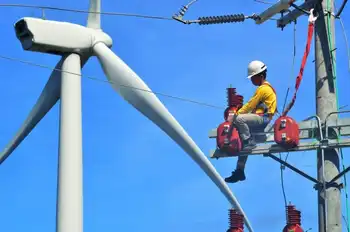
Deputy Prime Minister John Manley announced two proposed changes to income tax rules that he said would make it financially attractive to build wind turbines and ensure that renewable energy projects could raise financing in the same way as nonrenewable energy projects.

"I am confident that Canadians will support our efforts to encourage the production of more renewable energy in Canada," Manley said in a statement.

In the last federal budget, which was presented in December 2001, the government said it would give C$260 million ($164 million) to the wind power industry to increase current production of 200 megawatts to 1,000 megawatts by 2016.

Signing up to Kyoto -- the 1997 treaty designed to cut emissions of the greenhouse gases blamed for global warming -- would oblige Canada to cut its emissions by 6 percent from 1990 levels, by 2010. As of 1999, Canada's emissions were already 15 percent higher than 1990 levels.

Ottawa originally said it intended to ratify Kyoto this June but then called for more consultations in the face of strong resistance from businesses, energy producers and several provincial governments.

Related News

U.S. Electric Vehicle Market Share Dips in Q1 2024

U.S. EV Market Share Dip Q1 2024 reflects slower BEV adoption, rising PHEV demand, affordability concerns, charging infrastructure gaps, tax credit shifts, range anxiety, and automaker strategy adjustments across the electric vehicle market.


Key Points

Q1 2024 EV and hybrid share slipped as BEV sales lag, PHEVs rise, and affordability and charging concerns temper demand.

✅ BEV share fell to 7.0% as affordable models remain limited

✅ PHEV sales rose 50% YoY, easing range anxiety concerns

✅ Policy shifts and charging gaps weigh on consumer adoption


The U.S. electric vehicle (EV) market, once a beacon of unbridled growth, appears to be experiencing a course correction. Data from the U.S. Energy Information Administration (EIA) reveals that the combined market share of electric vehicles (battery electric vehicles, or BEVs) and hybrids dipped slightly in the first quarter of 2024, marking the first decline since the onset of the COVID-19 pandemic, even as EU EV share rose during lockdowns in 2020.

This news comes as a surprise to many analysts who predicted continued exponential growth for the EV market. While overall sales of electric vehicles surged into 2024 and did increase by 7% compared to Q1 2023, this growth wasn't enough to keep pace with the overall rise in vehicle sales. The result: a decline in market share from 18.8% in Q4 2023 to 18.0% in Q1 2024.

Several factors may be contributing to this shift. One potential culprit is a slowdown in battery electric vehicle sales. BEVs saw their share of the market dip from 8.1% to 7.0% in the same period. This could be attributed to a lack of readily available affordable options, with many popular EV models still commanding premium prices and concerns that EV supply may miss demand in the near term.

Another factor could be the rising interest in plug-in hybrid electric vehicles (PHEVs). PHEV sales witnessed a significant jump of 50% year-over-year, reflecting how gas-electric hybrids are getting a boost from major automakers, potentially indicating a consumer preference for vehicles that offer both electric and gasoline powertrain options, addressing concerns about range anxiety often associated with BEVs.

Industry experts offer mixed interpretations of this data. Some downplay the significance of the dip, attributing it to a temporary blip, even though EVs remain behind gas cars in total sales. They point to the ongoing commitment from major automakers to invest in EV production and the potential for new, more affordable models to hit the market soon.

Others express more concern, citing Europe's recent EV slump and suggesting this might be a sign of maturing consumer preferences. They argue that simply increasing the number of EVs on the market might not be enough. Automakers need to address issues like affordability, charging infrastructure, and range anxiety to maintain momentum.

The role of government incentives also remains a question mark. The federal tax credit for electric vehicles is currently set to phase out gradually, potentially impacting consumer purchasing decisions in the future. Continued government support, through incentives or infrastructure development, could be crucial in maintaining consumer interest.

The coming quarters will be crucial in determining the long-term trajectory of the U.S. EV market, especially after the global electric car market's rapid expansion in recent years. Whether this is a temporary setback or a more lasting trend remains to be seen. Addressing consumer concerns, ensuring a diverse range of affordable EV options, and continued government support will all be essential in ensuring the continued growth of this critical sector.

This development also presents an opportunity for traditional automakers. By capitalizing on the growing PHEV market and addressing consumer concerns about affordability and range anxiety, they can carve out a strong position in the evolving automotive landscape.


Related News

View more

Trump declares end to 'war on coal,' but utilities aren't listening

US Utilities Shift From Coal as natural gas stays cheap, renewables like wind and solar scale, Clean Power Plan uncertainty lingers, and investors, state policies, and emissions targets drive generation choices and accelerate retirements.


Key Points

A long-term shift by utilities from coal to cheap natural gas, expanding renewables, and lower-emission generation.

✅ Cheap natural gas undercuts coal on price and flexibility.

✅ Renewables costs falling; wind and solar add competitive capacity.

✅ State policies and investors sustain emissions reductions.


When President Donald Trump signed an executive order last week to sweep away Obama-era climate change regulations, he said it would end America's "war on coal", usher in a new era of energy production and put miners back to work.

But the biggest consumers of U.S. coal - power generating companies - remain unconvinced about efforts to replace Obama's power plant overhaul with a lighter-touch approach.

Reuters surveyed 32 utilities with operations in the 26 states that sued former President Barack Obama's administration to block its Clean Power Plan, the main target of Trump's executive order. The bulk of them have no plans to alter their multi-billion dollar, years-long shift away from coal, suggesting demand for the fuel will keep falling despite Trump's efforts.

The utilities gave many reasons, mainly economic: Natural gas - coal’s top competitor - is cheap and abundant; solar and wind power costs are falling; state environmental laws remain in place; and Trump's regulatory rollback may not survive legal challenges, as rushed pricing changes draw warnings from energy groups.

Meanwhile, big investors aligned with the global push to fight climate change – such as the Norwegian Sovereign Wealth Fund – have been pressuring U.S. utilities in which they own stakes to cut coal use.

"I’m not going to build new coal plants in today’s environment," said Ben Fowke, CEO of Xcel Energy, which operates in eight states and uses coal for about 36 percent of its electricity production. "And if I’m not going to build new ones, eventually there won’t be any."

Of the 32 utilities contacted by Reuters, 20 said Trump's order would have no impact on their investment plans; five said they were reviewing the implications of the order; six gave no response. Just one said it would prolong the life of some of its older coal-fired power units.

North Dakota's Basin Electric Power Cooperative was the sole utility to identify an immediate positive impact of Trump's order on the outlook for coal.

"We're in the situation where the executive order takes a lot of pressure off the decisions we had to make in the near term, such as whether to retrofit and retire older coal plants," said Dale Niezwaag, a spokesman for Basin Electric. "But Trump can be a one-termer, so the reprieve out there is short."

Trump's executive order triggered a review aimed at killing the Clean Power Plan and paving the way for the EPA's Affordable Clean Energy rule to replace it, though litigation is ongoing. The Obama-era law would have required states, by 2030, to collectively cut carbon emissions from existing power plants by 30 percent from 2005 levels. It was designed as a primary strategy in U.S. efforts to fight global climate change.

The U.S. coal industry, without increases in domestic demand, would need to rely on export markets for growth. Shipments of U.S. metallurgical coal, used in the production of steel, have recently shown up in China following a two-year hiatus - in part to offset banned shipments from North Korea and temporary delays from cyclone-hit Australian producers.


RETIRING AND RETROFITTING

Coal had been the primary fuel source for U.S. power plants for the last century, but its use has fallen more than a third since 2008 after advancements in drilling technology unlocked new reserves of natural gas.

Hundreds of aging coal-fired power plants have been retired or retrofitted. Huge coal mining companies like Peabody Energy Corp and Arch Coal fell into bankruptcy, and production last year hit its lowest point since 1978.

The slide appears likely to continue: U.S. power companies now expect to retire or convert more than 8,000 megawatts of coal-fired plants in 2017 after shutting almost 13,000 MW last year, according to U.S. Energy Information Administration and Thomson Reuters data.

Luke Popovich, a spokesman for the National Mining Association, acknowledged Trump's efforts would not return the coal industry to its "glory days," but offered some hope.

"There may not be immediate plans for utilities to bring on more coal, but the future is always uncertain in this market," he said.

Many of the companies in the Reuters survey said they had been focused on reducing carbon emissions for a decade or more while tracking 2017 utility trends that reinforce long-term planning, and were hesitant to change direction based on shifting political winds in Washington D.C.

"Utility planning typically takes place over much longer periods than presidential terms of office," Berkshire Hathaway Inc-owned Pacificorp spokesman Tom Gauntt said.

Several utilities also cited falling costs for wind and solar power, which are now often as cheap as coal or natural gas, thanks in part to government subsidies for renewable energy and recent FERC decisions affecting the grid.

In the meantime, activist investors have increased pressure on U.S. utilities to shun coal.

In the last year, Norway's sovereign wealth fund, the world's largest, has excluded more than a dozen U.S. power companies - including Xcel, American Electric Power Co Inc and NRG Energy Inc - from its investments because of their reliance on coal-fired power.

Another eight companies, including Southern Co and NorthWestern Corp, are "under observation" by the fund.

Wyoming-based coal miner Cloud Peak Energy said it doesn't blame utilities for being lukewarm to Trump's order.

"For eight years, if you were a utility running coal, you got the hell kicked out of you," said Richard Reavey, a spokesman for the company. "Are you going to turn around tomorrow and say, 'Let's buy lots of coal plants'? Pretty unlikely."


Related News

View more

The Banker Trying to Fix the UK's Electricity Grid

UK power grid bottleneck is stalling renewable energy, with connection queues, planning delays, and transmission infrastructure gaps raising costs, slowing decarbonization, and deterring investment as government considers reforms led by a new chief adviser.


Key Points

Delays and capacity gaps that hinder connecting new generation and demand, raising costs and slowing decarbonization.

✅ Connection queues delay projects for years

✅ Planning and NIMBY barriers stall transmission builds

✅ Investment costs on bills risk political pushback


During his three decades at investment bank Morgan Stanley, Franck Petitgas developed a reputation for solving problems that vexed others. Fixing the UK’s creaking power grid could be his most challenging task yet.

Earlier this year, Prime Minister Rishi Sunak appointed Petitgas as his chief business adviser, and the former financier has been pushing to tackle the gridlock that’s left projects waiting endlessly for a connection, an issue he sees as one of the biggest problems for industry.

But there are no easy solutions to tackle the years-long queue to get on the grid or the drawn-out planning process for building clean power generation, with the energy transition stalled by supply delays compounding the problem. And sluggish progress in expanding and improving the electricity network is preventing the construction of new housing developments and offices, as well as slowing the transition to greener power.

That transition has already taken a knock after Sunak last week controversially watered down some of the UK’s climate ambitions, citing in part the cost to consumers. He also acknowledged the issues surrounding the grid and promised the “most transformative plans” in response, drawing on lessons from Europe’s power crisis where applicable. Those are due to be unveiled within weeks. 

Shortly after his appointment, Petitgas offered reassurances to business leaders at a meeting in Downing Street that solutions were being worked on, according to people familiar with the matter. But there’s a lack of confidence across business that enough will be done.

Cost is a big factor in the expansion of the electricity grid, and some argue a state-owned generation model could ease bills over time. Improving the onshore network alone could require investment of between £100 billion and £240 billion ($122-$293 billion) by 2050, according to a government analysis last year. 

With network expansion funded through power bills, that’s a big ask, particularly with Sunak trailing in polls ahead of an election expected next year.

“It’s very difficult for politicians to say more money should be on bills,” said Emma Pinchbeck, chief executive of Energy UK, a trade body. “So you get to a situation where no one wants to pay for the infrastructure investment until it’s really sticky, and that’s where we’ve got to with the grid.”

There are huge competitive and economic implications if the UK falls further behind. With US President Joe Biden spending an estimated $370 billion on climate measures through his Inflation Reduction Act, and China already a world leader in electric vehicles, Britain’s grid inaction is holding it back in the global race to decarbonize, said Jess Ralston, an analyst at the Energy and Climate Intelligence Unit think tank.

“The UK is dithering and delaying, and not making any strategic decisions,” she said. “You can see companies just saying ‘I’m going to the US, or I’m going to China’.” 

In a statement, the government said it’s a “priority to speed up the time taken to connect new power generators and power consumers to the grid.” It added that it’s taking “significant steps to accelerate grid infrastructure,” including support for new Channel interconnectors announced this year.

The government expects demand for electricity to double by 2035 and that will mean more generation that needs to be linked up to the network by cables and pylons. Local grids will also have to expand to accommodate more connection points for electric vehicles and homes, and invest in large-scale energy storage capacity to balance supply.

But so far, the rapid rise in renewable energy investment has not been accompanied by matching spend on the power network, according to BloombergNEF, a pattern seen in Germany’s grid expansion woes as well.

“The pace and scale of what we now have to deliver is significantly different from the last few decades,” said Carl Trowell, president of UK strategic infrastructure at National Grid. “It’s a national endeavor.”

In June, Electricity Networks Commissioner Nick Winser sent the government recommendations for how to accelerate construction of more transmission infrastructure. He said efforts to decarbonize the power sector will be “wasted if we cannot get the power to homes and businesses.”

“We need a seriously stronger sense of urgency,” said Kevin O’Donovan, country manager for Statkraft UK, which is holding off investment in four wind farms and two solar projects due to grid connection delays.

In addition to cost, the other major stumbling block is planning. Politicians in the governing Conservative Party are wary of angering voters with new infrastructure in rural areas that typically vote Tory. Across the country, “Not In My Back Yard” campaigners – NIMBYs — pose a major challenge to projects.

Petitgas, 62, retired from Morgan Stanley last year after nearly 30 years at the bank, where he led its international division from London. The issues over connections and planning have been repeatedly pointed out to Petitgas by investors and trade groups over a series of meetings this year, according to people familiar with the matter, requesting anonymity discussing private talks.

Yet with a general election looming and the issue plagued by political headaches, many are skeptical that Sunak can find the solutions needed.

One business chief said Downing Street considers the issue too tricky and expensive to tackle in the short-term. Others are concerned that while Petitgas has license from Sunak, he doesn’t have influence across the relevant departments to get grids to the top of the agenda.


Wind Farms

Multiple parts of the UK’s climate plans are under pressure. Earlier this month, an auction for contracts to build new wind farms received zero bids from developers, even as wind leads the power mix in many regions, marking yet another green setback. 

The UK is already behind on its target of having 50 gigawatts of offshore wind built by 2030, up from 14 GW today. The challenge is accelerating development without railroading local communities.

Within Sunak’s Conservative Party, some lawmakers are pushing back on new infrastructure in their local areas. A group including Environment Secretary Therese Coffey and former Home Secretary Priti Patel is campaigning against building new pylons across a stretch of eastern England.

According to Adam Bell, director of policy at consultancy Stonehaven, backbench pressure means Sunak is unlikely to take major action on the grid in the near term. He doesn’t see the prime minister accepting Winser’s recommendations, least of all accelerating planning decisions.

“Over the last year, Sunak has favored party management over things that will benefit the country,” Bell said. 


Related News

View more

Canada in top 10 for hydropower jobs, but doesn't rank on other renewables

Canada Renewable Energy Jobs rank top 10 in hydropower, says IRENA, but trail in solar PV, wind power, and liquid biofuels; clean tech growth, EV manufacturing, and Canada Infrastructure Bank funding signal broader carbon-neutral opportunities.


Key Points

Canada counts 61,130 clean energy roles, top 10 in hydropower, with potential in solar, wind, biofuels, and EV manufacturing.

✅ 61,130 clean energy jobs in Canada per IRENA

✅ Top 10 share in hydropower employment

✅ Growth expected in solar, wind, biofuels, and EVs


Canada has made the top 10 list of countries for the number of jobs in hydropower, but didn’t rank in three other key renewable energy technologies, according to new international figures.

Although Canada has only two per cent of the global workforce, it had one of the 10 largest slices of the world’s jobs in hydropower in 2019, says the Abu Dhabi-based International Renewable Energy Agency (IRENA)

Canada didn’t make IRENA’s other top-10 employment lists, for solar photovoltaic (PV) technology, where solar power lags by international standards, liquid biofuels or wind power, released Sept. 30. Figures from the agency show the whole sector represents 61,130 jobs across Canada, or 0.5 per cent of the world’s 11.5 million jobs in renewables.

The numbers show Canada needs to move faster to minimize the climate crisis, including by joining trade blocs that put tariffs on high-carbon goods, argued the Victoria-based BC Sustainable Energy Association after reviewing IRENA’s report. The Canadian Renewable Energy Association also said it showed the country has untapped job creation potential, even as growth projections were scaled back after Ontario scrapped a clean energy program.

But other clean tech advocates say there’s more to the story. When tallying clean energy jobs, it's worth a broader look, Clean Energy Canada argued, pointing to the recent Ford-Unifor deal that includes a $1.8-billion commitment to produce electric vehicles in Oakville, Ont.

Natural Resources Minister Seamus O'Regan’s office also pointed out the renewables employment figures from IRENA are proportional to global population. “While Canada's share of the global clean energy job market is in line with our population size, we produce almost 2.7 per cent of the world’s total primary renewable energy supply. As only 0.5 per cent of the global population, we punch above our weight,” said O'Regan's press secretary, Ian Cameron.

Canada joined IRENA in January 2019 and the country has been described by the association as an “important market” for renewables over the long term.

On Thursday, Prime Minister Justin Trudeau announced a new $10-billion “Growth Plan” to be run by the Canada Infrastructure Bank that would include “$2.5 billion for clean power to support renewable generation and storage and to transmit clean electricity between provinces, territories, and regions, including to northern and Indigenous communities.” The infrastructure bank's plan is expected to create 60,000 jobs, the government said, and in Alberta an Alberta renewables surge could power 4,500 jobs as projects scale up.

World ‘building the renewable energy revolution now’

A powerful renewables sector is not just about job creation. It is also imperative if we are to meet global climate objectives, according to the Intergovernmental Panel on Climate Change. Renewable energy sources have to make up at least a 63 per cent share of the global electricity market by mid-century to battle the more extreme effects of climate change, it said.

“The IRENA report shows that people all over of the world are building the renewable energy revolution now,” said Tom Hackney, policy adviser for the BC Sustainable Energy Association.

“Many people in Canada are doing so, too. But we need to move faster to minimize climate change. For example, at the level of trade policy, a great idea would be to develop low-carbon trading blocs that put tariffs on goods with high embodied carbon emissions.”

Canadian Renewable Energy Association president and CEO Robert Hornung said the IRENA jobs review highlights “significant job creation potential” in Canada. As governments explore how to stimulate economic recovery from the impact of the COVID-19 pandemic, said Hornung, it's important to “capitalize on Canada's untapped renewable energy resources.”

In Canada, 82 per cent of the electricity grid is already non-emitting, noted Sarah Petrevan, policy director for Clean Energy Canada.

With the federal government committing to a 90 per cent non-emitting grid by 2030, said Petrevan, more wind and solar deployment can be expected, even though solar demand has lagged in recent years, especially in the Prairies where renewables are needed to help with Canada’s coal-fired power plant phase out.

One example of renewables in the Prairies, where the provinces are poised to lead growth, is the Travers Solar project, which is expected to be constructed in Alberta through 2021, and is being touted as “Canada's largest solar farm.”

But renewables are only “one part of the broader clean energy sector,” said Petrevan. Clean Energy Canada has outlined how Canada could be electric and clean with the right choices, and has calculated clean tech supports around 300,000 jobs, projected to grow to half a million by 2030.

“We’re talking about a transition of our energy system in every sense — not just in the power we produce. So while the IRENA figures provide global context, they reflect only a portion of both our current reality and the opportunity for Canada,” she said.

The organization’s research has shown that manufacturing of electric vehicles would be one of the fastest-growing job creators over the next decade. Putting a punctuation mark on that is a recent $1.8-billion deal with Ford Motor Company of Canada to produce five models of electric vehicles in Oakville, Ont.

China ‘remains the clear leader’ in renewables jobs

With 4.3 million renewable energy jobs in 2019, or 38 per cent of all renewables jobs, China “remains the clear leader in renewable energy employment worldwide,” the IRENA report states. China has the world's largest population and the second-largest GDP.

The country is also by far the world’s largest emitter of carbon pollution, at 28 per cent of global greenhouse gas emissions, and has significant fossil fuel interests. Chinese President Xi Jinping called for a “green revolution” last month, and pledged to “achieve carbon neutrality before 2060.”

China holds the largest proportion of jobs in hydropower, with 29 per cent of all jobs, followed by India at 19 per cent, Brazil at 11 per cent and Pakistan at five per cent, said IRENA.

Canada, with 32,359 jobs in the industry, and Turkey and Colombia hold two per cent each of the world’s hydropower jobs, while Myanmar and Russia hold three per cent each and Vietnam has four per cent.

China also dominates the global solar PV workforce, with 59 per cent of all jobs, followed by Japan, the United States, India, Bangladesh, Vietnam, Malaysia, Brazil, Germany and the Philippines. There are 4,261 jobs in solar PV in Canada, IRENA calculated, and the country is set to hit a 5 GW solar milestone as capacity expands, out of a global workforce of 3.8 million jobs.

In wind power, China again leads, with 44 per cent of all jobs. Germany, the United States and India come after, with the United Kingdom, Denmark, Mexico, Spain, the Philippines and Brazil following suit. Canada has 6,527 jobs in wind power out of 1.17 million worldwide.

As for liquid biofuels, Brazil leads that industry, with 34 per cent of all jobs. Indonesia, the United States, Colombia, Thailand, Malaysia, China, Poland, Romania and the Philippines fill out the top 10. There are 17,691 jobs in Canada in liquid biofuels.


Related News

View more

Coronavirus and the U.S. grid: What to know

COVID-19 Impact on US Electric Grid: utilities, ERCOT, PJM, and MISO brace for load shifts as remote work rises, industrial demand falls, and nuclear plants enforce pandemic planning to maintain reliability and resilience.


Key Points

Pandemic-driven changes in electricity demand and operations as utilities shift to remote work and reduced industrial use.

✅ Utilities enact remote work and suspend disconnections

✅ Grid operators model load shifts and maintain reliability

✅ Nuclear plants sustain operations with pandemic protocols


Operators of the nation's electric grid and energy companies are bracing for the spread of a virus that is undercutting power demand in countries across Asia and Europe as daily activities grind to a halt.

Owners of U.S. utilities and nuclear plants are canceling events, halting travel, pushing remote work and testing ill workers to slow the spread of the novel coronavirus.

So far, grid operators in the United States say no substantial effect on the electricity demand has emerged, but that could change, even though some reports indicate the U.S. grid is safe for now amid COVID-19. Texas' main grid operator, the Electric Reliability Council of Texas (ERCOT), expressed uncertainty when asked whether it will see changes in demand patterns for power due to the virus.

"It's too early to tell," Leslie Sopko, a spokeswoman for ERCOT, said in an email.

The virus has already taken a toll on power demand overseas. The chairman of Japan's federation of electric utilities and president of Chubu Electric Power Co., Satoru Katsuno, told reporters Friday the country's power demand has weakened as industrial activity slows due to the outbreak, according to Reuters.

The news outlet similarly reported China's industrial power demand this year may decline as the virus curtailed factory output and prevented some employees from returning to work. And, according to Bloomberg, power use in Italy slumped 7.4% last week after the government there shut down schools and told workers to remain home, while Ontario electricity demand also declined as people stayed home.

U.S. utility executives said the sector is well prepared and has faced the threat of spreading infections before. More than a decade ago, global virus scares like SARS pushed companies to hammer out extensive disaster planning, and those have stuck.

"A lot of the foundational work on contingency planning is actually rooted in pandemic planning because of those experiences in the mid-2000s," Scott Aaronson, the Edison Electric Institute's vice president of security and preparedness, told E&E News. "There is a good body of work and a lot of planning and exercises that have gone into being able to operate through these challenges."

Keeping the nation's electric grid running is a top priority at the Department of Energy, said Chris Fall, the agency's point person for COVID-19, which the new coronavirus causes. "Our responsibility is to make sure the electrical grid is resilient and working," said Fall, who directs the department's Office of Science.

He told an agency podcast, called "Direct Current," that the department is working with the private sector and other elements of the energy system. "Obviously we are connected with other agencies like Homeland Security or [the Federal Energy Regulatory Commission] on things like the electrical grid and making sure we have power, and if those people get sick or impacted, we have backups for all of that," he said.

According to a bulletin EEI released on the issue, 40% of a company's employees could be out sick, be quarantined or stay home to care for sick family members. And pandemics may prevent "traditional mutual assistance programs that help companies restore service after natural disasters and weather events," EEI said, such as restoring power in Florida after major storms.

The utility sector is also juggling the needs of its customers. Many major utilities across the nation have vowed to suspend shut-offs and keep power, heat and water on for all customers — a particular concern for people who may be out of work and cannot afford to pay their bills. Companies are also suspending disconnections for nonpayment, some under direction from officials and regulators in states like Ohio and Connecticut, while in Canada Hydro One's peak rate policy has drawn attention among self-isolating customers.

Like other businesses preparing for pandemics, utilities focus on keeping the workforce healthy and operations running. But EEI's Aaronson noted that a key difference with keeping critical infrastructure humming is the possible requirement for the sheltering in place of essential employees who are unable to do their jobs from home, as some operators contemplate locking down key staff at work sites to ensure continuity.

Grid operators are also well-equipped to handle shifts in power demand, and he acknowledged the sector could see changes as more offices and businesses move to remote working. He compared it to the load demand shifts between weekdays and weekends.

"So on the weekends, you're going to have a lot of people at home," Aaronson said. "During the week, it's people in offices. But generally speaking, the ability to have that resiliency and redundancy, the ability to shift resources and the way the grid balances, that is not going to change."

Electricity demand from high-intensity industries like manufacturing or theme parks like Disneyland could also wane, he added, even as electricity inequality in California influences who is most affected.

"It's not just a load shift to the residential, but it's also the load drop in some cases," Aaronson said. "Some of the commercial and industrial customers are going to be working a little bit less than they are presently."

Nuclear plants
Work is continuing at the Plant Vogtle nuclear construction project after Georgia Power Co. announced that one of the site workers is being tested for the coronavirus. The utility does not have the results of that test, a Georgia Power spokesman said late yesterday afternoon. The person works primarily in an office setting and is not on the construction site where two nuclear reactors are being built.

A second worker was tested Saturday, and those results were negative, spokesman John Kraft told E&E News.

Vogtle boasts a high worker count of 9,000 across the entire construction site, which includes office buildings. This is mostly craft laborers, but there are also administrators, executives and Nuclear Regulatory Commission safety inspectors.

A number of contractors and vendors are also on site given the complexity of the project.

Employees who were near the office worker being tested have been sent home until the company receives results. If the test is positive, then those workers will stay home for 14 days, Georgia Power said.

"The company is taking every action to prepare for impacts of the COVID-19 pandemic," Kraft said in a statement. This includes using advice from medical professionals and the Atlanta-based Centers for Disease Control and Prevention.

Georgia Power, owned by Atlanta-based Southern Co., informed regulators at the NRC that a worker was being tested. The federal commission itself has pandemic plans in place to ensure continued oversight, including robust work-from-home capabilities and "social distancing" practices to limit close contact among employees at headquarters.

NRC spokesman Scott Burnell said in an email that telework is not unusual for the agency, and about 75% of its workforce is already equipped to work remotely. The commission tested its telework readiness Friday. Some positions require workers to stay on-site to ensure safe reactor operations, Burnell added.

The nuclear industry has maintained pandemic preparedness plans and procedures since 2006, which have been shared with federal agencies, according to Mary Love, a spokeswoman for the Nuclear Energy Institute. "NEI members are participating in weekly calls to facilitate communications, coordination and best practices," she said.

According to NEI statistics, each plant averages 500 to 1,000 workers. While not every position is essential to operations, some areas like the control room cannot be conducted remotely.

"We know that nuclear power plant operations and the availability of electric service will be tremendously important in minimizing the impact of the situation on the general public," Love added. "We are confident, based on extensive planning, that the industry will continue to operate nuclear plants safely as this event unfolds."

Grid operators
Hundreds of workers responsible for overseeing critical operations of the U.S. electric grid are being encouraged to work from home, their offices are being sanitized, and in-person meetings are being moved online.

PJM Interconnection, the nation's largest grid operator covering some 65 million people across Mid-Atlantic and Midwest states, said Friday a forecast on load changes was not yet available.

PJM has moved all stakeholder meetings online. Employee travel has been suspended, as have external visits to its headquarters in Valley Forge, Pa.

Employees "are equipped to work remotely, if necessary, to maintain business continuity," and PJM "is prepared and able to run and support all market applications from its campus or remotely, as needed," the operator said.

"PJM recognizes that these measures have significant impacts to our staff, members and stakeholders," PJM said on its coronavirus response webpage. "We are dedicated to striking a balance between those impacts and our number one priority — the reliability of the grid."

Still pending at the operator is a decision about its annual meeting in Chicago at the beginning of May. That decision will be made by April 3, PJM said.

The Midcontinent Independent System Operator (MISO), which runs the bulk power grid across 15 states and the Canadian province of Manitoba, is also holding meetings via conference call or online and restricting all business travel.

MISO has encouraged "nonessential" employees to work remotely, leaving only those who actively monitor and manage the operation of the grid working on-site.

The grid operator employs nearly 1,000 people, including 780 at its headquarters in Carmel, Ind.

A board meeting set for the last week of March in New Orleans hasn't yet been canceled, with a final decision on whether to move forward with the meeting expected today.

MISO said it hasn't encountered other changes in normal operations and has not seen significant shifts in electricity demand.

In Texas, ERCOT has about 750 employees, mostly at its campus in the city of Taylor. ERCOT's Sopko said the grid operator is encouraging employees who are not required to be on-site to work from home. The policy is voluntary at this time, but that could change quickly, she said Friday.

ERCOT is also taking extra steps to keep workers safe, including alternating use of facilities, encouraging social distancing and imposing control room measures as part of its pandemic planning, she added.

Energy companies
In the Midwest, utilities including DTE Energy Co., Commonwealth Edison, Consumers Energy and Ameren Corp. said they're following CDC guidance and working with state and local officials to help slow the spread of the virus. That means asking employees who can do their jobs at home to do so, restricting visitors to company offices, canceling large assemblies and nonessential business travel, and holding meetings by phone or online.

Chicago-based ComEd, which serves 4 million customers, is imposing a moratorium on service disconnections and waiving new late payment charges through at least May 1, in addition to working with customers who are facing financial hardships on a case-by-case basis to establish payment arrangements and identify energy assistance options, spokesman Paul Elsberg said.

Many of the Southeast's major energy companies are also curbing travel and encouraging telework, among other steps, in response to the coronavirus.

For Southern Co., this includes its Georgia Power unit; Southern Power; and employees of Southern Company Gas, who are in Illinois, Tennessee and Virginia. Southern has not extended the policies to its Alabama and Mississippi electric companies, spokesman Schuyler Baehman said.

Charlotte, N.C.-based Duke Energy Corp. has suspended all business travel unless workers are traveling by car. The energy giant also is encouraging its employees to rethink their own vacations if upcoming trips take them out of the country.

"Circumstances are changing rapidly around the world," the company said in a statement.

For workers who must come to the office, or work at power plants or on the lines, utilities are doubling down on disinfectant in those areas.

"We're also reminding our employees that we provide a very critical service; we need you well, we need you able," said Le-Ha Anderson, a spokeswoman for Richmond, Va.-based Dominion Energy Inc.

Dominion started asking employees a few weeks ago to take mobile devices home and make sure they have what they need to work remotely. Anyone who has traveled to one of the CDC-identified hot spots is asked to stay home for 14 days with no questions asked, Anderson said.

The federally owned Tennessee Valley Authority has reviewed and updated its plans on how it will operate during a pandemic but has not yet reached the point to have employees telework if they are able to do so.

"We come at this at a very phased approach," TVA spokesman Jim Hopson said. "We can't just shut the doors."

State utility commissions, too, have begun taking steps. In response to a state of emergency declared by Ohio Gov. Mike DeWine (R), the Public Utilities Commission of Ohio on Thursday directed utilities to act where possible to avoid suspending service to customers.

Will Seuffert, executive secretary of the Minnesota Public Utilities Commission, said in an email that the regulator has canceled all public hearings and agenda meetings for the next two weeks and has been supporting telework "throughout the agency" in response to the virus.


Related News

View more

USAID Delivers Mobile Gas Turbine Power Plant to Ukraine

USAID GE Mobile Power Plant Ukraine supplies 28MW of emergency power and distributed generation to bolster energy security, grid resilience, and critical infrastructure reliability across cities and regions amid ongoing attacks.


Key Points

A 28MW GE gas turbine from USAID providing mobile, distributed power to strengthen Ukraine's grid resilience.

✅ 28MW GE gas turbine; power for 100,000 homes

✅ Mobile deployment to cities and regions as needed

✅ Supports hospitals, schools, and critical infrastructure


Deputy U.S. Administrator Isobel Coleman announced during her visit to Kyiv that the U.S. Agency for International Development (USAID) has provided the Government of Ukraine with a mobile gas turbine power plant purchased from General Electric (GE), as discussions of a possible agreement on power plant attacks continue among stakeholders.

The mobile power plant was manufactured in the United States by GE’s Gas Power business and has a total output capacity of approximately 28MW, which is enough to provide the equivalent electricity to at least 100,000 homes. This will help Ukraine increase the supply of electricity to homes, hospitals, schools, critical infrastructure providers, and other institutions, as the country has even resumed electricity exports in recent months. The mobile power plant can be operated in different cities or regions depending on need, strengthening Ukraine’s energy security amid the Russian Federation’s continuing strikes against critical infrastructure.   

Since the February 2022 full-scale invasion of Ukraine, and particularly since October 2022, the Russian Federation has deliberately targeted critical civilian heating, power, and gas infrastructure in an effort to weaponize the winter, raising nuclear risks to grid stability noted by international monitors. Ukraine has demonstrated tremendous resilience in the wake of these attacks, with utility workers routinely risking their lives to repair the damage, often within hours of air strikes, even as Russia builds power lines to reactivate the Zaporizhzhia plant to influence the energy situation.

The collaboration between USAID and GE reflects the U.S. government’s emphasis on engaging American private sector expertise and procuring proven and reliable equipment to meet Ukraine’s needs. Since the start of Putin’s full-scale war against Ukraine, USAID has both directly procured equipment for Ukraine from American companies and engaged the private sector in partnerships to meet Ukraine’s urgent wartime needs, with U.S. policy debates such as a proposal on Ukraine’s nuclear plants drawing scrutiny.

This mobile power plant is the latest example of USAID assistance to Ukraine’s energy sector since the start of the Russian Federation’s full-scale invasion, during which Ukraine has resumed electricity exports as conditions improved. USAID has already delivered more than 1,700 generators to 22 oblasts across Ukraine, with many more on the way. These generators ensure electricity and heating for schools, hospitals, accommodation centers for internally-displaced persons, district heating companies, and water systems if and when power is knocked out by the Russian Federation’s relentless, systematic and cruel attacks against critical civil infrastructure. USAID has invested $55 million in Ukraine’s heating infrastructure to help the Ukrainian people get through winter. This support will benefit up to seven million Ukrainians by supporting repairs and maintenance of pipes and other equipment necessary to deliver heating to homes, hospitals, schools, and businesses across Ukraine. USAID’s assistance builds on over two decades of support to Ukraine to strengthen the country’s energy security, complementing growth in wind power that is harder to destroy.


Related News

View more

Sign Up for Electricity Forum’s Newsletter

Stay informed with our FREE Newsletter — get the latest news, breakthrough technologies, and expert insights, delivered straight to your inbox.

Electricity Today T&D Magazine Subscribe for FREE

Stay informed with the latest T&D policies and technologies.
  • Timely insights from industry experts
  • Practical solutions T&D engineers
  • Free access to every issue

Live Online & In-person Group Training

Advantages To Instructor-Led Training – Instructor-Led Course, Customized Training, Multiple Locations, Economical, CEU Credits, Course Discounts.

Request For Quotation

Whether you would prefer Live Online or In-Person instruction, our electrical training courses can be tailored to meet your company's specific requirements and delivered to your employees in one location or at various locations.