NFPA 70E Training - 2027 Edition - Arc Flash and Electrical Safety Course
Our customized live online or in‑person group training can be delivered to your staff at your location.

- Live Online
- 6 hours Instructor-led
- Group Training Available
Regular Price:
$199
Coupon Price:
$149
New Zealand's most experienced electricity industry chief, Keith Turner, is calling for some sort of carbon tax or charge for emitting carbon to give renewable energy a leg-up.
Turner, chief executive of state power company Meridian Energy, said a carbon-pricing mechanism would discipline emitters and also help the economics of renewable energy such as wind, hydro and geothermal power.
Expanding renewables would require some sort of carbon charge which would make renewables more competitive with coal and gas-fired power plants.
Turner was commenting on a report called "Choices" released by Meridian and intended to contribute to the debate on the country's energy strategy and options. Meridian is committed to developing only renewables and is the country's biggest hydro generator and wind-farm developer.
The report shows wind, hydro, geothermal, coal and gas compete closely now, depending on the site and size of the power plant, for being the most economic forms of producing electricity where there is no carbon tax or other CO2 emissions penalty.
But with a carbon tax the costs for a gas-fired plant rise nearly 1 cent a kwh and for coal about 2 cents a kWh.
Wind power might be the cheapest new generation option if there was not a lot of low-cost gas discovered in New Zealand, Turner said.
However, once the best wind sites were taken up the cost of wind power would rise. The report shows wind power from the best sites costs about 6.3 cents a kWh and up to 8.7 cents a kWh at lesser sites.
"In actual fact wind might be the cheapest generation in the absence of very low cost gas for the very best sites and it's probably economic today," Turner said.
But if New Zealand wanted to produce even more wind, hydro and geothermal power, the costs would increase.
"If we really want to get into a renewables future, we think there is a case for pricing carbon into the atmosphere. That's a perspective we hold for renewables and it's a perspective held by climate-change advocates as well."
Wind, hydro and geothermal could provide all the new electricity plants needed for the next 20 years. But gas and coal-fired power plants would remain in the mix.
Turner said importing liquefied natural gas (LNG) for power plants would be economically viable only for existing plants, but not new ones, because of the high and uncertain cost of LNG.
His competitors, Genesis Power and Contact Energy, have a backstop plan to import LNG if local gas supplies are short. Genesis chief executive Murray Jackson said recently importing LNG was only a question of time, not if.
Savings from energy efficiency measures would be useful, but not large. The best savings at present were from compact fluorescent light bulbs. Solar hot-water heating would have quite small savings with the types of technology at present but would be useful in the future.
The report was intended to inform the public debate which had been characterised by speculation and misinformation, Turner said.
Related News

Rising Electricity Prices: Inflation, Climate Change, and Clean Energy Challenges
Rising Electricity Prices are driven by inflation, climate change, and the clean energy transition, affecting…
View more

Energy Vault Lands $110M From SoftBank’s Vision Fund for Gravity Storage
Energy Vault Gravity Storage uses crane-stacked concrete blocks to deliver long-duration, grid-scale renewable energy; a…
View more
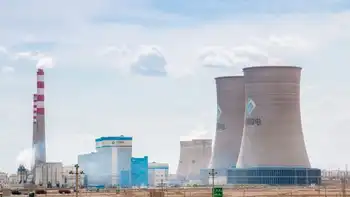
Is nuclear power really in decline?
Nuclear Energy Growth accelerates as nations pursue decarbonization, complement renewables, displace coal, and ensure grid…
View more

Announces Completion of $16 Million Project to Install Smart Energy-Saving Streetlights in Syracuse
Smart Street Lighting NY delivers Syracuse-wide LED retrofits with smart controls, Wi-Fi, and sensors, saving…
View more

Elon Musk could help rebuild Puerto Rico with solar-powered electricity grid
Puerto Rico Tesla Solar Power enables resilient microgrids using batteries, renewable energy, and energy storage…
View more

Solar power is the red-hot growth area in oil-rich Alberta
Alberta Solar Power is accelerating as renewable energy investment, PPAs, and utility-scale projects expand the…
View more
Sign Up for Electricity Forum’s Newsletter
Stay informed with our FREE Newsletter — get the latest news, breakthrough technologies, and expert insights, delivered straight to your inbox.
Electricity Today T&D Magazine Subscribe for FREE

Stay informed with the latest T&D policies and technologies.
- Timely insights from industry experts
- Practical solutions T&D engineers
- Free access to every issue
