Ten Killed In Power Station

By Associated Press


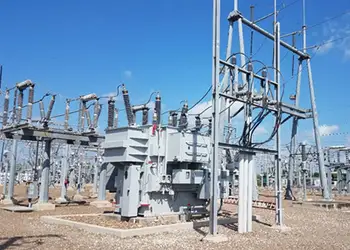
Substation Relay Protection Training

Our customized live online or in‑person group training can be delivered to your staff at your location.
  • Live Online
  • 12 hours Instructor-led
  • Group Training Available
Regular Price:
$699
Coupon Price:
$599
Reserve Your Seat Today
Hutu rebels killed at least 10 government troops guarding Bujumbura's main power station in an attack that forced 4,000 people to flee, rebel and government officials said recently.

The attack on the army post at the power station, 25 kilometers (15 miles) southwest of the capital, was in ``retaliation'' for an earlier army attack on the Forces for National Liberation, or FNL, rebel spokesman Pasteur Habimana said.

It was not immediately possible to confirm the casualty figures independently.

The FNL began a second round of exploratory peace talks with five high-ranking military officials on May 31 in the Swiss town of Caux. Until the first round of talks in March, it had remained resolutely outside the process begun in June 1998 to restore peace in the tiny central African nation.

Burundi's civil war broke out in October 1993 after paratroopers from the Tutsi minority, which has effectively controlled the country since independence in 1962, assassinated the country's first democratically elected president, a member of the Hutu majority.

Tutsi and Hutu political parties signed a power-sharing accord in August 2000 that led to the inauguration of the transitional government in November 2001.

But fighting has continued despite cease-fire agreements between the government and three of the four rebel factions.

More than 200,000 people, mostly civilians, have been killed in the conflict.

Ignace Ntawnbarira, the governor of Bujumbura-Rural province where the power station is located, confirmed the attack on the power station, but he was unable to give figures on casualties.

Army spokesman Col. Augustin Nzabampema acknowledged there had been a clash, but he said the rebels had been repulsed. He said he did not have figures for casualties.

Leonidas Ndayishimiye of the Burundi Water and Electricity Co. said because of the damage, the plant was now able to supply only two megawatts of power instead of the normal eight.

Related News
Can California Manage its Solar Boom?

California Duck Curve highlights midday solar oversupply and steep evening peak demand, stressing grid stability. Solutions include battery storage, demand response, diverse renewables like wind, geothermal, nuclear, and regional integration to reduce curtailment.


Key Points

A mismatch between midday solar surplus and evening demand spikes, straining the grid without storage and flexibility.

✅ Midday solar oversupply forces curtailment and wasted clean energy.

✅ Evening ramps require fast, fossil peaker plants to stabilize load.

✅ Batteries, demand response, regional trading flatten the curve.


California's remarkable success in adopting solar power, including a near-100% renewable milestone, has created a unique challenge: managing the infamous "duck curve." This distinctive curve illustrates a growing mismatch between solar electricity generation and the state's energy demands, creating potential problems for grid stability and ultimately threatening to slow California's progress in the fight against climate change.


The Shape of the Problem

The duck curve arises from a combination of high solar energy production during midday hours and surging energy demand in the late afternoon and evening when solar power declines. During peak solar hours, the grid often has an overabundance of electricity, and curtailments are increasing as a result, while as the sun sets, demand surges when people return home and businesses ramp up operations. California's energy grid operators must scramble to make up this difference, often relying on fast-acting but less environmentally friendly power sources.


The Consequences of the Duck Curve

The increasing severity of the duck curve has several potential consequences for California:

  • Grid Strain: The rapid ramp-up of power sources to meet evening demand puts significant strain on the electrical grid. This can lead to higher operational costs and potentially increase the risk of blackouts during peak demand times.
  • Curtailed Energy: To avoid overloading the grid, operators may sometimes have to curtail excess solar energy during midday, as rising curtailment reports indicate, essentially wasting clean electricity that could have been used to displace fossil fuel generation.
  • Obstacle to More Solar: The duck curve can make it harder to add new solar capacity, as seen in Alberta's solar expansion challenges, for fear of further destabilizing the grid and increasing the need for fossil fuel-based peaking plants.


Addressing the Challenge

California is actively seeking solutions to mitigate the duck curve, aligning with national decarbonization pathways that emphasize practicality. Potential strategies include:

  • Energy Storage: Deploying large-scale battery storage can help soak up excess solar electricity during the day and release it later when demand peaks, smoothing out the duck curve.
  • Demand Flexibility: Encouraging consumers to shift their energy use to off-peak hours through incentives and smart grid technologies can help reduce late-afternoon surges in demand.
  • Diverse Power Sources: While solar is crucial, a balanced mix of energy sources, including geothermal, wind, and nuclear, can improve grid stability and reduce reliance on rapid-response fossil fuel plants.
  • Regional Cooperation: Integrating California's grid with neighboring states can aid in balancing energy supply and demand across a wider geographical area.


The Ongoing Solar Debate

The duck curve has become a central point of debate about the future of California's energy landscape. While acknowledging the challenge, solar advocates argue for continued expansion, backed by measures like a bill to require solar on new buildings, emphasizing the urgent need to transition away from fossil fuels. Grid operators and some utility companies call for a more cautious approach, emphasizing grid reliability and potential costs if the problem isn't effectively managed.


Balancing California's Needs and its Green Ambitions

Finding the right path forward is essential; it will determine whether California can continue to lead the way in solar energy adoption while ensuring a reliable and affordable electricity supply. Successfully navigating the duck curve will require innovation, collaboration, and a strong commitment to building a sustainable energy system, as wildfire smoke impacts on solar continue to challenge generation predictability.


Related News

View more

Bomb Cyclone Leaves Half a Million Without Power in Western Washington

Western Washington Bomb Cyclone unleashed gale-force winds, torrential rain, and coastal flooding, causing massive power outages from Seattle to Tacoma; storm surge, downed trees, and blocked roads hindered emergency response and infrastructure repairs.


Key Points

A rapidly deepening storm with severe winds, rain, flooding, and major power outages across Western Washington.

✅ Rapid barometric pressure drop intensified the system

✅ Gale-force winds downed trees and power lines

✅ Coastal flooding and storm surge disrupted transport


A powerful "bomb cyclone" recently hit Western Washington, causing widespread destruction across the region. The intense storm left more than half a million residents without power, similar to B.C. bomb cyclone outages seen to the north, with outages affecting communities from Seattle to Olympia. This weather phenomenon, marked by a rapid drop in atmospheric pressure, unleashed severe wind gusts, heavy rain, and flooding, causing significant disruption to daily life.

The bomb cyclone, which is a rapidly intensifying storm, typically features a sharp drop in barometric pressure over a short period of time. This creates extreme weather conditions, including gale-force winds, torrential rain, and coastal flooding, as seen during California storm impacts earlier in the season. In Western Washington, the storm struck just as the region was beginning to prepare for the winter season, catching many off guard with its strength and unpredictability.

The storm's impact was immediately felt as high winds downed trees, power lines, and other infrastructure. By the time the worst of the storm had passed, utility companies had reported widespread power outages, with more than 500,000 customers losing electricity. The outages were particularly severe in areas like Seattle, Tacoma, and the surrounding communities. Crews worked tirelessly in difficult conditions to restore power, but many residents faced extended outages, underscoring US grid climate vulnerabilities that complicate recovery efforts, with some lasting for days due to the scope of the damage.

The power outages were accompanied by heavy rainfall, leading to localized flooding. Roads were inundated, making it difficult for first responders and repair crews to reach affected areas. Emergency services were stretched thin as they dealt with downed trees, blocked roads, and flooded neighborhoods. In some areas, floodwaters reached homes, forcing people to evacuate. In addition, several schools were closed, and public transportation services were temporarily halted, leaving commuters stranded and businesses unable to operate.

As the storm moved inland, its effects continued to be felt. Western Washington’s coastal regions were hammered by high waves and storm surges, further exacerbating the damage. The combination of wind and rain also led to hazardous driving conditions, prompting authorities to advise people to stay off the roads unless absolutely necessary.

While power companies worked around the clock to restore electricity, informed by grid resilience strategies that could help utilities prepare for future events, challenges persisted. Fallen trees and debris blocked access to repair sites, and the sheer number of outages made it difficult for crews to restore power quickly. Some customers were left in the dark for days, forced to rely on generators, candles, and other makeshift solutions. The storm's intensity left a trail of destruction, requiring significant resources to address the damages and rebuild critical infrastructure.

In addition to the immediate impacts on power and transportation, the bomb cyclone raised important concerns about climate change and the increasing frequency of extreme weather events. Experts note that storms like these are becoming more common, with rapid intensification leading to more severe consequences and compounding pressures such as extreme-heat electricity costs for households. As the planet warms, scientists predict that such weather systems will continue to grow in strength, posing greater challenges to cities and regions that are not always prepared for such extreme events.

In the aftermath of the storm, local governments and utility companies faced the daunting task of not only restoring services but also assessing the broader impact of the storm on communities. Many areas, especially those hit hardest by flooding and power outages, will require substantial recovery efforts. The devastation of the bomb cyclone highlighted the vulnerability of infrastructure in the face of rapidly changing weather patterns and water availability, as seen in BC Hydro drought adaptations nearby, and reinforced the need for greater resilience in the face of future storms.

The storm's impact on the Pacific Northwest is a reminder of the power of nature and the importance of preparedness. As Western Washington recovers, there is a renewed focus on strengthening infrastructure, including expanded renewable electricity to diversify supply, improving emergency response systems, and ensuring that communities are better equipped to handle the challenges posed by increasingly severe weather events. For now, residents remain hopeful that the worst is behind them and are working together to rebuild and prepare for whatever future storms may bring.

The bomb cyclone has left an indelible mark on Western Washington, but it also serves as a call to action for better preparedness, more robust infrastructure, and a greater focus on combating climate change to mitigate the impact of such extreme weather in the future.


Related News

View more

N.S. senior suspects smart meter to blame for shocking $666 power bill

Nova Scotia Power smart meter billing raises concerns amid estimated billing, catch-up bills, and COVID-19 meter reading delays, after seniors report doubled electricity usage and higher utility charges despite consistent consumption and on-time payments.


Key Points

Smart meter billing uses digital reads, limits estimates, and may trigger catch-up charges after reading suspensions.

✅ COVID-19 reading pause led to estimated bills and later catch-ups

✅ Smart meters reduce reliance on estimated billing errors

✅ Customers can seek payment plans and bill reviews


A Nova Scotia senior says she couldn't believe her eyes when she opened her most recent power bill. 

Gloria Chu was billed $666 -- more than double what she normally pays, and similar spikes such as rising electricity bills in Calgary have drawn attention.

As someone who always pays her bi-monthly Nova Scotia Power bill in full and on time, Chu couldn't believe it.

According to her bill, her electricity usage almost tripled during the month of May, compared to last year, and is even more than it was last winter, and with some utilities exploring seasonal power rates customers may see confusing swings.

She insists she and her husband aren't doing anything differently -- but one thing has changed.

"I have had a problem since they put the smart meter in," said Chu, who lives in Upper Gulf Shore, N.S.

Chu got a big bill right after the meter was installed in January, too. That one was more than $530.

She paid it, but couldn't understand why it was so high.

As for this bill, she says she just can't afford it, especially amid a recently approved 14% rate hike in Nova Scotia.

"That's all of my CPP," Chu said. "Actually, it's more than my CPP."

Chu says a neighbor up the road who also has a smart meter had her bill double, too. In nearby Pugwash, she says some residents have seen an increase of about $20-$30.

Nova Scotia Power had put a pause on installing smart meters because of the COVID-19 pandemic, but it has resumed as of June 1, with the goal of upgrading 500,000 meters by 2021, even as in other provinces customers have faced fees for refusing smart meters during similar rollouts.

In this case, the utility says it's not the meter that's the problem, and notes that in New Brunswick some old meters gave away free electricity even as the pandemic forced Nova Scotia Power to suspend meter readings for two months.

"As a result, every one of our customers in Nova Scotia received an estimated bill," said Jennifer parker, Nova Scotia Power's director of customer care.

The utility estimated Chu's bill at $182 -- less than she normally pays -- so her latest bill is considered a catch-up bill after meter readings resumed last month.

Parker admits how estimates are calculated isn't perfect.

"There would be a lot of customers who probably had a more accurate bill because of the way that we estimate, and that's actually one of things that smart meters will get rid of, is that we won't need to do estimated billing," Parker said.

Chu isn't quite convinced.

"It is pretty smart for the power company, but it's not smart for us," she said with a laugh.

Nova Scotia Power has put a hold on her bill and says it will work with Chu on an affordable solution, though the province cannot order the utility to lower rates which limits what can be offered.

She just hopes to never see a big bill like this again, while elsewhere in Newfoundland and Labrador a lump-sum electricity credit is being provided to help customers.


Related News

View more

Electricity use actually increased during 2018 Earth Hour, BC Hydro

Earth Hour BC highlights BC Hydro data on electricity use, energy savings, and participation in the Lower Mainland and Vancouver Island amid climate change and hydroelectric power dynamics.


Key Points

BC observance tracking BC Hydro electricity use and conservation during Earth Hour, amid hydroelectric power dominance.

✅ BC Hydro reports rising electricity use during Earth Hour 2018

✅ Savings fell from 2% in 2008 to near zero province-wide

✅ Hydroelectric grid yields low GHG emissions in BC


For the first time since it began tracking electricity use in the province during Earth Hour, BC Hydro said customers used more power during the 60-minute period when lights are expected to dim, mirroring all-time high electricity demand seen recently.

The World Wildlife Fund launched Earth Hour in Sydney, Australia in 2007. Residents and businesses there turned off lights and non-essential power as a symbol to mark the importance of combating climate change.

The event was adopted in B.C. the next year and, as part of that, BC Hydro began tracking the megawatt hours saved.

#google#

In 2008, residents and businesses achieved a two per cent savings in electricity use. But since then, BC Hydro says the savings have plummeted.

The event was adopted in B.C. the next year and, as part of that, BC Hydro began tracking the megawatt hours saved.

In 2008, residents and businesses achieved a two per cent savings in electricity use. But since then, BC Hydro says the savings have plummeted, as record-breaking demand in 2021 and beyond changed consumption patterns.


Lights on

For Earth Hour this year, which took place 8:30-9:30 p.m. on March 24, BC Hydro says electricity use in the Lower Mainland increased by 0.5 per cent, even as it activated a winter payment plan to help customers manage bills. On Vancouver Island it increased 0.6 per cent.

In the province's southern Interior and northern Interior, power use remained the same during the event.

On Friday, the utility released a report called: "lights out". Why Earth Hour is dimming in BC. which explores the decline of energy savings related to Earth Hour in the province.

The WWF says the way in which hydro companies track electricity savings during Earth Hour is not an accurate measure of participation, and tracking of emerging loads like crypto mining electricity use remains opaque, and noted that more countries than ever are turning off lights for the event.

For 2018, the WWF shifted the focus of Earth Hour to the loss of wildlife across the globe.

BC Hydro says in its report that the symbolism of Earth Hour is still important to British Columbians, but almost all power generation in B.C. is hydroelectric, though recent drought conditions have required operational adjustments, and only accounts for one per cent of greenhouse gas emissions.


Related News

View more

KHNP is being considered for Bulgarian Nuclear Power Plant Project

KHNP Shortlisted for Belene Nuclear Power Plant, named by the Bulgarian Energy Ministry alongside Rosatom and CNNC; highlights APR1400 reactor expertise, EPC credentials, and expansion into the European nuclear energy market.


Key Points

KHNP is a strategic investor candidate for Bulgaria's Belene NPP, leveraging APR1400 and European market entry.

✅ Selected with Rosatom and CNNC by Bulgarian Energy Ministry

✅ Builds on APR1400 reactor design and EPC track record

✅ Positions KHNP for EU nuclear projects and O&M services


Korea Hydro & Nuclear Power (KHNP) has been selected as one of the three strategic investor candidates for a Bulgarian nuclear power plant project amid global nuclear project milestones worldwide.

The Bulgarian Energy Ministry selected KHNP of Korea, RosAtom of Russia and CNNC of China as strategic investor candidates for the construction of the Belene Nuclear Power Plant, KHNP said on Dec. 20. The Belene Nuclear Power Plant is the second nuclear power plant that Bulgaria plans to build following the 2,000-megawatt Kozloduy Nuclear Power Plant built in 1991 during the Soviet Union era. The project budget is estimated at 10 billion euros.

By being included in the shortlist for the Bulgarian project, KHNP has boosted the possibility of making a foray into the European nuclear power plant market, as India takes steps to get nuclear back on track worldwide. KHNP began to export nuclear power plants in 2009 by winning the UAE Barakah Nuclear Power Plant Project, with Barakah Unit 1 reaching 100% power as it moves toward commercial operations. The UAE plant will be based on the APR1400, a next-generation Korean nuclear reactor that is used in Shin Kori Units 3 and 4 in Korea.

The ARP1400 is a Korean nuclear reactor developed by KHNP with investment of about 230 billion won for 10 years from 1992. The nuclear reactor became the first non-U.S. type reactor to receive a design certificate (DC) from the U.S. Nuclear Regulatory Commission (NRC), as China's nuclear energy program continues on a steady development track globally. By receiving the DC, its safety was internationally recognized. In June, the company also won the maintenance project for the Barakah Nuclear Power Plant, completing the entire cycle from the construction of the nuclear power plant to its design, operation and maintenance. However, U.S. and U.K. companies took part of the maintenance project for the nuclear power plant.

In July, KHNP officials visited Turkey and contacted local energy officials to prepare for nuclear power plant projects to be launched in that country, as Bangladesh develops nuclear power with IAEA assistance in the region. Earlier in May, the company also submitted a proposal to participate in the construction of a new nuclear power plant in Kazakhstan, while Kenya moves forward with plans for a $5 billion plant.


Related News

View more

Website Providing Electricity Purchase Options Offered Fewer Choices For Spanish-speakers

Texas PUC Spanish Power to Choose mandates bilingual parity in deregulated electricity markets, ensuring equal access to plans, transparent pricing, consumer protection, and provider listings for Spanish speakers, mirroring the English site offerings statewide.


Key Points

PUC mandate requiring identical Spanish and English plan listings for fair access in the deregulated power market.

✅ Orders parity across English and Spanish plan listings

✅ Increases transparency in a deregulated electricity market

✅ Deadline set for providers to post on both sites


The state’s Public Utility Commission has ordered that the Spanish-language version of the Power to Choose website provide the same options available on the English version of the site, a move that comes as shopping for electricity is getting cheaper statewide.

Texas is one of a handful of states with a deregulated electricity market, with ongoing market reforms under consideration to avoid blackouts. The idea is to give consumers the option to pick power plans that they think best fit their needs. Customers can find available plans on the state’s Power To Choose website, or its Spanish-language counterpart, Poder de Escoger. In theory, those two sites should have the exact same offerings, so no one is disadvantaged. But the Texas Public Utility Commission found that wasn’t the case.

Houston Chronicle business reporter Lynn Sixel has been covering this story. She says the Power to Choose website is important for consumers facing the difficult task of choosing an electric provider in a deregulated state, where electricity complaints have recently reached a three-year high for Texans.

“There are about 57 providers listed on the [English] Power to Choose website, and news about retailers like Griddy underscores how varied the offerings can be across providers. [Last week] there were only 23 plans on the Spanish Power to Choose site,” Sixel says. “If you speak Spanish and you’re looking for a low-cost plan, as of last week, it would have been difficult to find some of the really great offers.”

Mustafa Tameez, managing director of Outreach Strategists, a Houston firm that consults with companies and nonprofits on diversity, described this issue as a type of redlining.

“He’s referring to a practice that banks would use to circle areas on maps in which the bank decided they did not want to lend money or would charge higher rates,” Sixel says. “Typically it was poor minority neighborhoods. Those folks would not get the same great deals that their Anglo neighbors would get.”

DeAnn Walker, chairman of the Public Utility Commission, said she was not at all happy about the plans listings in a meeting Friday, against a backdrop where Texas utilities have recently backed out of a plan to create smart home electricity networks.

“She gave a deadline of 8 a.m. Monday morning for any providers who wanted to put their plans on the Power to Choose website, must put them on both the Spanish language and the English language versions,” Sixel says. “All the folks that I talked to really had no idea that there were different plans on both sites and I think that there was sort of an assumption.”


Related News

View more

Sign Up for Electricity Forum’s Newsletter

Stay informed with our FREE Newsletter — get the latest news, breakthrough technologies, and expert insights, delivered straight to your inbox.

Electricity Today T&D Magazine Subscribe for FREE

Stay informed with the latest T&D policies and technologies.
  • Timely insights from industry experts
  • Practical solutions T&D engineers
  • Free access to every issue

Live Online & In-person Group Training

Advantages To Instructor-Led Training – Instructor-Led Course, Customized Training, Multiple Locations, Economical, CEU Credits, Course Discounts.

Request For Quotation

Whether you would prefer Live Online or In-Person instruction, our electrical training courses can be tailored to meet your company's specific requirements and delivered to your employees in one location or at various locations.