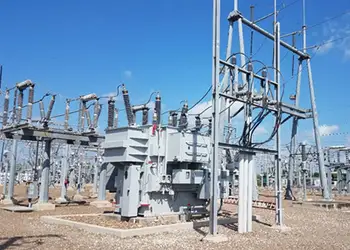
High Voltage Maintenance Training Online

Our customized live online or in‑person group training can be delivered to your staff at your location.
  • Live Online
  • 12 hours Instructor-led
  • Group Training Available
Regular Price:
$599
Coupon Price:
$499
Reserve Your Seat Today

Related News

Sub-Saharan Africa has a huge electricity problem - but with challenge comes opportunity

Sub-Saharan Africa Energy Access faces critical deficits; SDG7, clean energy finance, off-grid solar, and microgrids drive electrification for health, education, and economy amid World Bank and IEA efforts to expand reliable, affordable power.


Key Points

Reliable, affordable power in sub-Saharan Africa via renewables, off-grid solar, and SDG7-led electrification.

✅ SDG7 targets universal, modern energy access by 2030

✅ Off-grid solar and microgrids boost rural electrification

✅ Health, education, and business depend on reliable power


Sub-Saharan Africa has an electricity problem. While the world as a whole has made great strides when it comes to providing access to electricity and moving toward universal electricity access worldwide (the world average is now 90 per cent with access, up from 83 per cent in 2010), southern and western African states still lag far behind.

According to Tracking SDG7: The Energy Progress Report, produced by a consortium of organisations including the World Bank, the International Energy Agency and the World Health Organization, 759 million people were without electricity in 2019 and threequarters of them were based in sub-Saharan Africa. At just seven per cent, South Sudan had the lowest access figures; Chad, Burundi and Malawi were only marginally higher. What’s more, due to a combination of factors, the situation is getting worse. In total, the region’s access deficit increased from 556 million people in 2010 to 570 million people in 2019.

These days, being without electricity has an impact on every sphere of life. The Covid-19 pandemic only served to put this into sharper relief. Intermittent electricity meant vaccination doses that rely on cold storage were impossible to deliver and, as more than 70 per cent of the health facilities in sub-Saharan Africa have no access to reliable electricity, the problem was vast. But even without a global pandemic, having no power stymies opportunity in every field, from education to economics.

French photojournalist Pascal Maitre, who has spent much of his career writing about sub-Saharan Africa, wanted to document the problems faced by people in areas with no electricity. He thought particularly carefully about the location for his project. ‘First, I was thinking I could take images in the Democratic Republic of the Congo,’ he says. ‘But then I thought that if you chose a place that has war, it’s logical that electricity won’t really work. So, instead, I wanted to find a place that is quite stable. I decided to go to Benin, where they have a democracy. It is a good example of a country that’s not in really bad shape but where they still have this problem. Also, I didn’t want to go to a place that is very remote, where it is normal not to have good service. So I decided to go to a place around 50 kilometres from the capital that you can get to by road.’

Maitre visited several villages in the region, as well as making trips to Chad and Senegal, and encountered the full range of limitations engendered by the power shortage. From teachers struggling to conduct lessons in the dark to midwives forced to work with only the weak light from a phone, the situation was clearly unacceptable. ‘People were very, very, very upset,’ he says. ‘I conducted a lot of interviews in different villages and lack of electricity touches education, economy, business, security and also emigration, because people have to move to big cities or maybe to Europe to get jobs.’

Where once the situation might have been accepted as the norm, people today are fully aware of the ways in which they are held back by the lack of power. As Maitre remembers: ‘A guy said to me one day, “Do you think it is normal that last time my wife delivered a baby, the midwife had to hold her phone between her teeth in order to see what she was doing?” You feel very frustrated.’ He adds that the fact that most people now have mobile phones only highlights the hardship. ‘Before, maybe it was not so frustrating. But now, most of these people have cellphones. The cellphone company puts antennae everywhere so the phones work, but people cannot recharge their phones. They have to go to the market, where someone will come with a generator to recharge.’

Governments and global organisations are very aware of the problem across the world as a whole. Sustainable Development Goal 7 (SDG7) – one of the 17 goals set out in 2015 by the United Nations General Assembly – was designed to ensure universal access to affordable, reliable, sustainable and modern energy by 2030, underscoring the push for clean, affordable and sustainable electricity for all by 2030. As part of this goal, international financial flows to developing countries in support of clean energy reached US$17 billion in 2018. As a result, some areas have seen huge improvement. According to the Energy Progress Report, in Latin America and the Caribbean, and in Eastern and South-Eastern Asia, the advance of electrification has been enough to approach universal access. By 2019, in Western Asia and North Africa, and Central and South Asia, 94 and 95 per cent of the population respectively had access to electricity.

But these statistics only serve to emphasise just how bad the situation is in sub-Saharan Africa, where electricity systems are unlikely to go green this decade according to several analyses. As the report states: ‘While renewable energy has demonstrated remarkable resilience during the pandemic, the unfortunate fact is that gains in energy access throughout Africa are being reversed: the number of people lacking access to electricity is set to increase in 2020, making basic electricity services unaffordable for up to 30 million people who had previously enjoyed access.’

The small silver lining is that if the situation is dealt with properly, the region could build a renewable-energy system from the ground up, rather than having to undergo the costly and complex transitions underway in developed countries. In rural areas, small-scale or off-grid renewable systems (mostly solar) are expected to play an important role, as highlighted by a recent IRENA report on decarbonisation, in increasing access. In fact, solar panels are already used in many areas. In 2019, 105 million people had access to off-grid solar solutions, up from 85 million in 2016, and almost half lived in sub-Saharan Africa, with 17 million in Kenya and eight million in Ethiopia.

Rachel Kyte is currently serving as the 14th dean of the Fletcher School at Tufts University in the USA, but her CV is long. She was previously CEO of the UN-affiliated Sustainable Energy for All (SeforALL), as well as the World Bank Group vice president and special envoy for climate change, leading the run-up to the Paris Agreement. According to her, a focus on renewables is absolutely essential, both for wider efforts to tackle climate change, with some advocating a fossil fuel lockdown to drive a climate revolution, but also for the people of sub-Saharan Africa. ‘The fossil fuel industry has said it will just extend the centralised fossil-fuel power systems that we have today to reach these people,’ she says.


Related News

View more

Prevent Summer Power Outages

Summer Heatwave Electricity Shutoffs strain utilities and vulnerable communities, highlighting energy assistance, utility moratoriums, cooling centers, demand response, and grid resilience amid extreme heat, climate change, and rising air conditioning loads.


Key Points

Service disconnections for unpaid bills during extreme heat, risking vulnerable households and straining power grids.

✅ Moratoriums and flexible payment plans reduce shutoff risk.

✅ Cooling centers and assistance programs protect at-risk residents.

✅ Demand response, smart grids, and efficiency ease peak loads.


As summer temperatures soar, millions of people across the United States face the grim prospect of electricity shutoffs due to unpaid bills, as heat exacerbates electricity struggles for many families nationwide. This predicament highlights a critical issue exacerbated by extreme weather conditions and economic disparities.

The Challenge of Summer Heatwaves

Summer heatwaves not only strain power grids, as unprecedented electricity demand has shown, but also intensify energy consumption as households and businesses crank up their air conditioning units. This surge in demand places considerable stress on utilities, particularly in regions unaccustomed to prolonged heatwaves or lacking adequate infrastructure to cope with increased loads.

Vulnerable Populations

The threat of electricity shutoffs disproportionately affects vulnerable populations, including low-income households who face sky-high energy bills during extreme heat, elderly individuals, and those with underlying health conditions. Lack of access to air conditioning during extreme heat can lead to heat-related illnesses such as heat exhaustion and heatstroke, posing serious health risks.

Economic and Social Implications

The economic impact of electricity shutoffs extends beyond immediate discomfort, affecting productivity, food storage, and the ability to work remotely for those reliant on electronic devices, while rising electricity prices further strain household budgets. Socially, the inability to cool homes and maintain basic comforts strains community resilience and exacerbates inequalities.

Policy and Community Responses

In response to these challenges, policymakers and community organizations advocate for measures to prevent electricity shutoffs during heatwaves. Proposed solutions include extending moratoriums on shutoffs, informed by lessons from COVID-19 energy insecurity measures, implementing flexible payment plans, providing financial assistance to at-risk households, and enhancing communication about available resources.

Public Awareness and Preparedness

Raising public awareness about energy conservation during peak hours and promoting strategies to stay cool without overreliance on air conditioning are crucial steps towards mitigating electricity demand. Encouraging energy-efficient practices and investing in renewable energy sources also contribute to long-term resilience against climate-driven energy challenges.

Collaborative Efforts

Collaboration between government agencies, utilities, nonprofits, and community groups is essential in developing comprehensive strategies to safeguard vulnerable populations during heatwaves, especially when systems like the Texas power grid face renewed stress during prolonged heatwaves. By pooling resources and expertise, stakeholders can better coordinate emergency response efforts, distribute cooling centers, and ensure timely assistance to those in need.

Technology and Innovation

Advancements in smart grid technology and decentralized energy solutions offer promising avenues for enhancing grid resilience and minimizing disruptions during extreme weather events. These innovations enable more efficient energy management, demand response programs, and proactive monitoring of grid stability, though some utilities face summer supply-chain constraints that delay deployments.

Conclusion

As summer heatwaves become more frequent and severe, the risk of electricity shutoffs underscores the urgent need for proactive measures to protect vulnerable communities. By prioritizing equity, sustainability, and resilience in energy policy and practice, stakeholders can work towards ensuring reliable access to electricity, particularly during times of heightened climate vulnerability. Addressing these challenges requires collective action and a commitment to fostering inclusive and sustainable solutions that prioritize human well-being amid changing climate realities.


Related News

View more

Macron: France, Germany to provide each other with gas, electricity, to weather crisis

France-Germany Energy Solidarity underscores EU energy crisis cooperation: gas supply swaps, electricity imports, price cap talks, and curbs on speculation as Russian pipeline flows halt and winter demand rises across the bloc.


Key Points

A pact where France sends gas to Germany as Germany supplies power, bolstering EU cooperation and winter security.

✅ Gas to Germany; power to France amid nuclear outages.

✅ EU price cap, anti-speculation, joint gas purchasing.

✅ No new Spain-France pipeline unless case improves.


France will send gas to Germany if needed while Germany stands ready to provide it with electricity, President Emmanuel Macron said on Monday, saying this showcased European solidarity in the face of the energy crisis stemming from the war in Ukraine, which many view as a wake-up call to ditch fossil fuels across the bloc.

European gas prices surged, share prices slid and the euro sank on Monday after Russia stopped pumping gas via a major supply route, and Germany's 200 billion euro package sought to cushion the blow, in another warning to the 27-nation EU as it scrambled to respond to the crisis ahead of winter. read more

"Germany needs our gas and we need power from the rest of Europe, notably Germany," France's president told a news conference as EU electricity reform remains under debate following a phone call with German Chancellor Olaf Scholz.

The necessary connections for France to deliver gas to Germany when needed would be finalised in the coming weeks, he said, adding that France, which had long been a net exporter of electricity, will need help from its neighbours because of technical problems its nuclear plants face. read more

Macron, however, said that he did not understand demand for a third gas link between France and Spain, rejecting calls to increase capacity with a new pipeline.

He added he was open to changing his mind on that point, especially as Germany's utility troubles deepen, should Scholz or Prime Minister Pedro Sanchez argue convincingly for it.

Ahead of a meeting on Friday of EU energy ministers, Macron said France was in favour of buying gas at a European rather than a national level, as emergency electricity measures are weighed, and called for European Union measures to control energy prices.

He said it was necessary to act against speculation on energy prices at EU level, as the EU outlines possible gas price cap strategies for discussion, and also said France was in favour of putting a cap on the price of pipeline Russian gas.

Macron also repeated calls for all to turn down air conditioners when it's hot and to limit heating to 19 degrees Celsius this winter, noting that rolling back electricity prices is tougher than it appears this year.

"Everyone has to do their bit," he said.


Related News

View more

Alberta Proposes Electricity Market Changes

Alberta Electricity Market Reforms aim to boost grid reliability and efficiency through a day-ahead market, transmission policy changes, clearer pricing signals, AESO oversight, and smarter siting near existing infrastructure to lower consumer costs.


Key Points

Policies add a day-ahead market and transmission fees to modernize the grid and improve reliability.

✅ Day-ahead market for clearer pricing and scheduling

✅ Up-front, non-refundable transmission payments by generators

✅ AESO to draft new rules by end of 2025


The Alberta government is implementing significant electricity policy changes to its electricity market to enhance system reliability and efficiency. These reforms aim to modernize the grid, accommodate growing energy demands, and align with best practices observed in other jurisdictions.

Proposed Market Reforms

The government has outlined several key initiatives:

  • Day-Ahead Market Implementation: Introducing a day-ahead market is intended to provide clearer pricing signals and improve the scheduling of electricity generation. This approach allows market participants to plan and commit to energy production in advance, enhancing grid stability.

  • Transmission Policy Revisions: The government proposes reforms to transmission policies, including the introduction of up-front and non-refundable transmission payments from new power generators. These payments would vary based on the proximity of new generators to existing transmission lines with available capacity. As part of a broader market overhaul, this strategy encourages the development of power plants in areas where existing infrastructure can be utilized, potentially reducing costs for consumers and businesses.

Government's Objectives

Minister of Affordability and Utilities, Nathan Neudorf, emphasized that these changes are necessary to meet growing energy demands and modernize Alberta’s electricity system. The government's goal is to create a more reliable and efficient electrical system that benefits both consumers and the broader economy.

Industry Reactions

The proposed reforms have elicited mixed reactions from industry stakeholders amid profound sector change across Alberta:

  • Renewable Energy Sector Concerns: The Canadian Renewable Energy Association (CanREA) has expressed concerns about the potential for punitive market and transmission changes, and some retailers have similarly urged caution. They advocate for policies that support the integration of renewable energy sources and ensure fair treatment within the market.

  • Regulatory Oversight: The Alberta Electric System Operator (AESO) is tasked with preparing restructured energy market rules by the end of 2025. This timeline reflects the government's commitment to a thorough and consultative approach to market reform.

Implications for Consumers

The Alberta government's proposed market changes aim to enhance the reliability and efficiency of the electricity system by considering measures such as a Rate of Last Resort to provide additional stability. By encouraging the development of power plants in areas with existing infrastructure, the reforms seek to reduce costs for consumers and businesses. However, the success of these initiatives will depend on careful implementation and ongoing engagement with all stakeholders to balance the diverse interests involved.

Alberta's proposed electricity market reforms represent a significant step toward modernizing the province's energy infrastructure. By introducing a day-ahead market and revising transmission policies, the government aims to create a more reliable and efficient electrical system and promote market competition more effectively. While these changes have generated diverse reactions, they underscore the government's commitment to addressing the evolving energy needs of Alberta's residents and businesses.


Related News

View more

NL Consumer Advocate says 18% electricity rate hike 'unacceptable'

Newfoundland and Labrador electricity rate hike examines a proposed 18.6% increase under the PUB's Rate Stabilization Plan, driven by oil prices at Holyrood, with Consumer Advocate concerns over rate shock and use of RSP balances.


Key Points

A proposed 18.6% July 2017 increase under the RSP, driven by oil prices, now under PUB review for potential mitigation.

✅ PUB flags potential rate shock from proposed adjustment

✅ RSP balances cited to offset increases without depleting fund

✅ Oil-fired Holyrood volatility drives fuel cost uncertainty


How much of a rate hike is reasonable for users of electricity in Newfoundland and Labrador?

That's a question before the Public Utilities Board (PUB) as it examines an application by Newfoundland and Labrador Hydro, which could see consumers pay up to 18.6 per cent more as of July 1, reflecting regional pressures seen in Nova Scotia, where regulators approved a 14% rate hike earlier this year.

"The estimated rate increase for July 2017 is such a significant increase that it may be argued that it would cause rate shock," said the PUB, asking the company to revise its application.

NL Hydro said the price adjustment is part of what happens every year through the Rate Stabilization Plan (RSP), which is used to offset the ups and downs of oil prices.

"The cost of fuel is volatile and as long as we rely on oil-fired generation at Holyrood, customers will continue to be impacted by this electricity price uncertainty," said the company in a statement to CBC News.

It noted that customers received a break from RSP adjustments in 2015 and 2016, even as costs from the Muskrat Falls project begin to be reflected.

The PUB noted that under the rate stabilization plan, prices have gone up or down by about 10 per cent in the past.

The regulatory board said the impact of the latest request would be a 27.6 per cent hike to Newfoundland Power, with "an estimated average end customer impact of 18.6 per cent."

Hydro's estimates are based on an average price for oil of $81.40 per barrel from July 2017 to June 2018, according to the PUB.


'Unacceptable' burden: Consumer Advocate

"To burden ratepayers with an 18 per cent rate increase is unacceptable," said Consumer Advocate Dennis Browne, echoing pushback in Nova Scotia, where the premier urged regulators to reject a 14% hike at the time.

Browne is arguing that there is money in the RSP to reduce the proposed increase, including the possibility of a lump-sum bill credit for customers.

"These ratepayer balances — which, according to NL Power, totals $77.4 million — are not the property of Hydro," he wrote in a letter to the PUB.

"No utility has the right to squirrel away ratepayers' money to be used by that utility for some future purpose. The Board has jurisdiction over those balances," Browne said.

Browne also wants the RSP overhauled so that it can be applied to price fluctuations every quarter, as opposed to annually.

Hydro has expressed concern that depleting the rate stabilization fund would lead to other, more significant, rate increases in the future.

It said several alternatives to mitigate high rates have been provided to the PUB, which has final say, similar to how Manitoba Hydro scaled back a planned increase in the next year.


Related News

View more

Secret Liberal cabinet document reveals Electricity prices to soar

Ontario Hydro Rate Relief Plan delivers short-term electricity bill cuts, while leaked cabinet forecasts show inflation-linked hikes, borrowing costs, and a Clean Energy Adjustment under the province's long-term energy plan.


Key Points

A provincial plan that cuts bills now but defers costs, projecting rate hikes and adding a Clean Energy Adjustment.

✅ 25% cut now, after 8% HST relief; extra 17% reduction applied.

✅ Forecast: inflation-linked hikes later; borrowing adds long-term costs.

✅ Clean Energy Adjustment line to repay deferred system costs.


The short-term gain of a 25 per cent hydro rate cut this summer could lead to long-term pain as a leaked cabinet document forecasts prices jumping again in five years.

In the briefing materials leaked and obtained by the Progressive Conservatives, rates will start rising 6.5 per cent a year in 2022 and top out at 10.5 per cent in 2028, when average monthly bills hit $215.

That would be up from $123 this year once the rate cut — the subject of long-awaited legislation to lower electricity rates unveiled Thursday by Energy Minister Glenn Thibeault — takes full effect. There will be another 17-per-cent cut in addition to the 8 per cent taken off bills in January when the provincial portion of the HST was waived.

The leaked papers overshadowed Thibeault’s efforts to tout the price break, which will be followed with four years of hydro rate increases at 2 per cent, roughly the rate of inflation.

Thibeault charged that the Conservatives used an “outdated” document to distract from the fact that they are the only major party without a plan for dealing with skyrocketing hydro rates, with a year to go until next June’s provincial election.

“It’s not a coincidence,” he told reporters, denying any plans for an eventual 10.5-per-cent rate hike and promising the government’s new long-term energy plan, due in a few months, will have better numbers.

“We are working hard right now to continue to pull costs out of the system.”

Opposition parties said the Liberal plan doesn’t deal with the underlying problems that have made electricity expensive and simply borrows money to spread the costs over a longer period of time, with $25 billion in interest charges over 30 years.

Some observers also noted that a deal with Quebec would not reduce hydro bills, highlighting concerns about lasting affordability.

“The price of electricity is going to skyrocket after the next election,” warned Conservative MPP Todd Smith (Prince Edward—Hastings).

“The government isn’t being honest with the people of Ontario when it comes to the price of electricity.”

The documents show average monthly bills peaking at $231 in the year 2047, before falling back to $210 the following year once the 30 years of interest payments are over.

Conservative sources say they obtained the papers stamped “confidential cabinet document” from a whistleblower after Thibeault’s rate cut plan was presented to cabinet ministers at a meeting in early March.

There is no date on the document, which the energy minister alternately dismissed as “inaccurate” or possibly one of many that have been prepared with different options in mind.

“We’ve had hundreds of briefings with hundreds of documents … I can’t comment on one graph when we’ve been looking at hundreds of scenarios.”

New Democrats, who have proposed a scheme to cut rates, if elected, also called the government plan an election ploy with Liberals lagging in the polls.

“We’re going to take on a huge debt so (Premier) Kathleen Wynne can look good on the hustings in the next few months, and for decades we’re going to pay for it,” said MPP Peter Tabuns (Toronto-Danforth).

Thibeault acknowledged the Liberal plan will start repaying borrowed money in the mid- or late 2020s and it will show up separately on hydro bills as the “Clean Energy Adjustment”, a kind of electricity recovery rate that could raise costs.


Related News

View more

Sign Up for Electricity Forum’s Newsletter

Stay informed with our FREE Newsletter — get the latest news, breakthrough technologies, and expert insights, delivered straight to your inbox.

Electricity Today T&D Magazine Subscribe for FREE

Stay informed with the latest T&D policies and technologies.
  • Timely insights from industry experts
  • Practical solutions T&D engineers
  • Free access to every issue

Download the 2025 Electrical Training Catalog

Explore 50+ live, expert-led electrical training courses –

  • Interactive
  • Flexible
  • CEU-cerified