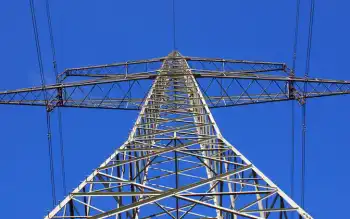
TransAlta commissions second Mexican power plant

By TransAlta


Protective Relay Training - Basic

Our customized live online or in‑person group training can be delivered to your staff at your location.

  • Live Online
  • 12 hours Instructor-led
  • Group Training Available
Regular Price:
$699
Coupon Price:
$599
Reserve Your Seat Today
September 9, 2003 -- TransAlta Corporation (TSX:TA; NYSE:TAC) today began commercial operation of its new US$258 million, 259-megawatt (MW) Chihuahua III combined-cycle gas-fired power plant. The plant is located approximately 40 km(25 miles) south of the U.S. / Mexico border near Cuidad de Juarez. The plant's electrical output is sold under a 25-year contract to Mexico's government-owned utility, the Comision Federal de Electricidad (CFE).

"Chihuahua III is a long-term investment that allows us to diversify our portfolio and increase generation capacity in the strong Mexican market," said Steve Snyder, TransAlta President and CEO. "We look forward to supplying Mexico's growing and modern economy with clean, reliable, and affordable energy."

TransAlta owns and operates 511 MW of power generation in Mexico and employs 83 people at two power plants and one regional office. TransAlta's first power plant in Mexico was the 252-MW combined-cycle gas- and diesel-fuelled Campeche power plant located in the state of Campeche on the Yucatan Peninsula. Campeche's output is also sold under long-term contract to the CFE.

TransAlta is Canada's largest non-regulated power generation and wholesale marketing company. We have close to $9 billion in coal-fired, gas-fired, hydro and renewable generation assets in Canada, the U.S., Mexico and Australia. With approximately 10,000 megawatts of capacity either in operation, under construction or in development, our focus is to efficiently operate our assets in order to provide our wholesale customers with a reliable, low-cost source of power.

Related News
Lawmakers question FERC licensing process for dams in West Virginia

FERC Hydropower Licensing Dispute centers on FERC authority, Clean Water Act compliance, state water quality certifications, Federal Power Act timelines, and Army Corps dams on West Virginia's Monongahela River licenses.


Key Points

An inquiry into FERC's licensing process and state water quality authority for hydropower at Monongahela River dams.

✅ Questions on omitted state water quality conditions

✅ Debate over starting Clean Water Act certification timelines

✅ Potential impacts on states' rights and licensing schedules


As federal lawmakers, including Democrats pressing FERC, plan to consider a bill that would expand Federal Energy Regulatory Commission (FERC) licensing authority, questions emerged on Tuesday about the process used by FERC to issue two hydropower licenses for existing dams in West Virginia.

In a letter to FERC Chairman Neil Chatterjee, Democratic leaders of the House Energy and Commerce Committee, as electricity pricing changes were being debated, raised questions about hydropower licenses issued for two dams operated by the U.S. Army Corps of Engineers on the Monongahela River in West Virginia.

U.S. Reps. Frank Pallone Jr. (D-NJ), the ranking member of the Subcommittee on Energy, Bobby Rush (D-IL), the ranking member of the Subcommittee on Environment, and John Sarbanes (D-MD), amid Maryland clean energy enforcement concerns, questioned why FERC did not incorporate all conditions outlined in a West Virginia Department of Environmental Protection water quality certificate into plans for the projects.

“By denying the state its allotted time to review this application and submit requirements on these licenses, FERC is undermining the state’s authority under the Clean Water Act and Federal Power Act to impose conditions that will ensure water quality standards are met,” the letter stated.

The House of Representatives was slated to consider the Hydropower Policy Modernization Act of 2017, H.R. 3043, later in the week. The measure would expand FERC authority over licensing processes, a theme mirrored in Maine's transmission line debate over interstate energy projects. Opponents of the bill argue that the changes would make it more difficult for states to protect their clean water interests.

West Virginia has announced plans to challenge FERC hydropower licenses for the dams on the Monongahela River, echoing Northern Pass opposition seen in New Hampshire.


Related News

View more

EIA expects solar and wind to be larger sources of U.S. electricity generation this summer

US Summer Electricity Outlook 2022 projects rising renewable energy generation as utility-scale solar and wind capacity additions surge, while coal declines and natural gas shifts amid higher fuel prices and regional supply constraints.


Key Points

An EIA forecast of summer 2022 power: more solar and wind, less coal, and shifting gas use amid higher fuel prices.

✅ Solar +10 million MWh; wind +8 million MWh vs last summer

✅ Coal generation -20 million MWh amid supply constraints, retirements

✅ Gas prices near $9/MMBtu; slight national gen decline


In our Summer Electricity Outlook, a supplement to our May 2022 Short-Term Energy Outlook, we expect the largest increases in U.S. electric power sector generation this summer will come from renewable energy sources such as wind and solar generation. These increases are the result of new capacity additions. We forecast utility-scale solar generation between June and August 2022 will grow by 10 million megawatthours (MWh) compared with the same period last summer, and wind generation will grow by 8 million MWh. Forecast generation from coal and natural gas declines by 26 million MWh this summer, although natural gas generation could increase in some electricity markets where coal supplies are constrained.

For recent context, overall U.S. power generation in January rose 9.3% year over year, the EIA reports.

Wind and solar power electric-generating capacity has been growing steadily in recent years. By the start of June, we estimate the U.S. electric power sector will have 65 gigawatts (GW) of utility-scale solar-generating capacity, a 31% increase in solar capacity since June 2021. Almost one-third of this new solar capacity will be built in the Texas electricity market. The electric power sector will also have an estimated 138 GW of wind capacity online this June, which is a 12% increase from last June.

Along with growth in renewables capacity, we expect that an additional 6 GW of new natural gas combined-cycle generating capacity will come online by June 2022, an increase of 2% from last summer. Despite this increase in capacity, we expect natural gas-fired electricity generation at the national level will be slightly (1.3%) lower than last summer.

We forecast the price of natural gas delivered to electric generators will average nearly $9 per million British thermal units between June and August 2022, which would be more than double the average price last summer. The higher expected natural gas prices and growth in renewable generation will likely lead to less natural gas-fired generation in some regions of the country.

In contrast to renewables and natural gas, the electricity industry has been steadily retiring coal-fired power plants over the past decade. Between June 2021 and June 2022, the electric power sector will have retired 6 GW (2%) of U.S. coal-fired generating capacity.

In previous years, higher natural gas prices would have resulted in more coal-fired electricity generation across the fleet. However, coal-fired power plants have been limited in their ability to replenish their historically low inventories in recent months as a result of mine closures, rail capacity constraints, and labor market tightness. These coal supply constraints, along with continued retirement of generating capacity, contribute to our forecast that U.S. coal-fired generation will decline by 20 million MWh (7%) this summer. In some regions of the country, these coal supply constraints may lead to increased natural gas-fired electricity generation despite higher natural gas prices.


Related News

View more

Freezing Rain Causes Widespread Power Outages in Quebec

Quebec Ice Storm 2025 disrupted power across Laurentians and Lanaudiere as freezing rain downed lines; Hydro-QuE9bec crews accelerated grid restoration, emergency response, and infrastructure resilience amid ongoing outages and severe weather alerts.


Key Points

Quebec Ice Storm 2025 brought freezing rain, outages, and grid damage, hitting Laurentians and Lanaudiere hardest.

✅ Peak: 62,000 Hydro-QuE9bec customers without electricity

✅ Most outages in Laurentians and Lanaudiere regions

✅ Crews repairing lines; restoration updates ongoing


A significant weather event struck Quebec in late March 2025, as a powerful ice storm caused widespread power outages across the province. The storm led to extensive power outages, affecting tens of thousands of residents, particularly in the Lanaudière and Laurentians regions. ​

Impact on Power Infrastructure

The freezing rain accumulated on power lines and vegetation, leading to numerous power outages across the network. Hydro-Québec reported that at its peak, over 62,000 customers were without electricity, with the majority of outages concentrated in the Laurentians and Lanaudière regions. By the afternoon, the number decreased to approximately 30,000, and further to just under 18,500 by late afternoon. 

Comparison with Previous Storms

While the March 2025 ice storm caused significant disruptions, it was less severe compared to the catastrophic ice storm of April 2023, which left 1.1 million Hydro-Québec customers without power. Nonetheless, the 2025 storm's impact was considerable, leading to the closure of municipal facilities and posing challenges for local economies, a pattern echoed when Toronto outages persisted for hundreds after a spring storm.

Ongoing Challenges

As of April 1, 2025, some areas continued to experience power outages, and incidents such as a manhole fire left thousands without service in separate cases. Hydro-Québec and municipal authorities worked diligently to restore services and address the aftermath of the storm, while Hydro One crews restored power to more than 277,000 customers after damaging storms in Ontario. Residents were advised to stay updated through official channels for restoration timelines and safety information.

Future Preparedness

The recurrence of such severe weather events highlights the importance of robust infrastructure and emergency preparedness, as seen in BC Hydro's storm response to an 'atypical' event that demanded extensive coordination. Both utility companies and residents must remain vigilant, especially during seasons prone to unpredictable weather patterns, with local utilities like Sudbury Hydro crews working to reconnect service after regional storms.


Related News

View more

Substation Maintenance Training

Substation Maintenance Training delivers live online instruction on testing switchgear, circuit breakers, transformers, protective relays, batteries, and SCADA systems, covering safety procedures, condition assessment, predictive maintenance, and compliance for utility substations.


Key Points

A live online course on testing and maintaining substation switchgear, breakers, transformers, relays, and batteries.

✅ Live instructor-led, 12-hour web-based training

✅ Covers testing: insulation resistance, contact resistance, TLI

✅ Includes 7 days of post-course email mentoring


Our Substation Maintenance Training course is a 12-Hour Live online instruction-led course that will cover the maintenance and testing requirements for common substation facilities, and complements VFD drive training for professionals managing motor control systems.

Electrical Transformer Maintenance Training

Substation Maintenance Training

Request a Free Training Quotation

Electrical Substation maintenance is a key component of any substation owner's electrical maintenance program. It has been well documented that failures in key procedures such as racking mechanisms, meters, relays and busses are among the most common source of unplanned outages. Electrical transmission, distribution and switching substations, as seen in BC Hydro's Site C transmission line work milestone, generally have switching, protection and control equipment and one or more transformers.Our electrical substation maintenance course focuses on maintenance and testing of switchgear, circuit breakers, batteries and protective relays.

This Substation Maintenance Training course will cover the maintenance and testing requirements for common substation devices, including power transformers, oil, air and vacuum circuit breakers, switchgear, ground grid systems aligned with NEC 250 grounding and bonding guidance, batteries, chargers and insulating liquids. This course focuses on what to do, when to do it and how to interpret the results from testing and maintenance. This Substation Maintenance course will deal with all of these important issues.

You Can Access The Live Online Training Through Our Web-Based Platform From Your Own Computer. You Can See And Hear The Instructor And See His Screen Live.

You Can Interact And Ask Questions, similar to our motor testing training sessions delivered online. The Cost Of The Training Also Includes 7 Days Of Email Mentoring With The Instructor.


LEARNING OBJECTIVES

  • Substation Types, Applications, Components And lightning protection systems safety procedures
  • Maintenance And Testing Methods For Medium-Voltage Circuit Breakers
  • How To Perform Insulation Resistance, Contact Resistance On Air, Oil And Vacuum Breakers, And Tank Loss Index On Oil Circuit Breaker And Vacuum Bottle Integrity Tests On Vacuum Breaker
  • Switchgear Arrangement, Torque Requirements, Insulation Systems, grounding guidelines And Maintenance Intervals
  • How To Perform Switchgear Inspection And Maintenance


WHO SHOULD ATTEND

This course is designed for engineering project managers, engineers, and technicians from utilities who have built or are considering building or retrofitting substations or distribution systems with SCADA and substation integration and automation equipment, and for teams focused on electrical storm safety in the field.

Complete Course Details Here:

https://electricityforum.com/electrical-training/substation-maintenance-training


Related News

View more

Plan to End E-Vehicle Subsidies Sparks Anger in Germany

Germany EV Subsidy Cut triggers budget-crisis fallout in the automotive industry, after a constitutional court ruling; EV incentives end, threatening electromobility adoption, manufacturer competitiveness, 2030 targets, and demand amid Chinese competition and weak global growth.


Key Points

A sudden end to Germany's EV incentives due to a budget shortfall after a court ruling, hurting automakers and adoption.

✅ Ends buyer rebates amid budget crisis ruling

✅ Risks 2030 EV targets and industry competitiveness

✅ Weak demand and China competition intensify


The German government has faced a backlash after abruptly ending an electric car subsidy scheme in a blow to the already struggling automotive industry.

The scheme is one of the casualties of a budget crisis caused by a shock constitutional court ruling in November that upended the government's spending plans.

The economy ministry said Saturday that Sunday would be the last day prospective buyers could apply for the scheme, which paid out thousands of euros per customer to partially cover the cost of buying an electric car today.

A spokesman for the ministry admitted it was an "unfortunate situation" for consumers who had been hoping to take advantage of the subsidy, but it had no choice "because there is no longer enough money available."

Analyst Ferdinand Dudenhoeffer from the Center for Automotive Research warned the decision could have dramatic consequences amid a Europe EV slump already pressuring demand.

"The competitiveness of [auto] manufacturers will now be severely damaged," Dudenhoeffer told the Rheinische Post newspaper.

The Handelsblatt business daily had already warned that scrapping the scheme risked jeopardizing Germany's plans to get 15 million electric cars on the road by 2030, even though the EU EV share grew during lockdowns earlier in the pandemic.

"This goal was already considered extremely unrealistic. Now it seems completely illusory," it wrote.

In the UK, analysts warn that electric cars could cost more if a post-Brexit deal is not reached, underscoring wider market uncertainties.

A total of around 10 billion euros ($1.1 billion) has been paid out since 2016 under the scheme for around 2.1 million electric vehicles, according to the economy ministry.

Germany's flagship automotive industry, including Volkswagen, has been struggling with the transition to electromobility due to a weak global economy and low levels of demand.

In addition, it is facing a serious challenge from homegrown rivals in China, one of its most important markets, as France moves to discourage Chinese EVs with new rules.

"The Chinese are massively expanding their car industry because they have customers. Our manufacturers no longer have any," Dudenhoeffer said, as France's incentive rules make the market tougher for Chinese brands.

Germany's highest court decided last month that the government had broken a constitutional debt rule when it transferred 60 billion euros earmarked for pandemic support to a climate fund.

The bombshell ruling blew a huge hole in spending plans and plunged Chancellor Olaf Scholz's three-way coalition into turmoil.

After adopting an emergency budget for 2023, Scholz and his junior coalition partners battled for weeks before finally finding an agreement for 2024.


Related News

View more

Ottawa won't oppose halt to Site C work pending treaty rights challenge

Site C Dam Injunction signals Ottawa's neutrality while B.C. reviews a hydroelectric dam project on the Peace River, amid First Nations treaty rights claims, federal approval defenses, and scrutiny of environmental assessment and Crown consultation.


Key Points

A legal request to pause Site C while courts weigh First Nations treaty rights, environmental review, and approvals.

✅ Ottawa neutral on injunction; still defends federal approvals

✅ First Nations cite treaty rights over Peace River territory

✅ B.C. jurisdiction, environmental assessment and Crown consultation at issue


The federal government is not going to argue against halting construction of the controversial Site C hydroelectric dam in British Columbia while a B.C. court decides if the project violates constitutionally protected treaty rights.


Work on Site C suspended prior to First Nations lawsuit

However a spokeswoman for Environment Minister Catherine McKenna said Monday the government will continue to defend the federal approval given for the project in December 2014, even though that approval was given using an environmental review process McKenna herself has said is fundamentally flawed.

The Site C project is an 1,100-megawatt dam and generating station on the Peace River in northern B.C. that will flood parts of the traditional territory of the West Moberly and Prophet River First Nations.

#google#

In January, they filed a civil court case against the provincial government, B.C. Hydro and the federal government asking a judge to decide if their rights were being violated by the dam. A few weeks later, West Moberly asked the court for an injunction to halt construction pending the outcome of the rights case, similar to other contested transmission projects like the Maine electricity corridor debate in New England.

On May 11, lawyers for Attorney General Jody Wilson-Raybould filed a notice that Canada would remain neutral on the question of the injunction, meaning Canada won't argue against the idea of postponing construction for months, if not years, while the rights case winds through the court.

Wilson-Raybould has been silent on Site C since being named Canada's minister of justice in 2015, but in 2012, when she was the B.C. regional chief for the Assembly of First Nations, she said the project was "running roughshod" over treaty rights. The Justice Department on Monday directed questions to Environment and Climate Change Canada.


Defence of environmental assessment

McKenna's spokeswoman, Caroline Theriault, said the injunction request is just a procedural step regarding construction and that it is B.C. jurisdiction not federal.

However, she said Canada will defend the environmental assessment and Crown consultation processes and the federally issued permits required for construction.


B.C. auditor general set to scrutinize Site C dam project

McKenna has legislation before the House of Commons to overhaul the process for environmental assessment of major projects like hydro dams and pipelines, arguing the former government's procedures had skewed too far towards proponents. The overhaul includes requiring traditional Indigenous knowledge be taken into account, a consideration also central to the Columbia River Treaty talks underway on both sides of the border.

However, Theriault said the commitment to overhaul the process also included a promise not to revisit projects that had already been approved, such as Site C.

"The federal environmental assessment process for the Site C project has already been upheld in other court actions," said Theriault.


'It feels kind of odd'

West Moberly Chief Roland Wilson said he was both excited and yet concerned by Canada's decision last week not to oppose the injunction.

"It feels kind of odd and makes me wonder what they're up to," Wilson said.

However he said all he has ever wanted was for the project to be stopped until the question of rights can be answered. Wilson said two previous dams on the Peace River already flooded 80 per cent of the functional land within West Moberly's territory and that Site C will flood half of what's left. That land is used for fishing and hunting and there is also concern the dam will allow mercury to leak into Moberly Lake, he said.


Retiree undaunted by steep odds against his petition to stop Site C dam

Construction began in 2015 and more than $2.4 billion has already been spent on a project that will at the earliest, not be completed until 2024 and will cost an estimated $10 billion total, with cost overrun risks underscored by the Muskrat Falls ratepayer agreement in Atlantic Canada.

The province continues to argue against the injunction and will also fight the rights case, even as Alberta suspends power purchase talks with B.C. over energy disputes. Premier John Horgan campaigned on a promise to review the Site C approval. A B.C. Utilities Commission report in November found there are alternatives to building it and that it will go over budget. Nevertheless Horgan in December said he had to let construction continue because cancelling the project would be too costly both for the province and its electricity consumers, despite the B.C. rate freeze announced around the same period.


Related News

View more

Sign Up for Electricity Forum’s Newsletter

Stay informed with our FREE Newsletter — get the latest news, breakthrough technologies, and expert insights, delivered straight to your inbox.

Electricity Today T&D Magazine Subscribe for FREE

Stay informed with the latest T&D policies and technologies.
  • Timely insights from industry experts
  • Practical solutions T&D engineers
  • Free access to every issue

Download the 2025 Electrical Training Catalog

Explore 50+ live, expert-led electrical training courses –

  • Interactive
  • Flexible
  • CEU-cerified