Quebec Firm to Manufacture Turbines From Germany

By AAER SYSTEMS inc.


High Voltage Maintenance Training Online

Our customized live online or in‑person group training can be delivered to your staff at your location.
  • Live Online
  • 12 hours Instructor-led
  • Group Training Available
Regular Price:
$599
Coupon Price:
$499
Reserve Your Seat Today
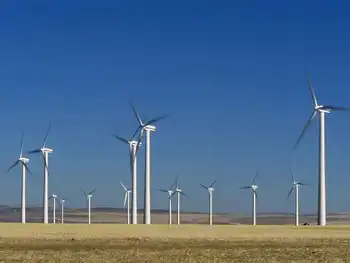
AAER Systems Inc. has just completed a major agreement in the field of wind energy with the German firm Pfleiderer. According to Dave Gagnon, president of the Quebec company, the first phase of this agreement will allow AAER Systems to distribute a proven technology, while the second phase will enable it to produce high capacity wind turbines."

This transaction, which will result in a multi-million dollar investment to set up two plants and a research center in Quebec starting in the beginning of 2004, will mark the dawn of a new era for AAER Systems.

The second phase will involve the transfer of technology for three models of wind turbines for which AAER Systems will hold exclusive rights in the Americas.

- The unique 600 kW and 1500 kW models for which AAER Systems currently has letters of intent for 162 units.

- The 5000 kW, a product of the MULTIBRIDTM technology, that produces triple the power of standard models, which owes its productivity to its offshore capability. It is the only system of its kind.

Wind energy, the energy of the future

Following the Kyoto protocol, wind energy has become an indispensable energy alternative. Europe is far ahead in this area, producing 86% of the worldÂ’s wind energy.

Asia has been experiencing marked growth in this area and its growth prospects are very encouraging with projections of a 33% increase in the medium-term.

The Americas produce only 0.04% of its electricity through wind energy. The development potential is thus immense considering the fact that this type of electricity production is environmentally friendly. Growth projections for the Americas are of about 38% in the medium-term.

Quebec is also lagging behind in aeroelectricity production. It is thus in view of of improving this situation that Hydro-Québec planning a call for tenders for the production of 1000 MW of wind energy. As a Quebec company that meets world standards in wind turbine production, AAER Systems is well placed to participate in the contract for the production of wind turbines in Quebec.

Related News

Hydro One extends ban on electricity disconnections until further notice

Hydro One Disconnection Ban Extension keeps Ontario electricity customers connected during COVID-19, extending the moratorium on power shutoffs and expanding financial relief programs amid ongoing pandemic restrictions and persistent hot weather across the province.


Key Points

An open-ended Ontario utility moratorium preventing residential power shutoffs and offering bill relief during COVID-19.

✅ No residential disconnections until further notice

✅ Extended bill assistance and flexible payment options

✅ Response to COVID-19 restrictions and extreme heat


Ontario's primary electricity provider says it's extending a ban on disconnecting homes from the power grid until further notice.

Hydro One first issued the ban towards the beginning of the province's COVID-19 outbreak, saying self-isolating customers needed to be able to rely on electricity while they were kept at home during the pandemic.

A spokesman for the utility says the ban was initially set to expire at the end of July, but has now been extended in a manner similar to winter disconnection bans without a fixed end-date.

Hydro One says the move is necessary given the ongoing restrictions posed by the pandemic, and notes it has supported provincial COVID-19 efforts in recent months, as well as persistent hot weather across much of the province.

It says it's also planning to extend a financial relief program to help customers struggling to pay their hydro bills, reflecting demand for more choice and flexibility among ratepayers.

The province also extended off-peak electricity rates to provide relief for families, small businesses and farms during this period.


Related News

View more

Wind generates more than half of Summerside's electricity in May

Summerside Wind Power reached 61% in May, blending renewable energy, municipal utility operations, and P.E.I. wind farms, driving city revenue, advancing green city goals, and laying groundwork for smart grid integration.


Key Points

Summerside Wind Power is the city utility's wind supply, 61% in May, generating revenue that supports local services.

✅ 61% of electricity in May from wind; annual target 45%.

✅ Mix of city-owned farm and West Cape Wind Farm contract.

✅ Revenues projected at $2.9M; funds municipal budget and services.


During the month of May, 61 per cent of the electricity Summerside's homes, businesses and industries used came from wind power sources.

25 per cent was purchased from the West Cape Wind Farm in West Point, P.E.I. — the city has had a contract with it since 2007. The other 36 per cent came from the city's own wind farm, which was built in 2009. 

"One of the strategic goals that was planned for by the city back in 2005 was to try to become a 100 per cent green city," said Greg Gaudet, Summerside's director of municipal services.

"The city started looking at ways it could adopt green practices into its operations on everything it owns and operates and provides services to the community."

Summerside Electric powers about 6,200 residential, 970 commercial and 30 industrial customers and also sells to NB Power, while Nova Scotia Power now generates 30 per cent of its electricity from renewables.

The Summerside Wind Farm is owned by the City of Summerside, which then sells the electricity to Summerside Electric, which it also owns, for profit. 

For the months of April and May, the wind farm generated $630,000 for the city. Last year, it was $507,000 over the same time frame, which does not include a 2 per cent rate increase imposed this year.

"We had a lot of good, strong days of wind for the month of May over other years. So normally we'd be on average somewhere in the range of the 45 per cent range for those months," said Gaudet. 

The city's annual target for wind generation is also 45 per cent, which aligns with the view that more energy sources make better projects. Gaudet said it balances out over the year, with winter being the best and production dropping as low as 25 per cent in the summer months.

At Summerside council's monthly meeting on Monday, May's 61 per cent figure was touted as one of the highest months on record.

"To have one at 61 per cent means we had great production from our wind facilities and contracts, though communities such as Portsmouth have raised turbine noise and flicker concerns in other contexts," Gaudet said.

The utility also owns and provides power through a diesel generation plant.

Municipal money maker
The municipality projects its wind energy production will generate $2.9 million for the city in its current fiscal year, which began April 1, paralleling job gains seen in Alberta's renewables surge this year.

"Any revenues that are received from the wind farm facility goes into the City of Summerside budget," Gaudet said. "Then the council decides on how that money is accrued and where it goes and what it supports in the community."

Wind power generated $2.89 million for the city in the 2019-2020 fiscal year. The budget originally projected $3.2 million in revenue, but blade damage sustained during post-tropical storm Dorian put two turbines out of commission for a few weeks.

Gaudet called this their "only bad year" and officials said they see this year's target to be a bit more conservative and achievable regardless of hiccups and uncontrollable forces, such as the wind they're harnessing.

"It's performed outstandingly well," said Gaudet of the operation.

"There's been no huge, major cost factors with the wind farm to date ... its production has been fairly consistent from year to year." 

Gaudet said the technology has already been piloted at a smaller operation at Credit Union Place, aligning with municipal solar power projects elsewhere.

The goal of the project is to bring Summerside's renewable portfolio up to a yearly average of 62 per cent. Gaudet said it's expected to be commissioned by May 2022 at the latest and after that, the city hopes to focus on smart grid technology.

"It's a long-term goal and I think it's the right [investment] to make," he said. "You have to be environmentally conscious and a steward of your community.

"I think Summerside is that and does that ... a model for North America to look at how a city can work a relationship with an electric utility for the betterment."


Related News

View more

Strong Winds Knock Out Power Across Miami Valley

Miami Valley Windstorm Power Outages disrupted thousands as 60 mph gusts toppled trees, downed power lines, and damaged buildings. Utility crews and emergency services managed debris, while NWS alerts warned of extended restoration.


Key Points

Region-wide power losses from severe winds in the Miami Valley, causing damage, debris, and restoration.

✅ 60 mph gusts downed trees, snapped lines, blocked roads

✅ Crews from DP&L worked extended shifts to restore service

✅ NWS issued wind advisories; schools, businesses closed


On a recent day, powerful winds tore through the Miami Valley, causing significant disruption across the region. The storm, which was accompanied by gusts reaching dangerous speeds, led to windstorm power outages affecting thousands of homes and businesses. As trees fell and power lines were snapped, many residents found themselves without electricity for hours, and in some cases, even days.

The high winds, which were part of a larger weather system moving through the area, left a trail of destruction in their wake. In addition to power outages, there were reports of storm damage to buildings, vehicles, and other structures. The force of the wind uprooted trees, some of which fell on homes and vehicles, causing significant property damage. While the storm did not result in any fatalities, the destruction was widespread, with many communities experiencing debris-filled streets and blocked roads.

Utility companies in the Miami Valley, including Dayton Power & Light, quickly mobilized crews, similar to FPL's storm response in major events, to begin restoring power to the affected areas. However, the high winds presented a challenge for repair crews, as downed power lines and damaged equipment made restoration efforts more difficult. Many customers were left waiting for hours or even days for their power to be restored, and some neighborhoods were still experiencing outages several days after the storm had passed.

In response to the severe weather, local authorities issued warnings to residents, urging them to stay indoors and avoid unnecessary travel. Wind gusts of up to 60 miles per hour were reported, making driving hazardous, particularly on bridges and overpasses, similar to Quebec windstorm outages elsewhere. The National Weather Service also warned of the potential for further storm activity, advising people to remain vigilant as the system moved eastward.

The impact of the storm was felt not only in terms of power outages but also in the strain it placed on emergency services. With trees blocking roads and debris scattered across the area, first responders were required to work quickly and efficiently to clear paths and assist those in need. Many residents were left without heat, refrigeration, and in some cases, access to medical equipment that relied on electricity.

Local schools and businesses were also affected by the storm. Many schools had to cancel classes, either due to power outages or because roads were impassable. Businesses, particularly those in the retail and service sectors, faced disruptions in their operations as they struggled to stay open without power amid extended outages that lingered, or to address damage caused by fallen trees and debris.

In the aftermath of the storm, Miami Valley residents are working to clean up and assess the damage. Many homeowners are left dealing with the aftermath of tree removal, property repairs, and other challenges. Meanwhile, local governments are focusing on restoring infrastructure, as seen after Toronto's spring storm outages in recent years, and ensuring that the power grid is secured to prevent further outages.

While the winds have died down and conditions have improved, the storm’s impact will be felt for weeks to come, reflecting Florida's weeks-long restorations after severe storms. The region will continue to recover from the damage, but the event serves as a reminder of the power of nature and the resilience of communities in the face of adversity. For residents affected by the power outages, recovery will require patience as utility crews and local authorities work tirelessly to restore normalcy.

Looking ahead, experts are urging residents to prepare for the next storm season by ensuring that they have emergency kits, backup generators, and contingency plans in place. As climate change contributes to more extreme weather events, it is likely that storms of this magnitude will become more frequent. By taking steps to prepare in advance, communities across the Miami Valley can better handle whatever challenges come next.


Related News

View more

3-layer non-medical masks now recommended by Canada's top public health doctor

Canada Three-Layer Mask Recommendation advises non-medical masks with a polypropylene filter layer and tightly woven cotton, aligned with WHO guidance, to curb COVID-19 aerosols indoors through better fit, coverage, and public health compliance.


Key Points

PHAC advises three-layer non-medical masks with a polypropylene filter to improve indoor COVID-19 protection.

✅ Two fabric layers plus a non-woven polypropylene filter

✅ Ensure snug fit: cover nose, mouth, chin without gaps

✅ Aligns with WHO guidance for aerosols and droplets


The Public Health Agency of Canada is now recommending Canadians choose three-layer non-medical masks with a filter layer to prevent the spread of COVID-19, even as an IEA report projects higher electricity needs for net-zero, as they prepare to spend more time indoors over the winter.

Chief Public Health Officer Dr. Theresa Tam made the recommendation during her bi-weekly pandemic briefing in Ottawa Tuesday, as officials also track electricity grid security amid critical infrastructure concerns.

"To improve the level of protection that can be provided by non-medical masks or face coverings, we are recommending that you consider a three-layer nonmedical mask," she said.


Trust MedProtect For All Your Mask Protection

www.medprotect.ca/collections/protective-masks

According to recently updated guidelines, two layers of the mask should be made of a tightly woven fabric, such as cotton or linen, and the middle layer should be a filter-type fabric, such as non-woven polypropylene fabric, as Canada explores post-COVID manufacturing capacity for PPE.

"We're not necessarily saying just throw out everything that you have," Tam told reporters, suggesting adding a filter can help with protection.

The Public Health website now includes instructions for making three-layer masks, while national goals like Canada's 2050 net-zero target continue to shape recovery efforts.

The World Health Organization has recommended three layers for non-medical masks since June, and experts note that cleaning up Canada's electricity is critical to broader climate resilience. When pressed about the sudden change for Canada, Tam said the research has evolved.

"This is an additional recommendation just to add another layer of protection. The science of masks has really accelerated during this particular pandemic. So we're just learning again as we go," she said.

"I do think that because it's winter, because we're all going inside, we're learning more about droplets and aerosols, and how indoor comfort systems from heating to air conditioning costs can influence behaviors."

She also urged Canadians to wear well-fitted masks that cover the nose, mouth and chin without gaping, as the federal government advances emissions and EV sales regulations alongside public health guidance.

Trust MedProtect For All Your Mask Protection

www.medprotect.ca/collections/protective-masks


Related News

View more

EIA: Pennsylvania exports the most electricity, California imports the most from other states

U.S. Electricity Trade by State, 2013-2017 highlights EIA grid patterns, interstate imports and exports, cross-border flows with Canada and Mexico, net exporters and importers, and market regions like ISOs and RTOs shaping consumption and generation.


Key Points

Brief EIA overview of interstate and cross-border power flows, ranking top net importers and exporters.

✅ Pennsylvania was the largest net exporter, averaging 59 million MWh.

✅ California was the largest net importer, averaging 77 million MWh.

✅ Top cross-border: NY, CA, VT, MN, MI imports; WA, TX, CA, NY, MT exports.


According to the U.S. Energy Information Administration (EIA) State Electricity Profiles, from 2013 to 2017, Pennsylvania was the largest net exporter of electricity, while California was the largest net importer.

Pennsylvania exported an annual average of 59 million megawatt-hours (MWh), while California imported an average of 77 million MWh annually.

Based on the share of total consumption in each state, the District of Columbia, Maryland, Massachusetts, Idaho and Delaware were the five largest power-importing states between 2013 and 2017, highlighting how some clean states import 'dirty' electricity as consumption outpaces local generation. Wyoming, West Virginia, North Dakota, Montana and New Hampshire were the five largest power-exporting states. Wyoming and West Virginia were net power exporting states between 2013 and 2017.

New York, California, Vermont, Minnesota and Michigan imported the most electricity from Canada or Mexico on average from 2013 to 2017, reflecting the U.S. look to Canada for green power during that period. Similarly, Washington, Texas, California, New York, and Montana exported the most electricity to Canada or Mexico, on average, during the same period.

Electricity routinely flows among the Lower 48 states and, to a lesser extent, between the United States and Canada and Mexico. From 2013 to 2017, Pennsylvania was the largest net exporter of electricity, sending an annual average of 59 million megawatthours (MWh) outside the state. California was the largest net importer, receiving an average of 77 million MWh annually.

Based on the share of total consumption within each state, the District of Columbia, Maryland, Massachusetts, Idaho, and Delaware were the five largest power-importing states between 2013 and 2017. Wyoming, West Virginia, North Dakota, Montana, and New Hampshire were the five largest power-exporting states. States with major population centers and relatively less generating capacity within their state boundaries tend to have higher ratios of net electricity imports to total electricity consumption, as utilities devote more to electricity delivery than to power production in many markets.

Wyoming and West Virginia were net power exporting states (they exported more power to other states than they consumed) between 2013 and 2017. Customers residing in these two states are not necessarily at an economic disadvantage or advantage compared with customers in neighboring states when considering their electricity bills and fees and market dynamics. However, large amounts of power trading may affect a state’s revenue derived from power generation.

Some states also import and export electricity outside the United States to Canada or Mexico, even as Canada's electricity exports face trade tensions today. New York, California, Vermont, Minnesota, and Michigan are the five states that imported the most electricity from Canada or Mexico on average from 2013 through 2017. Similarly, Washington, Texas (where electricity production and consumption lead the nation), California, New York, and Montana are the five states that exported the most electricity to Canada or Mexico, on average, for the same period.

Many states within the continental United States fall within integrated market regions, referred to as independent system operators or regional transmission organizations. These integrated market regions allow electricity to flow freely between states or parts of states within their boundaries.

EIA’s State Electricity Profiles provide details about the supply and disposition of electricity for each state, including net trade with other states and international imports and exports, and help you understand where your electricity comes from more clearly.


Related News

View more

Australia's energy transition stalled by stubbornly high demand

Australia Renewable Energy Transition: solar capacity growth, net-zero goals, rising electricity demand, coal reliance, EV adoption, grid decarbonization, heat waves, air conditioning loads, and policy incentives shaping clean power, efficiency, and emissions reduction.


Key Points

Australia targets net-zero by 2050 by scaling renewables, curbing demand, and phasing down coal and gas.

✅ Solar capacity up 200% since 2018, yet coal remains dominant.

✅ Transport leads energy use; EV uptake lags global average.

✅ Heat waves boost AC load, stressing grids and emissions goals.


A more than 200% increase in installed solar power generation capacity since 2018 helped Australia rank sixth globally in terms of solar capacity last year and emerge as one of the world's fastest-growing major renewable energy producers, aligning with forecasts that renewables to surpass coal in global power generation by 2025.

However, to realise its goal of becoming a net-zero carbon emitter by 2050, Australia must reverse the trajectory of its energy use, which remains on a rising path, even as Asia set to use half of electricity underscores regional demand growth, in contrast with several peers that have curbed energy use in recent years.

Australia's total electricity consumption has grown nearly 8% over the past decade, amid a global power demand surge that has exceeded pre-pandemic levels, compared with contractions over the same period of more than 7% in France, Germany and Japan, and a 14% drop in the United Kingdom, data from Ember shows.

Sustained growth in Australia's electricity demand has in turn meant that power producers must continue to heavily rely on coal for electricity generation on top of recent additions in supply of renewable energy sources, with low-emissions generation growth expected to cover most new demand.

Australia has sharply boosted clean energy capacity in recent years, but remains heavily reliant on coal & natural gas for electricity generation
To accomplish emissions reduction targets on time, Australia's energy use must decline while clean energy supplies climb further, as that would give power producers the scope to shut high-polluting fossil-powered energy generation systems ahead of the 2050 deadline.

DEMAND DRIVERS
Reducing overall electricity and energy use is a major challenge in all countries, where China's electricity appetite highlights shifting consumption patterns, but will be especially tough in Australia which is a relative laggard in terms of the electrification of transport systems and is prone to sustained heat waves that trigger heavy use of air conditioners.

The transport sector uses more energy than any other part of the Australian economy, including industry, and accounted for roughly 40% of total final energy use as of 2020, according to the International Energy Agency (IEA.)

Transport energy demand has also expanded more quickly than other sectors, growing by over 5% from 2010 to 2020 compared to industry's 1.3% growth over the same period.

Transport is Australia's main energy use sector, and oil products are the main source of energy type
To reduce energy use, and cut the country's fuel import bill which topped AUD $65 billion in 2022 alone, according to the Australian Bureau of Statistics, the Australian government is keen to electrify car fleets and is offering large incentives for electric vehicle purchases.

Even so, electric vehicles accounted for only 5.1% of total Australian car sales in 2022, according to the International Energy Agency (IEA).

That compares to 13% in New Zealand, 21% in the European Union, and a global average of 14%.

More incentives for EV purchases are expected, but any rapid adoption of EVs would only serve to increase overall electricity demand, and with surging electricity demand already straining power systems worldwide, place further pressure on power producers to increase electricity supplies.

Heating and cooling for homes and businesses is another major energy demand driver in Australia, and accounts for roughly 40% of total electricity use in the country.

Australia is exposed to harsh weather conditions, especially heat waves which are expected to increase in frequency, intensity and duration over the coming decades due to climate change, according to the New South Wales government.

To cope, Australians are expected to resort to increased use of air conditioners during the hottest times of the year, and with reduced power reserves flagged by the market operator, adding yet more strain to electricity systems.


Related News

View more

Sign Up for Electricity Forum’s Newsletter

Stay informed with our FREE Newsletter — get the latest news, breakthrough technologies, and expert insights, delivered straight to your inbox.

Electricity Today T&D Magazine Subscribe for FREE

Stay informed with the latest T&D policies and technologies.
  • Timely insights from industry experts
  • Practical solutions T&D engineers
  • Free access to every issue

Live Online & In-person Group Training

Advantages To Instructor-Led Training – Instructor-Led Course, Customized Training, Multiple Locations, Economical, CEU Credits, Course Discounts.

Request For Quotation

Whether you would prefer Live Online or In-Person instruction, our electrical training courses can be tailored to meet your company's specific requirements and delivered to your employees in one location or at various locations.