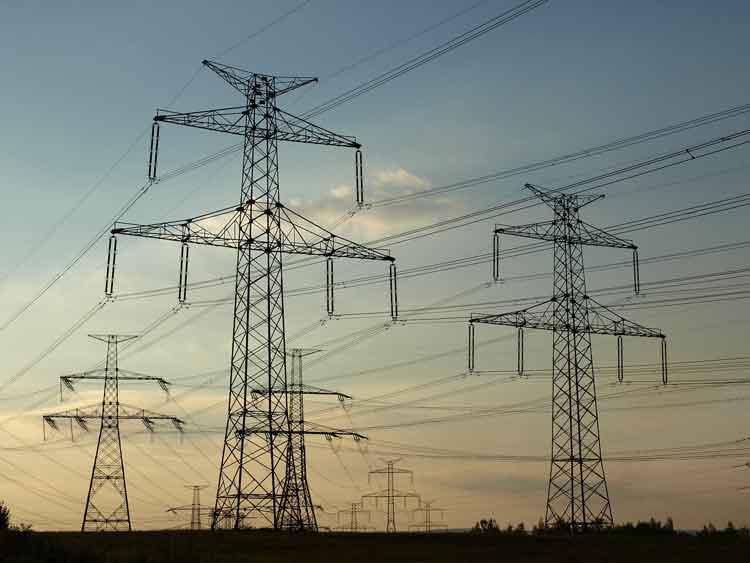
By -- Source, Fort Worth Star-Telegram


CSA Z463 Electrical Maintenance -

Our customized live online or in‑person group training can be delivered to your staff at your location.

  • Live Online
  • 6 hours Instructor-led
  • Group Training Available
Regular Price:
$249
Coupon Price:
$199
Reserve Your Seat Today
AUSTIN, Texas -- Utility company TXU did not willfully abuse the state's new deregulated electricity market and won't make a penny in profits off practices now drawing scrutiny from lawmakers and regulators, a company official said Wednesday.

Speaking to industry and regulatory officials, a TXU director blamed uncertainty about the new deregulated system for company decisions in August that led to more than $17 million in unearned revenues.

But the company won't keep any of the money, said Brad Jones, TXU's director of markets and regulation. Under market rules, he said, TXU must surrender the extra revenue to customers, probably by discounting electric bills.

"There's no profit for any of this," Jones said.

TXU is among six companies -- including Enron and Houston's Reliant Energy Service -- being investigated by the Texas Public Utility Commission. The PUC is trying to determine if the companies manipulated flaws in the state's new deregulated market.

All told, the activities generated about $28.7 million in unearned revenues for the six companies, according to PUC estimates.

More than half of that went to TXU, the single biggest electricity provider in the state. But in one of the broadest defenses of the company's actions to date, Jones said that TXU also paid various offsetting charges -- and that the net potential revenue may not exceed $3 million.

Whatever the final amount, the excess revenue will eventually flow back to customers, either through a slight discount on bills in 2004, or sometime earlier through a pending legal settlement, Jones said.

Although PUC investigators do not allege criminal wrongdoing, agency officials say they will probably require TXU, Enron, Reliant, Constellation Power Source, Mirant Americas Energy Marketing and American Electric Power Service to make refunds to companies potentially harmed by the activities under investigation.

PUC spokesman Terry Hadley said TXU and other companies under scrutiny have been directed to come up with a refund plan by June 1. The PUC will conduct another hearing on the matter May 10.

One official at a separate power company noted that the same quirk that financially rewarded TXU or its customers could lead to financial penalties for other companies or their customers. A PUC staffer said that even if TXU did not profit directly from its actions, they could lead to an unfair competitive edge for the company.

Related News

Closure of 3 Southern California power plants likely to be postponed

California Gas Plant Extensions keep Ormond Beach, AES Alamitos, and Huntington Beach on standby for grid reliability during heat waves, as regulators balance renewables, battery storage, and power, pending State Water Resources Control Board approval.


Key Points

State plan extending three coastal gas plants to 2026, adding capacity as California expands renewables and storage.

✅ Extends Ormond Beach, AES Alamitos, AES Huntington Beach

✅ Mitigates blackout risk during extreme heat and peak demand

✅ Pending State Water Resources Control Board approval


Temperatures in many California cities are cooling down this week, but a debate is simmering on how to generate enough electricity to power the state through extreme weather events while transitioning away from a reliance on fossil fuels as clean energy progress indicates statewide.

The California Energy Commission voted Wednesday to extend the life of three gas power plants along the state’s southern coast through 2026, even as natural-gas electricity records persist nationwide, postponing a shutoff deadline previously set for the end of this year. The vote would keep the decades-old facilities _ Ormond Beach Generating Station, AES Alamitos and AES Huntington Beach — open so they can run during emergencies.

The state is at a greater risk of blackouts during major events when many Californians simultaneously crank up their air conditioning, such as a blistering heat wave, illustrated by widespread utility shutoffs in recent years.

“We need to move faster in incorporating renewable energy. We need to move faster at incorporating battery storage. We need to build out chargers faster,” commissioner Patricia Monahan said amid an ongoing debate over the classification of nuclear power in California. “We’re working with all the energy institutions to do that, but we are not there yet.”

The plan, put together by the state’s Department of Water Resources, still needs final approval from the State Water Resources Control Board, which may vote on the issue next week. Democratic Gov. Gavin Newsom signed legislation last year creating an energy reserve the state could use as a last resort if there is likely to be an energy shortage, a challenge mirrored by Ontario electricity shortfall concerns elsewhere. The law allowed the Department of Water Resources to fund or secure power sources in those instances, after PG&E shutdown reasons drew attention to grid vulnerabilities.

The commission acknowledged it was a difficult decision. Environmentalists say the state needs to transition to more short- and long-term solutions that will help it move away from fossil fuels and to rely more on renewable energy sources like solar and wind, similar to Ontario's clean power push in recent years. They’re also concerned about the health impacts associated with pollution from gas plants.


Related News

View more

Vancouver's Reversal on Gas Appliances

Vancouver Natural Gas Ban Reversal spotlights energy policy, electrification tradeoffs, heat pumps, emissions, grid reliability, and affordability, reshaping building codes and decarbonization pathways while inviting stakeholders to weigh practical constraints and climate goals.


Key Points

Vancouver ending its ban on natural gas in new homes to balance climate goals with reliability, costs, and technology.

✅ Balances emissions goals with reliability and affordability

✅ Impacts builders, homeowners, and energy infrastructure

✅ Spurs debate on electrification, heat pumps, and grid capacity


In a significant policy shift, Vancouver has decided to lift its ban on natural gas appliances in new homes, a move that marks a pivotal moment in the city's energy policy and environmental strategy. This decision, announced recently and following the city's Clean Energy Champion recognition for Bloedel upgrades, has sparked a broader conversation about the future of energy systems and the balance between environmental goals and practical energy needs. Stewart Muir, CEO of Resource Works, argues that this reversal should catalyze a necessary dialogue on energy choices, highlighting both the benefits and challenges of such a policy change.

Vancouver's original ban on natural gas appliances was part of a broader initiative aimed at reducing greenhouse gas emissions and promoting sustainability, including progress toward phasing out fossil fuels where feasible over time. The city had adopted stringent regulations to encourage the use of electric heat pumps and other low-carbon technologies in new residential buildings. This move was aligned with Vancouver’s ambitious climate goals, which include achieving carbon neutrality by 2050 and significantly cutting down on fossil fuel use.

However, the recent decision to reverse the ban reflects a growing recognition of the complexities involved in transitioning to entirely new energy systems. The city's administration acknowledged that while electric alternatives offer environmental benefits, they also come with challenges that can affect homeowners, builders, and the broader energy infrastructure, including options for bridging the electricity gap with Alberta to enhance regional reliability.

Stewart Muir argues that Vancouver’s policy shift is not just about natural gas appliances but represents a larger conversation about energy system choices and their implications. He suggests that the reversal of the ban provides an opportunity to address key issues related to energy reliability, affordability, and the practicalities of integrating new technologies, including electrified LNG options for industry within the province into existing systems.

One of the primary reasons behind the reversal is the recognition of the practical limitations and costs associated with transitioning to electric-only systems. For many homeowners and builders, natural gas appliances have long been a reliable and cost-effective option. The initial ban on these appliances led to concerns about increased construction costs and potential disruptions for homeowners who were accustomed to natural gas heating and cooking.

In addition to cost considerations, there are concerns about the reliability and efficiency of electric alternatives. Natural gas has been praised for its stable energy supply and efficient performance, especially in colder climates where electric heating systems might struggle to maintain consistent temperatures or fully utilize Site C's electricity under peak demand. By reversing the ban, Vancouver acknowledges that a one-size-fits-all approach may not be suitable for every situation, particularly when considering diverse housing needs and energy demands.

Muir emphasizes that the reversal of the ban should prompt a broader discussion about how to balance environmental goals with practical energy needs. He argues that rather than enforcing a blanket ban on specific technologies, it is crucial to explore a range of solutions that can effectively address climate objectives while accommodating the diverse requirements of different communities and households.

The debate also touches on the role of technological innovation in achieving sustainability goals. As energy technologies continue to evolve, renewable electricity is coming on strong and new solutions and advancements could potentially offer more efficient and environmentally friendly alternatives. The conversation should include exploring these innovations and considering how they can be integrated into existing energy systems to support long-term sustainability.

Moreover, Muir advocates for a more inclusive approach to energy policy that involves engaging various stakeholders, including residents, businesses, and energy experts. A collaborative approach can help identify practical solutions that address both environmental concerns and the realities of everyday energy use.

In the broader context, Vancouver’s decision reflects a growing trend in cities and regions grappling with energy transitions. Many urban centers are evaluating their energy policies and considering adjustments based on new information and emerging technologies. The key is to find a balance that supports climate goals such as 2050 greenhouse gas targets while ensuring that energy systems remain reliable, affordable, and adaptable to changing needs.

As Vancouver moves forward with its revised policy, it will be important to monitor the outcomes and assess the impacts on both the environment and the community. The reversal of the natural gas ban could serve as a case study for other cities facing similar challenges and could provide valuable insights into how to navigate the complexities of energy transitions.

In conclusion, Vancouver’s decision to reverse its ban on natural gas appliances in new homes is a significant development that opens the door for a critical dialogue about energy system choices. Stewart Muir’s call for a broader conversation emphasizes the need to balance environmental ambitions with practical considerations, such as cost, reliability, and technological advancements. As cities continue to navigate their energy futures, finding a pragmatic and inclusive approach will be essential in achieving both sustainability and functionality in energy systems.


Related News

View more

Seattle City Light's Initiative Helps Over 93,000 Customers Reduce Electricity Bills

Seattle City Light Energy Efficiency Programs help 93,000 residents cut bills with rebates, home energy audits, weatherization, conservation workshops, and sustainability tools, reducing electricity use and greenhouse gas emissions across Seattle communities.


Key Points

They are utility programs that lower electricity use and bills via rebates, energy audits, and weatherization services.

✅ Rebates for ENERGY STAR appliances and efficient HVAC upgrades

✅ Free audits with tailored recommendations and savings roadmaps

✅ Weatherization aid for low-income households and renters


In a noteworthy achievement for both residents and the environment, Seattle City Light has successfully helped more than 93,000 customers reduce their electricity bills through various energy efficiency programs. This initiative not only alleviates financial burdens for many households, amid concerns about pandemic-era shut-offs that heightened energy insecurity, but also aligns with the city’s commitment to sustainability and responsible energy use.

The Drive for Energy Efficiency

Seattle City Light, the city’s publicly owned electric utility, has been at the forefront of promoting energy efficiency among its customers. Recognizing that energy costs can strain household budgets, the utility has developed a range of programs and tracks emerging utility rate designs to help residents lower their energy consumption and, consequently, their bills.

One of the main aspects of this initiative is the emphasis on education and awareness. By providing customers with tools and resources to understand their energy usage, City Light empowers residents to make informed choices that can lead to substantial savings and prepare for power outage events as well.

Key Programs and Services

Seattle City Light offers a variety of programs aimed at reducing energy consumption. Among the most popular are:

  1. Energy Efficiency Rebates: Customers can receive rebates for purchasing energy-efficient appliances, such as refrigerators, washing machines, and HVAC systems. These appliances are designed to consume less electricity than traditional models, resulting in lower energy bills over time.

  2. Home Energy Audits: Free energy audits are available for residential customers. During these audits, trained professionals assess homes for energy efficiency and provide recommendations on improvements. This personalized service allows homeowners to understand specific changes that can lead to savings.

  3. Weatherization Assistance: This program is particularly beneficial for low-income households. By improving insulation, sealing air leaks, and enhancing overall energy efficiency, residents can maintain comfortable indoor temperatures without over-relying on heating and cooling systems.

  4. Community Workshops: Seattle City Light conducts workshops that educate residents about energy conservation strategies. These sessions cover topics such as smart energy use, seasonal tips for reducing consumption, and the benefits of renewable energy sources, highlighting examples of clean energy engagement in other cities.

The Impact on Households

The impact of these initiatives is profound. By assisting over 93,000 customers in lowering their electricity bills, Seattle City Light not only provides immediate financial relief but also encourages a long-term commitment to energy conservation. This collective effort has resulted in significant reductions in overall energy consumption, contributing to a decrease in greenhouse gas emissions—a critical step in the fight against climate change.

Additionally, the programs have been particularly beneficial for low-income households. By targeting these communities, Seattle City Light ensures that the benefits of energy efficiency reach those who need them the most, promoting equity-focused regulation and access to essential resources.

Looking Ahead: Challenges and Opportunities

While the success of these initiatives is commendable, challenges remain. Fluctuating energy prices can still pose difficulties for many households, especially those on fixed incomes, as some utilities explore minimum charges for low-usage customers in their rate structures. Seattle City Light recognizes the need for ongoing support and resources to help residents navigate these financial challenges.

The utility is committed to expanding its programs to reach even more customers in the future. This includes enhancing outreach efforts to ensure that residents are aware of the available resources, even as debates like utility revenue in a free-electricity future shape planning, and potentially forming partnerships with local organizations to broaden the impact of its initiatives.


Related News

View more

Ontario takes constitutional challenge of its global adjustment electricity fee to Supreme Court

Ontario Global Adjustment Supreme Court Appeal spotlights a constitutional challenge to Ontario's electricity charge, pitting National Steel Car against the IESO over regulatory charge vs tax, procurement policy, and renewable energy feed-in tariff contracts.


Key Points

An SCC leave bid on whether Ontario's global adjustment is a valid regulatory charge or an unconstitutional tax.

✅ Appeals Court revived case for full record review

✅ Dispute centers on regulatory charge vs tax classification

✅ FIT renewables contracts and procurement policies at issue


The Ontario government wants the Supreme Court of Canada to weigh in on a constitutional challenge being brought against a large provincial electricity charge, a case the province claims raises issues of national importance.

Ontario’s attorney general and its Independent Electricity System Operator applied for permission to appeal to the Supreme Court in January, according to the court’s website.

The province is trying to appeal a Court of Appeal decision reinstating the challenge from November that said a legal challenge by Hamilton, Ont.-based National Steel Car Ltd. should be sent back to a lower-court for a full hearing.

Court reinstates constitutional challenge to Ontario's hefty ‘global adjustment’ electricity charge
National Steel Car appealing decision in legal challenge of Ontario electricity fee it calls an unconstitutional tax
Doug Ford’s cancellation of green energy deals costs Ontario taxpayers $231 million
National Steel Car launched its legal challenge in 2017, with the maker of steel rail cars claiming the province’s global adjustment electricity charge was a tax intended to fund certain post-financial-crisis policy goals. Since it is allegedly a tax, and one not imposed by the provincial legislature, the company’s argument is the global adjustment is unconstitutional, and also in breach of a provincial law requiring a referendum for new taxes.

The global adjustment mostly bridges the gap between the province’s hourly electricity price and the price guaranteed under contracts and regulated rates with power generators. It also helps cover the cost of building new electricity infrastructure and providing conservation programs, but the fee now makes up most of the commodity portion of a household power bill in the province.

Ontario argued the global adjustment is a valid regulatory charge, and moved to have National Steel Car’s challenge thrown out. An Ontario Superior Court judge agreed, and dismissed the challenge in 2018, saying it was “plain, obvious and beyond doubt” it could not succeed. However, an appeals court judge disagreed, writing in a decision last November that the “merits should not have been determined on a pleadings motion and without the development of a full record.”

In filings made to the Supreme Court, both the IESO and Ontario’s Ministry of the Attorney General argued their proposed appeals raise “issues of national and public importance,” such as whether incorporating environmental and social policy goals in procurement could turn attempts by a public body to recover costs into an unconstitutional tax.

Most applications for leave to appeal to the Supreme Court are dismissed, but the Ontario government claims the court’s guidance is required in this case, as it could lead to questions being raised about other fees or charges, such as money raised from fishing licences.

“A failure to dispose of this claim at the pleadings stage may well result in such uncertainty that public authorities across Canada decline to incorporate the kind of environmental and social policy goals objected to in this case into the decisions they make about how to spend funds raised from regulatory charges,” the filing from the attorney general states. “Alternatively, it may induce governments not to engage in cost recovery in connection with publicly supplied goods and services, which can otherwise be sound public policy.”

The government has so far had to pay National Steel Car $250,000 in legal costs “to avoid responding to the credible claim that the Global Adjustment is an unconstitutional tax,” said David Trafford of Morse Shannon LLP, one of National Steel Car’s lawyers.

“The application for leave to appeal is the next step in this effort to avoid having to respond to the case on the merits,” Trafford added in an email.

The application for leave to appeal is the next step in this effort to avoid having to respond to the case on the merits

David Trafford of Morse Shannon, one of National Steel Car’s lawyers
 
National Steel Car has particularly taken issue with the part of the global adjustment that funded contracts for renewable energy under a “feed-in tariff” program, or FIT, which the company called “the main culprit behind the dramatic price increases for electricity.”

The FIT program has been ended, but contracts awarded under it remain in place and form part of the global adjustment. Ontario’s auditor general estimated in 2015 that electricity consumers would pay $9.2 billion more for renewable energy under the government’s guaranteed-price program, a figure that later featured in a dispute between the auditor and the electricity regulator that drew political attention.

National Steel Car said its global adjustment costs grew from $207,260 in 2008 to almost $3.4 million in 2016, reflecting how high electricity rates have pressured manufacturers, to almost $3.4 million in 2016. For 2018, there was approximately $11.2 billion in global adjustment collected, according to the IESO’s reporting.

A spokesperson for the IESO said it “is not in a position to comment” because the case is still before the courts.

Electricity prices have been an ongoing problem for both Ontario consumers and politicians, which the previous Liberal government tried to address in 2017 by, among other things, refinancing global-adjustment costs through the Fair Hydro Plan and other measures.

Since National Steel Car filed its lawsuits, though, the Liberals lost power in the province and were succeeded in 2018 by Premier Doug Ford and the Progressive Conservatives, who made changes to the previous government’s power policies, including legislation to lower electricity rates introduced early in their mandate.

The province has also pursued interprovincial power arrangements, including building on an electricity deal with Quebec as part of its broader energy strategy.

“The present government of Ontario does not agree with the former government’s electricity procurement program, which ceased awarding new contracts in 2016,” Ontario’s attorney general said in a filing. “However, Ontario submits that (the lower-court judge) was correct in holding that it does not give rise to a claim susceptible to being remedied by the courts.”


Related News

View more

California scorns fossil fuel but can't keep the lights on without it

California fossil fuel grid reliability plan addresses heat wave demand, rolling blackouts, and grid stability by temporarily procuring gas generation while accelerating renewables, storage, and transmission to meet clean energy and carbon-neutral targets by 2045.


Key Points

A stop-gap policy to prevent blackouts by buying fossil power while fast-tracking renewables, storage, and grid upgrades.

✅ Temporary procurement of gas to avoid rolling blackouts

✅ Accelerates renewables, storage, transmission permitting

✅ Aims for carbon neutrality by 2045 without new gas plants


California wants to quit fossil fuels. Just not yet Faced with a fragile electrical grid and the prospect of summertime blackouts, the state agreed to put aside hundreds of millions of dollars to buy power from fossil fuel plants that are scheduled to shut down as soon as next year.

That has prompted a backlash from environmental groups and lawmakers who say Democratic Gov. Gavin Newsom’s approach could end up extending the life of gas plants that have been on-track to close for more than a decade and could threaten the state’s goal to be carbon neutral by 2045.

“The emphasis that the governor has been making is ‘We’re going to be Climate Leaders; we’re going to do 100 percent clean energy; we’re going to lead the nation and the world,’” said V. John White, executive director of the Sacramento-based Center for Energy Efficiency and Renewable Technologies, a non-profit group of environmental advocates and clean energy companies. “Yet, at least a part of this plan means going the opposite direction.”

That plan was a last-minute addition to the state’s energy budget, which lawmakers in the Democratic-controlled Legislature reluctantly passed. Backers say it’s necessary to avoid the rolling blackouts like the state experienced during a heat wave in 2020. Critics see a muddled strategy on energy, and not what they expected from a nationally ambitious governor who has made climate action a centerpiece of his agenda.

The legislation, which some Democrats labeled as “lousy” and “crappy,” reflects the reality of climate change. Heat waves are already straining power capacity, and the transition to cleaner energy isn’t coming fast enough to meet immediate needs in the nation’s most populous state.

Officials have warned that outages would be possible this summer, as the grid faces heat wave tests again, with as many as 3.75 million California homes losing power in a worst-case scenario of a West-wide heat wave and insufficient electrical supplies, particularly in the evenings.

It’s also an acknowledgment of the political reality that blackout politics are hazardous to elected officials, even in a state dominated by one party.

Newsom emphasized that the money to prop up the power grid, part of a larger $4.3 billion energy spending package, is meant as a stop-gap measure. The bill allows the Department of Water Resources to spend $2.2 billion on “new emergency and temporary generators, new storage systems, clean generation projects, and funding on extension of existing generation operations, if any occur,” the governor said in a statement after signing the bill.

“Action is needed now to maintain reliable energy service as the State accelerates the transition to clean energy,” Newsom said.

Following the signing, the governor called for the state California Air Resources Board to add a set of ambitious goals to its 2022 Scoping Plan, which lays out California’s path for reducing carbon emissions.

Among Newsom’s requested changes is a move away from fossil fuels, asking state agencies to prepare for an energy transition that avoids the need for new natural gas plants.

Alex Stack, a spokesman for the governor, said in a statement that California has been a global leader in reducing pollution and exporting energy policies across Western states, and pointed to Newsom’s recent letter to the Air Resources Board as well as one sent to President Joe Biden outlining how states can work with the federal government to combat climate change.

“California took action to streamline permitting for clean energy projects to accelerate the build out of clean energy that is needed to meet our climate goals and help maintain reliability in the face of extreme heat, wildfires, and drought,” Stack said.

But the prospect of using state money on fossil fuel power, even in the short term, has raised ire among the state’s many environmental advocacy groups, and raised questions about whether California will be able to achieve its goals.

“What is so frustrating about an energy bill like this is that we are at crunch time to meet these goals,” said Mary Creasman, CEO of California Environmental Voters. “And we’re investing a scale of funding into things that exacerbate those goals.”
 
Emmanuelle Chriqui and Mary Creasman speak during the 2021 Environmental Media Association IMPACT Summit at Pendry West Hollywood on September 2, 2021 in West Hollywood, California. | Jesse Grant/Getty Images for Environmental Media Association

With climate change-induced drought and high temperatures continuing to ravage the West, California anticipates the demand on the grid will only continue to grow. Despite more than a decade of bold posturing and efforts to transition to solar, wind and hydropower, the state worries it doesn’t have enough renewable energy sources on hand to keep the power on in an emergency right now, amid a looming shortage that will test reliability.

The specter of power outages poses a hazard to Newsom, and Democrats in general, especially ahead of November. While the governor is widely expected to sail to reelection, rolling blackouts are a serious political liability — in 2003, they were the catalyst for recalling Democratic Gov. Gray Davis. A lack of power isn’t just about people sweating in the dark, said Steven Maviglio, a longtime Democratic consultant who served as communications director for Davis, it can affect businesses, travel and have an outsized impact on the economy.

It behooves any state official to keep the power on, but, unlike Davis, Newsom is under serious pressure to make sure the state also adheres to its climate goals.

“Gavin Newsom’s brand is based on climate change and clean air, so it’s a little more difficult for him to say ‘well that’s not as important as keeping the power on,’” Maviglio said.

The same bill effectively ends local government control over those projects, for the time being. It hopes to speed up the state’s production of renewable energy sources by giving exclusive authority over the siting of those projects to a single state agency for the next seven years.

Environmental advocates say the state is now scrambling to address an issue they’ve long known was coming. In 2010, California officials set a schedule to retire a number of coastal gas plants that rely on what’s known as once-through cooling systems, which are damaging to the environment, especially marine life, even as regulators weigh more power plants to maintain reliability today. Many of those plants have been retired since 2010, but others have received extensions.

The remaining plants have various deadlines for when they must cease operations, with the soonest being the end of 2023.

Also at issue is the embattled Diablo Canyon nuclear power plant, California’s largest electricity source. The Pacific Gas & Electric-owned plant is scheduled to close in 2025, but the strain on the grid has officials considering the possibility of seeking an extension. Newsom said earlier this spring he would be open to extending the life of the plant. Doing so would also require federal approval.

Al Muratsuchi stands and talks into a microphone with a mask on. 
Assemblyman Al Muratsuchi speaks during an Assembly session in Sacramento, Calif., on Jan. 31, 2022. | Rich Pedroncelli/AP Photo

The International Brotherhood of Electrical Workers 1245, a labor union, sees the energy package as a way to preserve Diablo Canyon, and jobs at the plant.

“The value to 1245 PG&E members at Diablo Canyon is clear — funding to keep the plant open,” the union said of the bill.

Assemblymember Al Muratsuchi (D-Los Angeles) criticized the bill as “crappy” when it came to the floor in late June, describing it as “a rushed, unvetted and fossil-fuel-heavy response” to the state’s need to bolster the grid.

“The state has had over 12 years to procure and bring online renewable energy generation to replace these once through cooling gas power plants,” Muratsuchi said. “Yet, the state has reneged on its promise to shut down these plants, not once, but twice already.”

Not all details of the state’s energy budget are final. Lawmakers still have $3.8 billion to allocate when they return on Aug. 1 for the final stretch of the year.

Creasman, at California Environmental Voters, said she wants lawmakers to set specific guidelines for how and where it will spend the $2.2 billion when they return in August to dole out the remaining money in the budget. Newsom and legislators also need to ensure that this is the last time California has to spend money on fossil fuel, she said.

“Californians deserve to see what the plan is to make sure we’re not in this position again of having to choose between making climate impacts worse or keeping our lights on,” Creasman said. “That’s a false choice.”


Related News

View more

Ukrainians Find New Energy Solutions to Overcome Winter Blackouts

Ukraine Winter Energy Crisis highlights blackouts, damaged grid, and resilient solutions: solar panels, generators, wood stoves, district heating, batteries, and energy efficiency campaigns backed by EU and US aid to support communities through harsh winters.


Key Points

A wartime surge of blackouts driving resilient, off-grid and efficiency solutions to keep heat and power flowing.

✅ Solar panels, batteries, and generators stabilize essential loads

✅ Wood stoves and district heating maintain winter warmth

✅ Efficiency upgrades and aid bolster grid resilience


As winter sets in across Ukraine, the country faces not only the bitter cold but also the ongoing energy crisis exacerbated by Russia’s invasion. Over the past year, Ukraine has experienced widespread blackouts due to targeted strikes on its power infrastructure. With the harsh winter conditions ahead, Ukrainians are finding innovative ways to adapt to these energy challenges and to keep the lights on this winter despite shortages. From relying on alternative power sources to implementing energy-saving measures, the Ukrainian population is demonstrating resilience in the face of adversity.

The Energy Crisis in Ukraine

Since the onset of the war in February 2022, Ukraine’s energy infrastructure has become a prime target for Russian missile strikes. Power plants, electrical grids, and transmission lines have all been hit, causing significant damage to the nation’s energy systems, as Ukraine fights to keep the lights on amid repeated attacks. As a result, millions of Ukrainians have faced regular power outages, especially in the winter months when energy demand surges due to heating needs.

The situation has been compounded by the difficulty of repairing damaged infrastructure while the war continues. Many areas, particularly in eastern and southern Ukraine, still suffer from limited access to electricity, heating, and water, with strikes in western Ukraine occasionally causing further disruptions. With no end in sight to the conflict, the Ukrainian government and its citizens are being forced to think outside the box to ensure they can survive the harsh winter months.

Alternative Energy Sources: Solar Power and Generators

In response to these energy shortages, many Ukrainians are turning to alternative energy sources, particularly solar power and generators. Solar energy, which has been growing in popularity over the past decade, is seen as a promising solution. Solar panels can be installed on homes, schools, and businesses, providing a renewable source of electricity. During the day, the sun provides much-needed energy to power lights, appliances, and even heating systems in homes. While solar power may not fully replace the energy lost during blackouts, it can significantly reduce dependency on the grid, and recent electricity reserve updates suggest fewer planned outages if attacks abate.

To make solar power more accessible, many local and international organizations are providing solar panels and batteries to Ukrainians. These efforts have been critical, especially in rural areas where access to the national grid may be sporadic or unreliable. Additionally, solar-powered streetlights and community energy hubs are being set up in various cities to provide essential services during prolonged outages.

Generators, too, have become a vital tool for many households. Portable generators allow people to maintain some level of comfort during blackouts, powering essential appliances like refrigerators, stoves, and even small heaters. While generators are not a permanent solution, they offer a crucial lifeline when the grid is down for extended periods.

Wood and Coal Stoves: A Return to the Past

In addition to modern energy solutions, many Ukrainians are returning to more traditional sources of energy, such as wood and coal stoves. These methods of heating, while old-fashioned, are still widely available and effective. With gas shortages affecting the country and electricity supplies often unreliable, wood and coal stoves have become an essential part of daily life for many households.

Firewood is being sourced locally, and many Ukrainians are collecting and stockpiling it in preparation for the colder months. While this reliance on solid fuels presents environmental concerns, it remains one of the most feasible options for families living in rural areas or in homes without access to reliable electricity.

Moreover, some urban areas have seen a revival of district heating systems, where heat is generated centrally and distributed throughout a network of buildings. This system, although not without its challenges, is helping to provide warmth to thousands of people in larger cities like Kyiv and Lviv.

Energy Conservation and Efficiency

Beyond alternative energy sources, many Ukrainians are taking measures to reduce their energy consumption. Energy conservation has become a key strategy in dealing with blackouts, as individuals and families aim to minimize their reliance on the national grid. Simple steps like using energy-efficient appliances, sealing windows and doors to prevent heat loss, and limiting the use of electric heating have all become commonplace.

The Ukrainian government, in collaboration with international partners, has also launched campaigns to encourage energy-saving behaviors. These include public information campaigns on how to reduce energy consumption and initiatives to improve the insulation of homes and buildings. By promoting energy efficiency, Ukraine is not only making the most of its limited resources but also preparing for long-term sustainability.

The Role of the International Community

The international community has played a crucial role in helping Ukraine navigate the energy crisis. Several countries and organizations have provided funding, technology, and expertise to assist Ukraine in repairing its power infrastructure and implementing alternative energy solutions. For example, the United States and the European Union have supplied Ukraine with generators, solar panels, and other renewable energy technologies, though U.S. support for grid restoration has recently ended in some areas of assistance. This support has been vital in ensuring that Ukrainians can meet their energy needs despite the ongoing conflict.

In addition, humanitarian organizations have been working to provide emergency relief, including distributing winter clothing, heaters, and fuel to the most vulnerable populations, and Ukraine helped Spain amid blackouts earlier this year, underscoring reciprocal resilience. The global response has been a testament to the solidarity that exists for Ukraine in its time of need.

As winter arrives, Ukrainians are finding creative and resourceful ways to deal with the ongoing energy crisis caused by the war, reflecting the notion that electricity is civilization on the front lines. While the situation remains difficult, the country's reliance on alternative energy sources, traditional heating methods, and energy conservation measures demonstrates a remarkable level of resilience. With continued support from the international community and a commitment to innovation, Ukraine is determined to overcome the challenges of blackouts and ensure that its people can survive the harsh winter months ahead.


Related News

View more

Sign Up for Electricity Forum’s Newsletter

Stay informed with our FREE Newsletter — get the latest news, breakthrough technologies, and expert insights, delivered straight to your inbox.

Electricity Today T&D Magazine Subscribe for FREE

Stay informed with the latest T&D policies and technologies.
  • Timely insights from industry experts
  • Practical solutions T&D engineers
  • Free access to every issue

Download the 2025 Electrical Training Catalog

Explore 50+ live, expert-led electrical training courses –

  • Interactive
  • Flexible
  • CEU-cerified