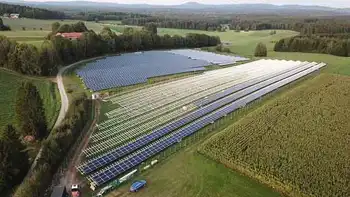
UK energy supply: not all doom and gloom for 2020

By Datamonitor


NFPA 70e Training - Arc Flash

Our customized live online or in‑person group training can be delivered to your staff at your location.
  • Live Online
  • 6 hours Instructor-led
  • Group Training Available
Regular Price:
$199
Coupon Price:
$149
Reserve Your Seat Today
The ICE report forecasts that by 2020 households and businesses in the UK will face widespread interruptions in power and gas supply. These will be caused by a combination of the country's growing dependency on natural gas for meeting its energy needs on the one hand, and of the dwindling sources of the fuel on the other.

According to a number of forecasts, the share of gas in the UK's power generation mix could more than double from the current 38% to as much as 80% in 2020. However, such dramatic change seems very unlikely. Even so, it is not unreasonable to expect that gas-generated power would have to account for between 50-60% of the total capacity by 2020.

Where will the gas come from if the North Sea deposits have been exhausted by then? The main alternative sources are Russia, Algeria and Nigeria. The ICE report is skeptical about these alternatives, citing "political instability" and that the UK would be last on the end of any future pipeline, and hence the last in line for the fuel. However, these concerns are misplaced.

Russia, the world's largest producer of gas, has enjoyed political and economic stability for the last three years, since President Putin's election in 1999, and the country is set on increasing its gas and oil production volumes. Nigeria and Algeria, while less politically stable, have always maintained a steady output as they rely heavily on the exports of carbohydrates.

The UK's position on the edge of Europe will not be a huge disadvantage, either. Which country gets most of the Russian and Algerian gas is a matter of long-term contracts rather than of geography.

The report is right that the government and the energy industry alike need to face up to the potential problems and start preparing solutions in advance. Those include building more gas storage and studying the options for new nuclear power stations.

Related News
Europe’s Big Oil Companies Are Turning Electric

European Oil Majors Energy Transition highlights BP, Shell, and Total rapidly scaling renewables, wind and solar assets, hydrogen, electricity, and EV charging while cutting upstream capex, aligning with net-zero goals and utility-style energy services.


Key Points

It is the shift by BP, Shell, Total and peers toward renewables, electricity, hydrogen, and EV charging to meet net-zero goals.

✅ Offshore wind, solar, and hydrogen projects scale across Europe

✅ Capex shifts, fossil output declines, net-zero targets by 2050

✅ EV charging, utilities, and power trading become core services


Under pressure from governments and investors, including rising investor pressure at utilities that reverberates across the sector, industry leaders like BP and Shell are accelerating their production of cleaner energy.

This may turn out to be the year that oil giants, especially in Europe, started looking more like electric companies.

Late last month, Royal Dutch Shell won a deal to build a vast wind farm off the coast of the Netherlands. Earlier in the year, France’s Total, which owns a battery maker, agreed to make several large investments in solar power in Spain and a wind farm off Scotland. Total also bought an electric and natural gas utility in Spain and is joining Shell and BP in expanding its electric vehicle charging business.

At the same time, the companies are ditching plans to drill more wells as they chop back capital budgets. Shell recently said it would delay new fields in the Gulf of Mexico and in the North Sea, while BP has promised not to hunt for oil in any new countries.

Prodded by governments and investors to address climate change concerns about their products, Europe’s oil companies are accelerating their production of cleaner energy — usually electricity, sometimes hydrogen — and promoting natural gas, which they argue can be a cleaner transition fuel from coal and oil to renewables, as carbon emissions drop in power generation.

For some executives, the sudden plunge in demand for oil caused by the pandemic — and the accompanying collapse in earnings — is another warning that unless they change the composition of their businesses, they risk being dinosaurs headed for extinction.

This evolving vision is more striking because it is shared by many longtime veterans of the oil business.

“During the last six years, we had extreme volatility in the oil commodities,” said Claudio Descalzi, 65, the chief executive of Eni, who has been with that Italian company for nearly 40 years. He said he wanted to build a business increasingly based on green energy rather than oil.

“We want to stay away from the volatility and the uncertainty,” he added.

Bernard Looney, a 29-year BP veteran who became chief executive in February, recently told journalists, “What the world wants from energy is changing, and so we need to change, quite frankly, what we offer the world.”

The bet is that electricity will be the prime means of delivering cleaner energy in the future and, therefore, will grow rapidly as clean-energy investment incentives scale globally.

American giants like Exxon Mobil and Chevron have been slower than their European counterparts to commit to climate-related goals that are as far reaching, analysts say, partly because they face less government and investor pressure (although Wall Street investors are increasingly vocal of late).

“We are seeing a much bigger differentiation in corporate strategy” separating American and European oil companies “than at any point in my career,” said Jason Gammel, a veteran oil analyst at Jefferies, an investment bank.

Companies like Shell and BP are trying to position themselves for an era when they will rely much less on extracting natural resources from the earth than on providing energy as a service tailored to the needs of customers — more akin to electric utilities than to oil drillers.

They hope to take advantage of the thousands of engineers on their payrolls to manage the construction of new types of energy plants; their vast networks of retail stations to provide services like charging electric vehicles; and their trading desks, which typically buy and hedge a wide variety of energy futures, to arrange low-carbon energy supplies for cities or large companies.

All of Europe’s large oil companies have now set targets to reduce the carbon emissions that contribute to climate change. Most have set a ”net zero” ambition by 2050, a goal also embraced by governments like the European Union and Britain.

The companies plan to get there by selling more and more renewable energy and by investing in carbon-free electricity across their portfolios, and, in some cases, by offsetting emissions with so-called nature-based solutions like planting forests to soak up carbon.

Electricity is the key to most of these strategies. Hydrogen, a clean-burning gas that can store energy and generate electric power for vehicles, also plays an increasingly large role.

The coming changes are clearest at BP. Mr. Looney said this month that he planned to increase investment in low-emission businesses like renewable energy by tenfold in the next decade to $5 billion a year, while cutting back oil and gas production by 40 percent. By 2030, BP aims to generate renewable electricity comparable to a few dozen large offshore wind farms.

Mr. Looney, though, has said oil and gas production need to be retained to generate cash to finance the company’s future.

Environmentalists and analysts described Mr. Looney’s statement that BP’s oil and gas production would decline in the future as a breakthrough that would put pressure on other companies to follow.

BP’s move “clearly differentiates them from peers,” said Andrew Grant, an analyst at Carbon Tracker, a London nonprofit. He noted that most other oil companies had so far been unwilling to confront “the prospect of producing less fossil fuels.”

While there is skepticism in both the environmental and the investment communities about whether century-old companies like BP and Shell can learn new tricks, they do bring scale and know-how to the task.

“To make a switch from a global economy that depends on fossil fuels for 80 percent of its energy to something else is a very, very big job,” said Daniel Yergin, the energy historian who has a forthcoming book, “The New Map,” on the global energy transition now occurring in energy. But he noted, “These companies are really good at big, complex engineering management that will be required for a transition of that scale.”

Financial analysts say the dreadnoughts are already changing course.

“They are doing it because management believes it is the right thing to do and also because shareholders are severely pressuring them,” said Michele Della Vigna, head of natural resources research at Goldman Sachs.

Already, he said, investments by the large oil companies in low-carbon energy have risen to as much as 15 percent of capital spending, on average, for 2020 and 2021 and around 50 percent if natural gas is included.

Oswald Clint, an analyst at Bernstein, forecast that the large oil companies would expand their renewable-energy businesses like wind, solar and hydrogen by around 25 percent or more each year over the next decade.

Shares in oil companies, once stock market stalwarts, have been marked down by investors in part because of the risk that climate change concerns will erode demand for their products. European electric companies are perceived as having done more than the oil industry to embrace the new energy era.

“It is very tricky for an investor to have confidence that they can pull this off,” Mr. Clint said, referring to the oil industry’s aspirations to change.

But, he said, he expects funds to flow back into oil stocks as the new businesses gather momentum.

At times, supplying electricity has been less profitable than drilling for oil and gas. Executives, though, figure that wind farms and solar parks are likely to produce more predictable revenue, partly because customers want to buy products labeled green.

Mr. Descalzi of Eni said converted refineries in Venice and Sicily that the company uses to make lower-carbon fuel from plant matter have produced better financial results in this difficult year than its traditional businesses.

Oil companies insist that they must continue with some oil and gas investments, not least because those earnings can finance future energy sources. “Not to make any mistake,” Patrick Pouyanné, chief executive of Total, said to analysts recently: Low-cost oil projects will be a part of the future.

During the pandemic, BP, Total and Shell have all scrutinized their portfolios, partly to determine if climate change pressures and lingering effects from the pandemic mean that petroleum reserves on their books — developed for perhaps billions of dollars, when oil was at the center of their business — might never be produced or earn less than previously expected. These exercises have led to tens of billions of dollars of write-offs for the second quarter, and there are likely to be more as companies recalibrate their plans.

“We haven’t seen the last of these,” said Luke Parker, vice president for corporate analysis at Wood Mackenzie, a market research firm. “There will be more to come as the realities of the energy transition bite.”


Related News

View more

Which of the cleaner states imports dirty electricity?

Hourly Electricity Emissions Tracking maps grid balancing areas, embodied emissions, and imports/exports, revealing carbon intensity shifts across PJM, ERCOT, and California ISO, and clarifying renewable energy versus coal impacts on health and climate.


Key Points

An hourly method tracing generation, flows, and embodied emissions to quantify carbon intensity across US balancing areas.

✅ Hourly traces of imports/exports and generation mix

✅ Consumption-based carbon intensity by balancing area

✅ Policy insights for renewables, coal, health costs


In the United States, electricity generation accounts for nearly 30% of our carbon emissions. Some states have responded to that by setting aggressive renewable energy standards; others are hoping to see coal propped up even as its economics get worse. Complicating matters further is the fact that many regional grids are integrated, and as America goes electric the stakes grow, meaning power generated in one location may be exported and used in a different state entirely.

Tracking these electricity exports is critical for understanding how to lower our national carbon emissions. In addition, power from a dirty source like coal has health and environment impacts where it's produced, and the costs of these aren't always paid by the parties using the electricity. Unfortunately, getting reliable figures on how electricity is produced and where it's used is challenging, even for consumers trying to find where their electricity comes from in the first place, leaving some of the best estimates with a time resolution of only a month.

Now, three Stanford researchers—Jacques A. de Chalendar, John Taggart, and Sally M. Benson—have greatly improved on that standard, and they have managed to track power generation and use on an hourly basis. The researchers found that, of the 66 grid balancing areas within the United States, only three have carbon emissions equivalent to our national average, and they have found that imports and exports of electricity have both seasonal and daily changes. de Chalendar et al. discovered that the net results can be substantial, with imported electricity increasing California's emissions/power by 20%.

Hour by hour
To figure out the US energy trading landscape, the researchers obtained 2016 data for grid features called balancing areas. The continental US has 66 of these, providing much better spatial resolution on the data than the larger grid subdivisions. This doesn't cover everything—several balancing areas in Canada and Mexico are tied in to the US grid—and some of these balancing areas are much larger than others. The PJM grid, serving Pennsylvania, New Jersey, and Maryland, for example, is more than twice as large as Texas' ERCOT, in a state that produces and consumes the most electricity in the US.

Despite these limitations, it's possible to get hourly figures on how much electricity was generated, what was used to produce it, and whether it was used locally or exported to another balancing area. Information on the generating sources allowed the researchers to attach an emissions figure to each unit of electricity produced. Coal, for example, produces double the emissions of natural gas, which in turn produces more than an order of magnitude more carbon dioxide than the manufacturing of solar, wind, or hydro facilities. These figures were turned into what the authors call "embodied emissions" that can be traced to where they're eventually used.

Similar figures were also generated for sulfur dioxide and nitrogen oxides. Released by the burning of fossil fuels, these can both influence the global climate and produce local health problems.

Huge variation
The results were striking. "The consumption-based carbon intensity of electricity varies by almost an order of magnitude across the different regions in the US electricity system," the authors conclude. The low is the Bonneville Power grid region, which is largely supplied by hydropower; it has typical emissions below 100kg of carbon dioxide per megawatt-hour. The highest emissions come in the Ohio Valley Electric region, where emissions clear 900kg/MW-hr. Only three regional grids match the overall grid emissions intensity, although that includes the very large PJM (where capacity auction payouts recently fell), ERCOT, and Southern Co balancing areas.

Most of the low-emissions power that's exported comes from the Pacific Northwest's abundant hydropower, while the Rocky Mountains area exports electricity with the highest associated emissions. That leads to some striking asymmetries. Local generation in the hydro-rich Idaho Power Company has embodied emissions of only 71kg/MW-hr, while its imports, coming primarily from Rocky Mountain states, have a carbon content of 625kg/MW-hr.

The reliance on hydropower also makes the asymmetry seasonal. Local generation is highest in the spring as snow melts, but imports become a larger source outside this time of year. As solar and wind can also have pronounced seasonal shifts, similar changes will likely be seen as these become larger contributors to many of these regional grids. Similar things occur daily, as both demand and solar production (and, to a lesser extent, wind) have distinct daily profiles.

The Golden State
California's CISO provides another instructive case. Imports represent less than 30% of its total electric use in 2016, yet California electricity imports provided 40% of its embodied emissions. Some of these, however, come internally from California, provided by the Los Angeles Department of Water and Power. The state itself, however, has only had limited tracking of imported emissions, lumping many of its sources as "other," and has been exporting its energy policies to Western states in ways that shape regional markets.

Overall, the 2016 inventory provides a narrow picture of the US grid, as plenty of trends are rapidly changing our country's emissions profile, including the rise of renewables and the widespread adoption of efficiency measures and other utility trends in 2017 that continue to evolve. The method developed here can, however, allow for annual updates, providing us with a much better picture of trends. That could be quite valuable to track things like how the rapid rise in solar power is altering the daily production of clean power.

More significantly, it provides a basis for more informed policymaking. States that wish to promote low-emissions power can use the information here to either alter the source of their imports or to encourage the sites where they're produced to adopt more renewable power. And those states that are exporting electricity produced primarily through fossil fuels could ensure that the locations where the power is used pay a price that includes the health costs of its production.


Related News

View more

5,000 homes would be switched to geothermal energy free of charge

Manitoba NDP Geothermal Conversion Program offers full-cost heat pump installation for 5,000 homes, lowering electricity bills, funding contractor training and rebates, and cutting greenhouse gas emissions via geothermal energy administered by Efficiency Manitoba.


Key Points

A plan funding 5,000 home heat pump conversions to cut electricity bills, reduce emissions, and expand installer capacity.

✅ Covers equipment and installation for 5,000 homes

✅ Cuts electricity bills up to 50% vs electric heat

✅ Administered by Efficiency Manitoba; trains contractors


An NDP government would cover the entire cost for 5,000 families to switch their homes to geothermal energy, New Democrats have promised.

If elected on Oct. 3, the NDP will pay for the equipment and installation of new geothermal systems at 5,000 homes, St. James candidate Adrien Sala announced outside a St. Boniface home that previously made the switch. 

The homes that switch to geothermal energy could save as much as 50 per cent on their electricity bills, Sala said.

"It will save you money, it will grow our economy and it will reduce greenhouse gas emissions. And I think we can safely call that a win, win, win," Sala said.

Geothermal energy is derived from heat that is generated within the Earth.

The NDP said each conversion to geothermal heating and cooling would cost an estimated $26,000, and comes as new turbine investments advance in Manitoba, and it would take four years to complete all 5,000 conversions.

The program would be administered through Efficiency Manitoba, the Crown corporation responsible for conserving energy, as Manitoba Hydro's new president navigates changes at the utility. The NDP estimates it will cost $32.5 million annually over the four years, at a time of red ink at Manitoba Hydro as new power generation needs loom. Some of that money would support the training of more contractors who could install geothermal systems.


Subsidies get low pickup: NDP
Sala wouldn't say Wednesday which homeowners or types of homes would be eligible.

He said the NDP's plan would be a first in Canada, even as Ontario's energy plan seeks to address growing demand elsewhere.

"What we've seen elsewhere is where other jurisdictions have used a strict subsidy model, where they try to reduce the cost of geothermal, and while Ontario reviews a halt to natural gas generation to cut emissions, approaches differ across provinces. We really haven't seen a lot of uptake in those other jurisdictions," Sala said.

"This is an attempt at dealing with one of those key barriers for homeowners."

Efficiency Manitoba runs a subsidy program for geothermal energy through ground source heat pumps, supporting using more electricity for heat across the province, valued at up to $2.50 per square foot. It is estimated a 1,600 sq. ft. home switching from an electric furnace to geothermal will receive a rebate of around $4,000 and save around $900 annually on their electricity bills, the Crown corporation said.anitoba homeProgressive Conservative spokesperson Shannon Martin questioned how NDP Leader Wab Kinew can afford his party's numerous election promises.

"He will have no choice but to raise taxes, and history shows the NDP will raise them all," said Martin, the McPhillips MLA who isn't seeking re-election.

Wednesday's announcement was the first for the NDP in which Kinew wasn't present. The party has criticized the Progressive Conservatives for leader Heather Stefanson showing up for only a few announcements a week.

Sala said Kinew was busy preparing for the debate later in the day.

"This stuff is near and dear to Wab's heart, and frankly, I think he's probably hurting that he's not here with us right now."


Related News

View more

New bill would close loophole that left hundreds of Kentucky miners with cold checks

Kentucky Coal Wage Protection Bill strengthens performance bond enforcement, links Energy and Environment Cabinet and Labor Cabinet notifications, addresses Blackjewel bankruptcy fallout, safeguards unpaid miners, ties mining permits to payroll bonds, penalizes violators via revocations.


Key Points

A Kentucky plan to enforce wage bonds and revoke mining permits to protect miners after bankruptcies.

✅ Requires wage bonds for firms under 5 years

✅ Links Energy and Environment Cabinet and Labor Cabinet

✅ Violators face permit revocation in 90 days


Following the high-profile bankruptcy of a coal company that left hundreds of Kentucky miners with bad checks last month, Sen. Johnny Ray Turner (D-Prestonsburg) said he will pre-file a bill Thursday aimed at closing a loophole that allowed the company to operate in violation of state law.

The bill would also compel state agencies to determine whether other companies are currently in violation of the law, and could revoke mining permits if the companies don't comply.

Turner's bill would amend an already-existing law that requires coal and construction companies that have been operating in Kentucky for less than five years to post a performance bond to protect wages if the companies cease their operations.

Blackjewel LLC., which employed hundreds of miners in Eastern Kentucky, failed to post that bond. When it shut its mines down and filed for bankruptcy last month, it left hundreds of miners without payment for 3 weeks and one day of work.

The bond issue has sparked criticism from various state officials, including Attorney General Andy Beshear, who said Tuesday that he would investigate whether other companies are currently in violation, similar to an external investigation of utility workers in another jurisdiction.

Blackjewel issued cold checks to its employees June 28, and when the checks bounced days later, many employees were left with bank accounts overdrawn by more than $1,000. The bankruptcy left many miners and their families with concerns over upcoming bill and mortgage payments, and, as unpaid days off at utilities elsewhere show, the strain on workers can be severe, and fostered a ongoing protest that blocked a train hauling coal from one of the company's Harlan County mines.

Blackjewel had been operating in Kentucky for about two years before it filed for bankruptcy, so it should have paid the performance bond, according to state law.

David A. Dickerson, the Kentucky Labor Cabinet Secretary, said the law as it's currently written does not set up any mechanism that notifies the cabinet, or provides comparable public reporting at large utility projects elsewhere, when a company opens in Kentucky that is supposed to pay the bond.

That allowed Blackjewel to operate for two years without any protection for workers before it closed its mines. Had the company posted the bond according to state law, miners likely would have been paid for the work they had already completed, officials said.

The law requires companies to set aside enough money to cover payroll for four weeks.

Turner's bill would compel the state Energy and Environment Cabinet to notify the Labor Cabinet's Department of Workplace Standards of any application for a mining permit from a company that has been doing business in Kentucky for less than five years.

It also compels the EEC to notify the Labor Cabinet of any companies that already have permits that are subject to the bond.

"It should have already been that way, but I'm happy so our children don't have to go through this," said Jeff Willig, a former Blackjewel miner who helped launch the protest at the railroad.

Willig said he and other miners will continue to block the tracks until they receive payment for their past work.

Any company currently operating in violation of the law would have 90 days to become compliant before its mining permits are revoked. New companies that are applying for permits will be required post the bond before permits are issued.

"Hopefully it will take care of the loopholes that had been exploited by Blackjewel," Turner said.

The bill will be taken up by the legislature when it returns to session in January. It would also cover attorneys' fees if workers are forced to sue their employer to cover wages, underscoring broader worker safety concerns during health emergencies.

Turner said he has reached out to Republican leadership in the Senate, and expects the bill to have bipartisan support come January.

Turner announced the legislation at a press conference in Harlan, the county with the highest population of Blackjewel employees affected by the bankruptcy, and as prolonged utility outages after tornadoes have strained other Kentucky communities.

State rep. Angie Hatton (D-Whitesburg) was also in attendance, along with rep. Chris Fugate (R-Chavies) and state Sen. Morgan McGarvey (D-Louisville).

Hatton said the bankruptcy has had serious economic impact throughout Eastern Kentucky, including in Letcher County, which is home to more than 130 former Blackjewel workers.

"This is something that has done a lot of damage to Eastern Kentucky," Hatton said.

Hatton plans to file the same bill in the state House of Representatives.

Fugate commended community members in Harlan County and elsewhere who have banded together in support of the miners by donating children's clothing, school supplies, food and other goods, while other regions have created a coal transition fund to help displaced workers.

Mosley called the bankruptcy "totally unprecedented" and said the current performance bond law, which has been on-the-books since 1986, lacked the enforcement necessary to protect miners in bankruptcies like Blackjewel's, even as a workplace safety fine in another case shows regulatory consequences in other industries.

"There was a law, there wasn't good enough process," Mosley said.

Blackjewel received court approval to sell many of its mines last month, including many in Kentucky, to Kopper Glo Mining, LLC.

As part of the sale agreement, Kopper Glo said it would pay $450,000 to cover the past wages of Blackjewel miners, and collect a per ton fee accumulating up to $550,000 that it will also contribute to pay back wages.

That total $1 million is less than half of all back wages owed to Blackjewel miners, but attorneys who filed a class action suit against the company said miners have a priority lien on the purchase price. That could allow former Blackjewel employees to make good on their back wages as bankruptcy proceedings continue.

Mosley said he spoke with a Kopper Glo official Thursday, who said the company is working to re-open the mines as quickly as possible. The official did not give an exact timeline.


Related News

View more

Government of Canada Invests in the Future of Work in Today's Rapidly Changing Electricity Sector

EHRC National Occupational Standards accelerate workforce readiness for smart grids, renewable energy, digitalization, and automation, aligning skills, reskilling, upskilling across the electricity sector with a career portal, labour market insights, and emerging jobs.


Key Points

Industry benchmarks from EHRC defining skills, training, and competencies for Canada's evolving electricity workforce.

✅ Aligns skills to smart grids, renewable energy, and automation

✅ Supports reskilling, upskilling, and career pathways

✅ Informs employers with labour market intelligence


Smart grids, renewable electricity generation, automation, carbon capture and storage, and electric vehicles are transforming the traditional electricity industry. Technological innovation is reshaping and reinventing the skills and occupations required to support the electrical grid of the 21st century, even as pandemic-related grid warnings underscore resilience needs.

Canada has been a global leader in embracing and capitalizing on drivers of disruption and will continue to navigate the rapidly changing landscape of electricity by rethinking and reshaping traditional occupational standards and skills profiles.

In an effort to proactively address the needs of our current and future labour market, building on regional efforts like Nova Scotia energy training to enhance participation, Electricity Human Resources Canada (EHRC) is pleased to announce the launch of funding for the new National Occupational Standards (NOS) and Career Portal project. This project will explore the transformational impact of technology, digitalization and innovation on the changing nature of work in the sector.

Through this research a total of 15 National Occupational Standards and Essential Skills Profiles will be revised or developed to better prepare jobseekers, including young Canadians interested in electricity to transition into the electricity sector. Occupations to be covered include:

  • Electrical Engineering Technician/ Technologist
  • Power Protection and Control Technician/ Technologist
  • Power Systems Operator
  • Solar Photovoltaic Installer
  • Power Station Operator
  • Wind Turbine Technician
  • Geothermal Heat Pump Installer
  • Solar Thermal Installer
  • Utilities Project Manager
  • Heat Pump Designer
  • Small System Designer (Solar)
  • Energy Storage Technician
  • Smart Grid Specialist
  • 2 additional occupations TBD

The labour market intelligence gathered during the research will examine current occupations or job functions facing change or requiring re-skilling or up-skilling, including specialized courses such as arc flash training in Vancouver that bolster safety competencies, as well as entirely emerging occupations that will require specialized skills.

This project is funded in part by the Government of Canada’ Sectoral Initiative Program and supports its goal to address current and future skills shortages through the development and distribution of sector-specific labour market information.

“Canada’s workforce must evolve with the changing economy. This is critical to building the middle class and ensuring continued economic growth. Our government is committed to an evidence-based approach and is focused on helping workers to gain valuable work experience and the skills they need for a fair chance at success. By collaborating with partners like Electricity Human Resources Canada, we can ensure that we are empowering workers today, and planning for the jobs of tomorrow.” – The Honourable Patty Hajdu, Minister of Employment, Workforce Development and Labour

“By encouraging the adoption of new technologies and putting in place the appropriate support for workers, Canada can minimize both skills shortages and technological unemployment. A long-term strategic and national approach to human resource planning and training is therefore critical to ensuring that we continue to maintain the level of growth, reliability, safety and productivity in the system – with a workforce that is truly inclusive and diverse.” – Michelle Branigan, CEO, EHRC.

“The accelerated pace of change in our sector, including advancements in technology and innovation will also have a huge impact on our workforce. We need to anticipate what those impacts will be so employers, employees and job seekers alike can respond to the changing structure of the sector and future job opportunities.” – Jim Kellett, Board Chair, EHRC.

About Electricity Human Resources Canada

EHRC helps to build a better workforce by strengthening the ability of the Canadian electricity industry to meet current and future needs for a highly skilled, safety-focused, diverse and productive workforce by addressing the electrical safety knowledge gap that can lead to injuries.


Related News

View more

New England's solar growth is creating tension over who pays for grid upgrades

New England Solar Interconnection Costs highlight distributed generation strains, transmission charges, distribution upgrades, and DAF fees as National Grid maps hosting capacity, driving queue delays and FERC disputes in Rhode Island and Massachusetts.


Key Points

Rising upfront grid upgrade and DAF charges for distributed solar in RI and MA, including some transmission costs.

✅ Upfront grid upgrades shifted to project developers

✅ DAF and transmission charges increase per MW costs

✅ Queue delays tied to hosting capacity and cluster studies


Solar developers in Rhode Island and Massachusetts say soaring charges to interconnect with the electric grid are threatening the viability of projects. 

As more large-scale solar projects line up for connections, developers are being charged upfront for the full cost of the infrastructure upgrades required, a long-common practice that they say is now becoming untenable amid debates over a new solar customer charge in Nova Scotia. 

“It is a huge issue that reflects an under-invested grid that is not ready for the volume of distributed generation that we’re seeing and that we need, particularly solar,” said Jeremy McDiarmid, vice president for policy and government affairs at the Northeast Clean Energy Council, a nonprofit business organization. 

Connecting solar and wind systems to the grid often requires upgrades to the distribution system to prevent problems, such as voltage fluctuations and reliability risks highlighted by Australian distributors in their networks. Costs can vary considerably from place to place, depending on the amount of distributed generation coming online and the level of capacity planning by regulators, said David Feldman, a senior financial analyst at the National Renewable Energy Laboratory.

“Certainly the Northeast often has more distribution challenges than much of the rest of the country just because it’s more populous and often the infrastructure is older,” he said. “But it’s not unique to the Northeast — in the Midwest, for example, there’s a significant amount of wind projects in the queues and significant delays.”

In Rhode Island and Massachusetts, where strong incentive programs are driving solar development, the level of solar coming online is “exposing the under-investment in the distribution system that is causing these massive costs that National Grid is assigning to particular projects or particular groups of projects,” McDiarmid said. “It is going to be a limiting factor for how much clean energy we can develop and bring online.”

Frank Epps, chief executive officer at Energy Development Partners, has been developing solar projects in Rhode Island since 2010. In that time, he said, interconnection charges on his projects have grown from about $80,000-$120,000 per megawatt to more than $400,000 per megawatt. He attributed the increase to a lack of investment in the distribution network by National Grid over the last decade.

He and other developers say the utility is now adding further to their costs by passing along not just the cost of improving the distribution system — the equivalent of the city street of the grid that brings power directly to customers — but also costs for modifying the transmission system — the interstate highway that moves bulk power over long distances to substations. 

Solar developers who are only requesting to hook into the distribution system, and not applying for transmission service, say they should not be charged for those additional upgrades under state interconnection rules unless they are properly authorized under the federal law that governs the transmission system. 

A Rhode Island solar and wind developer filed a complaint with the Federal Energy Regulatory Commission in February over transmission system improvement charges for its four proposed solar projects. Green Development said National Grid subsidiaries Narragansett Electric and New England Power Company want to charge the company more than $500,000 a year in operating and maintenance expenses assessed as so-called direct assignment facility charges. 

“This amount nearly doubles the interconnection costs associated with the projects,” which total 38.4 megawatts in North Smithfield, the company says in its complaint. “Crucially, these charges are linked to recovering costs associated with providing transmission service — even though no such transmission service is being provided to Green Development.”

But Ted Kresse, a spokesperson for National Grid, said the direct assignment facility, or DAF, construct has been in place for decades and has been applied to any customer affecting the need for transmission upgrades.

“It is the result of the high penetration and continued high volume of distributed generation interconnections that has recently prompted the need for transmission upgrades, and subsequently the pass-through of the associated DAF charges,” he said. 

Several complaints before the Rhode Island Public Utilities Commission object to these DAF and other transmission charges.

One petition for dispute resolution concerns four solar projects totaling 40 MW being developed by Energy Development Partners in a former gravel pit in North Kingstown. Brown University has agreed to purchase the power. 

The developer signed interconnection service agreements with Narragansett Electric in 2019 requiring payment of $21.6 million for costs associated with connecting the projects at a new Wickford Junction substation. Last summer, Narragansett sought to replace those agreements with new ones that reclassified a portion of the costs as transmission-level costs, through New England Power, National Grid’s transmission subsidiary.

That shift would result in additional operational and maintenance charges of $835,000 per year for the estimated 35-year life of the projects, the complaint says.

“This came as a complete shock to us,” Epps said. “We’re not just paying for the maintenance of a new substation. We are paying a share of the total cost that the system owner has to own and operate the transmission system. So all of the sudden, it makes it even tougher for distributed energy resources to be viable.”

In its response to the petition, National Grid argues that the charges are justified because the solar projects will require transmission-level upgrades at the new substation. The company argues that the developer should be responsible for the costs rather than ratepayers, “who are already supporting renewable energy development through their electric rates.”

Seth Handy, one of the lawyers representing Green Development in the FERC complaint, argues that putting transmission system costs on distribution assets is unfair because the distributed resources are “actually reducing the need to move electricity long distances. We’ve been fighting these fights a long time over the underestimating of the value of distributed energy in reducing system costs.”

Handy is also representing the Episcopal Diocese of Rhode Island before the state Supreme Court in its appeal of an April 2020 public utilities commission order upholding similar charges for a proposed 2.2-megawatt solar project at the diocese’s conference center and camp in Glocester. 

Todd Bianco, principal policy associate at the utilities commission, said neither he nor the chairperson can comment on the pending dockets contesting these charges. But he noted that some of these issues are under discussion in another docket examining National Grid’s standards for connecting distributed generation. Among the proposals being considered is the appointment of an independent ombudsperson to resolve interconnection disputes. 

Separately, legislation pending before the Rhode Island General Assembly would remove responsibility for administering the interconnection of renewable energy from utilities, and put it under the authority of the Rhode Island Infrastructure Bank, a financing agency.

Handy, who recently testified in support of the bill, said he believes National Grid has too many conflicting interests to administer interconnecting charges in a timely, transparent and fair fashion, and pointed to utility moves such as changes to solar compensation in other states as examples. In particular, he noted the company’s interests in expanding natural gas infrastructure. 

“There are all kinds of economic interests that they have that conflict with our state policy to provide lower-cost renewable energy and more secure energy solutions,” Handy said.

In testimony submitted to the House Committee on Corporations opposing the legislation, National Grid said such powers are well beyond the purpose and scope of the infrastructure bank. And it cited figures showing Rhode Island is third in the country for the most installed solar per square mile (behind New Jersey and Massachusetts).

Nadav Enbar, program manager at the Electric Power Research Institute, a nonprofit research organization for the utility industry, said interconnection delays and higher costs are becoming more common due to “the incredible uptake” in distributed renewable energy, particularly solar.

That’s impacting hosting capacity, the room available to connect all resources to a circuit without causing adverse harm to reliability and safety. 

“As hosting capacity is being reduced, it’s causing an increasing number of situations where utilities need to study their systems to guarantee interconnection without compromising their systems,” he said. “And that is the reason why you’re starting to see some delays, and it has translated into some greater costs because of the need for upgrades to infrastructure.”

The cost depends on the age or absence of infrastructure, projected load growth, the number of renewable energy projects in the queue, and other factors, he said. As utilities come under increasing pressure to meet state renewable goals, and as some states pilot incentives like a distributed energy rebate in Illinois to drive utility innovation, some (including National Grid) are beginning to provide hosting capacity maps that provide detailed information to developers and policymakers about the amount of distributed energy that can be accommodated at various locations on the grid, he said. 

In addition, the coming availability of high-tech “smart inverters” should help ease some of these problems because they provide the grid with more flexibility when it comes to connecting and communicating with distributed energy resources, Enbar said. 

In Massachusetts, the Department of Public Utilities has opened a docket to explore ways to better plan for and share the cost of upgrading distribution infrastructure to accommodate solar and other renewable energy sources as part of a grid overhaul for renewables nationwide. National Grid has been conducting “cluster studies” there that attempt to analyze the transmission impacts of a group of solar projects and the corresponding interconnection cost to each developer.

Kresse, of National Grid, said the company favors cost-sharing methodologies under consideration that would “provide a pathway to spread cost over the total enabled capacity from the upgrade, as opposed to spreading the cost over only those customers in the queue today.” 

Solar developers want regulators to take an even broader approach that factors in how the deployment of renewables and the resulting infrastructure upgrades benefit not just the interconnecting generator, but all customers. 

“Right now, if your project is the one that causes a multimillion-dollar upgrade, you are assigned that cost even though that upgrade is going to benefit a lot of other projects, as well as make the grid stronger,” said McDiarmid, of the clean energy council. “What we’re asking for is a way of allocating those costs among a variety of developers, as well as to the grid itself, meaning ratepayers. There’s a societal benefit to increasing the modernization of the grid, and improving the resilience of the grid.”

In the meantime, BlueHub Capital, a Boston-based solar developer focused on serving affordable housing developments, recently learned from National Grid that, as a part of one of the area studies, it will be required to pay $5.8 million in transmission and distribution upgrades to interconnect a 2-megawatt solar-plus-storage project that leverages cheaper batteries to enhance resilience, approved for a brownfield site in Gardner, Massachusetts. 

According to testimony submitted to the department, the sum is supposed to be paid within the next year, even though the project will have to wait to be interconnected until April 2027, when a new transmission line is completed. In addition, BlueHub will be responsible for DAF charges totaling $3.4 million over the 20-year life of the project. 

“We’re being asked to pay a fortune to provide solar that the state wants,” said DeWitt Jones, BlueHub’s president. “It’s so expensive that the upgrades are driving everyone out of the interconnection queue. The costs stay the same, but they fall on fewer projects. We need a process of grid design and modernization to guide this.”


Related News

View more

Sign Up for Electricity Forum’s Newsletter

Stay informed with our FREE Newsletter — get the latest news, breakthrough technologies, and expert insights, delivered straight to your inbox.

Electricity Today T&D Magazine Subscribe for FREE

Stay informed with the latest T&D policies and technologies.
  • Timely insights from industry experts
  • Practical solutions T&D engineers
  • Free access to every issue

Live Online & In-person Group Training

Advantages To Instructor-Led Training – Instructor-Led Course, Customized Training, Multiple Locations, Economical, CEU Credits, Course Discounts.

Request For Quotation

Whether you would prefer Live Online or In-Person instruction, our electrical training courses can be tailored to meet your company's specific requirements and delivered to your employees in one location or at various locations.