By Reuters


Arc Flash Training CSA Z462 - Electrical Safety Essentials

Our customized live online or in‑person group training can be delivered to your staff at your location.

  • Live Online
  • 6 hours Instructor-led
  • Group Training Available
Regular Price:
$249
Coupon Price:
$199
Reserve Your Seat Today
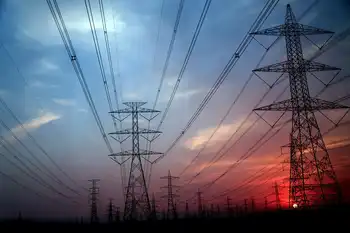
British prompt electricity prices soared on the back of a slew of production outages but ended off highs on Tuesday while the curve took a cue from Monday's rally in oil prices, dealers said.

"It all leapt up on the outages this morning but then came off a bit as people realised the shortage wasn't as big as they thought and started selling," one dealer said. British Energy said its nuclear power station Hartlepool, which has a capacity of 1,200 megawatts (MW), went offline late on Monday night due to an electrical supply fault. Traders said another 2,000 MW - equivalent of about three percent of total generation capacity - came offline overnight, which helped push up prices further in England and Wales. The front months steamed higher on the back of the prompt, with August up 25 pence at 15.10 pounds, September rising 23 pence to 15.75 pounds and October up 20 pence at 17.60 pounds. The forward curve was lifted by firmer oil prices, with winter 03 inching up 10 pence to 20.07 pounds where it hovered most of the day. Summer 04 gained 14 pence at 15.79 pounds, winter 04 rose 11 pence to 20.66 pounds and summer 05 put on 15 pence to 18.55 pounds. "There has been a lot of buying interest on the curve because of the gains in the oil," another dealer said. On Monday, IPE Brent futures soared a dollar as a nationwide strike in OPEC-member Nigeria and a tropical storm in the United States increased concerns about oil supplies. There had been no bookings in daily capacity auctions on the UK/France interconnector.

British Energy said its nuclear power station Hartlepool, which has a capacity of 1,200 megawatts (MW), went offline late on Monday night due to an electrical supply fault.

Traders said another 2,000 MW - equivalent of about three percent of total generation capacity - came offline overnight, which helped push up prices further in England and Wales.

The front months steamed higher on the back of the prompt, with August up 25 pence at 15.10 pounds, September rising 23 pence to 15.75 pounds and October up 20 pence at 17.60 pounds.

The forward curve was lifted by firmer oil prices, with winter 03 inching up 10 pence to 20.07 pounds where it hovered most of the day.

Summer 04 gained 14 pence at 15.79 pounds, winter 04 rose 11 pence to 20.66 pounds and summer 05 put on 15 pence to 18.55 pounds.

"There has been a lot of buying interest on the curve because of the gains in the oil," another dealer said.

On Monday, IPE Brent futures soared a dollar as a nationwide strike in OPEC-member Nigeria and a tropical storm in the United States increased concerns about oil supplies.

There had been no bookings in daily capacity auctions on the UK/France interconnector.

Related News

EU outlines $300 billion plan to dump Russian energy

REPowerEU Plan accelerates the EU's shift from Russian fossil fuels with renewable energy, energy efficiency, solar, wind, heat pumps, faster permits, and energy security measures by 2027, backed by grants, loans, and grid investments.


Key Points

EU plan to quit Russian fossil fuels via renewables and efficiency, with faster permits, by 2027.

✅ €300bn in grants and loans for efficiency and renewables

✅ Streamlined permits; solar mandate on new buildings

✅ Targets 2027 independence; cuts Russian gas, oil, coal


The European Union’s executive arm moved Wednesday to jump-start plans for the 27-nation bloc to abandon Russian energy amid the Kremlin’s war in Ukraine, proposing a nearly 300 billion-euro ($315 billion) package that includes more efficient use of fuels and faster rollout of renewable power, even as rolling back electricity prices remains challenging.

The European Commission’s investment initiative is meant to help the 27 EU countries start weaning themselves off Russian fossil fuels this year, a move many see as a wake-up call to ditch fossil fuels across Europe. The goal is to deprive Russia, the EU’s main supplier of oil, natural gas and coal, of tens of billions in revenue and strengthen EU climate policies.

“We are taking our ambition to yet another level to make sure that we become independent from Russian fossil fuels as quickly as possible,” European Commission President Ursula von der Leyen said in Brussels when announcing the package, dubbed REPowerEU.

With no end in sight to Russia’s war in Ukraine and European energy security shaken, amid what some describe as an energy nightmare for the region, the EU is rushing to align its geopolitical and climate interests for the coming decades. It comes amid troubling signs that have raised concerns about energy supplies that the EU relies on and have no quick replacements for, including Russia cutting off member nations Poland and Bulgaria after they refused a demand to pay for natural gas in rubles.

The bloc’s dash to ditch Russian energy stems from a combination of voluntary and mandatory actions. Both reflect the political discomfort of helping fund Russia’s military campaign in a country that neighbors the EU and wants to join the bloc.

An EU ban on coal from Russia is due to start in August, and the bloc has pledged to try to reduce demand for Russian gas by two-thirds by year's end, while debating gas price cap strategies to curb volatility. Meanwhile, a proposed EU oil embargo has hit a roadblock from Hungary and other landlocked countries that worry about the cost of switching to alternative sources.

In a bid to swing Hungary behind the oil phaseout, the REPowerEU package expects oil investment funding of around 2 billion euros for member nations highly dependent on Russian oil.

Energy savings and renewables form the cornerstones of the package, which would be funded mainly by an economic stimulus program put in place to help member countries overcome the slump triggered by the coronavirus pandemic.

The European Commission said the price tag for abandoning Russian fossil fuels completely by a 2027 target date is 210 billion euros. Its package includes 56 billion euros for energy efficiency and 86 billion euros for renewables.

Von der Leyen cited a total funding pot of 72 billion euros in grants and 225 billion euros for loans.

The European Commission also proposed ways to streamline the approval processes in EU countries for renewable projects, which can take up to a decade to get through red tape, as part of a broader effort to revamp the electricity market across Europe. The commission said approval times need to fall to as little as a year or less.

It put forward a specific plan on solar energy, seeking to double photovoltaic capacity by 2025 and pushing for a phased-in obligation to install solar panels on new buildings.

Simone Tagliapietra, an energy expert at the Bruegel think tank in Brussels, called REPowerEU a “jumbo package” whose success will ultimately depend on political will in the bloc’s national capitals, with examples such as Germany’s 200 billion euro energy price shield illustrating the scale of national responses.

“Most of the actions entailed in the plan require either national implementation or strong coordination among member states,” Tagliapietra said. “The extent to which countries really engage is going to be defining.”

The German energy think tank Agora Energiewende said the EU’s plan “gives too little attention to concrete initiatives that reduce fossil fuel demand in the short term and thereby misses the opportunity to simultaneously enhance Europe’s energy security and meet Europe’s climate objectives.”

The group's research shows rapidly expanding solar, wind parks and use of heat pumps for low-temperature heat in industry and buildings could be done faster than constructing new liquefied natural gas terminals or gas infrastructure, said Matthias Buck, its director for Europe.

The European Commission’s recommendations on short-term national actions to cut demand for Russian energy, which include potential emergency measures to limit electricity prices as well, coincide with deliberations underway in the bloc since last year on setting more ambitious EU energy-efficiency and renewable targets for 2030.

Those targets, being negotiated by the European Parliament and national governments, are part of the bloc’s commitments to a 55% cut in greenhouse gases by decade's end, compared with 1990 emissions, and to climate neutrality by 2050.

Von der Leyen urged the European Parliament and national governments to deepen the commission’s July proposal for an energy efficiency target of 9% and renewable energy goal of 40% by 2030. She said those objectives should be 13% and 45%, respectively.

Belgium, the Netherlands, Germany and Denmark plan to build North Sea wind farms to help cut carbon emissions.


Related News

View more

Was there another reason for electricity shutdowns in California?

PG&E Wind Shutdown and Renewable Reliability examines PSPS strategy, wildfire risk, transmission line exposure, wind turbine cut-out speeds, grid stability, and California's energy mix amid historic high-wind events and supply constraints across service areas.


Key Points

An overview of PG&E's PSPS decisions, wildfire mitigation, and how wind cut-out limits influence grid reliability.

✅ Wind turbines reach cut-out near 55 mph, reducing generation.

✅ PSPS mitigates ignition from damaged transmission infrastructure.

✅ Baseload diversity improves resilience during high-wind events.


According to the official, widely reported story, Pacific Gas & Electric (PG&E) initiated power shutoffs across substantial portions of its electric transmission system in northern California as a precautionary measure.

Citing high wind speeds they described as “historic,” the utility claims that if it didn’t turn off the grid, wind-caused damage to its infrastructure could start more wildfires.

Perhaps that’s true. Perhaps. This tale presumes that the folks who designed and maintain PG&E’s transmission system are unaware of or ignored the need to design it to withstand severe weather events, and that the Federal Energy Regulatory Commission (FERC) and North American Electric Reliability Corp. (NERC) allowed the utility to do so.

Ignorance and incompetence happens, to be sure, but there’s much about this story that doesn’t smell right—and it’s disappointing that most journalists and elected officials are apparently accepting it without question.

Take, for example, this statement from a Fox News story about the Kincade Fires: “A PG&E meteorologist said it’s ‘likely that many trees will fall, branches will break,’ which could damage utility infrastructure and start a fire.”

Did you ever notice how utilities cut wide swaths of trees away when transmission lines pass through forests? There’s a reason for that: When trees fall and branches break, the grid can still function, and even as the electric rhythms of New York City shifted during COVID-19, operators planned for variability.

So, if badly designed and poorly maintained infrastructure isn’t the reason PG&E cut power to millions of Californians, what might have prompted them to do so? Could it be that PG&E’s heavy reliance on renewable energy means they don’t have the power to send when a “historic” weather event occurs, especially as policymakers weigh the postponed closure of three power plants elsewhere in California?


Wind Speed Limits

The two most popular forms of renewable energy come with operating limitations, which is why some energy leaders urge us to keep electricity options open when planning the grid. With solar power, the constraint is obvious: the availability of sunlight. One doesn’t generate solar power at night and energy generation drops off with increasing degrees of cloud cover during the day.

The main operating constraint of wind power is, of course, wind speed, and even in markets undergoing 'transformative change' in wind generation, operators adhere to these technical limits. At the low end of the scale, you need about a 6 or 7 miles-per-hour wind to get a turbine moving. This is called the “cut-in speed.” To generate maximum power, about a 30 mph wind is typically required. But, if the wind speed is too high, the wind turbine will shut down. This is called the “cut-out speed,” and it’s about 55 miles per hour for most modern wind turbines.

It may seem odd that wind turbines have a cut-out speed, but there’s a very good reason for it. Each wind turbine rotor is connected to an electric generator housed in the turbine nacelle. The connection is made through a gearbox that is sized to turn the generator at the precise speed required to produce 60 Hertz AC power.

The blades of the wind turbine are airfoils, just like the wings of an airplane. Adjusting the pitch (angle) of the blades allows the rotor to maintain constant speed, which, in turn, allows the generator to maintain the constant speed it needs to safely deliver power to the grid. However, there’s a limit to blade pitch adjustment. When the wind is blowing so hard that pitch adjustment is no longer possible, the turbine shuts down. That’s the cut-out speed.

Now consider how California’s power generation profile has changed. According to Energy Information Administration data, the state generated 74.3 percent of its electricity from traditional sources—fossil fuels and nuclear, amid debates over whether to classify nuclear as renewable—in 2001. Hydroelectric, geothermal, and biomass-generated power accounted for most of the remaining 25.7 percent, with wind and solar providing only 1.98 percent of the total.

By 2018, the state’s renewable portfolio had jumped to 43.8 percent of total generation, with clean power increasing and wind and solar now accounting for 17.9 percent of total generation. That’s a lot of power to depend on from inherently unreliable sources. Thus, it wouldn’t be at all surprising to learn that PG&E didn’t stop delivering power out of fear of starting fires, but because it knew it wouldn’t have power to deliver once high winds shut down all those wind turbines


Related News

View more

How Should California Wind Down Its Fossil Fuel Industry?

California Managed Decline of Fossil Fuels aligns oil phaseout with carbon neutrality, leveraging ZEV adoption, solar and wind growth, severance taxes, drilling setbacks, fracking oversight, CARB rules, and CalGEM regulation to deliver a just transition.


Key Points

California's strategy to phase out oil and gas while meeting carbon-neutral goals through policy, regulation, and equity.

✅ Severance taxes fund clean energy and workforce transition.

✅ Setbacks restrict drilling near schools, homes, and hospitals.

✅ CARB and CalGEM tighten fracking oversight and ZEV targets.


California’s energy past is on a collision course with its future. Think of major oil-producing U.S. states, and Texas, Alaska or North Dakota probably come to mind. Although its position relative to other states has been falling for 20 years, California remains the seventh-largest oil-producing state, with 162 million barrels of crude coming up in 2018, translating to tax revenue and jobs.

At the same time, California leads the nation in solar rooftops and electric vehicles on the road by a wide margin and ranking fifth in installed wind capacity. Clean energy is the state’s future, and the state is increasingly exporting its energy policies across the West, influencing regional markets. By law, California must have 100 percent carbon-free electricity by 2045, and an executive order signed by former Governor Jerry Brown calls for economywide carbon-neutrality by the same year.

So how can the state reconcile its divergent energy path? How should clean-energy-minded lawmakers wind down California’s oil and gas sector in a way that aligns with the state’s long-term climate targets while providing a just transition for the industry’s workforce?

Any efforts to reduce fossil fuel supply must run parallel to aggressive demand-reduction measures such as California’s push to have 5 million zero-emission vehicles on the road by 2030, said Ethan Elkind, director of Berkeley Law's climate program, especially amid debates over keeping the lights on without fossil fuels in the near term. After all, if oil demand in California remains strong, crude from outside the state will simply fill the void.

“If we don’t stop using it, then that supply is going to get here, even if it’s not produced in-state,” Elkind said in an interview.

Lawmakers have a number of options for policies that would draw down and eventually phase out fossil fuel production in California, according to a new report from the Center for Law, Energy and the Environment at the UC Berkeley School of Law, co-authored by Elkind and Ted Lamm.

They could impose a higher price on California's oil production through a "severance" tax or carbon-based fee, with the revenue directed to measures that wean the state from fossil fuels. (California, alone among major oil-producing states, does not have an oil severance tax.)

Lawmakers could establish a minimum drilling setback from schools, playgrounds, homes and other sensitive sites. They could push the state's oil and gas regulator, the California Geologic Energy Management Division, to prioritize environmental and climate concerns.

A major factor holding lawmakers back is, of course, politics, including debates over blackouts and climate policy that shape public perception. Given the state’s clean-energy ambitions, it might surprise non-Californians that the oil and gas industry is one of the Golden State’s most powerful special interest groups.

Overcoming a "third-rail issue" in California politics
The Western States Petroleum Association, the sector’s trade group in California's capital of Sacramento, spent $8.8 million lobbying state policymakers in 2019, more than any other interest group. Over the last five years, the group, which cultivates both Democratic and Republican lawmakers, has spent $43.3 million on lobbying, nearly double the total of the second-largest lobbying spender.

Despite former Governor Brown’s reputation as a climate champion, critics say he was unwilling to forcefully take on the oil and gas industry. However, things may take a different turn under Brown's successor, Governor Gavin Newsom.

In May 2019, when Newsom released California's midyear budget revision (PDF), the governor's office noted the need for "careful study and planning to decrease demand and supply of fossil fuels, while managing the decline in a way that is economically responsible and sustainable.”

Related reliability concerns surfaced as blackouts revealed lapses in power supply across the state.

Writing for the advocacy organization Oil Change International, David Turnbull observed, “This may mark the first time that a sitting governor in California has recognized the need to embark upon a managed decline of fossil fuel supply in the state.”

“It is significant because typically this is one of those third-rail issues, kind of a hot potato that governors don’t even want to touch at all — including Jerry Brown, to a large extent, who really focused much more on the demand side of fuel consumption in the state,” said Berkeley Law’s Elkind.

California's revised budget included $1.5 million for a Transition to a Carbon-Neutral Economy report, which is being prepared by University of California researchers for the California Environmental Protection Agency. In an email, a CalEPA spokesperson said the report is due by the end of this year.

Winding down oil and gas production
Since the release of the revised budget last May, Newsom has taken initial steps to increase oversight of the oil and gas industry. In July 2019, he fired the state’s top oil and gas regulator for issuing too many permits to hydraulically fracture, or frack, wells.

Later in the year, he appointed new leadership to oversee oil and gas regulation in the state, and he signed a package of bills that placed constraints on fossil fuel production. The next month, Newsom halted the approval of new fracking operations until pending permits could be reviewed by a panel of scientists at Lawrence Livermore National Laboratory. The California Geologic Energy Management Division (CalGEM) did not resume issuing fracking permit approvals until April of this year.

Not all steps have been in the same direction. This month Newsom dropped a proposal to add dozens of analysts, engineers and geologists at CalGEM, citing COVID-related economic pressure. The move would have increased regulatory oversight on fossil fuel producers and was opposed by the state's oil industry.

Ultimately, more durable measures to wind down fossil fuel supply and demand will require new legislation, even as regulators weigh whether the state needs more power plants to maintain reliability.

A 2019 bill by Assemblymember Al Muratsuchi (D-Torrance), AB 345, would have codified the minimum 2,500-foot setback for new oil and gas wells. However, before the final vote in the Assembly, the bill’s buffer requirement was dropped and replaced with a requirement for CalGEM “to consider a setback distance of 2,500 feet.” The bill passed the Assembly in January over "no" votes from several moderate Democrats; it now awaits action in the Senate.

A bill previously introduced by Assemblymember Phil Ting (D-San Francisco), AB 1745, didn’t even make it that far. Ting’s bill would have required that all new passenger cars registered in the state after January 1, 2040, be zero-emission vehicles (ZEV). The bill died in committee without a vote in April 2018.

But the backing of the California Air Resources Board (CARB), one of the world's most powerful air-quality regulators, could change the political conversation. In March, CARB chair Mary Nichols said she now supports consideration of California establishing a 100 percent zero-emission vehicle sales target by 2030, as policymakers also consider a revamp of electricity rates to clean the grid.

“In the past, I’ve been skeptical about whether that would do more harm than good in terms of the backlash by dealers and others against something that sounded so un-California like,” Nichols said during an online event. “But as time has gone on, I’ve become more convinced that we need to send the longer-term signal about where we’re headed.”

Another complicating factor for California’s political leaders is the lack of a willing federal partner — at least in the short term — in winding down oil and gas production, amid warnings about a looming electricity shortage that could pressure the grid.

Under the Trump administration, the Bureau of Land Management, which oversees 15 million acres of federal land in California, has pushed to open more than 1 million acres of public and private land across eight counties in Central California to fracking. In January 2020, California filed a federal lawsuit to block the move.


Related News

View more

Sen. Cortez Masto Leads Colleagues in Urging Congress to Support Clean Energy Industry in Economic Relief Packages

Clean Energy Industry Support includes tax credits, refundability, safe harbor extensions, EV incentives, and stimulus measures to stabilize renewable energy projects, protect the workforce, and ensure financing continuity during economic recovery.


Key Points

Policies and funding to stabilize renewables, protect jobs, and extend tax incentives for workforce continuity.

✅ Extend PTC/ITC and remove phase-outs to sustain projects

✅ Enable direct pay or refundability to unlock financing

✅ Preserve safe harbor timelines disrupted by supply chains


U.S. Senator Catherine Cortez Masto (D-Nev.) led 17 Senate colleagues, as the Senate moves to modernize public-land renewables, in sending a letter calling on Congress to include support for the United States' clean energy industry and workforce in any economic aid packages.

"As Congress takes steps to ensure that our nation's workforce is prepared to emerge stronger from the coronavirus health and economic crisis, we must act to shore up clean energy businesses and workers who are uniquely impacted by the crisis, echoing a power-sector call for action from industry groups," said the senators. "This action, which has precedent in prior financial recovery efforts, could take several forms, including tax credit extensions or removal of the current phase-out schedule, direct payment or refundability, or extensions of safe harbor continuity."

"We need to make sure that any package protects workers and helps families stay afloat in these challenging times. Providing support to the clean energy industry will give much-needed certainty and confidence, as the sector targets a market majority, for those workers that they will be able to keep their paychecks and their jobs in this critical industry," the senators also said.

In addition to Senator Cortez Masto, the letter was also signed by Senators Ed Markey (D-Mass.), Martin Heinrich (D-N.M), Sheldon Whitehouse (D-R.I.), Debbie Stabenow (D-Mich.), Tina Smith (D-Minn.), Jack Reed (D-R.I.), Cory Booker (D-N.J.), Richard Blumenthal (D-Conn.), Amy Klobuchar (D-Minn.), Chris Van Hollen (D-Md.), Dianne Feinstein (D-Calif.), Jacky Rosen (D-Nev.), Tammy Duckworth (D-Ill.), Chris Coons (D-Del.), Mazie Hirono (D-Hawaii), Dick Durbin (D-Ill.), and Kyrsten Sinema (D-Ariz.).

Dear Leader McConnell, Leader Schumer, Chairman Grassley, Ranking Member Wyden:

As Congress takes steps to ensure that our nation's workforce is prepared to emerge stronger from the coronavirus health and economic crisis, we must act to shore up clean energy businesses and workers who are uniquely impacted by the crisis, with wind investments at risk amid the pandemic. This action, which has precedent in prior financial recovery efforts, could take several forms, including tax credit extensions or removal of the current phase-out schedule, direct payment or refundability, or extensions of safe harbor continuity.

First and foremost, we need to take care of workers' health and immediate needs to stay in their homes and provide for their families, and the Families First Coronavirus Response Act is a critical down payment. Now, we must make sure the workforce has jobs to return to and that employers remain able to pay for critical benefits like paid sick and family leave, healthcare, and Unemployment Insurance.

The renewable energy industry employs over 800,000 people across every state in the United States. This industry and its workers could suffer significant harms as a result of the coronavirus emergency and resulting financial impact. Renewable energy businesses are already seeing project cancellations or delays, as the Covid-19 crisis hits solar and wind across the sector, with the solar industry reporting delays of 30 percent. Likewise, the energy efficiency sector is susceptible to similar impacts. As the coronavirus pandemic intensifies in the United States, that rate of delay or cancellations will only continue to skyrocket. Global and domestic supply chains are already facing chaotic changes, with equipment delays of three to four months for parts of the industry. A major collapse in financing is all but certain as investment firms' profits turn to losses and capital is suddenly unavailable for large labor-intensive investments.

To ensure that we do not lose years of progress on clean energy and the source of employment for tens of thousands of renewable energy workers, Congress should look to previous relief packages as an example for how to support this sector and the broader American economy. The American Recovery and Reinvestment Act of 2009 (also known as the Recovery Act or ARRA) provided over $90 billion in funding for clean energy and grid modernization, along with emergency relief programs. Specifically, ARRA provided immediate funding streams like the 1603 Cash Grant program for renewables and the 30 percent clean energy manufacturing tax credit to give immediate relief for the clean energy industry. As Congress develops this new package, it should consider these immediate relief programs for the renewable and clean energy industry, especially as analyses suggest green energy could drive Covid-19 recovery at scale. This could include direct payment or refundability, extensions of safe harbor continuity, tax credit extensions, electric vehicle credit expansion, or removal of the current phase-out schedules for the clean energy industry.

We need to make sure that any package protects workers and helps families stay afloat in these challenging times. Providing support to the clean energy industry will give much-needed certainty and confidence for those workers that they will be able to keep their paychecks and their jobs in this critical industry.

These strategies to provide assistance to the clean energy industry must be included in any financial recovery discussions, particularly if the Trump Administration continues its push to aid the oil industry, even as some advocate a total fossil fuel lockdown to accelerate climate action. We appreciate your consideration and collaboration as we do everything in our power to quickly recover from this health and economic emergency.


Related News

View more

Heathrow Airport Power Outage: Vulnerabilities Flagged Days Before Disruption

Heathrow Airport Power Outage 2025 disrupted operations with mass flight cancellations and diversions after a grid failure, exposing infrastructure resilience gaps, crisis management flaws, and raising passenger compensation and safety oversight concerns.


Key Points

A grid failure closed Heathrow, causing mass cancellations and diversions, exposing resilience and communication lapses.

✅ Grid fire triggered airport-wide shutdown

✅ 1,400+ flights canceled or diverted

✅ Inquiry probes resilience, communication, compensation


On March 21, 2025, Heathrow Airport, Europe's busiest, suffered a catastrophic power outage, similar to another high-profile outage seen at major events, that led to the cancellation and diversion of over 1,400 flights, affecting nearly 300,000 passengers and costing airlines an estimated £100 million. The power failure, triggered by a fire at an electricity substation in west London, left Heathrow with a significant operational crisis. This disruption is even more significant considering that Heathrow is one of the most expensive airports globally, which raises concerns about its infrastructure resilience and broader electricity system resilience across Europe.

In a parliamentary committee meeting, Heathrow officials admitted that vulnerabilities in the airport’s power supply were flagged just days before the outage. Nigel Wicking, Chief Executive of the Heathrow Airline Operators' Committee (HAOC), informed MPs that concerns regarding power resilience had been raised on March 15, following disruptions caused by cable thefts impacting runway lights. Despite these warnings, the airport’s management did not address the vulnerabilities urgently, even as UK net zero policies continue to reshape infrastructure planning, which ultimately led to the disastrous outage.

The airport was closed for a day, with serious consequences for not only airlines but also the surrounding community and businesses. British Airways alone faced millions of pounds in losses, and passengers experienced significant emotional distress, missing vital life events like weddings and funerals due to flight cancellations. The committee is now questioning officials from National Grid and Scottish and Southern Electricity Networks to better understand why Heathrow’s infrastructure failed, in the context of a cleaner grid following the British carbon tax that reduced coal use, how it communicated with affected parties, and what measures will be taken to compensate impacted passengers.

Heathrow’s Chief Executive, Thomas Woldbye, defended the closure decision, stating it would have been disastrous to keep the airport open under such circumstances. He noted that continuing operations would have left tens of thousands of passengers stranded and would have posed safety risks due to the failure of fire surveillance and CCTV systems. However, Wicking, representing the airlines, pointed out that Heathrow’s lack of resilience was unacceptable given the amount spent on the airport, emphasizing the need for better infrastructure, including addressing SF6 in switchgear during upgrades, and more transparent management practices.

Looking forward, the MPs intend to investigate the airport’s emergency preparedness, why the resilience review from 2018 wasn’t shared with airlines, and whether enough preventative measures were in place amid surging data demand that could strain electricity supplies. The outcome of this inquiry could have lasting effects on how Heathrow and other major airports handle their infrastructure and crisis management systems, as drought-driven hydro challenges demonstrate the wider climate stresses on power networks.


Related News

View more

New clean energy investment in developing nations slipped sharply last year: report

Developing Countries Clean Energy investment fell as renewable energy financing slowed in China; solar and wind growth lagged while coal power hit new highs, raising emissions risks for emerging markets and complicating climate change goals.


Key Points

Renewables investment and power trends in emerging nations: solar, wind, coal shifts, and steps toward decarbonization.

✅ Investment fell to $133b; China dropped to $86b

✅ Coal power rose to 6,900 TWh; 47% generation share

✅ New coal builds declined to 39 GW, decade low


New clean energy investment slid by more than a fifth in developing countries last year due to a slowdown in China, while the amount of coal-fired power generation jumped to a new high, reflecting global power demand trends, a recent annual survey showed.

Bloomberg New Energy Finance (BNEF) surveyed 104 emerging markets and found that developing nations were moving towards cleaner, low-emissions sources in many regions, but not fast enough to limit carbon dioxide emissions or the effects of climate change.

New investment in wind, solar and other clean energy projects dropped to $133 billion last year from $169 billion a year earlier, mainly due to a slump in Chinese investment, even as electricity investment globally surpasses oil and gas for the first time, the research showed.

China’s clean energy investment fell to $86 billion from $122 billion a year earlier, with dynamics in China's electricity sector also in focus. Investment by India and Brazil also declined, mainly due to lower costs for solar and wind.

However, the volume of coal-fired power generation produced and consumed in developing countries increased to a new high of 6,900 terrawatt hours (TWh) last year, even as renewables are poised to eclipse coal globally, from 6,400 TWh in 2017.

The increase of 500 TWh is equivalent to the power consumed in the U.S. state of Texas in one year, underscoring how surging electricity demand is putting power systems under strain. Coal accounted for 47% of all power generation across the 104 countries.

“The transition from coal toward cleaner sources in developing nations is underway,” said Ethan Zindler, head of Americas at BNEF. “But like trying to turn a massive oil tanker, it takes time.”

Despite the spike in coal-fired generation, the amount of new coal capacity which was added to the grid in developing countries declined, with Europe's renewables crowding out gas offering a contrasting pathway. New construction of coal plants fell to its lowest level in a decade last year of 39 gigawatts (GW).

The report comes a week ahead of United Nations climate talks in Madrid, Spain, where more than 190 countries will flesh out the details of an accord to limit global warming.


Related News

View more

Sign Up for Electricity Forum’s Newsletter

Stay informed with our FREE Newsletter — get the latest news, breakthrough technologies, and expert insights, delivered straight to your inbox.

Electricity Today T&D Magazine Subscribe for FREE

Stay informed with the latest T&D policies and technologies.
  • Timely insights from industry experts
  • Practical solutions T&D engineers
  • Free access to every issue

Download the 2025 Electrical Training Catalog

Explore 50+ live, expert-led electrical training courses –

  • Interactive
  • Flexible
  • CEU-cerified