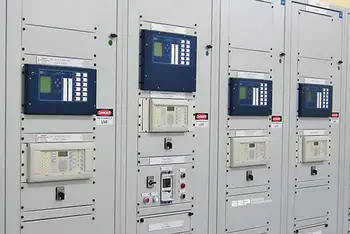
Protective Relay Training - Basic
Our customized live online or in‑person group training can be delivered to your staff at your location.
- Live Online
- 12 hours Instructor-led
- Group Training Available
Regular Price:
$699
Coupon Price:
$599
ATLANTA
—
U.S. Grid Heat Resilience sees operators adopt a design baseline for extreme heat, use ambient-adjusted and dynamic line ratings, harden transformers, and scale demand response and virtual power plants amid drought and wildfire smoke.
Essential Takeaways
-
Operators shift from tail risk to design baseline for extreme heat.
-
AAR and DLR expand transfer capability without new corridors.
-
DR, VPPs and equipment cooling bolster summer reliability.
System planners and grid operators are increasingly treating extreme heat as a design baseline rather than a tail risk, a shift driven by earlier, longer heat waves, persistent drought, and rapid load growth. That change is reframing investment and operations across transmission, generation, and distribution while aligning utility strategy with industry attention on grid climate change impacts on reliability and asset life.
Entering summer, reliability authorities project modestly higher peak demand alongside significant new on-peak capacity. Even so, wide-area heat events remain a primary system risk this season, a trend mirrored by global focus on world heat electricity challenges in power planning and operations. Wholesale price expectations are mixed across regions this summer, and consumer affordability remains a strategic concern as extreme heat boosts us electricity bills remains a topic in regulatory and utility discussions.
Transmission operators are pivoting from static seasonal line ratings to ambient-adjusted ratings that update hourly based on actual and forecast temperatures. Order 881 requires hourly forecasts out to 10 days, separate day and night ratings, and updates triggered by each 5°F change. In March, one large regional operator implemented ambient-adjusted ratings across dozens of weather-forecast zones after a multi-year effort, and others have scheduled compliance. Dynamic line ratings are also moving from pilots to corridor-scale use, applying real-time sensors to constrain conductor temperature directly and tap existing transfer capacity without new rights-of-way. In parallel, advanced reconductoring with composite-core conductors offers a rebuild alternative where corridors are constrained.
Heat stress is equally consequential on the distribution side. High ambient temperatures accelerate transformer insulation aging and can erode substation and feeder margins. Guidance indicates that large power transformers can be overloaded by 10% to 20% above nameplate during emergencies, albeit with accelerated aging, and utilities are specifying additional cooling capacity for long-duration hot spells. Despite announced manufacturing expansions, long replacement lead times for distribution units persist into this year, keeping spares strategies and fleet condition monitoring in the spotlight. Another growing hazard is wildfire smoke: conductive particulates deposited on insulators have been linked to flashovers far downwind of active fire lines, creating fault risk even on otherwise clear days.
Utilities in high-risk territories are layering operational mitigations. Enhanced protective settings that trip at lower fault thresholds during dangerous weather have materially reduced reportable ignitions on targeted primary distribution circuits, an approach adopted where California faces blackouts and wildfire exposure is acute, helping shrink ignition likelihood while balancing outage impact.
On the generation side, there is no hot-weather equivalent to the current cold-weather reliability standard, so plants are leaning on inspections, weatherization, and near-term performance upgrades. Inlet air-cooling retrofits can recover roughly 10% of output otherwise lost above 90°F ambient, making them a practical capacity lever amid long equipment lead times. Seasonal capability rules are also tightening, and recent filings to adjust ultimate heat sink temperature limits underscore emerging climate change nuclear considerations for thermal fleets in hotter summers.
Flexible load remains pivotal. Virtual power plants are scaling, with an installed base estimated at tens of gigawatts and a 2030 target in the high tens to low hundreds of gigawatts. Demand response also cleared major peaks during last summer’s heat, trimming several gigawatts of load during the most stressed hours without firm load shed. As the season advances, a combined toolkit of ambient-adjusted and dynamic ratings, targeted equipment cooling and replacements, wildfire-aware protection, and orchestrated load flexibility will define how the system holds the line on reliability during extreme heat.
Related News
California Regulators Face Calls for Action as Electricity Bills Soar
California Electricity Rate Hikes strain households as CPUC weighs fixed charges, utility profit caps, and…
View more
Rio Tinto Completes Largest Off-Grid Solar Plant in Canada's Northwest Territories
Rio Tinto Off-Grid Solar Power Plant showcases renewable energy at the Diavik Diamond Mine in…
View more
Should California classify nuclear power as renewable?
California Nuclear Renewable Bill AB 2898 seeks to add nuclear to the Renewables Portfolio Standard,…
View more
Solar-powered pot: Edmonton-area producer unveils largest rooftop solar array
Freedom Cannabis solar array powers an Acheson cannabis facility with 4,574 rooftop panels, a 1,830-kilowatt…
View more
Iran supplying 40% of Iraq’s need for electricity
Iran Electricity Exports to Iraq address power shortages and blackouts, supplying 1,200-1,500 MW and gas…
View more
Hot Houston summer and cold winter set new electricity records
US Electricity Demand 2018-2050 projects slower growth as energy consumption, power generation, air conditioning, and…
View more
Sign Up for Electricity Forum’s Newsletter
Stay informed with our FREE Newsletter — get the latest news, breakthrough technologies, and expert insights, delivered straight to your inbox.
Electricity Today T&D Magazine Subscribe for FREE

Stay informed with the latest T&D policies and technologies.
- Timely insights from industry experts
- Practical solutions T&D engineers
- Free access to every issue
