U.S. West Electricity Prices Rise Amid Hot Weather, Plant Shutdowns

By Bloomberg


Substation Relay Protection Training

Our customized live online or in‑person group training can be delivered to your staff at your location.

  • Live Online
  • 12 hours Instructor-led
  • Group Training Available
Regular Price:
$699
Coupon Price:
$599
Reserve Your Seat Today
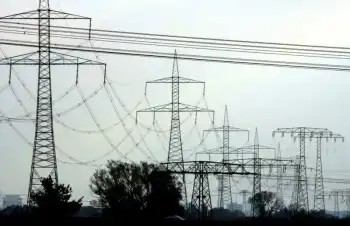
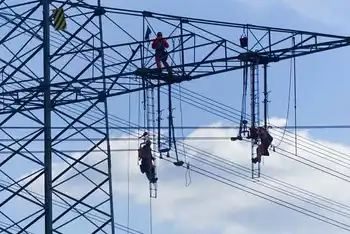
Wholesale electricity prices gained in the Western U.S. amid forecasts for higher-than-normal temperatures in the Southwest and the shutdown of two generators in Northern California.

Cooling demand will be 6 percent above normal tomorrow in Phoenix, and double the average in Reno, Nevada, according to forecaster Weather Derivatives. The high temperature in Phoenix will be 110 degrees Fahrenheit (43 Celsius) tomorrow, six degrees above average, the Weather Channel said.

At the Mead substation, near Hoover Dam at the border of Nevada and Arizona, wholesale power surged $11.04, or 17 percent, to $76.67 a megawatt-hour at 7:59 a.m. local time, according to Bloomberg data. It was the region's biggest gain in more than two weeks and the highest price since May 30.

"It looks like a little weather, staying kind of the same as yesterday," is boosting power prices, said Saul Lopez, an electricity trader at Silicon Valley Power, the municipal utility in Santa Clara, California. Power demand tends to increase during a heat wave because it takes more and more air conditioning to keep buildings cool.

In Southern California, the price for electricity gained for a second day, rising $9.86, or 17 percent, to $69.23 a megawatt- hour. The price in Northern California increased $5.58, or 10 percent, to $59.38. Northern California power traded as high as $64 a megawatt-hour this morning on the Bloomberg PowerMatch trading system.

The California Independent System Operator, the agency that manages the state's power grid, had asked generators to postpone maintenance work on their power plants for a second straight day because "resources may be inadequate" today. The request was canceled at 9 a.m.

Duke Energy Corp.'s Moss Landing Unit 6 and Unit 7 generators, located about 12 miles northwest of Salinas, California, are expected to be back online either late today or early tomorrow, Duke spokesman Pat Mullen said. The generators can produce 1,510 megawatts.

Wholesale electricity at the California-Oregon border gained $3.75, or 7.6 percent, to $53 a megawatt-hour. At Washington's Mid-Columbia trading point, a benchmark for the Northwest, the price increased $4.05, or 8.9 percent, to $49.45 a megawatt-hour.

One megawatt-hour can power 800 typical U.S. homes for an hour, according to the U.S. Energy Department.

In the Four Corners region, where Colorado, New Mexico, Arizona and Utah meet, the price for power rose for a third session, increasing $12.08, or 18 percent, to $78.33 a megawatt- hour. It was the region's highest price since March 5. At the Palo Verde switchyard in Arizona, the price gained $9.41, or 14 percent, to $74.56.

Related News

Brazil government considers emergency Coronavirus loans for power sector

Brazil Energy Emergency Loan Package aims to bolster utilities via BNDES as coronavirus curbs electricity demand. Aneel and the Mines and Energy Ministry weigh measures while Eletrobras privatization and auctions face delays.


Key Points

An emergency plan supporting Brazilian utilities via BNDES and banks during coronavirus demand slumps and payment risks.

✅ Modeled on 2014-2015 sector loans via BNDES and private banks

✅ Addresses cash flow from lower demand and bill nonpayment

✅ Auctions and Eletrobras privatization delayed amid outbreak


Brazil’s government is considering an emergency loan package for energy distributors struggling with lower energy use and facing lost revenues because of the coronavirus outbreak, echoing strains seen elsewhere such as Germany's utility troubles during the energy crisis, an industry group told Reuters.

Marcos Madureira, president of Brazilian energy distributors association Abradee, said the package being negotiated by companies and the government could involve loans from state development bank BNDES or a pool of banks, but that the value of the loans and other details was not yet settled.

Also, Brazil’s Mines and Energy Ministry is indefinitely postponing projects to auction off energy transmission and generation assets planned for this year because of the coronavirus, even as the need for electricity during COVID-19 remained critical, it said in the Official Gazette.

The coronavirus outbreak will also delay the privatization of state-owned utility Eletrobras, its chief executive officer said on Monday.

The potential loan package under discussion would resemble a similar measure in 2014 and 2015 that offered about 22 billion reais ($4.2 billion) in loans to the sector as Brazil was entering its deepest recession on record, and drawing comparisons to a proposed Texas market bailout after a winter storm, Madureira said.

Public and private banks including BNDES, Caixa Economica Federal, Itau Unibanco and Banco Bradesco participated in those loans.

Three sources involved in the discussions said on condition of anonymity that the Mines and Energy Ministry and energy regulator Aneel were considering the matter.

Aneel declined to comment. The Mines and Energy Ministry and BNDES did not immediately respond to requests for comment.

Energy distributors worry that reduced electricity demand during COVID-19 could result in deep revenue losses.

The coronavirus has led to widespread lockdowns of non-essential businesses in Brazil, while citizens are being told to stay home. That is causing lost income for many hourly and informal workers in Brazil, who could be unable to pay their electricity bills, raising risks of pandemic power shut-offs for vulnerable households.

The government sees a loan package as a way to stave off a potential chain of defaults in the sector, a move discussed alongside measures such as a Brazil tax strategy on energy prices, one of the sources said.

On a conference call with investors about the company’s latest earnings, Eletrobras CEO Wilson Ferreira Jr. said privatization would be delayed, without giving any more details on the projected time scale.

The largest investors in Brazil’s energy distribution sector include Italy’s Enel, Spain’s Iberdrola via its subsidiary Neoenergia and China’s State Grid via CPFL Energia, with Chinese interest also evidenced by CTG's bid for EDP, as well as local players Energisa e Equatorial Energia. 


Related News

View more

Solar power is the red-hot growth area in oil-rich Alberta

Alberta Solar Power is accelerating as renewable energy investment, PPAs, and utility-scale projects expand the grid, with independent power producers and foreign capital outperforming AESO forecasts in oil-and-gas-rich markets across Alberta and Calgary.


Key Points

Alberta Solar Power is a fast-growing provincial market, driven by PPAs and private investment, outpacing AESO forecasts.

✅ Utility-scale projects and PPAs expand capacity beyond AESO outlooks

✅ Private and foreign capital drive independent power producers

✅ Costs near $70/MWh challenge >$100/MWh assumptions


Solar power is beating expectations in oil and gas rich Alberta, where the renewable energy source is poised to expand dramatically amid a renewable energy surge in the coming years as international power companies invest in the province.

Fresh capital is being deployed in the Alberta’s electricity generation sector for both renewable and natural gas-fired power projects after years of uncertainty caused by changes and reversals in the province’s power market, said Duane Reid-Carlson, president of power consulting firm EDC Associates, who advises renewable power developers on electric projects in the province.

“From the mix of projects that we see in the queue at the (Alberta Electric System Operator) and the projects that have been announced, Alberta, a powerhouse for both green energy and fossil fuels, has no shortage of thermal and renewable projects,” Reid-Carlson said, adding that he sees “a great mix” of independent power companies and foreign firms looking to build renewable projects in Alberta.

Alberta is a unique power market in Canada because its electricity supply is not dominated by a Crown corporation such as BC Hydro, Hydro One or Hydro Quebec. Instead, a mix of private-sector companies and a few municipally owned utilities generate electricity, transmit and distribute that power to households and industries under long-term contracts.

Last week, Perimeter Solar Inc., backed by Danish solar power investor Obton AS, announced Sept. 30 that it had struck a deal to sell renewable energy to Calgary-based pipeline giant TC Energy Corp. with 74.25 megawatts of electricity from a new 130-MW solar power project immediately south of Calgary. Neither company disclosed the costs of the transaction or the project.

“We are very pleased that of all the potential off-takers in the market for energy, we have signed with a company as reputable as TC Energy,” Obton CEO Anders Marcus said in a release announcing the deal, which it called “the largest negotiated energy supply agreement with a North American energy company.”

Perimeter expects to break ground on the project, which will more than double the amount of solar power being produced in the province, by the end of this year.

A report published Monday by the Energy Information Administration, a unit of the U.S. Department of Energy, estimated that renewable energy powered 3 per cent of Canada’s energy consumption in 2018.

Between the Claresholm project and other planned solar installations, utility companies are poised to install far more solar power than the province is currently planning for, even as Alberta faces challenges with solar expansion today.

University of Calgary adjunct professor Blake Shaffer said it was “ironic” that the Claresholm Solar project was announced the exact same day as the Alberta Electric System Operator released a forecast that under-projected the amount of solar in the province’s electric grid.

The power grid operator (AESO) released its forecast on Sept. 30, which predicted that solar power projects would provide just 1 per cent of Alberta’s electricity supply by 2030 at 231 megawatts.

Shaffer said the AESO, which manages and operates the province’s electricity grid, is assuming that on a levelized basis solar power will need a price over $100 per megawatt hour for new investment. However, he said, based on recent solar contracts for government infrastructure projects, the cost is closer to $70 MW/h.

Most forecasting organizations like the International Energy Agency have had to adjust their forecasts for solar power adoption higher in the past, as growth of the renewable energy source has outperformed expectations.

Calgary-based Greengate Power has also proposed a $500-million, 400-MW solar project near Vulcan, a town roughly one-hour by car southeast of Calgary.

“So now we’re getting close to 700 MW (of solar power),” Shaffer said, which is three times the AESO forecast.


Related News

View more

Germany's Call for Hydrogen-Ready Power Plants

Germany Hydrogen-Ready Power Plants Tender accelerates the energy transition by enabling clean energy generation, decarbonization, and green hydrogen integration through retrofit and new-build capacity, resilient infrastructure, flexible storage, and grid reliability provisions.


Key Points

Germany tender to build or convert plants for hydrogen, advancing decarbonization, energy security, and clean power.

✅ Hydrogen-ready retrofits and new-build generation capacity

✅ Supports decarbonization, grid reliability, and flexible storage

✅ Future-proof design for green hydrogen supply integration


Germany, a global leader in energy transition and environmental sustainability, has recently launched an ambitious call for tenders aimed at developing hydrogen-ready power plants. This initiative is a significant step in the country's strategy to transform its energy infrastructure and support the broader goal of a greener economy. The move underscores Germany’s commitment to reducing greenhouse gas emissions and advancing clean energy technologies.

The Need for Hydrogen-Ready Power Plants

Hydrogen, often hailed as a key player in the future of clean energy, offers a promising solution for decarbonizing various sectors, including power generation. Unlike fossil fuels, hydrogen produces zero carbon emissions when used in fuel cells or burned. This makes it an ideal candidate for replacing conventional energy sources that contribute to climate change.

Germany’s push for hydrogen-ready power plants reflects the country’s recognition of hydrogen’s potential in achieving its climate goals. Traditional power plants, which typically rely on coal, natural gas, or oil, emit substantial amounts of CO2. Transitioning these plants to utilize hydrogen can significantly reduce their carbon footprint and align with Germany's climate targets.

The Details of the Tender

The recent tender call is part of Germany's broader strategy to incorporate hydrogen into its energy mix, amid a nuclear option debate in climate policy. The tender seeks proposals for power plants that can either be converted to use hydrogen or be built with hydrogen capability from the outset. This approach allows for flexibility and innovation in how hydrogen technology is integrated into existing and new energy infrastructures.

One of the critical aspects of this initiative is the focus on “hydrogen readiness.” This means that power plants must be designed or retrofitted to operate with hydrogen either exclusively or in combination with other fuels. The goal is to ensure that these facilities can adapt to the growing availability of hydrogen and seamlessly transition from conventional fuels without significant additional modifications.

By setting such requirements, Germany aims to stimulate the development of technologies that can handle hydrogen’s unique properties and ensure that the infrastructure is future-proofed. This includes addressing challenges related to hydrogen storage, transportation, and combustion, and exploring concepts like storing electricity in natural gas pipes for system flexibility.

Strategic Implications for Germany

Germany’s call for hydrogen-ready power plants has several strategic implications. First and foremost, it aligns with the country’s broader energy strategy, which emphasizes the need for a transition from fossil fuels to cleaner alternatives, building on its decision to phase out coal and nuclear domestically. As part of its commitment to the Paris Agreement and its own climate action plans, Germany has set ambitious targets for reducing greenhouse gas emissions and increasing the share of renewable energy in its energy mix.

Hydrogen plays a crucial role in this strategy, particularly for sectors where direct electrification is challenging. For instance, heavy industry and certain industrial processes, such as green steel production, require high-temperature heat that is difficult to achieve with electricity alone. Hydrogen can fill this gap, providing a cleaner alternative to natural gas and coal.

Moreover, this initiative helps Germany bolster its leadership in green technology and innovation. By investing in hydrogen infrastructure, Germany positions itself as a pioneer in the global energy transition, potentially influencing international standards and practices. The development of hydrogen-ready power plants also opens up new economic opportunities, including job creation in engineering, construction, and technology sectors.

Challenges and Opportunities

While the push for hydrogen-ready power plants presents significant opportunities, it also comes with challenges. Hydrogen production, especially green hydrogen produced from renewable sources, remains relatively expensive compared to conventional fuels. Scaling up production and reducing costs are critical for making hydrogen a viable alternative for widespread use.

Furthermore, integrating hydrogen into existing power infrastructure, alongside electricity grid expansion, requires careful planning and investment. Issues such as retrofitting existing plants, ensuring safe handling of hydrogen, and developing efficient storage and transportation systems must be addressed.

Despite these challenges, the long-term benefits of hydrogen integration are substantial, and a net-zero roadmap indicates electricity costs could fall by a third. Hydrogen can enhance energy security, reduce reliance on imported fossil fuels, and support global climate goals. For Germany, this initiative is a step towards realizing its vision of a sustainable, low-carbon energy system.

Conclusion

Germany’s call for hydrogen-ready power plants is a forward-thinking move that reflects its commitment to sustainability and innovation. By encouraging the development of infrastructure capable of using hydrogen, Germany is taking a significant step towards a cleaner energy future. While challenges remain, the strategic focus on hydrogen underscores Germany’s leadership in the global transition to a low-carbon economy. As the world grapples with the urgent need to address climate change, Germany’s approach serves as a model for integrating emerging technologies into national energy strategies.


Related News

View more

Heathrow Airport Power Outage: Vulnerabilities Flagged Days Before Disruption

Heathrow Airport Power Outage 2025 disrupted operations with mass flight cancellations and diversions after a grid failure, exposing infrastructure resilience gaps, crisis management flaws, and raising passenger compensation and safety oversight concerns.


Key Points

A grid failure closed Heathrow, causing mass cancellations and diversions, exposing resilience and communication lapses.

✅ Grid fire triggered airport-wide shutdown

✅ 1,400+ flights canceled or diverted

✅ Inquiry probes resilience, communication, compensation


On March 21, 2025, Heathrow Airport, Europe's busiest, suffered a catastrophic power outage, similar to another high-profile outage seen at major events, that led to the cancellation and diversion of over 1,400 flights, affecting nearly 300,000 passengers and costing airlines an estimated £100 million. The power failure, triggered by a fire at an electricity substation in west London, left Heathrow with a significant operational crisis. This disruption is even more significant considering that Heathrow is one of the most expensive airports globally, which raises concerns about its infrastructure resilience and broader electricity system resilience across Europe.

In a parliamentary committee meeting, Heathrow officials admitted that vulnerabilities in the airport’s power supply were flagged just days before the outage. Nigel Wicking, Chief Executive of the Heathrow Airline Operators' Committee (HAOC), informed MPs that concerns regarding power resilience had been raised on March 15, following disruptions caused by cable thefts impacting runway lights. Despite these warnings, the airport’s management did not address the vulnerabilities urgently, even as UK net zero policies continue to reshape infrastructure planning, which ultimately led to the disastrous outage.

The airport was closed for a day, with serious consequences for not only airlines but also the surrounding community and businesses. British Airways alone faced millions of pounds in losses, and passengers experienced significant emotional distress, missing vital life events like weddings and funerals due to flight cancellations. The committee is now questioning officials from National Grid and Scottish and Southern Electricity Networks to better understand why Heathrow’s infrastructure failed, in the context of a cleaner grid following the British carbon tax that reduced coal use, how it communicated with affected parties, and what measures will be taken to compensate impacted passengers.

Heathrow’s Chief Executive, Thomas Woldbye, defended the closure decision, stating it would have been disastrous to keep the airport open under such circumstances. He noted that continuing operations would have left tens of thousands of passengers stranded and would have posed safety risks due to the failure of fire surveillance and CCTV systems. However, Wicking, representing the airlines, pointed out that Heathrow’s lack of resilience was unacceptable given the amount spent on the airport, emphasizing the need for better infrastructure, including addressing SF6 in switchgear during upgrades, and more transparent management practices.

Looking forward, the MPs intend to investigate the airport’s emergency preparedness, why the resilience review from 2018 wasn’t shared with airlines, and whether enough preventative measures were in place amid surging data demand that could strain electricity supplies. The outcome of this inquiry could have lasting effects on how Heathrow and other major airports handle their infrastructure and crisis management systems, as drought-driven hydro challenges demonstrate the wider climate stresses on power networks.


Related News

View more

New bill would close loophole that left hundreds of Kentucky miners with cold checks

Kentucky Coal Wage Protection Bill strengthens performance bond enforcement, links Energy and Environment Cabinet and Labor Cabinet notifications, addresses Blackjewel bankruptcy fallout, safeguards unpaid miners, ties mining permits to payroll bonds, penalizes violators via revocations.


Key Points

A Kentucky plan to enforce wage bonds and revoke mining permits to protect miners after bankruptcies.

✅ Requires wage bonds for firms under 5 years

✅ Links Energy and Environment Cabinet and Labor Cabinet

✅ Violators face permit revocation in 90 days


Following the high-profile bankruptcy of a coal company that left hundreds of Kentucky miners with bad checks last month, Sen. Johnny Ray Turner (D-Prestonsburg) said he will pre-file a bill Thursday aimed at closing a loophole that allowed the company to operate in violation of state law.

The bill would also compel state agencies to determine whether other companies are currently in violation of the law, and could revoke mining permits if the companies don't comply.

Turner's bill would amend an already-existing law that requires coal and construction companies that have been operating in Kentucky for less than five years to post a performance bond to protect wages if the companies cease their operations.

Blackjewel LLC., which employed hundreds of miners in Eastern Kentucky, failed to post that bond. When it shut its mines down and filed for bankruptcy last month, it left hundreds of miners without payment for 3 weeks and one day of work.

The bond issue has sparked criticism from various state officials, including Attorney General Andy Beshear, who said Tuesday that he would investigate whether other companies are currently in violation, similar to an external investigation of utility workers in another jurisdiction.

Blackjewel issued cold checks to its employees June 28, and when the checks bounced days later, many employees were left with bank accounts overdrawn by more than $1,000. The bankruptcy left many miners and their families with concerns over upcoming bill and mortgage payments, and, as unpaid days off at utilities elsewhere show, the strain on workers can be severe, and fostered a ongoing protest that blocked a train hauling coal from one of the company's Harlan County mines.

Blackjewel had been operating in Kentucky for about two years before it filed for bankruptcy, so it should have paid the performance bond, according to state law.

David A. Dickerson, the Kentucky Labor Cabinet Secretary, said the law as it's currently written does not set up any mechanism that notifies the cabinet, or provides comparable public reporting at large utility projects elsewhere, when a company opens in Kentucky that is supposed to pay the bond.

That allowed Blackjewel to operate for two years without any protection for workers before it closed its mines. Had the company posted the bond according to state law, miners likely would have been paid for the work they had already completed, officials said.

The law requires companies to set aside enough money to cover payroll for four weeks.

Turner's bill would compel the state Energy and Environment Cabinet to notify the Labor Cabinet's Department of Workplace Standards of any application for a mining permit from a company that has been doing business in Kentucky for less than five years.

It also compels the EEC to notify the Labor Cabinet of any companies that already have permits that are subject to the bond.

"It should have already been that way, but I'm happy so our children don't have to go through this," said Jeff Willig, a former Blackjewel miner who helped launch the protest at the railroad.

Willig said he and other miners will continue to block the tracks until they receive payment for their past work.

Any company currently operating in violation of the law would have 90 days to become compliant before its mining permits are revoked. New companies that are applying for permits will be required post the bond before permits are issued.

"Hopefully it will take care of the loopholes that had been exploited by Blackjewel," Turner said.

The bill will be taken up by the legislature when it returns to session in January. It would also cover attorneys' fees if workers are forced to sue their employer to cover wages, underscoring broader worker safety concerns during health emergencies.

Turner said he has reached out to Republican leadership in the Senate, and expects the bill to have bipartisan support come January.

Turner announced the legislation at a press conference in Harlan, the county with the highest population of Blackjewel employees affected by the bankruptcy, and as prolonged utility outages after tornadoes have strained other Kentucky communities.

State rep. Angie Hatton (D-Whitesburg) was also in attendance, along with rep. Chris Fugate (R-Chavies) and state Sen. Morgan McGarvey (D-Louisville).

Hatton said the bankruptcy has had serious economic impact throughout Eastern Kentucky, including in Letcher County, which is home to more than 130 former Blackjewel workers.

"This is something that has done a lot of damage to Eastern Kentucky," Hatton said.

Hatton plans to file the same bill in the state House of Representatives.

Fugate commended community members in Harlan County and elsewhere who have banded together in support of the miners by donating children's clothing, school supplies, food and other goods, while other regions have created a coal transition fund to help displaced workers.

Mosley called the bankruptcy "totally unprecedented" and said the current performance bond law, which has been on-the-books since 1986, lacked the enforcement necessary to protect miners in bankruptcies like Blackjewel's, even as a workplace safety fine in another case shows regulatory consequences in other industries.

"There was a law, there wasn't good enough process," Mosley said.

Blackjewel received court approval to sell many of its mines last month, including many in Kentucky, to Kopper Glo Mining, LLC.

As part of the sale agreement, Kopper Glo said it would pay $450,000 to cover the past wages of Blackjewel miners, and collect a per ton fee accumulating up to $550,000 that it will also contribute to pay back wages.

That total $1 million is less than half of all back wages owed to Blackjewel miners, but attorneys who filed a class action suit against the company said miners have a priority lien on the purchase price. That could allow former Blackjewel employees to make good on their back wages as bankruptcy proceedings continue.

Mosley said he spoke with a Kopper Glo official Thursday, who said the company is working to re-open the mines as quickly as possible. The official did not give an exact timeline.


Related News

View more

California’s Solar Power Cost Shift: A Misguided Policy Threatening Energy Equity

California Rooftop Solar Cost Shift examines PG&E rate hikes, net metering changes, and utility infrastructure spending impacts on low-income households, distributed generation, and clean energy adoption, potentially raising bills and undermining grid resilience.


Key Points

A claim that rooftop solar shifts fixed grid costs to others; critics cite PG&E rates, avoided costs, and impacts.

✅ PG&E rates outpace national average, underscoring cost drivers.

✅ Net metering cuts risk burdening low- and middle-income homes.

✅ Distributed generation avoids infrastructure spend and grid strain.


California is grappling with soaring electricity prices across the state, with Pacific Gas & Electric (PG&E) rates more than double the national average and increasing at an average of 12.5% annually over the past six years. In response, Governor Gavin Newsom issued an executive order directing state energy agencies to identify ways to reduce power costs. However, recent policy shifts targeting rooftop solar users may exacerbate the problem rather than alleviate it.

The "Cost Shift" Theory

A central justification for these pricing changes is the "cost shift" theory. This theory posits that homeowners with rooftop solar panels reduce their electricity consumption from the grid, thereby shifting the fixed costs of maintaining and operating the electrical grid onto non-solar customers. Proponents argue that this leads to higher rates for those without solar installations.

However, this theory is based on a flawed assumption: that PG&E owns 100% of the electricity generated by its customers and is entitled to full profits even for energy it does not deliver. In reality, rooftop solar users supply only about half of their energy needs and still pay for the rest. Moreover, their investments in solar infrastructure reduce grid strain and save ratepayers billions by avoiding costly infrastructure projects and reducing energy demand growth, aligning with efforts to revamp electricity rates to clean the grid as well.

Impact on Low- and Middle-Income Households

The majority of rooftop solar users are low- and middle-income households. These individuals often invest in solar panels to lower their energy bills and reduce their carbon footprint. Policy changes that undermine the financial viability of rooftop solar disproportionately affect these communities, and efforts to overturn income-based charges add uncertainty about affordability and access.

For instance, Assembly Bill 942 proposes to retroactively alter contracts for millions of solar consumers, cutting the compensation they receive from providing energy to the grid, raising questions about major changes to your electric bill that could follow if their home is sold or transferred. This would force those with solar leases—predominantly lower-income individuals—to buy out their contracts when selling their homes, potentially incurring significant financial burdens.

The Real Drivers of Rising Energy Costs

While rooftop solar users are being blamed for rising electricity rates, calls for action have mounted as the true culprits lie elsewhere. Unchecked utility infrastructure spending has been a significant factor in escalating costs. For example, PG&E's rates have increased rapidly, yet the utility's spending on infrastructure projects has often been criticized for inefficiency and lack of accountability. Instead of targeting solar users, policymakers should scrutinize utility profit motives and infrastructure investments to identify areas where costs can be reduced without sacrificing service quality.

California's approach to addressing rising electricity costs by targeting rooftop solar users is misguided. The "cost shift" theory is based on flawed assumptions and overlooks the substantial benefits that rooftop solar provides to the grid and ratepayers. To achieve a sustainable and equitable energy future, the state must focus on controlling utility spending, promoting clean energy access for all, especially as it exports its energy policies across the West, and ensuring that policies support—not undermine—the adoption of renewable energy technologies.


Related News

View more

Sign Up for Electricity Forum’s Newsletter

Stay informed with our FREE Newsletter — get the latest news, breakthrough technologies, and expert insights, delivered straight to your inbox.

Electricity Today T&D Magazine Subscribe for FREE

Stay informed with the latest T&D policies and technologies.
  • Timely insights from industry experts
  • Practical solutions T&D engineers
  • Free access to every issue

Download the 2025 Electrical Training Catalog

Explore 50+ live, expert-led electrical training courses –

  • Interactive
  • Flexible
  • CEU-cerified