By The Canadian Press


CSA Z463 Electrical Maintenance -

Our customized live online or in‑person group training can be delivered to your staff at your location.

  • Live Online
  • 6 hours Instructor-led
  • Group Training Available
Regular Price:
$249
Coupon Price:
$199
Reserve Your Seat Today
Val Vista Energy makes $4.5M acquisition

CALGARY -- Junior energy producer Val Vista Energy Ltd. is buying a private oil and gas company in a $4.5-million cash and stock deal.

Val Vista said recently the purchase involves $3.3 million in cash and $1.2 million in shares. It will give the Calgary company central Alberta properties with about 200 barrels of oil equivalent production a day and more than 3,000 gross hectares of land.

The acquisition is expected to close Oct. 31 and will boost Val Vista's overall production to more than 475 barrels of oil equivalent output a day. The company's current production is primarily focused in the Manyberries, Taber, Conrad, and Matziwin areas of southern Alberta.

Related News
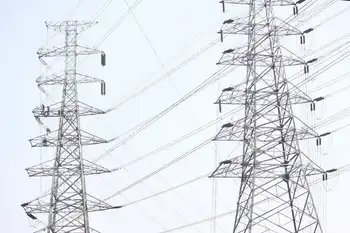
Saudis set to 'boost wind by over 6GW'

Saudi Arabia Wind Power Market set to lead the Middle East, driven by Vision 2030 renewables goals, REPDO tenders, and PIF backing, adding 6.2GW wind capacity by 2028 alongside solar PV diversification.


Key Points

It is the emerging national segment leading Middle East wind growth, targeting 6.2GW by 2028 under Vision 2030 policies.

✅ Adds 6.2GW, 46% of regional wind capacity by 2028

✅ REPDO tenders and PIF funding underpin pipeline

✅ Targets: 16GW wind, 40GW solar under Vision 2030


Saudi Arabia will become a regional heavyweight in the Middle East's wind power market adding over 6GW in the next 10 years, according to new research by Wood Mackenzie Power & Renewables.

The report – 'Middle East Wind Power Market Outlook, 2019-2028’ – said developers will build 6.2GW of wind capacity in the country or 46% of the region’s total wind capacity additions between 2019 and 2028.

Wood Mackenzie Power & Renewables senior analyst Sohaib Malik said: “The integration of renewables in Vision 2030’s objectives underlines strong political commitment within Saudi Arabia.

“The level of Saudi ambition for wind and solar PV varies significantly, despite the cost parity between both technologies during the first round of tenders in 2018.”

Saudi Arabia has set a 16GW target for wind by 2030 and 40GW for solar, plans to solicit 60 GW of clean energy over the next decade, Wood Mackenzie added.

“Moving forward, the Renewable Energy Project Development Office will award 850MW of wind capacity in 2019, which is expected to be commissioned in 2021-2022, and increase the local content requirement in future tendering rounds,” Malik said.

However, Saudi Arabia will fall short of its current 2030 renewables target, despite growth projections and regional leadership, the report said.

Some 70% of the renewables capacity target is to be supported by the Public Investment Fund (PIF), the Saudi sovereign wealth fund, while the remaining capacity is to be awarded through REPDO.

“A central concern is the PIF’s lack of track record in the renewables sector and its limited in-house sectoral expertise,” said Malik

“REPDO, on the other hand, completed two renewables request for proposals after pre-developing the sites,” he said.

PIF is estimated to have $230bn of assets – targeted to reach $2 trillion under Vision 2030 – driven by investments in a variety of sectors ranging from electric vehicles to public infrastructure, Wood Mackenzie said.

“There is little doubt about the fund’s financial muscle, however, its past investment strategy focused on established firms in traditional industries,” Malik added.

“Aspirations to develop a value chain for wind and PV technologies locally is a different ball game and requires the PIF to acquire new capabilities for effective oversight of these ventures,” he said.

The report noted that regional volatility is expected to remain, with strong positive growth, driven by Jordan and Iran in 2018 expected to reverse in 2019, and policy shifts, as in Canada’s scaled-back projections, can influence outcomes.

Post-2020 Wood Mackenzie Power & Renewables sees regional demand returning to steady growth as global renewables set more records elsewhere.

“In 2018, developers added 185MW and 63MW of wind capacity in Jordan and Iran, respectively, compared to 53MW of capacity across the entire region in 2017, following a record year for renewables in 2016,” said Malik.

“The completion of the 89MW Al Fujeij and the 86MW Al Rajef projects in 2018 indicates that Jordan has 375MW of the region’s operational 675MW wind capacity.

“Iran followed with 278MW of installed capacity at the end of 2018. A slowdown in 2019 is expected, as project development activity softens in Iran.

“Additionally, delays in awarding the 400MW Dumat Al Jandal project in Saudi Arabia will limit annual capacity additions to 184MW.”

He added that a maturing project pipeline in the region supports the 2020-2021 outlook, even as wind power grew despite Covid-19 globally.

“Saudi Arabian demand serves as the foundation for regional demand. Regional demand diversification is also occurring, with Lebanon set to add 200-400MW to its existing permitted capacity pipeline of 202MW in 2019,” he said

“These developments pave the way for the addition of 2GW of wind capacity between 2019 and 2021.”

Wood Mackenzie Power & Renewables added that the outlook for solar in the region is “much more positive” than wind.

“Compared to only 6GW of wind power capacity, developers will add 53GW of PV capacity through 2024,” said Malik.

He added: “Solar PV, supported by trends such as China’s rapid PV growth in 2016, has become a natural choice for many countries in the region, which is endowed with world class solar energy resources.

“The increased focus on solar energy is demonstrated by ambitious PV targets across the region.”


Related News

View more

Bill Gates’ Nuclear Startup Unveils Mini-Reactor Design Including Molten Salt Energy Storage

Natrium small modular reactor pairs a sodium-cooled fast reactor with molten salt storage to deliver load-following, dispatchable nuclear power, enhancing grid flexibility and peaking capacity as TerraPower and GE Hitachi pursue factory-built, affordable deployment.


Key Points

A TerraPower-GE Hitachi SMR joining a sodium-cooled reactor with molten salt storage for flexible, dispatchable power.

✅ 345 MW base; 500 MW for 5.5 hours via thermal storage

✅ Sodium-cooled coolant and molten salt storage enable load-following

✅ Backed by major utilities; factory-built modules aim lower costs


Nuclear power is the Immovable Object of generation sources. It can take days just to bring a nuclear plant completely online, rendering it useless as a tool to manage the fluctuations in the supply and demand on a modern energy grid.  

Now a firm launched by Bill Gates in 2006, TerraPower, in partnership with GE Hitachi Nuclear Energy, believes it has found a way to make the infamously unwieldy energy source a great deal nimbler, drawing on next-gen nuclear ideas — and for an affordable price. 

The new design, announced by TerraPower on August 27th, is a combination of a "sodium-cooled fast reactor" — a type of small reactor in which liquid sodium is used as a coolant — and an energy storage system. While the reactor could pump out 345 megawatts of electrical power indefinitely, the attached storage system would retain heat in the form of molten salt and could discharge the heat when needed, increasing the plant’s overall power output to 500 megawatts for more than 5.5 hours. 

“This allows for a nuclear design that follows daily electric load changes and helps customers capitalize on peaking opportunities driven by renewable energy fluctuations,” TerraPower said. 

Dubbed Natrium after the Latin name for sodium ('natrium'), the new design will be available in the late 2020s, said Chris Levesque, TerraPower's president and CEO.

TerraPower said it has the support of a handful of top U.S. utilities, including Berkshire Hathaway Energy subsidiary Pacificorp, Energy Northwest, and Duke Energy. 

The reactor's molten salt storage add-on would essentially reprise the role currently played by coal- or gas-fired power stations or grid-scale batteries: each is a dispatchable form of power generation that can quickly ratchet up or down in response to changes in grid demand or supply. As the power demands of modern grids become ever more variable with additions of wind and solar power — which only provide energy when the wind is blowing or the sun shining — low-carbon sources of dispatchable power are needed more and more, and Europe is losing nuclear power at a difficult moment for energy security. California’s rolling blackouts are one example of what can happen when not enough power is available to be dispatched to meet peak demand. 

The use of molten salt, which retains heat at extremely high temperatures, as a storage technology is not new. Concentrated solar power plants also collect energy in the form of molten salt, although such plants have largely been abandoned in the U.S. The technology could enjoy new life alongside nuclear plants: TerraPower and GE Hitachi Nuclear are only two of several private firms working to develop reactor designs that incorporate molten salt storage units, including U.K.- and Canada-based developer Moltex Energy.

The Gates-backed venture and its partner touted the "significant cost savings" that would be achieved by building major portions of their Natrium plants through not a custom but an industrial process — a defining feature of the newest generation of advanced reactors is that their parts can be made in factories and assembled on-site — although more details on cost weren't available. Reuters reported earlier that each plant would cost around $1 billion.

NuScale Power

A day after TerraPower and GE Hitachi's unveiled their new design, another nuclear firm — Portland, Oregon-based NuScale Power — announced that the U.S. Nuclear Regulatory Commission (NRC) had completed its final safety evaluation of NuScale’s new small modular reactor design.

It was the first small modular reactor design ever to receive design approval from the NRC, NuScale said. 

The approval means customers can now pursue plans to develop its reactor design confident that the NRC has signed off on its safety aspects. NuScale said it has signed agreements with interested parties in the U.S., Canada, Romania, the Czech Republic, and Jordan, and is in the process of negotiating more. 

NuScale previously said that construction on one of its plants could begin in Utah in 2023, with the aim of completing the first Power Module in 2026 and the remaining 11 modules in 2027.

NuScale
An artist’s rendering of NuScale Power’s small modular nuclear reactor plant. NUSCALE POWER
NuScale’s reactor is smaller than TerraPower’s. Entirely factory-built, each of its Power Modules would generate 60 megawatts of power. The design, typical of advanced reactors, uses pressurized water reactor technology, with one power plant able to house up to 12 individual Power Modules. 

In a sign of the huge amounts of time and resources it takes to get new nuclear technology to the market’s doorstep, NuScale said it first completed its Design Certification Application in December 2016. NRC officials then spent as many as 115,000 hours reviewing it, NuScale said, in what was only the first of several phases in the review process. 

In January 2019, President Donald Trump signed into law the Nuclear Energy Innovation and Modernization Act (NEIMA), designed to speed the licensing process for advanced nuclear reactors, and the DOE under Secretary Rick Perry moved to advance nuclear development through parallel initiatives. The law had widespread bipartisan support, underscoring Democrats' recent tentative embrace of nuclear power.

An industry eager to turn the page

After a boom in the construction of massive nuclear power plants in the 1960s and 70s, the world's aging fleet of nuclear plants suffers from rising costs and flagging public support. Nuclear advocates have for years heralded so-called small modular reactors or SMRs as the cheaper and more agile successors to the first generation of plants, and policy moves such as the UK's green industrial revolution lay out pathways for successive waves of reactors. But so far a breakthrough on cost has proved elusive, and delays in development timelines have been abundant. 

Edwin Lyman, the director of nuclear power safety at the Union of Concerned Scientists, suggested on Twitter that the nuclear designs used by TerraPower and GE Hitachi had fallen short of a major innovation. “Oh brother. The last thing the world needs is a fleet of sodium-cooled fast reactors,” he wrote.  

Still, climate scientists view nuclear energy as a crucial source of zero-carbon energy, with analyses arguing that net-zero emissions may be impossible without nuclear in many scenarios, if the world stands a chance at limiting global temperature increases to well below 2 degrees Celsius above pre-industrial levels. Nearly all mainstream projections of the world’s path to keeping the temperature increase below those levels feature nuclear energy in a prominent role, including those by the United Nations and the International Energy Agency (IEA). 

According to the IEA: “Achieving the clean energy transition with less nuclear power is possible but would require an extraordinary effort.”


Related News

View more

Opponent of Site C dam sharing concerns with northerners

Site C Dam Controversy highlights Peace River risks, BC Hydro claims, Indigenous rights under Treaty 8, environmental assessment findings, and potential impacts to agriculture and the Peace-Athabasca Delta across Alberta and the Northwest Territories.


Key Points

Debate over BC Hydro's Site C dam: clean energy vs Indigenous rights, Peace-Athabasca Delta impacts, and agriculture.

✅ Potential drying of Peace-Athabasca Delta and wildlife habitat

✅ Treaty 8 rights and First Nations legal challenges

✅ Loss of prime Peace Valley farmland; alternatives in renewables


One of the leading opponents of the Site C dam in northeastern B.C. is sharing her concerns with northerners this week.

Proponents of the Site C dam say it will be a cost-effective source of clean electricity, even as a major Alberta wind farm was scrapped elsewhere in Canada, and that it will be able to produce enough energy to power the equivalent of 450,000 homes per year in B.C. But a number of Indigenous groups and environmentalists are against the project.

Wendy Holm is an economist and agronomist who did an environmental assessment of the dam focusing on its potential impacts on agriculture.

On Tuesday she spoke at a town hall presentation in Fort Smith, N.W.T., organized by the Slave River Coalition. She is also speaking at an event in Yellowknife on Friday, as small modular reactors in Yukon receive study as a potential long-term option.


Worried about downstream impacts, Northern leaders urge action on Site C dam

"I learned that people outside of British Columbia are as concerned with this dam as we are," Holm said.

"There's just a lot of concern with what's happening on the Peace River and this dam and the implications for Alberta, where hydro's share has diminished in recent decades, and the Northwest Territories."

If completed, BC Hydro's Site C energy project will be the third dam on the Peace River in northeast B.C. and the largest public works project in B.C. history. The $10.7-billion project was approved by both the provincial and federal governments as B.C. moves to streamline clean energy permitting for future projects.

Amy Lusk, co-ordinator of the Slave River Coalition, said many issues were discussed at the town hall, but she also left with a sense of hope.

"I think sometimes in our little corner of the world, we are up against so much when it comes to industrial development and threats to our water," she said.

"To kind of take away that message of, this is not a done deal, and that we do have a few options in place to try and stop this and not to lose hope, I think was a very important message for the community."


Drying of the Peace-Athabasca Delta

Holm said her main concern for the Northwest Territories is how it could affect the Peace-Athabasca Delta. She said the two dams already on the river are responsible for two-thirds of the drying that's happening in the delta.

"These are very real issues and very present in the minds of northerners who want to stay connected to a traditional lifestyle, want to have access to those wild foods," she said.

Lusk said northerners are fed up with defending waters "time after time after time."

BC Hydro, however, said studies commissioned during the environmental assessment of Site C show the project will have no measurable effect on the delta, which is located 1,100 kilometres away.

Holm said the fight against the Site C dam is also important when it comes to First Nations treaty rights.

The West Moberly and Prophet River First Nations applied for an injunction to halt construction on Site C, as well as a treaty infringement lawsuit against the B.C. government. They argue the dam would cause irreparable harm to their territories and way of life, which are rights protected under Treaty 8.


Agricultural land

While the project is located in B.C., Holm said its impacts on prime horticulture land would also affect northerners, something that's important given issues of food security and nutrition.

"This is some of the best agriculture land in all of Canada," she said of the Peace Valley.

According to BC Hydro, around 2.6 million hectares of land in the Peace agricultural region would remain available for agricultural production while 3,800 hectares would be unavailable. It has also proposed a number of mitigation efforts, including a $20-million agricultural compensation fund.

Holm said renewable energy, including tidal energy for remote communities, will be cheaper and less destructive than the dam, and there's a connection between the dams on the Peace River and water sharing with the U.S.

"When you run out of water there's nothing else you can use. You can't use orange juice to irrigate your fields or to run your industries or to power your homes," she said.


Related News

View more

Electricity turns garbage into graphene

Waste-to-Graphene uses flash joule heating to convert carbon-rich trash into turbostratic graphene for composites, asphalt, concrete, and flexible electronics, delivering scalable, low-cost, high-quality material from food scraps, plastics, and tires with minimal processing.


Key Points

A flash heating method converting waste carbon into turbostratic graphene for scalable, low-cost industrial uses.

✅ Converts food scraps, plastics, and tires into graphene

✅ Produces turbostratic flakes that disperse well in composites

✅ Scalable, low-cost process via flash joule heating


Science doesn’t usually take after fairy tales. But Rumpelstiltskin, the magical imp who spun straw into gold, would be impressed with the latest chemical wizardry. Researchers at Rice University report today in Nature that they can zap virtually any source of solid carbon, from food scraps to old car tires, and turn it into graphene—sheets of carbon atoms prized for applications ranging from high-strength plastic to flexible electronics, and debates over 5G electricity use continue to evolve. Current techniques yield tiny quantities of picture-perfect graphene or up to tons of less prized graphene chunks; the new method already produces grams per day of near-pristine graphene in the lab, and researchers are now scaling it up to kilograms per day.

“This work is pioneering from a scientific and practical standpoint” as it promises to make graphene cheap enough to use to strengthen asphalt or paint, says Ray Baughman, a chemist at the University of Texas, Dallas. “I wish I had thought of it.” The researchers have already founded a new startup company, Universal Matter, to commercialize their waste-to-graphene process, while others are digitizing the electrical system to modernize infrastructure.

With atom-thin sheets of carbon atoms arranged like chicken wire, graphene is stronger than steel, conducts electricity and heat better than copper, and can serve as an impermeable barrier preventing metals from rusting, while advances such as superconducting cables aim to cut grid losses. But since its 2004 discovery, high-quality graphene—either single sheets or just a few stacked layers—has remained expensive to make and purify on an industrial scale. That’s not a problem for making diminutive devices such as high-speed transistors and efficient light-emitting diodes. But current techniques, which make graphene by depositing it from a vapor, are too costly for many high-volume applications. And higher throughput approaches, such as peeling graphene from chunks of the mineral graphite, produce flecks composed of up to 50 graphene layers that are not ideal for most applications.

Graphene comes in many forms. Single sheets, which are ideal for electronics and optics, can be grown using a method called chemical vapor deposition. But it produces only tiny amounts. For large volumes, companies commonly use a technique called liquid exfoliation. They start with chunks of graphite, which is just myriad stacked graphene layers. Then they use acids and solvents, as well as mechanical grinding, to shear off flakes. This approach typically produces tiny platelets each made up of 20 to 50 layers of graphene.

In 2014, James Tour, a chemist at Rice, and his colleagues found they could make a pure form of graphene—each piece just a few layers thick—by zapping a form of amorphous carbon called carbon black with a laser. Brief pulses heated the carbon to more than 3000 kelvins, snapping the bonds between carbon atoms; for comparison, researchers have also generated electricity from falling snow using triboelectric effects. As the cloud of carbon cooled, it coalesced into the most stable structure possible, graphene. But the approach still produced only tiny qualities and required a lot of energy.

Two years ago, Luong Xuan Duy, one of Tour’s graduate students, read that other researchers had created metal nanoparticles by zapping a material with electricity, creating the same brief blast of heat behind the success of the laser graphene approach. “I wondered if I could use that to heat a carbon source and produce graphene,” Duy says. So, he put a dash of carbon black in a clear glass vial and zapped it with 400 volts, similar in spirit to electrical weed zapping approaches in agriculture, for about 200 milliseconds. Initially he got junk. But after a bit of tweaking, he managed to create a bright yellowish white flash, indicating the temperature inside the vial was reaching about 3000 kelvins. Chemical tests revealed he had produced graphene.

It turned out to be a type of graphene that is ideal for bulk uses. As the carbon atoms condense to form graphene, they don’t have time to stack in a regular pattern, as they do in graphite. The result is a material known as turbostatic graphene, with graphene layers jumbled at all angles atop one another. “That’s a good thing,” Duy says. When added to water or other solvents, turbostatic graphene remains suspended instead of clumping up, allowing each fleck of the material to interact with whatever composite it’s added to.

“This will make it a very good material for applications,” says Monica Craciun, a materials physicist at the University of Exeter. In 2018, she and her colleagues reported that adding graphene to concrete more than doubled its compressive strength. Tour’s team saw much the same result. When they added just 0.05% by weight of their flash-produced graphene to concrete, the compressive strength rose 25%; graphene added to polydimethylsiloxane, a common plastic, boosted its strength by 250%.

As digital control spreads across energy networks, research to counter ransomware-driven blackouts is increasingly important for grid resilience.

Those results could reignite efforts to use graphene in a wide range of composites. Researchers in Italy reported recently that adding graphene to asphalt dramatically reduces its tendency to fracture and more than doubles its life span. Last year, Iterchimica, an Italian company, began to test a 250-meter stretch of road in Milan paved with graphene-spiked asphalt. Tests elsewhere have shown that adding graphene to paint dramatically improves corrosion resistance.

These applications would require high-quality graphene by the ton. Fortunately, the starting point for flash graphene could hardly be cheaper or more abundant: Virtually any organic matter, including coffee grounds, food scraps, old tires, and plastic bottles, can be vaporized to make the material. “We’re turning garbage into graphene,” Duy says.


Related News

View more

Three New Solar Electricity Facilities in Alberta Contracted At Lower Cost than Natural Gas

Alberta Solar Energy Contracts secure low-cost photovoltaic PPAs for government operations, delivering renewable electricity at 4.8 cents/kWh, beating natural gas LCOE, enhancing summer grid efficiency across Hays, Tilley, and Jenner with Canadian Solar.


Key Points

Low-cost PV power agreements meeting 55% of Alberta government electricity demand via new Canadian Solar facilities.

✅ Price: 4.8 cents/kWh CAD, under gas-fired generation LCOE.

✅ Sites: Hays, Tilley, Jenner; 50% equity with Conklin Métis Local #193.

✅ Supplies 55% of provincial government electricity demand.


Three new solar electricity facilities to be built in south eastern Alberta (Canada) amid Alberta's solar growth have been selected through a competitive process to supply the Government of Alberta with 55 per cent of their annual electricity needs. The facilities will be built near Hays, Tilley, and Jenner, by Canadian Solar with Conklin Métis Local #193 as 50-percent equity owners.

The Government of Alberta's operations have been powered 100 per cent with wind power since 2007. Upon the expiration of some of these contracts, they have been renewed to switch from wind to solar energy. The average contract pricing will be $0.048 per kilowatt hour (3.6 cents/kWh USD), which is less than the average historical wholesale power pool price paid to natural gas-fired electricity in the province in years 2008 - 2018.

"The conversation about solar energy has long been fixated on its price competitiveness with fossil fuels," said John Gorman, CanSIA President & CEO. "Today's announcement demonstrates that low cost solar energy has arrived as a mainstream option in Alberta, even as demand for solar lags in Canada according to federal assessments. The conversation should next focus on how to optimize an all-of-the-above strategy for developing the province's renewable and non-renewable resources."

"This price discovery is monumental for the solar industry in Canada" said Patrick Bateman, CanSIA Director of Policy & Market Development. "At less than five cents per kilowatt hour, this solar electricity has a cost that is less than that of natural gas. Achieving Alberta's legislated 30 per cent by 2030 renewable electricity target just became a whole lot cheaper!".


Quick Facts:

  • The contract price of 4.8 cents/kWh CAD to be paid by Alberta Infrastructure for this solar electricity represents a lower Levelized Cost of Electricity (LCOE) than the average annual wholesale price paid by the power pool to combined-cycle and single-cycle natural gas-fired electricity generation which was 7.1 cents/kWh and 11.2 cents/kWh respectively from 2008 - 2018.
  • Alberta receives more hours of sunshine than Miami, Florida in the summer months. Alberta's electricity supply is most strained in summer, highlighting challenges for solar expansion when high temperatures increase the resistance of the distribution and transmission systems, and reduce the efficiency of cooling thermal power plants. For this reason, solar facilities sited near to electricity demand improves overall grid efficiency. Supply shortages are atypical in Alberta in winter when solar energy is least available. When they do occur, imports are increased and large loads are decreased.
  • In 2018, Alberta's solar electricity generation exceeded 50 MW. While representing much less than 1% of the province's electricity supply today, the Canadian Solar Industries Association (CanSIA) forecasts that solar energy could supply as much as 3 per cent of the province's electricity by 2030, supporting renewable energy job growth across Alberta. A recent supply chain study of the solar electricity sector in Alberta by Solas Energy Consulting Inc. found a potential of $4.1 billion in market value and a labour force rising to 10,000 in 2030.


To learn more about solar energy and the best way for consumers to go solar, please visit the Canadian Solar Industries Association at www.CanSIA.ca.


Related News

View more

Amazon Announces Three New Renewable Energy Projects to Support AWS Global Infrastructure

AWS Renewable Energy Projects deliver new wind power for AWS data centers in Ireland, Sweden, and the US, adding 229 MW and 670,000 MWh annually, supporting 100% renewable targets and global cloud sustainability.


Key Points

AWS projects add wind power in Ireland, Sweden, and the US to supply clean energy for AWS data centers.

✅ 229 MW new wind capacity; 670,000 MWh annual generation

✅ Sites: Donegal (IE), Backhammar (SE), Tehachapi (US)

✅ Advances 100% renewable goal for global AWS infrastructure


 Amazon has announced three new clean energy projects as part of its long-term goal to power all Amazon Web Services (AWS) global infrastructure with renewable energy. These projects – one in Ireland, one in Sweden, and one in the United States – will deliver wind-generated energy that will total over 229 megawatts (MW) of power, with expected generation of over 670,000 megawatt hours (MWh) of renewable energy annually. The new projects are part of AWS’s long-term commitment to achieve 100 percent renewable energy for its global infrastructure. In 2018, AWS exceeded 50 percent renewable energy for its global infrastructure.

Once complete, these projects, combined with AWS’s previous nine renewable energy projects, reflect how renewable power developers benefit from diversified sources and are expected to generate more than 2,700,000 MWh of renewable energy annually – equivalent to the annual electricity consumption of over 262,000 US homes, which is approximately the size of the city of Nashville, Tennessee.

“Each of these projects brings us closer to our long-term commitment to use 100 percent renewable energy to power our global AWS infrastructure,” said Peter DeSantis, Vice President of Global Infrastructure and Customer Support, Amazon Web Services. “These projects are well-positioned to serve AWS data centers in Ireland, Sweden, and the US. We expect more projects in 2019 as we continue toward our goal of powering all AWS global infrastructure with renewable energy.”

Amazon has committed to buying the energy from a new wind project in Ireland, a 91.2 MW wind farm in Donegal. The Donegal wind farm project is expected to deliver clean energy no later than the end of 2021.

“AWS’s investment in renewable projects in Ireland illustrates their continued commitment to adding clean energy to the grid and it will make a positive contribution to Ireland’s renewable energy goals,” said Leo Varadkar, An Taoiseach of Ireland. “As a significant employer in Ireland, it is very encouraging to see Amazon taking a lead on this issue. We look forward to continuing to work with Amazon as we strive to make Ireland a leader on renewable energy.”

Amazon will also purchase 91 MW of power from a new wind farm in Bäckhammar, Sweden, which is expected to deliver renewable energy by the end of 2020.

“Sweden has long been known for ambitious renewable energy goals, and this new wind farm showcases both our country’s leadership and AWS’s commitment to renewable energy,” said Anders Ygeman, Sweden’s Minister for Energy and Digital Development. “This is a significant step in Sweden’s renewable energy production as we work toward our target of 100 percent renewable energy by 2040.”

California leads the United States in renewable electricity generation from non-hydroelectric sources, as US solar and wind growth accelerates, and the state’s Tehachapi Mountains, where AWS’s wind farm will be located, contain some of the largest wind farms in the country. The wind farm project in Tehachapi is expected to bring up to 47 MW of new renewable energy capacity by the end of 2020.

“This announcement from AWS is great news, not just for California, but for the entire country, as it reaffirms our role as a leader in renewable energy and allows us to take an important step forward on deploying the clean energy we need to respond to climate change,” said California State Senator Jerry Hill, San Mateo and Santa Clara Counties, a member of the Senate Standing Committee on Energy, Utilities and Communications.

Beyond the sustainability initiatives focused on powering the AWS global infrastructure, Amazon recently announced Shipment Zero, which is Amazon’s vision to make all Amazon shipments net zero carbon, with 50 percent of all shipments net zero by 2030. Additional sustainability programs across the company include Amazon Wind Farm Texas, which adds more than 1 million MWh of clean energy each year, alongside Amazon Wind Farm US East that is now fully operational, demonstrating scale. In total, Amazon has enabled 53 wind and solar projects worldwide, which produce more than 1,016 MW and are expected to deliver over 3,075,636 million MWh of energy annually, while peers like Arvato's solar power plant underscore broader momentum across the industry. These projects support hundreds of jobs, while providing tens of millions of dollars of investment in local communities, with Iowa wind power offering a strong example. Amazon has also set a goal to host solar energy systems at 50 fulfillment centers by 2020. This deployment of rooftop solar systems, aided by cheap batteries that enhance storage, is part of a long-term initiative that will start in North America and spread across the globe. Amazon also implemented the District Energy Project that uses recycled energy for heating Amazon offices in Seattle. For more information on Amazon’s sustainability initiatives, visit www.amazon.com/sustainability.


Related News

View more

Sign Up for Electricity Forum’s Newsletter

Stay informed with our FREE Newsletter — get the latest news, breakthrough technologies, and expert insights, delivered straight to your inbox.

Electricity Today T&D Magazine Subscribe for FREE

Stay informed with the latest T&D policies and technologies.
  • Timely insights from industry experts
  • Practical solutions T&D engineers
  • Free access to every issue

Live Online & In-person Group Training

Advantages To Instructor-Led Training – Instructor-Led Course, Customized Training, Multiple Locations, Economical, CEU Credits, Course Discounts.

Request For Quotation

Whether you would prefer Live Online or In-Person instruction, our electrical training courses can be tailored to meet your company's specific requirements and delivered to your employees in one location or at various locations.