By -- Source The Atlanta Journal-Constitution


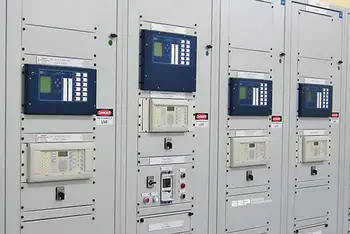
Protective Relay Training - Basic

Our customized live online or in‑person group training can be delivered to your staff at your location.

  • Live Online
  • 12 hours Instructor-led
  • Group Training Available
Regular Price:
$699
Coupon Price:
$599
Reserve Your Seat Today
WASHINGTON--The collapse of Enron won't derail efforts to deregulate the electrical power and other energy markets, the nation's top energy regulator said Monday. His remarks came one day before a Senate committee hearing on the issue. Patrick Wood, chairman of the Federal Energy Regulatory Commission, is to testify before the Senate Energy and Natural Resources Committee. The panel is examining the impact of Enron's failure on energy markets, deregulation and competition. Wood declined to discuss his planned testimony. But in a speech to an association of publicly owned electric utilities, he said creating regional wholesale markets for electrical power is "an important goal that has to happen across the nation." The creation of four independent regional transmission grids will probably be measured "in months, not years," Wood told the American Public Power Association. Wood's push for a market structure that Enron supported could also draw questions in congressional hearings. In September, Wood threatened to hobble utilities' ability to charge deregulated rates and to delay merger approvals if they refused to join the "new world" of regional grids. Enron and other independent energy producers sought a federal system of regional markets rather than a nationwide open market. Former FERC Chairman Curtis Hebert Jr., told The Washington Post that former Enron Chairman Kenneth Lay had offered to support his continued tenure at the agency if he would change his views on regulation of the industry. Hebert told the Post he refused. He resigned in August, and Wood took over as chairman of the panel in September. On Monday, Wood appeared to soften his stance about utilities joining regional grids. "You don't have to do this. I can't make you join," Wood told the utility operators."I think if we do it right, [power producers] will want to join."

-- Source The Atlanta Journal-Constitution

Related News

Starting Texas Schools After Labor Day: Power Grid and Cost Benefits?

Texas After-Labor Day School Start could ease ERCOT's power grid strain by shifting peak demand, lowering air-conditioning loads in schools, improving grid reliability, reducing electricity costs, and curbing emissions during extreme heat the summer months.


Key Points

A proposed calendar shift to start school after Labor Day to lower ERCOT peak demand, costs, and grid risk.

✅ Cuts school HVAC loads during peak summer heat

✅ Lowers costly peaker plant use and electricity rates

✅ Requires calendar changes, testing and activities shifts


As Texas faces increasing demands on its power grid, a new proposal is gaining traction: starting the school year after Labor Day. This idea, reported by the Dallas News, suggests that delaying the start of the academic year could help alleviate some of the pressure on the state’s electricity grid during the peak summer months, potentially leading to both grid stability and financial savings. Here’s an in-depth look at how this proposed change could impact Texas’s energy landscape and education system.

The Context of Power Grid Strain

Texas's power grid, operated by the Electric Reliability Council of Texas (ERCOT), has faced significant challenges in recent years. Extreme weather events, record-breaking temperatures, and high energy demand have strained the grid, and some analyses argue that climate change, not demand is the biggest challenge today, leading to concerns about reliability and stability. The summer months are particularly taxing, as the demand for air conditioning surges, often pushing the grid to its limits.

In this context, the idea of adjusting the school calendar to start after Labor Day has been proposed as a potential strategy to help manage electricity demand. By delaying the start of school, proponents argue that it could reduce the load on the power grid during peak usage periods, thereby easing some of the stress on energy resources.

Potential Benefits for the Power Grid

The concept of delaying the school year is rooted in the potential benefits for the power grid. During the hottest months of summer, the demand for electricity often spikes as families use air conditioning to stay cool, and utilities warn to prepare for blackouts as summer takes hold. School buildings, typically large and energy-intensive facilities, contribute significantly to this demand when they are in operation.

Starting school later could help reduce this peak demand, as schools would be closed during the hottest months when the grid is under the most pressure. This reduction in demand could help prevent grid overloads and reduce the risk of power outages, at a time when longer, more frequent outages are afflicting the U.S. power grid, ultimately contributing to a more stable and reliable electricity supply.

Additionally, a decrease in peak demand could help lower electricity costs. Power plants, particularly those that are less efficient and more expensive to operate, are often brought online during periods of high demand. By reducing the peak load, the state could potentially minimize the need for these costly power sources, leading to lower overall energy costs.

Financial and Environmental Considerations

The financial implications of starting school after Labor Day extend beyond just the power grid. By reducing energy consumption during peak periods, the state could see significant savings on electricity costs. This, in turn, could lead to lower utility bills for schools, businesses, and residents alike, a meaningful relief as millions risk electricity shut-offs during summer heat.

Moreover, reducing the demand for electricity from fossil fuel sources can have positive environmental impacts. Lower peak demand may reduce the reliance on less environmentally friendly energy sources, and aligns with calls to invest in a smarter electricity infrastructure nationwide, thereby decreasing greenhouse gas emissions and contributing to overall environmental sustainability.

Challenges and Trade-offs

While the proposal offers potential benefits, it also comes with challenges and trade-offs. Adjusting the school calendar would require significant changes to the academic schedule, potentially affecting extracurricular activities, summer programs, and family plans, and comparisons to California's reliability challenges underscore the complexity. Additionally, there could be resistance from various stakeholders, including parents, educators, and students, who are accustomed to the current school calendar.

There are also logistical considerations to address, such as how a delayed start might impact standardized testing schedules and the academic calendar for higher education institutions. These factors would need to be carefully evaluated to ensure that the proposed changes do not adversely affect educational outcomes or create unintended consequences.

Looking Ahead

The idea of starting Texas schools after Labor Day represents an innovative approach to addressing the challenges facing the state’s power grid. By potentially reducing peak demand and lowering energy costs, and alongside efforts to connect Texas's grid to the rest of the nation, this proposal could contribute to greater grid stability and financial savings. However, careful consideration and planning will be essential to navigate the complexities of altering the school calendar and to ensure that the benefits outweigh the challenges.

As Texas continues to explore solutions for managing its power grid and energy resources, the proposal to shift the school year schedule provides an intriguing possibility. It reflects a broader trend of seeking creative and multifaceted approaches to balancing energy demand, environmental sustainability, and public needs.

In conclusion, starting schools after Labor Day could offer tangible benefits for Texas’s power grid and financial well-being. As discussions on this proposal advance, it will be important to weigh all factors and engage stakeholders to ensure a successful and equitable implementation.


Related News

View more

Electricity Payouts on Biggest U.S. Grid Fall 64 Per Cent in Auction

PJM Capacity Auction Price Drop signals PJM Interconnection capacity market shifts, with $50/MW-day clearing, higher renewables and nuclear participation, declining coal, natural gas pressure, and zone impacts in ComEd and EMAAC, amid 21% reserve margins.


Key Points

A decline to $50 per MW-day in PJM capacity prices, shifting resource mix, zonal rates, and reserve margins.

✅ Clearing price fell to $50/MW-day from $140 in 2018

✅ Renewables and nuclear up; coal units down across PJM

✅ Zonal prices: ComEd $68.96, EMAAC $97.86; 21% reserves


Power-plant owners serving the biggest U.S. grid will be paid 64% less next year for being on standby to keep the lights on from New Jersey to Illinois.

Suppliers to PJM Interconnection LLC’s grid, which serves more than 65 million people, will get $50 a megawatt-day to provide capacity for the the year starting June 2022, according to the results of an auction released Wednesday. That’s down sharply from $140 in the previous auction, held in 2018. Analysts had expected the price would fall to about $85.

“Renewables, nuclear and new natural gas generators saw the greatest increases in cleared capacity, while coal units saw the largest decrease,” PJM said in a statement.

The PJM auction is the single most important event for power generators across the eastern U.S., including Calpine Corp., NRG Energy Inc. and Exelon Corp., because it dictates a big chunk of their future revenue. It also plays a pivotal role in shaping the region’s electricity mix, determining how much the region is willing to stick with coal and natural gas plants or replace them with wind and solar even as the aging grid complicates progress nationwide.

The results showed that the capacity price for the Chicago-area zone, known as ComEd, was $68.96 compared with $195.55 in the last auction. The price for the Pennsylvania and New Jersey zone, known as EMAAC, fell to $97.86 percent, from $165.73. All told, 144,477 megawatts cleared, representing a reserve margin of 21%.

Exelon shares fell 0.4% after the results were released. Vistra fell 1.5%. NRG was unchanged.

Blackouts triggered by extreme weather in Texas and California over the last year have reignited a debate over whether other regions should institute capacity systems similar to the one used by PJM, and whether to adopt measures like emergency fuel stock programs in New England as well. The market, which pays generators to be on standby in case extra power is needed, has long been a source of controversy. While it makes the grid more reliable, the system drives up costs for consumers. In the area around Chicago, for instance, these charges total more than $1.7 billion per year, accounting for 20% of customer bills, according to the Illinois Clean Jobs Coalition.

In the 2018 auction, PJM contracted supplies that were about 22% in excess of the peak demand projection at the time. This year, the grid is projected to start summer with a reserve margin of about 26%, as COVID-19 demand shifts persist, according to the market monitor -- far higher than the 16% most engineers say is needed to prevent major outages.

“This certainly doesn’t seem fair to ratepayers,” said Ari Peskoe, director of Harvard Law School’s Electricity Law Initiative.

Fossil-Fuel Advantage
Heading into the auction, analysts expected coal and gas plants to have the advantage. Nuclear reactors and renewables, they said, were poised to struggle amid coal and nuclear disruptions nationwide.

That’s because this is the first PJM auction run under a major pricing change imposed by federal regulators during the Trump administration. The new structure creates a price floor for some bidders, effectively hobbling nuclear and renewables that receive state subsidies while making it easier for fossil fuels to compete.

Those rules triggered contentious wrangling between power providers, PJM and federal regulators, delaying the auction for two years. The new system, however, may be short lived. The Biden administration is moving to overhaul the rules in time for the next auction in December.

Also See: Biden Climate Goals to Take Backseat in Biggest U.S. Power Grid

Dominion Energy Inc., one of the biggest U.S. utility owners, pulled out of the market over the rules. The Virginia-based company, which has a goal to have net-zero carbon emissions by 2050, said the new PJM format will “make renewables more expensive” than delivering clean energy through alternative markets.

Illinois, New Jersey and Maryland have also threatened to leave the capacity market unless the new price floor is eliminated, and Connecticut is leading a market overhaul in New England as well. PJM has already launched a process to do it.

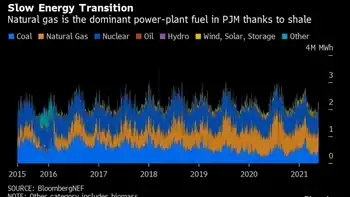
PJM is already one of the most fossil-fuel intensive grids, with 60% of its electricity coming from coal and gas. Power plants that bid into the auction rely on it for the bulk of their revenue. That means plants that win contracts have an incentive to continue operating for as long as they can, even amid a supply-chain crisis this summer.


Related News

View more

Germany's Call for Hydrogen-Ready Power Plants

Germany Hydrogen-Ready Power Plants Tender accelerates the energy transition by enabling clean energy generation, decarbonization, and green hydrogen integration through retrofit and new-build capacity, resilient infrastructure, flexible storage, and grid reliability provisions.


Key Points

Germany tender to build or convert plants for hydrogen, advancing decarbonization, energy security, and clean power.

✅ Hydrogen-ready retrofits and new-build generation capacity

✅ Supports decarbonization, grid reliability, and flexible storage

✅ Future-proof design for green hydrogen supply integration


Germany, a global leader in energy transition and environmental sustainability, has recently launched an ambitious call for tenders aimed at developing hydrogen-ready power plants. This initiative is a significant step in the country's strategy to transform its energy infrastructure and support the broader goal of a greener economy. The move underscores Germany’s commitment to reducing greenhouse gas emissions and advancing clean energy technologies.

The Need for Hydrogen-Ready Power Plants

Hydrogen, often hailed as a key player in the future of clean energy, offers a promising solution for decarbonizing various sectors, including power generation. Unlike fossil fuels, hydrogen produces zero carbon emissions when used in fuel cells or burned. This makes it an ideal candidate for replacing conventional energy sources that contribute to climate change.

Germany’s push for hydrogen-ready power plants reflects the country’s recognition of hydrogen’s potential in achieving its climate goals. Traditional power plants, which typically rely on coal, natural gas, or oil, emit substantial amounts of CO2. Transitioning these plants to utilize hydrogen can significantly reduce their carbon footprint and align with Germany's climate targets.

The Details of the Tender

The recent tender call is part of Germany's broader strategy to incorporate hydrogen into its energy mix, amid a nuclear option debate in climate policy. The tender seeks proposals for power plants that can either be converted to use hydrogen or be built with hydrogen capability from the outset. This approach allows for flexibility and innovation in how hydrogen technology is integrated into existing and new energy infrastructures.

One of the critical aspects of this initiative is the focus on “hydrogen readiness.” This means that power plants must be designed or retrofitted to operate with hydrogen either exclusively or in combination with other fuels. The goal is to ensure that these facilities can adapt to the growing availability of hydrogen and seamlessly transition from conventional fuels without significant additional modifications.

By setting such requirements, Germany aims to stimulate the development of technologies that can handle hydrogen’s unique properties and ensure that the infrastructure is future-proofed. This includes addressing challenges related to hydrogen storage, transportation, and combustion, and exploring concepts like storing electricity in natural gas pipes for system flexibility.

Strategic Implications for Germany

Germany’s call for hydrogen-ready power plants has several strategic implications. First and foremost, it aligns with the country’s broader energy strategy, which emphasizes the need for a transition from fossil fuels to cleaner alternatives, building on its decision to phase out coal and nuclear domestically. As part of its commitment to the Paris Agreement and its own climate action plans, Germany has set ambitious targets for reducing greenhouse gas emissions and increasing the share of renewable energy in its energy mix.

Hydrogen plays a crucial role in this strategy, particularly for sectors where direct electrification is challenging. For instance, heavy industry and certain industrial processes, such as green steel production, require high-temperature heat that is difficult to achieve with electricity alone. Hydrogen can fill this gap, providing a cleaner alternative to natural gas and coal.

Moreover, this initiative helps Germany bolster its leadership in green technology and innovation. By investing in hydrogen infrastructure, Germany positions itself as a pioneer in the global energy transition, potentially influencing international standards and practices. The development of hydrogen-ready power plants also opens up new economic opportunities, including job creation in engineering, construction, and technology sectors.

Challenges and Opportunities

While the push for hydrogen-ready power plants presents significant opportunities, it also comes with challenges. Hydrogen production, especially green hydrogen produced from renewable sources, remains relatively expensive compared to conventional fuels. Scaling up production and reducing costs are critical for making hydrogen a viable alternative for widespread use.

Furthermore, integrating hydrogen into existing power infrastructure, alongside electricity grid expansion, requires careful planning and investment. Issues such as retrofitting existing plants, ensuring safe handling of hydrogen, and developing efficient storage and transportation systems must be addressed.

Despite these challenges, the long-term benefits of hydrogen integration are substantial, and a net-zero roadmap indicates electricity costs could fall by a third. Hydrogen can enhance energy security, reduce reliance on imported fossil fuels, and support global climate goals. For Germany, this initiative is a step towards realizing its vision of a sustainable, low-carbon energy system.

Conclusion

Germany’s call for hydrogen-ready power plants is a forward-thinking move that reflects its commitment to sustainability and innovation. By encouraging the development of infrastructure capable of using hydrogen, Germany is taking a significant step towards a cleaner energy future. While challenges remain, the strategic focus on hydrogen underscores Germany’s leadership in the global transition to a low-carbon economy. As the world grapples with the urgent need to address climate change, Germany’s approach serves as a model for integrating emerging technologies into national energy strategies.


Related News

View more

Hydro One bends to government demands, caps CEO pay at $1.5M

Hydro One CEO Pay Cap sets executive compensation at $1.5 million under Ontario's provincial directive, linking incentives to transmission and distribution cost reductions, governance improvements, and board pay limits at the electricity utility.


Key Points

The Hydro One CEO Pay Cap limits pay to $1.5M, linking incentives to cost reductions and defined targets.

✅ Base salary set at $500,000 per year.

✅ Incentives capped at $1,000,000, tied to cost cuts.

✅ Board pay capped: chair $120,000; members $80,000.


Hydro One has agreed to cap the annual compensation of its chief executive at $1.5 million, the provincial utility said Friday, acquiescing to the demands of the Progressive Conservative government.

The CEO's base salary will be set at $500,000 per year, while short-term and long-term incentives are limited to $1 million. Performance targets under the pay plan will include the CEO's contributions to reductions in transmission and distribution costs, even as Hydro One has pursued a bill redesign to clarify charges for customers.

The framework represents a notable political victory for Premier Doug Ford, who vowed to fire Hydro One's CEO and board during the campaign and promised to reduce the annual earnings of Hydro One's board members.

In February, the province issued a directive to the board, ordering it to pay the utility's CEO no more than the $1.5 million figure it has now agreed to, as part of a broader push to lower electricity rates across Ontario.

Hydro One and the government had been at loggerheads over executive compensation, with the company refusing repeated requests to slash the CEO pay below $2,775,000. The board argued it would have difficulty recruiting suitable leaders for anything less, even as customers contend with a recovery rate that could raise hydro bills.

Further, the company agreed to pay the board chair no more than $120,000 annually and board members no more than $80,000 — figures Energy Minister Greg Rickford had outlined in his directive last month, amid calls for cleaning up Ontario's hydro mess from policy commentators.

"Hydro One's compliance with this directive allows us to move forward as a province. It sets the company on the right course for the future, proving that it can operate as a top-class electricity utility while reining in executive compensation and increasing public transparency," Rickford said in a statement issued Friday morning.


Related News

View more

EV Sales Still Behind Gas Cars

U.S. EV and Hybrid Sales 2024 show slower adoption versus gas-powered cars, as charging infrastructure gaps, range anxiety, higher upfront costs, and affordability concerns persist despite incentives, battery tech advances, and expanding fast-charging networks.


Key Points

They represent 10-15% of U.S. car sales, lagging gas models due to costs, charging gaps, range anxiety, and access.

✅ 10-15% of U.S. auto sales; gas cars dominate

✅ Barriers: upfront cost, limited charging, range anxiety

✅ Incentives, battery tech, and networks may boost adoption


Sales of hybrid and electric vehicles (EVs) in the U.S. are continuing to trail behind traditional gas-powered vehicles in 2024, despite significant advancements in automotive technology and growing public awareness of environmental concerns. While the electric vehicle market has seen steady growth and recent sales momentum over the past few years, the gap between EVs and gasoline-powered cars remains wide.

In 2024, hybrid and electric vehicles are projected to account for roughly 10-15% of total car sales in the U.S., a figure that, though significant, still lags far behind the sales of gas-powered vehicles and follows a Q1 2024 EV market share dip in the U.S., according to recent data. Analysts point to several factors contributing to this slower adoption rate, including higher upfront costs, limited charging infrastructure, and consumer concerns over range anxiety. Additionally, while EVs and hybrids offer lower lifetime operating costs, the initial price difference remains a hurdle for many prospective buyers.

One of the key challenges for EV sales continues to be the perception of cost, even as analyses show they can be better for the planet and often your budget over time. While federal and state incentives have made EVs more affordable, especially for lower-income buyers, the price tag for many electric models remains steep, particularly for higher-end vehicles. Even with government rebates, EVs can still be priced higher than their gasoline counterparts, making them less accessible for middle-class consumers. Many potential buyers are also hesitant to make the switch, unsure if the long-term savings will outweigh the initial investment.

Another critical factor is the limited charging infrastructure in many parts of the country. Though major cities have seen significant improvements in charging stations, rural areas and smaller towns still lack the necessary infrastructure to support widespread EV use. This uneven distribution of charging stations leads to concerns about being stranded in areas without access to fast-charging options. While automakers are working on expanding charging networks, the pace of this development is slow, and EVs won't go mainstream until key problems are fixed according to industry leaders.

Range anxiety is also a continuing issue, despite improvements in battery technology. Though newer electric vehicles can go further on a single charge than ever before, the range of many EVs still doesn't meet the expectations of some drivers, particularly those who regularly take long road trips or live in rural areas. The longer charging times and the necessity of planning routes around charging stations add to the hesitation, especially when gasoline-powered vehicles provide greater convenience and flexibility.

The shift toward EVs is further hindered by the continued dominance of gas-powered cars in the market. Gasoline vehicles benefit from decades of development, an extensive fueling infrastructure, and familiarity with the technology. For many consumers, the convenience, affordability, and ease of use of gas-powered vehicles still outweigh the benefits of switching to an electric alternative. Additionally, with fluctuating fuel prices, many drivers continue to find gas-powered cars relatively cost-effective in terms of daily commuting, especially when compared to the current costs of EV ownership.

Despite these challenges, there is hope for a future shift. The federal government’s push for stricter emissions regulations and tax incentives continues to fuel growth in the electric vehicle market. As automakers ramp up production and more affordable options become available, EV sales are expected to increase in the coming years. Companies like Tesla, Ford, whose hybrids are getting a boost, and General Motors are leading the charge, while new manufacturers like Rivian and Lucid Motors are offering alternatives to traditional gasoline vehicles.

Furthermore, the development of new technologies, such as solid-state batteries and faster charging systems, could help alleviate some of the current drawbacks of electric vehicles. If these advancements reach mass-market production in the next few years, they could help make EVs a more attractive and practical option for consumers, aligning with within-a-decade adoption forecasts from some industry observers.

In conclusion, while hybrid and electric vehicles are growing in popularity, gas-powered vehicles continue to dominate the U.S. car market in 2024. Challenges such as high upfront costs, limited charging infrastructure, and concerns about range persist, making it difficult for many consumers to make the switch to electric even as they ask if it's time to buy an EV in 2024. However, with continued investment in technology and infrastructure, the gap between EVs and gas-powered vehicles could narrow in the years to come.


Related News

View more

As California enters a brave new energy world, can it keep the lights on?

California Grid Transition drives decarbonization with renewable energy, EV charging, microgrids, and energy storage, while tackling wildfire risk, aging infrastructure, and cybersecurity threats to build grid resilience and reliability across a rapidly electrifying economy.


Key Points

California Grid Transition is the statewide shift to renewables, storage, EVs, and resilient, secure infrastructure.

✅ Integrates solar, wind, storage, and demand response at scale

✅ Expands microgrids and DERs to enhance reliability and resilience

✅ Addresses wildfire, aging assets, and cybersecurity risks


Gretchen Bakke thinks a lot about power—the kind that sizzles through a complex grid of electrical stations, poles, lines and transformers, keeping the lights on for tens of millions of Californians who mostly take it for granted.

They shouldn’t, says Bakke, who grew up in a rural California town regularly darkened by outages. A cultural anthropologist who studies the consequences of institutional failures, she says it’s unclear whether the state’s aging electricity network and its managers can handle what’s about to hit it, as U.S. blackout risks continue to mount.

California is casting off fossil fuels to become something that doesn’t yet exist: a fully electrified state of 40 million people. Policies are in place requiring a rush of energy from renewable sources such as the sun and wind and calling for millions of electric cars that will need charging—changes that will tax a system already fragile, unstable and increasingly vulnerable to outside forces.

“There is so much happening, so fast—the grid and nearly everything about energy is in real transition, and there’s so much at stake,” said Bakke, who explores these issues in a book titled simply, “The Grid.”

The state’s task grew more complicated with this week’s announcement that Pacific Gas and Electric, which provides electricity for more than 5 million customer accounts, intends to file for bankruptcy in the face of potentially crippling liabilities from wildfires. But the reshaping of California’s energy future goes far beyond the woes of a single company.

The 19th-century model of one-way power delivery from utility companies to customers is being reimagined. Major utilities—and the grid itself—are being disrupted by rooftops paved with solar panels and the rise of self-sufficient neighborhood mini-grids. Whole cities and counties are abandoning big utilities and buying power from wholesalers and others of their choosing.

With California at the forefront of a new energy landscape, officials are racing to design a future that will not just reshape power production and delivery but also dictate how we get around and how our goods are made. They’re debating how to manage grid defectors, weighing the feasibility of an energy network that would expand to connect and serve much of the West and pondering how to appropriately regulate small power producers.

“We are in the depths of the conversation,” said Michael Picker, president of the state Public Utilities Commission, who cautions that even as the system is being rebooted, like repairing a car while driving in practice, there’s no real plan for making it all work.

Such transformation is exceedingly risky and potentially costly. California still bears the scars of having dropped its regulatory reins some 20 years ago, leaving power companies to bilk the state of billions of dollars it has yet to completely recover. And utility companies will undoubtedly pass on to their customers the costs of grid upgrades to defend against natural and man-made threats.

Some weaknesses are well known—rodents and tree limbs, for example, are common culprits in power outages, even as longer, more frequent outages afflict other parts of the U.S. A gnawing squirrel squeezed into a transformer on Thanksgiving Day three years ago, shutting off power to parts of Los Angeles International Airport. The airport plans to spend $120 million to upgrade its power plant.

But the harsh effects of climate change expose new vulnerabilities. Rising seas imperil coastal power plants. Electricity infrastructure is both threatened by and implicated in wildfires. Picker estimates that utility operations are related to one in 10 wildland fires in California, which can be sparked by aging equipment and winds that send tree branches crashing into power lines, showering flammable landscapes with sparks.

California utilities have been ordered to make their lines and equipment more fire-resistant as they’re increasingly held accountable for blazes they cause. Pacific Gas and Electric reported problems with some of its equipment at a starting point of California’s deadliest wildfire, which killed at least 86 people in November in the town of Paradise. The cause of the fire is under investigation.

New and complex cyber threats are more difficult to anticipate and even more dangerous. Computer hackers, operating a world away, can—and have—shut down electricity systems, toggling power on and off at will, and even hijacked the computers of special teams dispatched to restore control.

Thomas Fanning, CEO of Southern Co., one of the country’s largest utilities, recently disclosed that his teams have fended off multiple attempts to hack a nuclear power plant the firm operates. He called grid hacking “the most important under-reported war in American history.”

However, if you’ve got what seems like an insoluble problem requiring a to-the-studs teardown and innovative rebuild, California is a good place to start. After all, the first electricity grid was built in San Francisco in 1879, three years before Thomas Edison’s power station in New York City. (Edison’s plant burned to the ground a decade later.)

California’s energy-efficiency regulations have helped reduce statewide energy use, which peaked a decade ago and is on the decline, somewhat easing pressure on the grid. The major utilities are ahead of schedule in meeting their obligation to obtain power from renewable sources.

California’s universities are teaming with national research labs to develop cutting-edge solutions for storing energy produced by clean sources. California is fortunate in the diversity of its energy choices: hydroelectric dams in the north, large-scale solar operations in the Mojave Desert to the east, sprawling windmill farms in mountain passes and heat bubbling in the Geysers, the world’s largest geothermal field north of San Francisco. A single nuclear-power plant clings to the coast near San Luis Obispo, but it will be shuttered in 2025.

But more renewable energy, accessible at the whims of weather, can throw the grid off balance. Renewables lack the characteristic that power planners most prize: dispatchability, ready when called on and turned off when not immediately needed. Wind and sun don’t behave that way; their power is often available in great hunks—or not at all, as when clouds cover solar panels or winds drop.

In the case of solar power, it is plentiful in the middle of the day, at a time of low demand. There’s so much in California that most days the state pays its neighbors to siphon some off,  lest the excess impede the grid’s constant need for balance—for a supply that consistently equals demand.

So getting to California’s new goals of operating on 100 percent clean energy by 2045 and having 5 million electric vehicles within 12 years will require a shift in how power is acquired and managed. Consumers will rely more heavily on battery storage, whose efficiency must improve to meet that demand.


Related News

View more

Sign Up for Electricity Forum’s Newsletter

Stay informed with our FREE Newsletter — get the latest news, breakthrough technologies, and expert insights, delivered straight to your inbox.

Electricity Today T&D Magazine Subscribe for FREE

Stay informed with the latest T&D policies and technologies.
  • Timely insights from industry experts
  • Practical solutions T&D engineers
  • Free access to every issue

Download the 2025 Electrical Training Catalog

Explore 50+ live, expert-led electrical training courses –

  • Interactive
  • Flexible
  • CEU-cerified