New Windpower fund raises $42,500,000

By Canada Newswire


Arc Flash Training CSA Z462 - Electrical Safety Essentials

Our customized live online or in‑person group training can be delivered to your staff at your location.
  • Live Online
  • 6 hours Instructor-led
  • Group Training Available
Regular Price:
$249
Coupon Price:
$199
Reserve Your Seat Today
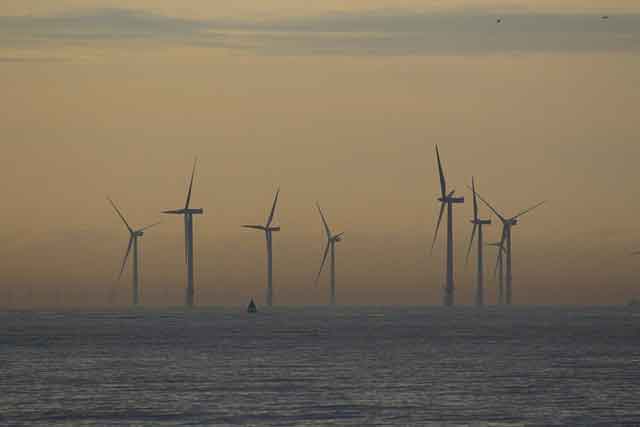
Creststreet Asset Management Limited announces that it has completed its initial public offering of Creststreet Power and Income Fund LP (the "Partnership"), the first Windpower flow-through fund offered to investors in the Canadian capital markets.

The offering raised $42,500,000 for investment in flow-through shares of Mount Copper Wind Power Energy Inc. (Mount Copper) and Pubnico Point Wind Farm Inc. ("Pubnico Point") that will construct and then operate wind energy projects to generate electricity for sale to provincial electricity utilities pursuant to long-term power purchase agreements. Investors in the Partnership are expected to receive tax deductions up to 83% of the amount invested in the 2003 taxation year.

The proceeds of the offering will fund the cost of construction of a total of seven test wind turbines which will qualify as Canadian Renewable and Conservation Expense ("CRCE") under the Income Tax Act (Canada). CRCE eligible expenses are 100% deductible for income tax purposes and will be flowed through to investors in the Partnership. Following the installation of the test wind turbines, and upon satisfactory completion of a 120 day test period, Mount Copper and Pubnico Point intend to complete the installation of an aggregate of 40 additional infill wind turbines using construction debt financing to complete the projects.

Related News
Saudis set to 'boost wind by over 6GW'

Saudi Arabia Wind Power Market set to lead the Middle East, driven by Vision 2030 renewables goals, REPDO tenders, and PIF backing, adding 6.2GW wind capacity by 2028 alongside solar PV diversification.


Key Points

It is the emerging national segment leading Middle East wind growth, targeting 6.2GW by 2028 under Vision 2030 policies.

✅ Adds 6.2GW, 46% of regional wind capacity by 2028

✅ REPDO tenders and PIF funding underpin pipeline

✅ Targets: 16GW wind, 40GW solar under Vision 2030


Saudi Arabia will become a regional heavyweight in the Middle East's wind power market adding over 6GW in the next 10 years, according to new research by Wood Mackenzie Power & Renewables.

The report – 'Middle East Wind Power Market Outlook, 2019-2028’ – said developers will build 6.2GW of wind capacity in the country or 46% of the region’s total wind capacity additions between 2019 and 2028.

Wood Mackenzie Power & Renewables senior analyst Sohaib Malik said: “The integration of renewables in Vision 2030’s objectives underlines strong political commitment within Saudi Arabia.

“The level of Saudi ambition for wind and solar PV varies significantly, despite the cost parity between both technologies during the first round of tenders in 2018.”

Saudi Arabia has set a 16GW target for wind by 2030 and 40GW for solar, plans to solicit 60 GW of clean energy over the next decade, Wood Mackenzie added.

“Moving forward, the Renewable Energy Project Development Office will award 850MW of wind capacity in 2019, which is expected to be commissioned in 2021-2022, and increase the local content requirement in future tendering rounds,” Malik said.

However, Saudi Arabia will fall short of its current 2030 renewables target, despite growth projections and regional leadership, the report said.

Some 70% of the renewables capacity target is to be supported by the Public Investment Fund (PIF), the Saudi sovereign wealth fund, while the remaining capacity is to be awarded through REPDO.

“A central concern is the PIF’s lack of track record in the renewables sector and its limited in-house sectoral expertise,” said Malik

“REPDO, on the other hand, completed two renewables request for proposals after pre-developing the sites,” he said.

PIF is estimated to have $230bn of assets – targeted to reach $2 trillion under Vision 2030 – driven by investments in a variety of sectors ranging from electric vehicles to public infrastructure, Wood Mackenzie said.

“There is little doubt about the fund’s financial muscle, however, its past investment strategy focused on established firms in traditional industries,” Malik added.

“Aspirations to develop a value chain for wind and PV technologies locally is a different ball game and requires the PIF to acquire new capabilities for effective oversight of these ventures,” he said.

The report noted that regional volatility is expected to remain, with strong positive growth, driven by Jordan and Iran in 2018 expected to reverse in 2019, and policy shifts, as in Canada’s scaled-back projections, can influence outcomes.

Post-2020 Wood Mackenzie Power & Renewables sees regional demand returning to steady growth as global renewables set more records elsewhere.

“In 2018, developers added 185MW and 63MW of wind capacity in Jordan and Iran, respectively, compared to 53MW of capacity across the entire region in 2017, following a record year for renewables in 2016,” said Malik.

“The completion of the 89MW Al Fujeij and the 86MW Al Rajef projects in 2018 indicates that Jordan has 375MW of the region’s operational 675MW wind capacity.

“Iran followed with 278MW of installed capacity at the end of 2018. A slowdown in 2019 is expected, as project development activity softens in Iran.

“Additionally, delays in awarding the 400MW Dumat Al Jandal project in Saudi Arabia will limit annual capacity additions to 184MW.”

He added that a maturing project pipeline in the region supports the 2020-2021 outlook, even as wind power grew despite Covid-19 globally.

“Saudi Arabian demand serves as the foundation for regional demand. Regional demand diversification is also occurring, with Lebanon set to add 200-400MW to its existing permitted capacity pipeline of 202MW in 2019,” he said

“These developments pave the way for the addition of 2GW of wind capacity between 2019 and 2021.”

Wood Mackenzie Power & Renewables added that the outlook for solar in the region is “much more positive” than wind.

“Compared to only 6GW of wind power capacity, developers will add 53GW of PV capacity through 2024,” said Malik.

He added: “Solar PV, supported by trends such as China’s rapid PV growth in 2016, has become a natural choice for many countries in the region, which is endowed with world class solar energy resources.

“The increased focus on solar energy is demonstrated by ambitious PV targets across the region.”


Related News

View more

Investigation underway to determine cause of Atlanta Airport blackout

Atlanta Airport Power Outage disrupts Hartsfield-Jackson as an underground fire cripples switchgear redundancy, canceling flights during holiday travel; Georgia Power restores electricity overnight while utility crews probe causes and monitor system resilience.


Key Points

A major Hartsfield-Jackson blackout from an underground fire; power restored as switchgear redundancy is investigated.

✅ Underground fire near Plane Train tunnel damaged switchgear systems

✅ Over 1,100 flights canceled; holiday travel severely disrupted

✅ Georgia Power restored service; redundancy and root cause under review


Power has been restored at the world’s busiest airport after a massive outage Sunday afternoon left planes and passengers stranded for hours, forced airlines to cancel more than 1,100 flights and created a logistical nightmare during the already-busy holiday travel season.

An underground fire caused a complete power outage Sunday afternoon at Hartsfield-Jackson Atlanta International Airport, resulting in thousands of canceled flights at the world's busiest terminal and affecting travelers worldwide.

The massive outage didn’t just leave passengers stranded overnight Sunday, it also affected travelers with flights Monday morning schedules.

According to Paul Bowers, the president and CEO of Georgia Power,  “From our standpoint, we apologize for the inconvenience,” he said. The utility restored power to the airport shortly before midnight.

Utility Crews are monitoring the fixes that restored power and investigating what caused the fire and why it was able to damage redundant systems. Bowers said the fire occurred in a tunnel that runs along the path of the underground Plane Train tunnel near Concourse E.

Sixteen highly trained utility personnel worked in the passageway to reconnect the network.“Our investigation is going through the process of what do we do to ensure we have the redundancy going back at the airport, because right now we are a single source feed,” Bowers said.

“We will have that complete by the end of the week, and then we will turn to what caused the failure of the switchgear.”

Though the cause isn’t yet known, he said foul play is not suspected.“There are two things that could happen,” he said.

“There are inner workings of the switchgear that could create the heat that caused the fire, or the splicing going into that switchgear -- that the cable had a failure on that going into the switch gear.”

When asked if age of the system could have been a failure, Bowers said his company conducts regular inspections.“We constantly inspect,” he said. “We inspect on an annual basis to ensure the reliability of the network, and that redundancy is protection for the airport.”Bowers said he is not familiar with any similar fire or outage at the airport.

“The issue for us is to ensure the reliability is here and that it doesn’t happen again and to ensure that our network is resilient enough to withstand any kind of fire,” he said. He added that Georgia Power will seek to determine what can be done in the future to avoid a similar event, such as those experienced during regional outages in other communities.


Related News

View more

Cal ISO Warns Rolling Blackouts Possible, Calls For Conservation As Power Grid Strains

Cal ISO Flex Alert urges Southern California energy conservation as a Stage 2 emergency strains the power grid, with potential rolling blackouts during peak hours from 3 to 10 p.m., if demand exceeds supply.


Key Points

A statewide call to conserve power during high demand, issued by the grid operator to prevent rolling blackouts.

✅ Stage 2 emergency signals severe grid strain

✅ Peak Flex Alert hours: 3 to 10 p.m. statewide

✅ Set thermostats to 78 and avoid major appliances


Residents and businesses across Southern California were urged to conserve power Tuesday afternoon amid ongoing electricity inequities across the state as the manager of the state’s power grid warned rolling blackouts could be imminent for some power customers.

The California Independent System Operator (Cal ISO), which manages the state power grid, declared a Stage 2 emergency as of 2:30 p.m., indicating severe strain on the electrical system, similar to a recent grid alert in Alberta that relied on reserves.

ADVERTISING

Rolling blackouts for some customers could occur in a Stage 3 emergency, distinct from the intentional shut-offs some utilities use to reduce wildfire risk.

Cal ISO issued a statewide Flex Alert in effect from 3 to 10 p.m. Tuesday and Wednesday, with conservation considered especially critical during those hours, a concern heightened by pandemic-era grid operations this year.

Officials told reporters rolling blackouts might be avoided Tuesday evening if residents repeat the level of conservation seen Monday.
“If we can get the same sort of response we got yesterday, we can minimize this, or perhaps avoid it altogether,” Cal-ISO President/CEO Steve Berberich said, noting that some operators have even planned staff lockdowns during COVID-19 to maintain reliability.

Cal-ISO controls roughly 80% of the state’s power grid through Southern California Edison, Pacific Gas and Electric Co., with the utility recently restoring power after shut-offs in affected communities, and San Diego Gas & Electric.

Residents are urged to set thermostats at 78 in the afternoon and evening hours and avoiding the use of air conditioning and major appliances during the Flex Alert hours, as utilities like PG&E prepare for winter storms to improve resilience.


Related News

View more

B.C. Streamlines Regulatory Process for Clean Energy Projects

BCER Renewable Energy Permitting streamlines single-window approvals for wind, solar, and transmission projects in BC, cutting red tape, aligning with CleanBC, and accelerating investment, Indigenous partnerships, and low-carbon infrastructure growth provincewide.


Key Points

BC's single-window framework consolidates approvals for wind, solar, and transmission to accelerate energy projects.

✅ Single-window permits via BC Energy Regulator (BCER)

✅ Covers wind, solar, and high-voltage transmission lines

✅ Aligns with CleanBC, supports Indigenous partnerships


In a decisive move to bolster clean energy initiatives, the government of British Columbia (B.C.) has announced plans to overhaul the regulatory framework governing renewable energy projects. This initiative aims to expedite the development of wind, solar, and other renewable energy sources, positioning B.C. as a leader in sustainable energy production.

Transitioning Regulatory Authority to the BC Energy Regulator (BCER)

Central to this strategy is the proposed legislation, set to be introduced in spring 2025, which will transfer the permitting and regulatory oversight of renewable energy projects, aligning with offshore wind regulation plans at the federal level, from multiple agencies to the BC Energy Regulator (BCER). This transition is designed to create a "single-window" permitting process, simplifying approvals and reducing bureaucratic delays for developers.

Expanding BCER's Mandate

Historically known as the British Columbia Oil and Gas Commission, the BCER's mandate has evolved to encompass a broader range of energy projects. The upcoming legislation will empower the BCER to oversee renewable energy projects, including wind and solar, as well as high-voltage transmission lines like the North Coast Transmission Line (NCTL), in step with renewable transmission planning efforts elsewhere in North America. This expansion aims to streamline the regulatory process, providing developers with a single point of contact throughout the project lifecycle.

Economic and Environmental Implications

The restructuring is expected to unlock significant economic opportunities. Projections suggest that the streamlined process could attract between $5 billion and $6 billion in private investment and complement recent federal grid modernization funding initiatives, generating employment opportunities and fostering economic growth. Moreover, by facilitating the rapid deployment of renewable energy projects, B.C. aims to enhance its clean energy capacity, contributing to global sustainability goals.

Strengthening Partnerships with Indigenous Communities

A pivotal aspect of this initiative is the emphasis on collaboration with Indigenous communities. The government has highlighted the importance of engaging First Nations in the development process, ensuring that projects are not only environmentally sustainable but also socially responsible. This approach seeks to honor Indigenous rights and knowledge, fostering partnerships that benefit all stakeholders.

Supporting Infrastructure Development

The acceleration of renewable energy projects necessitates corresponding infrastructure enhancements. The NCTL, for instance, is crucial for meeting the increased electricity demand from sectors such as mining, port electrification, and hydrogen production, and for addressing regional grid constraints that limit renewable integration. By improving the transmission infrastructure, B.C. aims to support the growing energy needs of these industries while promoting clean energy solutions.

Aligning with CleanBC Objectives

This regulatory overhaul aligns seamlessly with B.C.'s CleanBC initiative, which sets ambitious targets for reducing greenhouse gas emissions and promoting energy efficiency, and supports Canada's goal of zero-emissions electricity by 2035 under active consideration. By removing regulatory barriers and expediting project approvals, the government aims to accelerate the transition to a low-carbon economy, positioning B.C. as a hub for clean energy innovation.

Addressing Potential Challenges

While the initiative has been lauded for its potential, experts caution that careful consideration must be given to environmental assessments and Indigenous consultation processes, as well as to lessons from Alberta's solar expansion challenges on land use and grid impacts. Ensuring that projects meet environmental standards and respect Indigenous rights is crucial for the long-term success and acceptance of renewable energy developments.

The proposed changes mark a significant shift in B.C.'s approach to energy development, reflecting a commitment to sustainability and economic growth. As the legislation moves through the legislative process, stakeholders across the energy sector are closely monitoring developments, particularly as Alberta ends its renewables moratorium and resumes project approvals across the Prairies, anticipating a more efficient and transparent regulatory environment that supports the rapid expansion of renewable energy projects.

B.C.'s plan to streamline the regulatory process for clean energy projects represents a bold step toward a sustainable and prosperous energy future. By consolidating regulatory authority under the BCER, fostering Indigenous partnerships, and aligning with broader environmental objectives, the province is setting a precedent for effective governance in the transition to renewable energy.


Related News

View more

EIA: Pennsylvania exports the most electricity, California imports the most from other states

U.S. Electricity Trade by State, 2013-2017 highlights EIA grid patterns, interstate imports and exports, cross-border flows with Canada and Mexico, net exporters and importers, and market regions like ISOs and RTOs shaping consumption and generation.


Key Points

Brief EIA overview of interstate and cross-border power flows, ranking top net importers and exporters.

✅ Pennsylvania was the largest net exporter, averaging 59 million MWh.

✅ California was the largest net importer, averaging 77 million MWh.

✅ Top cross-border: NY, CA, VT, MN, MI imports; WA, TX, CA, NY, MT exports.


According to the U.S. Energy Information Administration (EIA) State Electricity Profiles, from 2013 to 2017, Pennsylvania was the largest net exporter of electricity, while California was the largest net importer.

Pennsylvania exported an annual average of 59 million megawatt-hours (MWh), while California imported an average of 77 million MWh annually.

Based on the share of total consumption in each state, the District of Columbia, Maryland, Massachusetts, Idaho and Delaware were the five largest power-importing states between 2013 and 2017, highlighting how some clean states import 'dirty' electricity as consumption outpaces local generation. Wyoming, West Virginia, North Dakota, Montana and New Hampshire were the five largest power-exporting states. Wyoming and West Virginia were net power exporting states between 2013 and 2017.

New York, California, Vermont, Minnesota and Michigan imported the most electricity from Canada or Mexico on average from 2013 to 2017, reflecting the U.S. look to Canada for green power during that period. Similarly, Washington, Texas, California, New York, and Montana exported the most electricity to Canada or Mexico, on average, during the same period.

Electricity routinely flows among the Lower 48 states and, to a lesser extent, between the United States and Canada and Mexico. From 2013 to 2017, Pennsylvania was the largest net exporter of electricity, sending an annual average of 59 million megawatthours (MWh) outside the state. California was the largest net importer, receiving an average of 77 million MWh annually.

Based on the share of total consumption within each state, the District of Columbia, Maryland, Massachusetts, Idaho, and Delaware were the five largest power-importing states between 2013 and 2017. Wyoming, West Virginia, North Dakota, Montana, and New Hampshire were the five largest power-exporting states. States with major population centers and relatively less generating capacity within their state boundaries tend to have higher ratios of net electricity imports to total electricity consumption, as utilities devote more to electricity delivery than to power production in many markets.

Wyoming and West Virginia were net power exporting states (they exported more power to other states than they consumed) between 2013 and 2017. Customers residing in these two states are not necessarily at an economic disadvantage or advantage compared with customers in neighboring states when considering their electricity bills and fees and market dynamics. However, large amounts of power trading may affect a state’s revenue derived from power generation.

Some states also import and export electricity outside the United States to Canada or Mexico, even as Canada's electricity exports face trade tensions today. New York, California, Vermont, Minnesota, and Michigan are the five states that imported the most electricity from Canada or Mexico on average from 2013 through 2017. Similarly, Washington, Texas (where electricity production and consumption lead the nation), California, New York, and Montana are the five states that exported the most electricity to Canada or Mexico, on average, for the same period.

Many states within the continental United States fall within integrated market regions, referred to as independent system operators or regional transmission organizations. These integrated market regions allow electricity to flow freely between states or parts of states within their boundaries.

EIA’s State Electricity Profiles provide details about the supply and disposition of electricity for each state, including net trade with other states and international imports and exports, and help you understand where your electricity comes from more clearly.


Related News

View more

PG&E restoring power after intentional shut-offs affect 20,500 customers

PG&E power restoration continues across Butte and Yuba counties after PSPS shut-offs from high winds and dry weather, with crews patrolling overhead lines, repairing damage, and reopening community resource centers near Lake Berryessa.


Key Points

PG&E power restoration safely re-energizes lines after PSPS, using inspections and repairs to restore service.

✅ Crews patrolled 800 miles of overhead lines for hazards

✅ Repairs followed wind damage; gradual re-energization

✅ Resource centers offered water, outlets, air conditioning


Pacific Gas and Electric Co. field crews have begun restoring power to approximately 20,500 customers in Butte and Yuba counties after the utility shut off electricity to reduce wildfire risk because of gusty winds and dry weather conditions.

More than half of the affected customers had electricity again as of 1:47 p.m. Sunday, according to PG&E, and by 4 p.m. all of Yuba County power had been restored.

The utility also cut electricity for about 1,600 customers in parts of Napa, Solano and Yolo counties, primarily in the Lake Berryessa area, in a PSPS event separate from statewide grid conservation alerts that can trigger rolling blackouts. Power to those areas was switched off at 6:15 a.m. Saturday but was restored by the evening.

As the danger subsided Sunday, utility workers, as part of PG&E's local response planning for winter storms, worked throughout Butte and Yuba counties to re-energize power lines. The shut-offs affected areas including eastern Chico, Oroville and fire-ravaged Paradise.

Technicians checked lines for damage or fire hazards, like vegetation that could interfere with live wires, Pasion said, as part of broader pandemic grid preparedness that informed utility protocols.

PG&E “patrolled approximately 800 miles of overhead power lines,” the company said in a statement. “Crews found instances of damage to de-energized equipment caused by the extreme weather event and are making necessary repairs.”

While the shut-offs inconvenienced businesses and homeowners, they also highlighted energy inequality across impacted neighborhoods, and some called 911 with emergencies and confusion.

A half hour into the shut-off Saturday night, Butte County sheriff’s dispatchers received a call from a person requesting a welfare check on an individual whose care required electricity, according to department call logs. Two calls overnight from the Magalia area requested medical assistance because residents had oxygen concerns for medically sensitive spouses.

One woman requested an ambulance because her “husband was running out of oxygen,” according to the logs.

Around 4:11 a.m. Sunday, a resident of Hidden Valley Mobile Home Park in Oroville called about a tree falling into a trailer, causing a power line to fall, but noted that the electricity was off.

In a comparable storm-related outage, Sudbury Hydro crews worked to reconnect service after severe weather in Ontario.

And there were multiple calls asking for information about the shut-off, including one caller around midnight who was “demanding PG&E turn his power back on.”

The calls led the Butte County Sheriff’s Office to tweet a reminder Sunday afternoon that 911 is reserved for emergencies and requests for information about the power shutdown should be done through PG&E.

The utility opened a community resource center at Harrison Stadium in Oroville (Butte County) on Sunday morning to provide restrooms, bottled water, power outlets and air conditioning to residents. About 40 people showed up at the center in the first few hours, officials said.

“It’s a small but steady stream,” Pasion said.

Power was being restored to parts of Oroville as of 11 a.m. Sunday.

PG&E officials said it could take up to 48 hours for power to be restored in some areas.

For perspective, during severe storms in Ontario, Hydro One crews restored power to more than 277,000 customers within days.


Related News

View more

Sign Up for Electricity Forum’s Newsletter

Stay informed with our FREE Newsletter — get the latest news, breakthrough technologies, and expert insights, delivered straight to your inbox.

Electricity Today T&D Magazine Subscribe for FREE

Stay informed with the latest T&D policies and technologies.
  • Timely insights from industry experts
  • Practical solutions T&D engineers
  • Free access to every issue

Live Online & In-person Group Training

Advantages To Instructor-Led Training – Instructor-Led Course, Customized Training, Multiple Locations, Economical, CEU Credits, Course Discounts.

Request For Quotation

Whether you would prefer Live Online or In-Person instruction, our electrical training courses can be tailored to meet your company's specific requirements and delivered to your employees in one location or at various locations.