Renewable Energy Plan Meets Utility Resistance

By Tulsa World, Oklahoma


NFPA 70e Training - Arc Flash

Our customized live online or in‑person group training can be delivered to your staff at your location.
  • Live Online
  • 6 hours Instructor-led
  • Group Training Available
Regular Price:
$199
Coupon Price:
$149
Reserve Your Seat Today
Wind power advocates are making a second attempt to establish renewable-energy standards for the electric utilities in Oklahoma.

Senate Joint Resolution 8, which is pending before the Senate, encourages electric utilities to provide a certain percentage of power made from renewable forms of energy such as wind and solar.

The standards, which would increase each year, would be voluntary, said Charles Ward, a member of the Oklahoma Renewable Energy Foundation, the group backing the proposal.

"We're just trying to get wind power development" in Oklahoma, Ward said.

A proposal that contained mandatory standards was killed in committee last year after some last-minute lobbying by utilities, Ward said.

Public Service Company of Oklahoma, a subsidiary of American Electric Power, opposes the measure. PSO is the state's second-largest electric utility, serving 478,000 customers.

"The concern is that what is currently voluntary could at some point be made mandatory," said PSO spokesman Ed Bettinger.

The standards, if forced, could create higher costs for PSO and its customers, Bettinger said.

"In order to protect prices, we're opposed to the current language in the bill," he said.

Oklahoma Gas & Electric Co., the state's top power provider, also opposes the measure, saying it would set specific standards without regard to the level of consumer demand.

"We don't oppose the intent of SJR8. We're very supportive of renewables," said Paul Renfrow, a spokesman for OG&E. The amount of renewable power a utility purchases should be based on demand, not supply, because renewable power costs more than conventional supplies, he said.

"We do believe there is a place for renewables. We do believe some of our customers will want it," Renfrow said. "But we don't really know how many people will really be interested in it."

The resolution calls on each utility to voluntarily acquire 1 percent of its power from renewable sources by next Jan. 1. Each year, the percentage would rise until it reaches eight per cent in January 2011.

"That's the wrong approach," Renfrow said.

OG&E would have to provide 480 megawatts of renewable power by 2011 based on its current load, which is 6,000 megawatts.

OG&E, which serves 700,000 Oklahoma customers, has plans to offer wind-generated electricity to some of its customers next year. Under its new rate plan, the utility can purchase up to 50 megawatts of wind power for its customers. A request for bids is to be issued next week.

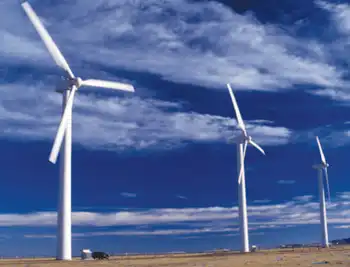
Oklahoma is ranked eighth nationally in wind power potential, according to the American Wind Energy Association. In some parts of the state, the average wind speed at more than 160 feet in the air is 16 mph, strong enough to turn the tall turbines of a large-scale wind farm.

Last month, Blue Canyon Windpower LLC of Wichita Falls, Texas, announced plans to build a 64-megawatt wind farm north of Lawton. The project, which calls for the construction of 39 wind turbines, is expected to be completed by the end of the year.

All of that power will be purchased by Western Farmers Electric Cooperative, which supplies electricity to 19 rural cooperatives in Oklahoma under a 20-year contract.

US wind power capacity increased 10 per cent last year, as 410 megawatts of new generation went online, AWEA said. Wind power capacity totaled 4,685 megawatts at the end of 2002, enough to power 1.3 million homes.

Related News
Expanding EV Charging Infrastructure in Calgary's Apartments and Condos

Calgary EV Charging for Apartments and Condos streamlines permitting for multi-unit dwellings, guiding condo boards and property managers to install EV charging stations, expand infrastructure, and advance sustainability with cleaner air and lower emissions.


Key Points

A Calgary program simplifying permits and guidance to add EV charging stations in multi-unit residential buildings.

✅ Streamlined permitting for condo boards and property managers

✅ Technical assistance to install EV charging stations

✅ Boosts property value and reduces emissions citywide


As the demand for electric vehicles (EVs) continues to rise, and as national EV targets gain traction, Calgary is taking significant strides to enhance its charging infrastructure, particularly in apartment and condominium complexes. A recent initiative has been introduced to facilitate the installation of EV charging stations in these residential buildings, addressing a critical barrier for potential EV owners living in multi-unit dwellings.

The Growing EV Market

Electric vehicles are no longer a niche market; they have become a mainstream option for many consumers. As of late 2023, EV sales have surged, with projections indicating that the trend will only continue. However, a significant challenge remains for those who live in apartments and condos, where high-rise charging can be a mixed experience and the lack of accessible charging stations persists. Unlike homeowners with garages, residents of multi-unit dwellings often rely on public charging infrastructure, which can be inconvenient and limiting.

The New Initiative

In response to this growing concern, the City of Calgary has launched a new initiative aimed at easing the process of installing EV chargers in apartment and condo buildings. This program is designed to streamline the permitting process, reduce red tape, and provide clear guidelines for property managers and condo boards, similar to strata installation rules adopted in other jurisdictions to ease installations.

The initiative includes various measures, such as providing technical assistance and resources to building owners and managers. By simplifying the installation process, the city hopes to encourage more residential complexes to adopt EV charging stations. The initiative also emphasizes practical support, such as providing technical assistance, including condo retrofit guidance, and resources to building owners and managers. This is a significant step towards creating an eco-friendly urban environment and meeting the growing demand for sustainable transportation options.

Benefits of the Initiative

The benefits of this initiative are manifold. Firstly, it supports Calgary's broader climate goals by promoting electric vehicle adoption. As more residents gain access to charging stations, the city can expect a corresponding reduction in greenhouse gas emissions, contributing to cleaner air and a healthier urban environment.

Additionally, providing charging infrastructure can enhance property values. Buildings equipped with EV chargers become more attractive to potential tenants and buyers who prioritize sustainability. As the market for electric vehicles expands, properties that offer charging facilities are likely to see increased demand, making them a sound investment for landlords and developers.

Overcoming Challenges

While this initiative marks a positive step forward, there are still challenges to address. Property managers and condo boards may face initial resistance from residents who are uncertain about the costs associated with installing and maintaining EV chargers, though rebates for home and workplace charging can offset upfront expenses and ease adoption. Clear communication about the long-term benefits, including potential energy savings and the value of sustainable living, will be essential in overcoming these hurdles.

Furthermore, the city will need to ensure that the installation of EV chargers is done in a way that is equitable and inclusive. This means considering the needs of all residents, including those who may not own an electric vehicle but would benefit from a greener community.

Looking Ahead

As Calgary moves forward with this initiative, it sets a precedent for other cities, as seen in Vancouver's EV-ready policy, facing similar challenges in promoting electric vehicle adoption. By prioritizing charging infrastructure in multi-unit residential buildings, Calgary is taking important steps towards a more sustainable future.

In conclusion, the push for EV charging stations in apartments and condos is a critical move for Calgary. It reflects a growing recognition of the role that urban planning and infrastructure play in supporting the transition to electric vehicles, which complements corridor networks like the BC Electric Highway for intercity travel. With the right support and resources, Calgary can pave the way for a greener, more sustainable urban landscape that benefits all its residents. As the city embraces this change, it will undoubtedly contribute to a broader shift towards sustainable living, ultimately helping to combat climate change and improve the quality of life for all Calgarians.


Related News

View more

Ukraine resumes electricity exports despite Russian attacks

Ukraine Electricity Exports resume to the European grid, starting with Moldova and expanding to Poland, Slovakia, and Romania, signaling energy security, grid resilience, added megawatts, and recovery after Russian strikes with support and renewables.


Key Points

Ukraine Electricity Exports are resumed sales of surplus power to EU neighbors, reflecting grid recovery and resilience.

✅ Initial deliveries to Moldova; Poland, Slovakia, Romania to follow.

✅ Extra capacity from repairs, warmer demand, and renewables.

✅ Exports may vary amid ongoing Russian strikes risk.


Ukraine began resuming electricity exports to European countries on Tuesday, its energy minister said, a dramatic turnaround from six months ago when fierce Russian bombardment of power stations plunged much of the country into darkness in a bid to demoralize the population.

The announcement by Energy Minister Herman Halushchenko that Ukraine was not only meeting domestic consumption demands but also ready to restart exports to its neighbors was a clear message that Moscow’s attempt to weaken Ukraine by targeting its infrastructure did not work.

Ukraine’s domestic energy demand is “100%” supplied, he told The Associated Press in an interview, and it has reserves to export due to the “titanic work” of its engineers and international partners.

Russia ramped up infrastructure attacks in September, when waves of missiles and exploding drones destroyed about half of Ukraine’s energy system. Power cuts were common across the country as temperatures dropped below freezing and tens of millions struggled to keep warm.

Moscow said the strikes were aimed at weakening Ukraine’s ability to defend itself, and has also moved to reactivate the Zaporizhzhia plant through new power lines, while Western officials said the blackouts that caused civilians to suffer amounted to war crimes. Ukrainians said the timing was designed to destroy their morale as the war marked its first anniversary.

Ukraine had to stop exporting electricity in October to meet domestic needs.

Engineers worked around the clock, often risking their lives to come into work at power plants and keep the electricity flowing. Kyiv’s allies also provided help. In December, U.S. Secretary of State Antony Blinken announced $53 million in bilateral aid to help the country acquire electricity grid equipment, and USAID mobile gas turbine plant support, on top of $55 million for energy sector support.

Much more work remains to be done, Halushchenko said. Ukraine needs funding to repair damaged generation and transmission lines, and revenue from electricity exports would be one way to do that.

The first country to receive Ukraine’s energy exports will be Moldova, he said.

Besides the heroic work by engineers and Western aid, warmer temperatures are enabling the resumption of exports by making domestic demand lower, even as Germany’s coal generation shapes regional power flows.

Renewables like solar and wind power also come into play as temperatures rise, taking some pressure off nuclear and coal-fired power plants.

But it’s unclear if Ukraine can keep up exports amid the constant threat of Russian bombardment, with any potential agreement on power plant attacks still uncertain.

“Unfortunately now a lot of things depend on the war,” Halushchenko said. “I would say we feel quite confident now until the next winter.”

Exports to Poland, Slovakia and Romania are also on schedule to resume, he said.

“Today we are starting with Moldova, and we are talking about Poland, we are talking about Slovakia and Romania,” Halushchenko added, noting that how much will depend on their needs.

“For Poland, we have only one line that allows us to export 200 megawatts, but I think this month we will finish another line which will increase this to an additional 400 MW, so these figures could change,” he said.

Export revenue will depend on fluctuating electricity prices in Europe, where stunted hydro and nuclear output may affect recovery. In 2022, while Ukraine was still able to export energy, Ukrainian companies averaged 40 million to 70 million euros a month depending on prices, Halushchenko said.


Related News

View more

Renewable power developers discover more energy sources make better projects

Hybrid renewable energy projects integrate wind, solar, and battery storage to enhance grid reliability, reduce curtailment, and provide dispatchable power in markets like Alberta, leveraging photovoltaic tracking, overbuilt transformers, and improved storage economics.


Key Points

Hybrid renewable energy projects combine wind, solar, and storage to deliver reliable, dispatchable clean power.

✅ Combine wind, solar, and batteries for steady, dispatchable output

✅ Lower curtailment by using shared transformers and smart inverters

✅ Boost farm income via leases; diversify risk from oil and gas


Third-generation farmer James Praskach has been burned by the oil and gas sector and watched wicked weather pound his crops flat, but he is hoping a new kind of energy -- the renewable kind -- will pay dividends.

The 39-year-old is part of a landowner consortium that is hosting the sprawling 300-megawatt Blackspring Ridge wind power project in southeastern Alberta.

He receives regular lease payments from the $600-million project that came online in 2014, even though none of the 166 towering wind turbines that surround his land are actually on it.

His lease payments stand to rise, however, when and if the proposed 77-MW Vulcan Solar project, which won regulatory approval in 2016, is green-lighted by developer EDF Renewables Inc.

The panels would cover about 400 hectares of his family's land with nearly 300,000 photovoltaic solar panels in Alberta, installed on racks designed to follow the sun. It would stand in the way of traditional grain farming of the land, but that wouldn't have been a problem this year, Praskach says.

"This year we actually had a massive storm roll through. And we had 100 per cent hail damage on all of (the Vulcan Solar lands). We had canola, peas and barley on it this year," he said, adding the crop was covered by insurance.

Meanwhile, poor natural gas prices and a series of oilpatch financial failures mean rents aren't being paid for about half of the handful of gas wells on his land, showing how a province that is a powerhouse for both fossil and green energy can face volatility -- he's appealed to the Alberta surface Rights Board for compensation.

"(Solar power) would definitely add a level of security for our farming operations," said Praskach.

Hybrid power projects that combine energy sources are a growing trend as selling renewable energy gains traction across markets. Solar only works during the day and wind only when it is windy so combining the two -- potentially with battery storage or natural gas or biomass generation -- makes the power profile more reliable and predictable.

Globally, an oft-cited example is on El Hierro, the smallest of the Canary Islands, where wind power is used to pump water uphill to a reservoir in a volcanic crater so that it can be released to provide hydroelectric power when needed. At times, the project has provided 100 per cent of the tiny island's energy needs.

Improvements in technology such as improving solar and wind power and lower costs for storage mean it is being considered as a hybrid add-on for nearly all of its renewable power projects, said Dan Cunningham, manager of business development at Greengate Power Corp. of Calgary.

Grant Arnold, CEO of developer BluEarth Renewables, agreed.

"The barrier to date, I would say, has been cost of storage but that is changing rapidly," he said. "We feel that wind and storage or solar and storage will be a fundamental way we do business within five years. It's changing very, very rapidly and it's the product everybody wants."

Vulcan Solar was proposed after Blackspring Ridge came online, said David Warner, associate director of business development for EDF Renewables, which now co-owns the wind farm with Enbridge Inc.

"Blackspring actually had incremental capacity in the main power transformers," he said. "Essentially, it was capable of delivering more energy than Blackspring was producing. It was overbuilt."

Vulcan Solar has been sized to utilize the shortfall without producing so much energy that either will ever have to be constrained, he said. Much of the required environmental work has already been done for the wind farm.

Storage is being examined as a potential addition to the project but implementing it depends on the regulatory system. At present, Alberta's regulators are still working on how to permit and control what they call "dispatchable renewables and storage" systems.

EDF announced last spring it would proceed with the Arrow Canyon Solar Project in Nevada which is to combine 200 MW of solar with 75 MW of battery storage by 2022 -- the batteries are to soak up the sun's power in the morning and dispatch the electricity in the afternoon when Las Vegas casinos' air conditioning is most needed.

What is clear is that renewable energy will continue to grow, with Alberta renewable jobs expected to follow -- in a recent report, the International Energy Agency said global electricity capacity from renewables is set to rise by 50 per cent over the next five years, an increase equivalent to adding the current total power capacity of the United States.

The share of renewables is expected to rise from 26 per cent now to 30 per cent in 2024 but will remain well short of what is needed to meet long-term climate, air quality and energy access goals, it added.


Related News

View more

Are Norwegian energy firms ‘best in class’ for environmental management?

CO2 Tax for UK Offshore Energy Efficiency can accelerate adoption of aero-derivative gas turbines, flare gas recovery, and combined cycle power, reducing emissions on platforms like Equinor's Mariner and supporting net zero goals.


Key Points

A carbon price pushing operators to adopt efficient turbines, flare recovery, and combined cycle to cut emissions.

✅ Aero-derivative turbines beat industrial units on efficiency

✅ Flare gas recovery cuts routine flaring and fuel waste

✅ Combined cycle raises efficiency and lowers emissions


By Tom Baxter

The recent Energy Voice article from the Equinor chairman concerning the Mariner project heralding a ‘significant point of reference’ for growth highlighted the energy efficiency achievements associated with the platform.

I view energy efficiency as a key enabler to net zero, and alongside this the UK must start large-scale storage to meet system needs; it is a topic I have been involved with for many years.

As part of my energy efficiency work, I investigated Norwegian practices and compared them with the UK.

There were many differences, here are three;


1. Power for offshore installations is usually supplied from gas turbines burning fuel from the oil and gas processing plant, and even as the UK's offshore wind supply accelerates, installations convert that to electricity or couple the gas turbine to a machine such as a gas compressor.

There are two main generic types of gas turbine – aero-derivative and industrial. As the name implies aero-derivatives are aviation engines used in a static environment. Aero-derivative turbines are designed to be energy efficient as that is very import for the aviation industry.

Not so with industrial type gas turbines; they are typically 5-10% less efficient than a comparable aero-derivative.

Industrial machines do have some advantages – they can be cheaper, require less frequent maintenance, they have a wide fuel composition tolerance and they can be procured within a shorter time frame.

My comparison showed that aero-derivative machines prevailed in Norway because of the energy efficiency advantages – not the case in the UK where there are many more offshore industrial gas turbines.

Tom Baxter is visiting professor of chemical engineering at Strathclyde University and a retired technical director at Genesis Oil and Gas Consultants


2. Offshore gas flaring is probably the most obvious source of inefficient use of energy with consequent greenhouse gas emissions.

On UK installations gas is always flared due to the design of the oil and gas processing plant.

Though not a large quantity of gas, a continuous flow of gas is routinely sent to flare from some of the process plant.

In addition the flare requires pilot flames to be maintained burning at all times and, while Europe explores electricity storage in gas pipes, a purge of hydrocarbon gas is introduced into the pipes to prevent unsafe air ingress that could lead to an explosive mixture.

On many Norwegian installations the flare system is designed differently. Flare gas recovery systems are deployed which results in no flaring during continuous operations.

Flare gas recovery systems improve energy efficiency but they are costly and add additional operational complexity.


3. Returning to gas turbines, all UK offshore gas turbines are open cycle – gas is burned to produce energy and the very hot exhaust gases are vented to the atmosphere. Around 60 -70% of the energy is lost in the exhaust gases.

Some UK fields use this hot gas as a heat source for some of the oil and gas treatment operations hence improving energy efficiency.

There is another option for gas turbines that will significantly improve energy efficiency – combined cycle, and in parallel plans for nuclear power under the green industrial revolution aim to decarbonise supply.

Here the exhaust gases from an open cycle machine are taken to a separate turbine. This additional turbine utilises exhaust heat to produce steam with the steam used to drive a second turbine to generate supplementary electricity. It is the system used in most UK power stations, even as UK low-carbon generation stalled in 2019 across the grid.

Open cycle gas turbines are around 30 – 40% efficient whereas combined cycle turbines are typically 50 – 60%. Clearly deploying a combined cycle will result in a huge greenhouse gas saving.

I have worked on the development of many UK oil and gas fields and combined cycle has rarely been considered.

The reason being is that, despite the clear energy saving, they are too costly and complex to justify deploying offshore.

However that is not the case in Norway where combined cycle is used on Oseberg, Snorre and Eldfisk.

What makes the improved Norwegian energy efficiency practices different from the UK – the answer is clear; the Norwegian CO2 tax.

A tax that makes CO2 a significant part of offshore operating costs.

The consequence being that deploying energy efficient technology is much easier to justify in Norway when compared to the UK.

Do we need a CO2 tax in the UK to meet net zero – I am convinced we do. I am in good company. BP, Shell, ExxonMobil and Total are supporting a carbon tax.

Not without justification there has been much criticism of Labour’s recent oil tax plans, alongside proposals for state-owned electricity generation that aim to reshape the power market.

To my mind Labour’s laudable aims to tackle the Climate Emergency would be much better served by supporting a CO2 tax that complements the UK's coal-free energy record by strengthening renewable investment.


Related News

View more

New England takes key step to 1.2 GW of Quebec hydro as Maine approves transmission line

NECEC Clean Energy Connect advances with Maine DEP permits, Hydro-Québec contracts, and rigorous transmission line mitigation, including tapered vegetation, culvert upgrades, and forest conservation, delivering low-carbon power, broadband fiber, and projected ratepayer savings.


Key Points

A Maine transmission project delivering Hydro-Québec power with strict DEP mitigation, lower bills, and added broadband.

✅ DEP permits mandate tapered vegetation, culvert upgrades, land conservation

✅ Hydro-Québec to supply 9.55 TWh/yr via MA contracts; bill savings 2-4%

✅ Added broadband fiber in Somerset and Franklin; local tax benefits


The Maine DEP reviewed the Clean Energy Connect project for more than two years, while regional interest in cross-border transmission continued to grow, before issuing permits that included additional environmental mitigation elements.

"Collectively, the requirements of the permit require an unprecedented level of environmental protection and compensatory land conservation for the construction of a transmission line in the state of Maine," DEP said in a May 11 statement.

Requirements include limits on transmission corridor width, forest preservation, culvert replacement and vegetation management projects, while broader grid programs like vehicle-to-grid integration enhance clean energy utilization across the region.

"In our original proposal we worked hard to develop a project that provided robust mitigation measures to protect the environment," NECEC Transmission CEO Thorn Dickinson said in a statement. "And through this permitting process, we now have made an exceedingly good project even better for Maine."

NECEC will be built on land owned or controlled by Central Maine Power. The 53 miles of new corridor on working forest land will use a new clearing technique for tapered vegetation, while the remainder of the project follows existing power lines.

Environmentalists said they agreed with the decision, and the mitigation measures state regulators took, noting similar momentum behind new wind investments in other parts of Canada.

"Building new ways to deliver low-carbon energy to our region is a critical piece of tackling the climate crisis," CLF Senior Attorney Phelps Turner said in a statement. "DEP was absolutely right to impose significant environmental conditions on this project and ensure that it does not harm critical wildlife areas."

Once complete, Turner said the transmission line will allow the region "to retire dirty fossil fuel plants in the coming years, which is a win for our health and our climate."

The Massachusetts Department of Public Utilities in June 2019 advanced the project by approving contracts for the state's utilities to purchase 9,554,940 MWh annually from Hydro-Quebec. Officials said the project is expected to provide approximately 2% to 4% savings on monthly energy bills.

Total net benefits to Massachusetts ratepayers over the 20-year contract, including both direct and indirect benefits, are expected to be approximately $4 billion, according to the state's estimates.

NECEC "will also deliver significant economic benefits to Maine and the region, including lower electricity prices, increased local real estate taxes and reduced energy costs with examples like battery-backed community microgrids demonstrating local resilience, expanded fiber optic cable for broadband service in Somerset and Franklin counties and funding of economic development for Western Maine," project developers said in a statement.​


Related News

View more

Canada's Ambitious Electric Vehicle Goals

Canada 2035 Gasoline Car Ban accelerates EV adoption, zero-emission transport, and climate action, with charging infrastructure, rebates, and industry investment supporting net-zero goals while addressing affordability, range anxiety, and consumer acceptance nationwide.


Key Points

A federal policy to end new gas car sales by 2035, boosting EV adoption, emissions goals, and charging infrastructure.

✅ Ends new gas car and light-truck sales by 2035

✅ Expands charging infrastructure and grid readiness

✅ Incentives, rebates, and industry investment drive adoption


Canada has set its sights on a bold and transformative goal: to ban the sale of new gasoline-powered passenger cars and light-duty trucks by the year 2035. This ambitious target, announced by the federal government, underscores Canada's commitment to combating climate change and accelerating the adoption of electric vehicles (EVs) nationwide, supported by forthcoming EV sales regulations from Ottawa.

The Federal Initiative

Under the leadership of Prime Minister Justin Trudeau, Canada aims to significantly reduce greenhouse gas emissions from the transportation sector, which accounts for a substantial portion of the country's carbon footprint. The initiative aligns with Canada's broader climate objectives, including achieving net-zero emissions by 2050.

Driving Forces Behind the Decision

The decision to phase out internal combustion engine vehicles reflects growing recognition of the urgency to transition towards cleaner transportation alternatives, even as 2019 electricity from fossil fuels still powered a notable share of Canada's grid. Minister of Environment and Climate Change Jonathan Wilkinson emphasizes the environmental benefits of electric vehicles, citing their potential to lower emissions and improve air quality in urban centers across the country.

Challenges and Opportunities

While the move towards electric vehicles presents promising opportunities for reducing emissions, it also poses challenges. Key considerations include infrastructure development, affordability, and consumer acceptance of EV technology, amid EV shortages and wait times that can influence buying decisions. Addressing these hurdles will require coordinated efforts from government, industry stakeholders, and consumers alike.

Industry Response

The automotive industry plays a crucial role in realizing Canada's EV ambitions. Automakers are increasingly investing in electric vehicle production and innovation to meet evolving consumer demand and regulatory requirements, including cross-border Canada-U.S. collaboration on supply chains. The transition offers opportunities for job creation, technological advancement, and economic growth in the clean energy sector.

Provincial Perspectives

Provinces across Canada are pivotal in facilitating the transition to electric vehicles. Some provinces have already implemented incentives such as rebates for EV purchases, charging infrastructure investments, and policy frameworks to support emissions reduction targets, even as Quebec's EV dominance push faces scrutiny from experts. Collaborative efforts between federal and provincial governments are essential in ensuring a cohesive approach to achieving national EV goals.

Consumer Considerations

For consumers, the shift towards electric vehicles represents a paradigm shift in transportation choices. Factors such as range anxiety, charging infrastructure availability, and upfront costs, with one EV cost survey citing price as the main barrier, remain considerations for prospective buyers. Government incentives and subsidies aim to alleviate some of these concerns and promote widespread EV adoption.

Looking Ahead

As Canada navigates towards a future without gasoline-powered vehicles, stakeholders must work together to overcome challenges and capitalize on opportunities presented by the electric vehicle revolution, even as critics of the 2035 mandate question its feasibility. Continued investments in infrastructure, innovation, and consumer education will be critical in paving the way for a sustainable and prosperous automotive industry.

Conclusion

Canada's commitment to phasing out gasoline-powered vehicles by 2035 marks a pivotal moment in the country's climate action agenda. By embracing electric vehicles, Canada aims to lead by example in combatting climate change, fostering innovation, and building a greener future for generations to come. The success of this ambitious initiative hinges on collective efforts to transform the automotive landscape and accelerate towards a sustainable transportation future.


Related News

View more

Sign Up for Electricity Forum’s Newsletter

Stay informed with our FREE Newsletter — get the latest news, breakthrough technologies, and expert insights, delivered straight to your inbox.

Electricity Today T&D Magazine Subscribe for FREE

Stay informed with the latest T&D policies and technologies.
  • Timely insights from industry experts
  • Practical solutions T&D engineers
  • Free access to every issue

Download the 2025 Electrical Training Catalog

Explore 50+ live, expert-led electrical training courses –

  • Interactive
  • Flexible
  • CEU-cerified