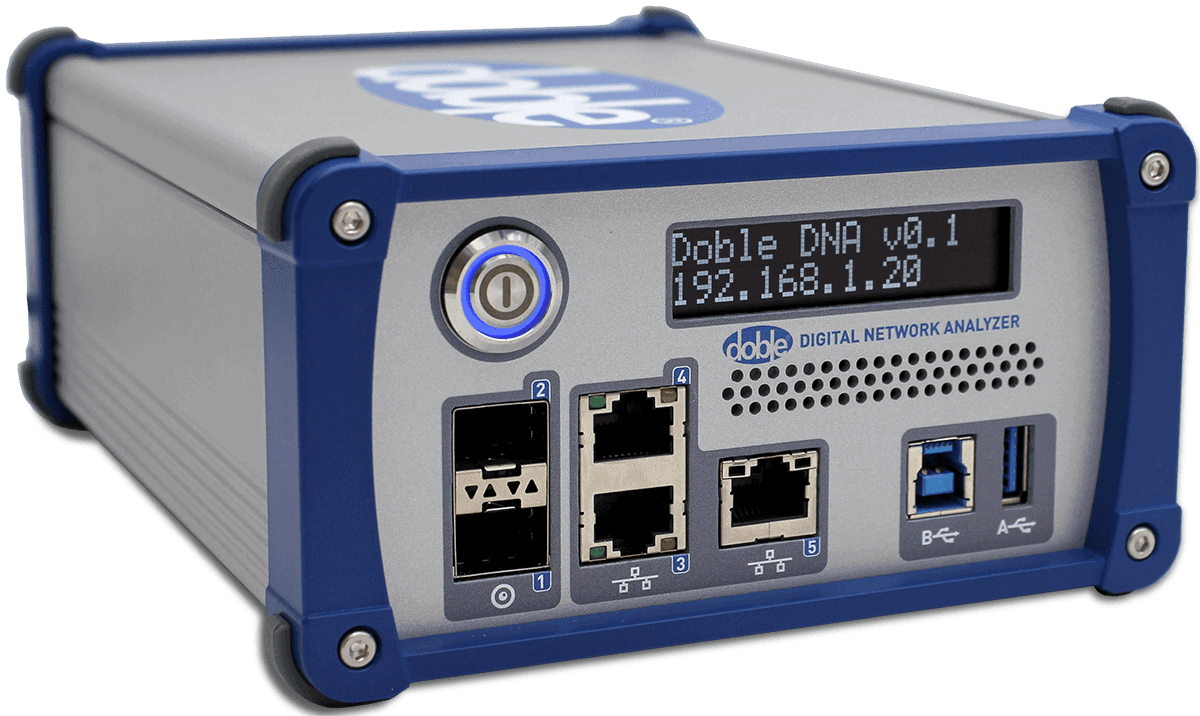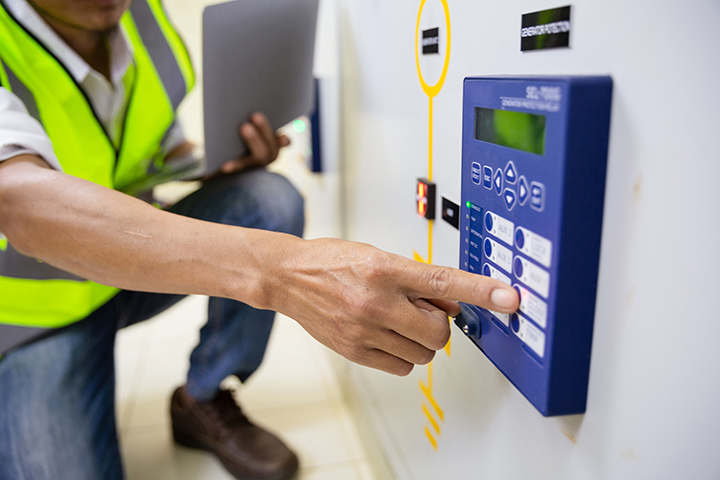
The first edition of the IEC 61850 standard was published in 2003, initially focused on standardizing communication within substations. Since then, IEC 61850 has evolved significantly and has become an important part of the transition toward digital substations. Technologies such as merging units and digitalized current and voltage measurements have enabled the introduction of the process bus, while high-speed communications allow protection, control, and automation functions to exchange information directly over the substation network.
As substations become increasingly digital, testing practices must evolve as well. Testing is no longer limited to injecting current and voltage into a protective relay and verifying a contact output. Engineers and technicians must also consider communications, network configuration, time synchronization, data quality, and the interaction between multiple intelligent electronic devices (IEDs).
IEC 61850 communications can generally be divided into three primary categories. Clientserver communication is commonly used for monitoring, control, and reporting. GOOSE messaging provides high-speed, peer-to-peer communication for functions such as trips, interlocks, and protection schemes. Sampled Values allow digitized CT and VT measurements to be transmitted across the process bus from merging units to protection, control, and measurement devices.
Testing and troubleshooting these systems can be organized into four major areas.
Protection Testing verifies that IEDs perform their intended protection functions and respond correctly to simulated power-system conditions. Traditional functions such as overcurrent, differential, and distance protection remain important, but the inputs and outputs may now be digital. Testing may require subscribing to Sampled Values, publishing or monitoring GOOSE messages, and confirming that the complete protection scheme responds correctly to simulated faults. End-to-end and system-based testing can further verify the interaction between multiple devices.
Automation and Control Testing including SCADA, focuses on whether information is correctly communicated and acted upon throughout the system. Testing may include verifying status indications, alarms, measurements, controls, interlocking logic, gateway configuration, and HMI operation. The objective is to confirm that the correct information reaches the correct device and produces the intended system response.
Network Testing evaluates the communication infrastructure supporting protection and control functions. Testing can include Ethernet switch configuration, VLANs, bandwidth and network loading, redundancy, communication performance, and time synchronization. Technicians may also analyze GOOSE and Sampled Values traffic to identify missing messages, configuration errors, or abnormal communication behavior.
Troubleshooting becomes especially important when protection and control functions move from hardwired connections onto the communication network. In a conventional substation, technicians may troubleshoot by tracing wiring or checking relay contacts. In an IEC 61850 system, the problem could involve a GOOSE subscription, Sampled Values stream, network switch, time synchronization source, configuration file, or incorrect data mapping.
Troubleshooting often requires following the digital signal from its source to its destination. Technicians may need to determine whether a GOOSE message was published, whether the intended IED received it, whether the correct Sampled Values stream is available, and whether the information matches the system configuration. Network captures, IED event records, configuration information, and time-synchronized data can then be combined to reconstruct what happened.
The transition to IEC 61850 does not eliminate traditional testing principles; it expands them. Current, voltage, protection logic, and operating times remain critical, but the communication network is now part of the protection and control system.
Ultimately, successful IEC 61850 testing requires verifying the complete system, from the measurement source and communications network to the protection logic, control function, and final system response.
Doble Engineering
Doble Engineering Company is a global leader in diagnostic test equipment, software and engineering services for the electric power industry. Founded in 1920, it helps utilities and energy asset owners improve reliability, assess system health, and optimize operations through advanced diagnostics and expertise worldwide.
Contact us at sales@doble.com , or visit https://www.doble.com