Data Center Power Distribution for Critical Load Reliability
By Howard WIlliams, Associate Editor
By Howard WIlliams, Associate Editor
Request for Quotation Service
Buyers Submit Free RFQs to top suppliers, no obligation.
Suppliers Browse real project RFQs directly from buyers.
Trust Electricity Forum 40 years connection buyers and suppliers.
Data center power distribution delivers conditioned electricity through switchgear, UPS systems, generators, PDUs, busway, and rack circuits so critical IT loads remain online during faults, maintenance isolation, transfer events, harmonic stress, and branch overloads.
Data center power distribution determines whether electrical disturbances remain local or cascade into service interruption. The objective is not simply to move electricity into a facility but to maintain continuous power delivery through switchgear, UPS systems, generators, PDUs, busway, and rack circuits, even when faults, maintenance isolation, or transfer events occur.
Critical computing loads cannot tolerate long recovery windows. A distribution architecture that appears redundant during normal operation can still expose the room to risk if both feeds depend on the same protection zone, if branch loading leaves insufficient margin, or if transfer behavior pushes surviving equipment beyond stable limits.
Operational reliability, therefore, depends on how electrical paths behave during abnormal conditions. Generator pickup, UPS bypass states, breaker coordination, and rack-level branch loading all influence whether a disturbance stays confined or spreads across the room.
Redundant distribution is designed so that a single failure does not interrupt computing operations. Dual-corded IT equipment allows each server to receive power from separate distribution paths, but this protection works only if those paths remain electrically independent at upstream switchgear and panel boundaries.
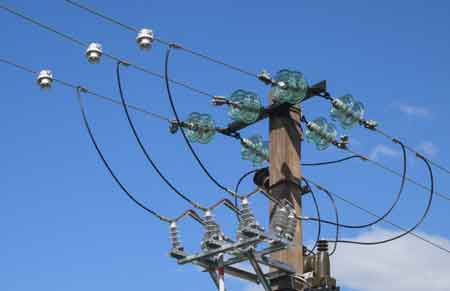
The incoming supply still originates from the broader grid infrastructure described in Electric Power Distribution, but once electricity enters the building, the reliability problem shifts to facility-level architecture. Internal feeders, switchboards, UPS modules, and distribution panels must maintain stable voltage and capacity during source transfers or protective device operation.
Stay informed with our FREE Overhead T&D Newsletter — get the latest news, breakthrough technologies, and expert insights, delivered straight to your inbox.
Topology principles that govern large electrical networks are explored in Electrical Distribution Systems, yet mission-critical facilities apply those principles with tighter operational limits because computing loads cannot tolerate even short interruptions.
Data center infrastructure depends on a stable electrical architecture that delivers power from the utility power source through UPS systems, switchgear, power distribution units PDUs, and remote power panels RPPs before reaching rack equipment. Both single phase and three phase power are used within this distribution chain to support diverse IT loads while maintaining redundancy during power outages.
Electrical reliability also influences cooling systems, since servers and chillers must remain energized to prevent thermal instability. Operators therefore evaluate energy efficiency and metrics such as power usage effectiveness PUE to ensure that the distribution design supports continuous operation while minimizing electrical losses across the facility.
Uninterruptible power supplies define the ride-through boundary between utility disturbances and generator restoration. Batteries support the load during source transfer, but the distribution system must handle the resulting current changes, breaker coordination, and recharge demand once generators stabilize.
If generator acceptance, UPS bypass logic, and protective settings are not aligned, a system may survive the first seconds of a disturbance only to trip later when cooling equipment restarts or the battery recharge current rises. That delayed-failure chain illustrates how the distribution architecture determines whether backup capacity actually protects the load.
Stored energy support and backup coordination are discussed further in Critical Energy Storage, particularly where battery systems carry substantial portions of facility demand during abnormal operation.
Selective coordination is essential in mission-critical distribution. Protective devices must isolate a faulted branch circuit without opening upstream feeders that support multiple racks or PDUs.
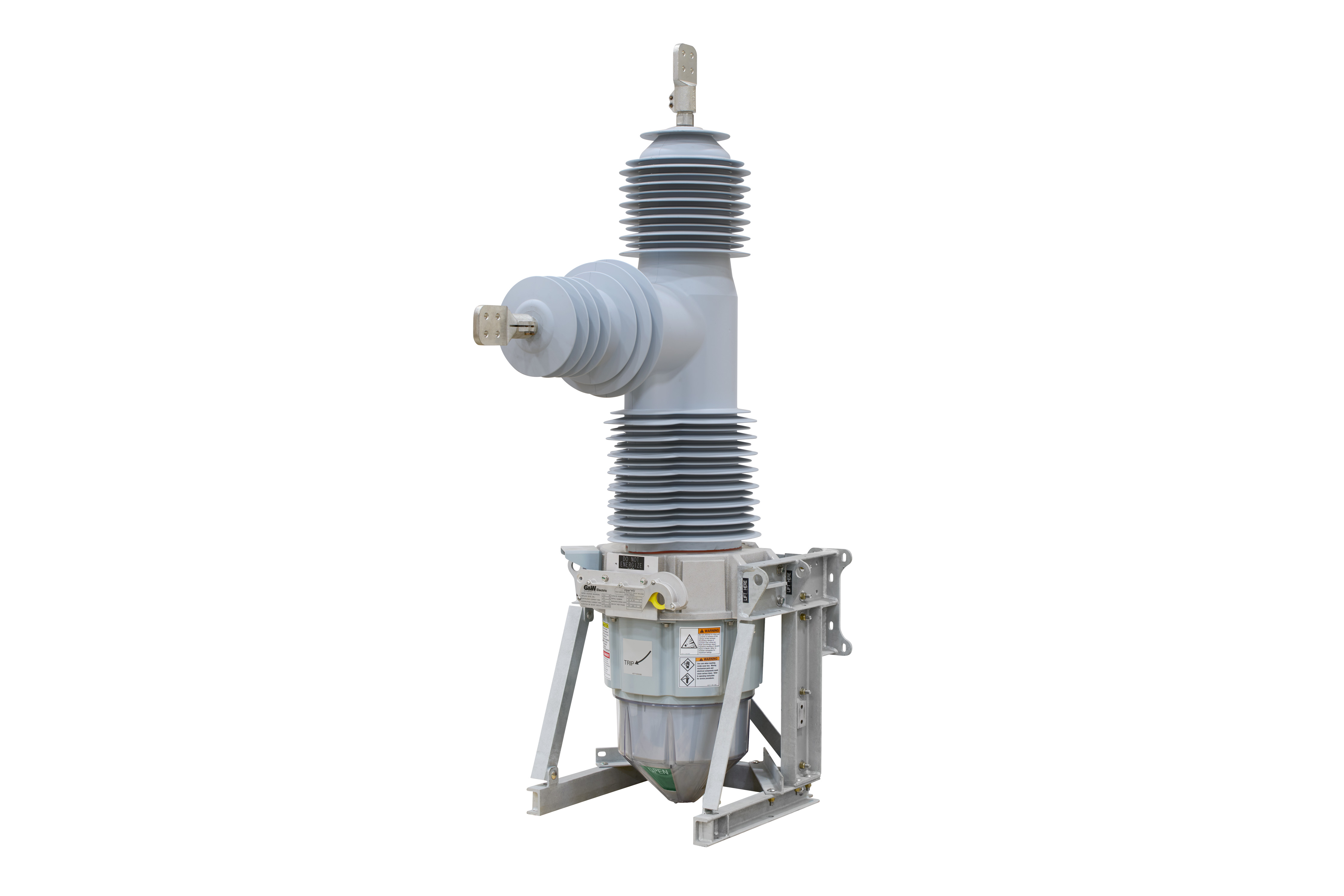
Switchgear segmentation, breaker ratings, and interrupting capacity determine whether a local short circuit clears at the correct level. The equipment responsible for that containment is detailed in Electrical Distribution Equipment, where switchboards, circuit breakers, and protective devices establish the boundaries that prevent cascading outages.
System protection philosophy is also connected to broader reliability practices described in Reliability and Protection in Utility Distribution, although mission-critical facilities typically enforce stricter coordination margins than conventional utility feeders.
The final stage of power delivery occurs at the rack. Remote power panels, busway tap-offs, and branch circuits distribute power to individual servers and networking equipment. High-density computing environments can concentrate electrical demand within small areas, creating localized heating, phase imbalance, and harmonic currents.
Maintaining adequate branch margin is therefore essential. When one upstream path is lost, the surviving distribution path must carry the redistributed load without exceeding thermal or protective limits. If branch circuits operate too close to capacity, a single transfer event can push them beyond safe operating conditions.
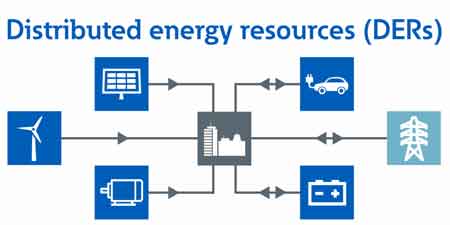
Facilities that incorporate on-site generation or storage may also interact with distributed supply concepts described in Distributed Energy Resources. These resources can support resilience but also introduce additional coordination considerations for transfer-sequencing and fault-current behavior.
The most demanding condition for any data center power distribution system occurs during maintenance. When a UPS module is bypassed, a switchboard section is isolated, or a generator is unavailable, the remaining equipment must carry the entire critical load without compromising protective coordination or thermal limits.
Designs that maintain an adequate margin in these maintenance states provide the highest operational confidence. The true test of redundancy is not normal operation but the ability to sustain service while components are intentionally removed.
Download our FREE Electrical Training Catalog and explore a full range of expert-led electrical training courses.

Data center power distribution succeeds when faults, transfers, and maintenance actions remain confined to small sections of the system. When architecture preserves that containment, computing infrastructure continues operating even under adverse electrical conditions.
Advantages To Instructor-Led Training – Instructor-Led Course, Customized Training, Multiple Locations, Economical, CEU Credits, Course Discounts.
Request For QuotationWhether you would prefer Live Online or In-Person instruction, our electrical training courses can be tailored to meet your company's specific requirements and delivered to your employees in one location or at various locations.