Electrical Distribution Equipment Selection
By William Conklin, Associate Editor
By William Conklin, Associate Editor
Request for Quotation Service
Buyers Submit Free RFQs to top suppliers, no obligation.
Suppliers Browse real project RFQs directly from buyers.
Trust Electricity Forum 40 years connection buyers and suppliers.
Electrical distribution equipment includes transformers, switchgear, reclosers, regulators, insulators, and fuses whose selection affects fault isolation, voltage control, restoration speed, maintenance burden, and feeder reliability during faults.
Electrical distribution equipment is the field hardware that determines whether a feeder stays controllable after something goes wrong. The issue is not naming devices from a catalog. It is whether the installed mix of switching, protection, transformation, insulation, and voltage-control devices can keep the problem contained when load shifts, a section faults, or crews must reconfigure the circuit.
A feeder can appear complete on a one-line drawing yet perform poorly in service. An underrated transformer can lock in overload risk after a transfer. A poorly placed recloser can interrupt a healthy load. A regulator can hold voltage on one section while pushing another section closer to thermal or reactive limits. Those consequences appear during restoration, not during equipment procurement.
That is why electrical distribution equipment should be judged by operating consequence, not by product category alone. Each device changes what operators can isolate, what crews can switch, how much load can be transferred, how long restoration takes, and whether the circuit still has enough margin for the next abnormal condition.
Electrical distribution equipment includes the devices that carry load, transform voltage, interrupt fault current, sectionalize damaged spans, support insulation, and keep service inside usable voltage limits. This page does not own the broader topology problem or the broad delivery function. It owns the equipment-selection problem itself: which class of device matters for the condition being managed, where it should sit on the feeder, and what happens when it is misapplied.
Stay informed with our FREE Overhead T&D Newsletter — get the latest news, breakthrough technologies, and expert insights, delivered straight to your inbox.
Transformers, switches, reclosers, sectionalizers, fuses, regulators, capacitors, arresters, insulators, terminations, and sensors all do different work, but they should never be selected as isolated line items. The better question is which equipment class controls the operating risk in front of you: fault clearing, switching speed, voltage support, conductor isolation, maintenance exposure, or service continuity. That is why Electrical Distribution Systems remain related but separate: topology determines the path, while equipment determines how that path behaves under stress.
In practice, equipment value is not defined by the device name alone. It is defined by the operating problem the device must solve, the location where it is installed, and the feeder condition it must survive after the normal configuration no longer exists.
Switches and reclosers decide how much of a feeder must be removed from service when one section fails. Sparse switching points can force crews to de-energize far more load than the damaged span requires, while a device with the wrong interrupting duty or poor sectionalizing logic can trip the wrong segment at the wrong time. The broader utility obligation sits with Electric Power Distribution, but this page owns the device choices that determine whether that obligation can be met in the field.
Switching equipment also defines restoration flexibility. A feeder with well-placed switching devices can isolate damage and transfer load in smaller blocks, while a poorly sectionalized feeder may leave operators with only blunt options, expanding the outage footprint.
Protection equipment determines how much healthy load remains energized after a fault and how much restoration work must be performed before customers return. A recloser applied without regard to laterals, downstream fuses, available fault current, or source strength can increase customer interruptions rather than reduce them. Coordination pressure becomes even harder once operators re-tie feeders under contingency conditions, which is why Reliability and Protection in Utility Distribution belongs beside this page in the cluster.
A fault that is not isolated quickly does not remain a single device problem. It can hold a breaker out longer than planned, depress voltage on adjacent sections, consume transfer capacity, delay patrol, and leave the next contingency with less switching margin than operators thought they had. That cascading consequence is why equipment mistakes often appear minor in design review yet costly in live operation.
Voltage regulators, capacitor banks, tap-changing transformers, and line sensors matter most where feeder length, changing load shape, and transfer conditions make voltage behavior less predictable. Equipment that appears acceptable in a normal base case can become unstable during cold load pickup, storm restoration, or post-fault reconfiguration. The threshold issue is not whether the device works on a good day. The threshold issue is whether it continues to behave predictably after the feeder is switched to a different operating state.
Automation can help, but it does not remove judgment. Distribution Automation is relevant here because faster remote switching only helps when the underlying zones, device ratings, and control logic are chosen correctly.
Indicators, sensors, and communications improve awareness, but they do not correct poor equipment locations. A Fault Indicator can shorten patrol time, yet faster fault location does not solve a poor sectionalizing plan or a breaker that trips more load than necessary.
That is the deployment tradeoff that many systems underestimate. More field devices can increase visibility and control, but they also increase the complexity of settings, the maintenance burden, dependence on communications, battery replacement cycles, and opportunities for misoperation. A better equipment strategy is rarely just adding more equipment.
Think you know Overhead T&D? Take our quick, interactive quiz and test your knowledge in minutes.
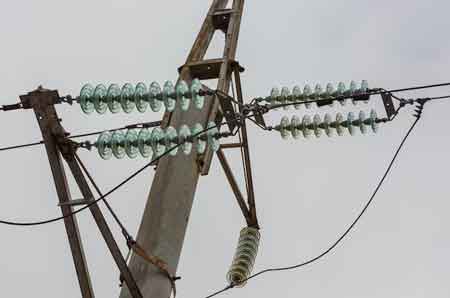
Not every equipment failure begins with switching or protection. Contamination, moisture, tracking, mechanical loading, and aging can turn an insulation problem into a recurring source of outages long before a breaker trips. Electrical Insulator belongs in this article because the insulating condition still determines whether conductors remain separated under weather, pollution, and mechanical stress.
Insulator choice also affects maintenance intervals, flashover exposure, leakage performance, and long-term reliability on overhead circuits. A feeder can have acceptable switching and protection design and still develop repeated trouble if insulation hardware is poorly matched to contamination levels, coastal conditions, ice loading, or mechanical strain.
Bidirectional flow changes equipment behavior. On feeders with local generation, storage, or island-capable segments, old assumptions about fault-current direction, regulator response, and safe switching sequences can break down quickly. Distributed Energy Resources matters because legacy devices were often applied when one-way power flow was still assumed.
The same risk grows when local sections are expected to operate more independently during disturbances. What Is a Microgrid becomes relevant because microgrid-capable sections can change restoration logic, islanding assumptions, and protection behavior in ways that older feeder equipment was never selected to manage.
Explore 50+ live, expert-led electrical training courses –