
High Voltage Maintenance Training Online
Our customized live online or in‑person group training can be delivered to your staff at your location.
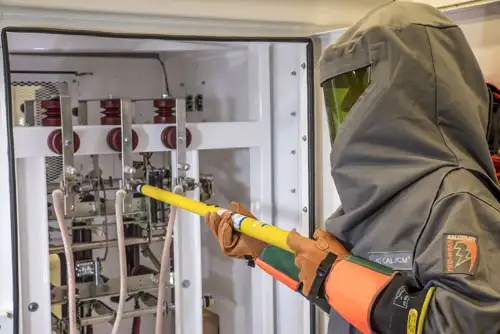
- Live Online
- 12 hours Instructor-led
- Group Training Available
Regular Price:
$599
Coupon Price:
$499
VANCOUVER
—
Data-Driven Smart Grids lead utilities to unify AMI, DERs, interoperability, and edge data for grid modernization and resilience as electrification and decarbonization accelerate, says Tantalus Systems CEO Pete Londa at a Grid Transformation Forum.
What You Need to Know
-
CEO urges interoperable, data-centric smart grids
-
Next-gen AMI and edge data seen as critical
-
Use cases span wildfire risk to outage sequencing
-
Five sustainability vectors guide utility strategy
Utilities face simultaneous pressure to electrify and decarbonize while hardening distribution systems against extreme weather. At the Grid Transformation Forum, Tantalus Systems CEO Pete Londa argued that the only scalable path through this convergence is to treat data with the same rigor as power, building interoperable, data-driven smart grids that make every kilowatt and kilobyte count. He urged utility leaders to move beyond siloed programs and adopt unified platforms capable of ingesting, contextualizing, and acting on edge intelligence across the entire distribution footprint.
Londa positioned next-generation AMI as a foundation, but not the destination. The objective is a truly digital distribution grid that captures granular power-quality and consumption information from meters, distribution automation, solar inverters, stationary storage, microgrid controllers, and EV chargers. With a common, interoperable layer, utilities gain the real-time visibility, command, and control necessary to integrate DERs at scale and to manage bi-directional flows safely. This evolution aligns with broader sector thinking around a digital grid, while ensuring operations teams can translate data into timely field action.
He framed sustainability as a multi-vector mandate: operational, financial, community, regulatory, and environmental. Data-driven workflows connect these vectors, enabling targeted asset maintenance, improved workforce safety, and better reliability outcomes. Londa highlighted how continuous power-quality analytics can flag equipment degradation before overheating or arcing occurs, helping reduce wildfire risk and extend asset life. Proactive insights also support revenue protection, dynamic pricing, and stronger ESG reporting, reinforcing the business case for interoperable platforms that can evolve as policy and technology landscapes change, including initiatives aimed to energize America in the face of rising load and weather volatility.
Edge data, he noted, enhances situational awareness and speeds restoration. During storms, granular telemetry can inform sequenced, managed outages that preserve power for critical services, while coordinated control of DERs and remote disconnect functions help mitigate imbalances between supply and demand. Vegetation management can also become more surgical: recurring momentary contacts identified through endpoint data guide crews to precise spans, limiting unnecessary tree work and truck rolls, and thereby lowering CO2 emissions. These themes echo the industry push for sensor-led visibility and distribution system operator readiness, as seen in efforts around lighthouse smart grid sensors dso visibility that elevate feeder-level awareness without overhauling entire systems at once.
Looking ahead, Londa underscored that a modernized, interoperable platform is the essential first step. With that base, utilities can orchestrate EVs, rooftop solar, and batteries, island portions of the network to boost resilience, and shift demand away from peaker plants. Customer-facing benefits follow, from usage education to faster detection of water and gas leaks via integrated telemetry. The call to action is pragmatic: start by unifying data across legacy silos, then scale advanced applications as capabilities mature. Lessons from past modernization waves, including the 2019 grid cycle and regional initiatives such as Ontario grid modernization supply chain efc advocacy, show that sequencing investments around clear use cases accelerates value realization while keeping options open for future technologies.
Related News
Related News
Saint John Energy Opens Plug-In Labs, Canada's First Utility Smart-Grid Sandbox
Saint John Energy Plug-In Labs launches a governed smart grid sandbox using a digital twin…
View more
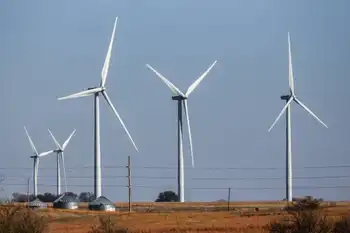
Why power companies should be investing in carbon-free electricity
Noncarbon Electricity Investment Strategy helps utilities hedge policy uncertainty, carbon tax risks, and emissions limits…
View more

U.S. Nonprofit Invests $250M in Electric Trucks for California Ports
California Ports Electric Truck Leasing accelerates zero-emission logistics, cutting diesel pollution at Los Angeles and…
View more

China's Fusion Reactor Targets Ignition by 2027
China's Experimental Advanced Superconducting Tokamak (EAST) is on track to achieve plasma ignition by 2027…
View more
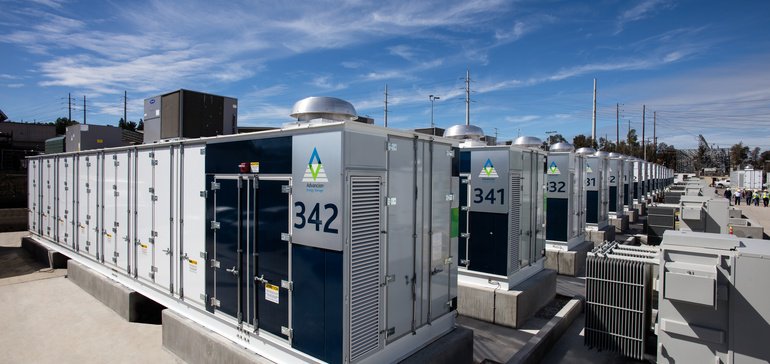
EU ministers warn over China dominance in battery storage, push grid fixes
EU battery storage dependence drives fresh concern as ministers warn over China-linked supply chains, lithium-ion…
View more

Advanced Technologies Drive Grid Hardening and Smart Grid Resilience
Grid Hardening Technologies are reshaping the smart grid as utilities deploy AI, sensors, automation, and…
View more
Sign Up for Electricity Forum’s Newsletter
Stay informed with our FREE Newsletter — get the latest news, breakthrough technologies, and expert insights, delivered straight to your inbox.
Electricity Today T&D Magazine Subscribe for FREE

Stay informed with the latest T&D policies and technologies.
- Timely insights from industry experts
- Practical solutions T&D engineers
- Free access to every issue

