ADMS vs DERMS: Grid Control Authority and DER Coordination
By Dr. Stipe Fustar, ESTA International
By Dr. Stipe Fustar, ESTA International
Request for Quotation Service
Buyers Submit Free RFQs to top suppliers, no obligation.
Suppliers Browse real project RFQs directly from buyers.
Trust Electricity Forum 40 years connection buyers and suppliers.
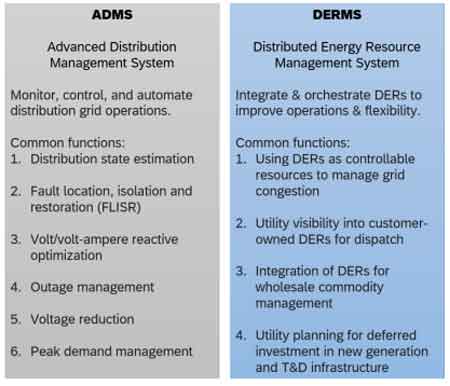
ADMS vs DERMS defines utility control hierarchy, where ADMS governs grid operations, and DERMS coordinates distributed energy resources, inverter dispatch, and voltage support to maintain reliability, stability, and flexible distribution system operation.
Utility distribution networks now operate with two distinct control layers that serve fundamentally different operational roles. ADMS controls the electrical network itself, maintaining switching authority, voltage stability, and feeder reliability. DERMS manages distributed energy resource behavior, coordinating inverter output, storage dispatch, and aggregated resource response to support grid operational objectives.
This distinction between ADMS and DERMS ensures utilities retain centralized operational authority over grid infrastructure while leveraging distributed resources to enhance system flexibility, reliability, and voltage stability.
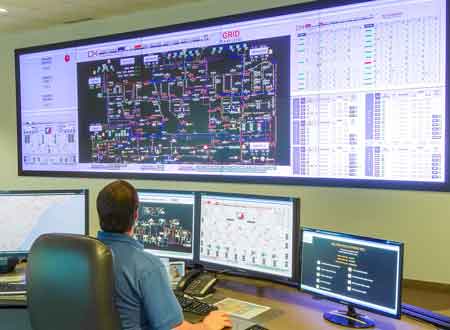
Advanced Distribution Management Systems function as the utility’s authoritative operational control platform. ADMS maintains a real-time model of the distribution network, continuously monitoring feeder status, breaker positions, voltage levels, and load conditions. This model enables operators to evaluate system stability and execute direct control commands that alter network configuration.
ADMS performs core operational control functions, including:
• Switching feeders and reconfiguring network topology
• Executing fault location, isolation, and restoration operations
• Managing voltage through regulator and capacitor control
• Monitoring power flow across feeders and substations
• Maintaining grid stability during disturbances
These actions directly affect the utility's physical infrastructure. ADMS issues commands through SCADA systems that open breakers, adjust voltage regulators, and isolate faulted segments. Because these commands alter the electrical network itself, ADMS operates as the grid control authority.
Operational responsibility for grid safety and reliability ultimately resides within the ADMS platform.
Download our FREE Electrical Training Catalog and explore a full range of expert-led electrical training courses.

The operational authority and architecture of these systems is explained in the Advanced Distribution Management System (ADMS) overview, which defines how utilities maintain centralized control over feeder switching, voltage regulation, and network topology.
The real-time decision-making capability of ADMS depends on accurate digital network representations generated by utility-scale grid modeling systems, which enable operators to simulate power flow, validate switching actions, and evaluate network stability before executing control commands.
These control capabilities operate within broader grid management solutions, which integrate telemetry, analytics, and operational control into a unified platform for managing modern distribution networks.
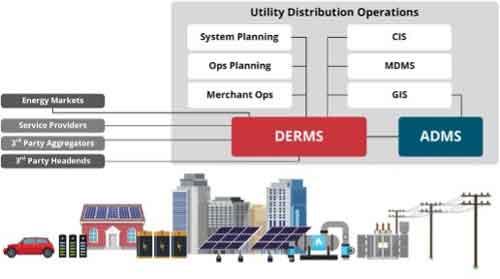
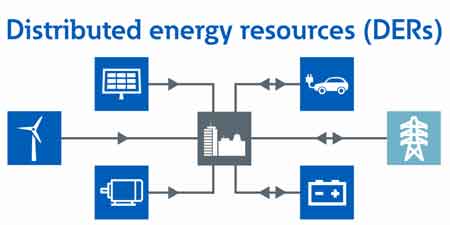
Distributed Energy Resource Management Systems operate at a different functional layer. DERMS does not control grid infrastructure. Instead, it coordinates distributed energy resources connected throughout the distribution system, including solar inverters, battery storage systems, and flexible demand assets.
The orchestration role of these systems is described in the Distributed Energy Resource Management System architecture guide, which explains how utilities monitor and dispatch distributed resources while preserving centralized grid control authority.
DERMS continuously monitors resource availability, forecasts potential output, and dispatches resources to support grid stability objectives. These dispatch actions include increasing or reducing generation output, adjusting inverter reactive power, and coordinating aggregated resource fleets.
These coordination decisions rely heavily on real-time telemetry from advanced metering infrastructure, and platforms such as AMI data systems provide critical visibility into voltage conditions, load behavior, and distributed resource performance across the distribution network.
Key DERMS orchestration functions include:
• Monitoring distributed energy resource status and availability
• Dispatching solar, storage, and controllable load resources
• Coordinating virtual power plant operations
• Managing inverter voltage support functions
• Communicating with aggregators and field devices
These actions influence how distributed resources behave, but they do not directly alter grid topology or switching configuration. DERMS manages resource response, not grid infrastructure.
The most critical distinction in the ADMS vs DERMS relationship is operational authority. ADMS maintains centralized control over the electrical network, executing switching, voltage regulation, and topology management. DERMS provides coordinated control of distributed energy resources, adjusting their output and response to support ADMS-directed grid operating conditions without assuming direct control of grid infrastructure.
ADMS determines system operating requirements, such as maintaining voltage within acceptable limits or preventing feeder overload. DERMS responds by dispatching distributed resources to help achieve those operational targets.
For example, if the voltage on a feeder drops due to increased load, ADMS identifies the violation and determines a corrective action. DERMS may then dispatch battery storage or adjust inverter reactive output to support voltage recovery. However, ADMS retains responsibility for controlling voltage regulators, switching devices, and feeder configuration.
This centralized control authority is essential to maintaining overall power system reliability, ensuring that operational decisions affecting feeder stability remain under direct utility control.
DERMS supports grid operation. ADMS controls grid operation.
This separation ensures that distributed resources enhance grid stability without compromising centralized operational authority.
As distributed energy penetration increases, utilities must manage growing operational complexity. Distributed generation introduces variability that affects voltage stability, power flow, and equipment loading. Without coordinated control, these resources can destabilize distribution networks.
DERMS enables utilities to safely integrate distributed energy by coordinating resource responses while allowing ADMS to retain control of infrastructure.
This coordination allows distributed resources to function as operational assets that support:
• Voltage stability during load variation
• Peak load reduction through resource dispatch
• Congestion mitigation on constrained feeders
• Improved reliability through flexible resource response
Stay informed with our FREE Grid Optimization, DER & Flexibility Newsletter — get the latest news, breakthrough technologies, and expert insights, delivered straight to your inbox.
DERMS transforms distributed resources from uncontrolled generation sources into coordinated grid support assets.
Modern utility control systems implement an ADMS vs DERMS hierarchy that separates grid control authority from distributed resource coordination. ADMS operates at the infrastructure control layer, maintaining authority over switching operations, feeder topology, and system stability. DERMS operates at the resource orchestration layer, coordinating distributed energy resource output and response to support ADMS-directed grid operating requirements.
This layered architecture ensures utilities can integrate distributed energy while preserving centralized operational authority. ADMS maintains control over the electrical network itself, while DERMS enables flexible coordination of distributed resource capability.
The distinction between these systems is not optional. It defines how modern utilities maintain reliability, stability, and operational control in increasingly complex distribution networks.
Utilities do not use DERMS to control the grid. They use DERMS to coordinate distributed resources, enabling ADMS to safely and effectively control the grid.
Advantages To Instructor-Led Training – Instructor-Led Course, Customized Training, Multiple Locations, Economical, CEU Credits, Course Discounts.
Request For QuotationWhether you would prefer Live Online or In-Person instruction, our electrical training courses can be tailored to meet your company's specific requirements and delivered to your employees in one location or at various locations.