Grid Management Solutions
By Robert Uluski, ESTA International
By Robert Uluski, ESTA International
Request for Quotation Service
Buyers Submit Free RFQs to top suppliers, no obligation.
Suppliers Browse real project RFQs directly from buyers.
Trust Electricity Forum 40 years connection buyers and suppliers.
Grid management solutions integrate ADMS, DERMS, SCADA, and outage management into a unified operational control platform that enables real-time monitoring, automated switching, DER coordination, and secure command authority across modern utility distribution networks.
Electric utilities do not operate distribution networks solely by observation. They operate them through command authority. Grid management solutions provide that authority by integrating telemetry, network models, switching control, outage management, and distributed energy coordination into a unified operational control system. Without this integrated control layer, utilities lose the ability to maintain stability, restore outages safely, and coordinate distributed energy resources in real time.
Grid management solutions represent the operational core of modern utility control rooms. These systems integrate Advanced Distribution Management Systems (ADMS), Distributed Energy Resource Management Systems (DERMS), Supervisory Control and Data Acquisition (SCADA), Outage Management Systems (OMS), and advanced distribution automation applications into a synchronized operational environment. The central operational engine in this architecture is the Advanced Distribution Management System, which provides the decision-making platform utilities use to analyze, control, and optimize real-time distribution network conditions. This system-of-systems architecture enables continuous monitoring, operational intelligence, and real-time control of distribution infrastructure and connected energy resources.
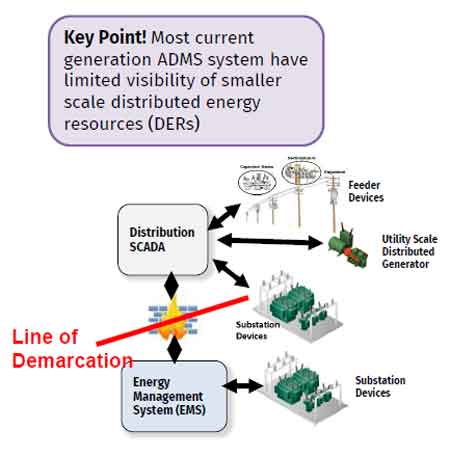
The operational foundation of grid management solutions begins with SCADA, which provides the telemetry and command interface for substations, feeders, and field devices. Secure telemetry transport and command validation are essential, making SCADA cybersecurity a critical component of maintaining operational integrity and preventing unauthorized control actions. SCADA delivers near-real-time visibility into system conditions through measurements, alarms, and device status, while enabling operators to remotely open and close breakers, adjust voltage regulators, and control capacitor banks. SCADA functions as the command transport layer, transmitting telemetry from field infrastructure and executing control instructions issued by higher-level grid management applications.

Grid management solutions rely on a continuously synchronized electrical network model representing the real-time configuration of the distribution system. These operational models are constructed and maintained using technologies such as geospatial ADMS, which integrates GIS topology, asset connectivity, and real-time system status into a unified operational model. This model integrates geographic information system data, asset characteristics, switch status, load profiles, and operational changes to create an accurate representation of the as-operated network.
Model-driven applications use this synchronized representation to analyze electrical conditions, forecast loading, and validate control actions before execution. These capabilities depend on accurate grid modeling, which ensures that operational decisions reflect actual electrical conditions rather than static engineering assumptions. This ensures switching operations, restoration actions, and voltage control decisions reflect actual field conditions.
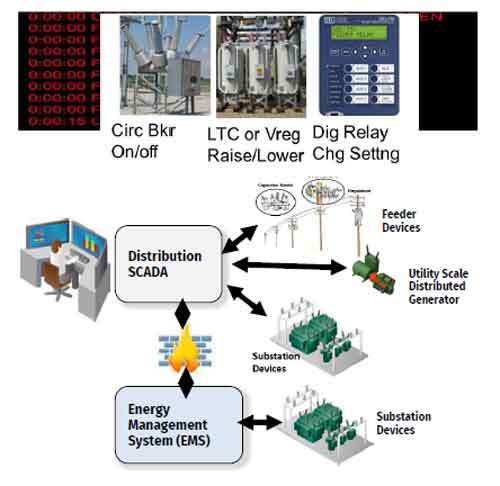
Advanced distribution management applications operate on top of the synchronized network model to enable automated operational control. These applications include volt-var optimization, fault location analysis, switching validation, and load forecasting. These functions are implemented through specialized ADMS software platforms, which provide the analytical and control applications that utilities use to automate grid operation and restoration workflows.
These functions maintain voltage stability, identify fault locations, validate switching operations, and ensure reliable network operation under changing system conditions.
Outage management systems provide restoration coordination capabilities within grid management solutions. OMS platforms detect outages using telemetry, meter signals, and operational data. They identify fault locations, dispatch crews, and coordinate restoration workflows.
Integrated OMS functionality enables faster restoration, improved operational awareness, and coordinated switching execution across the distribution network.
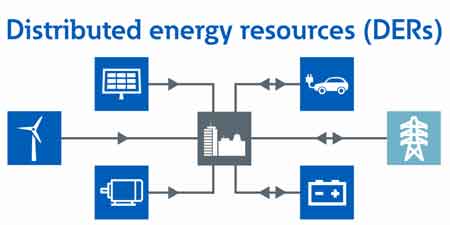
Distributed Energy Resource Management Systems enable grid management solutions to monitor and control distributed energy resources such as solar generation, battery storage, and controllable loads. These capabilities are provided through the Distributed Energy Resource Management System, which enables utilities to coordinate DER output, manage grid stability, and support restoration operations.
DERMS provides telemetry, forecasting, and dispatch capability, allowing distributed resources to support voltage control, load balancing, and restoration operations.
Switching management is a core operational function supported by grid management solutions. These systems validate switching actions before execution, ensuring proposed changes do not create overload conditions, voltage violations, or unsafe operating states. These operational decisions are increasingly supported by advanced fault analysis tools such as AI fault detection, which help identify system disturbances and guide restoration actions.
Grid management systems generate switching plans, evaluate operational impact, and execute commands through SCADA control pathways.
Loss of grid management capability removes operational visibility and control authority. Utilities lose the ability to validate switching actions, coordinate restoration, and maintain voltage stability.
This increases outage duration, operational risk, infrastructure stress, and the likelihood of cascading system failures.
Grid management solutions provide the operational authority utilities require to safely operate modern distribution networks. These platforms integrate telemetry, operational models, automation systems, and distributed energy coordination into a unified operational control environment.
They ensure utilities maintain stability, reliability, and operational control across increasingly complex distribution systems.
Download our FREE Electrical Training Catalog and explore a full range of expert-led electrical training courses.

Explore 50+ live, expert-led electrical training courses –