ADMS Enables Real-Time Control of Distribution Grid
By Jenika Raub, Senior Manager, Grid Data & Analytics, Salt River Project
By Jenika Raub, Senior Manager, Grid Data & Analytics, Salt River Project
Request for Quotation Service
Buyers Submit Free RFQs to top suppliers, no obligation.
Suppliers Browse real project RFQs directly from buyers.
Trust Electricity Forum 40 years connection buyers and suppliers.
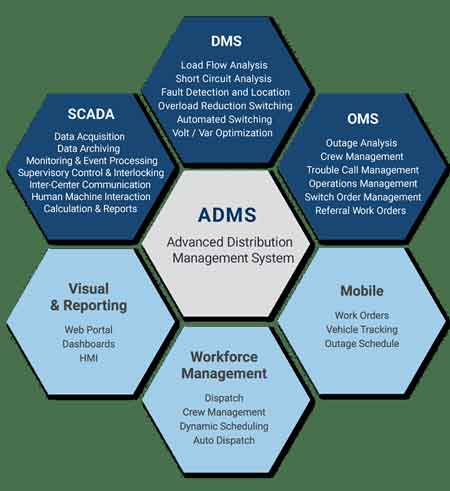
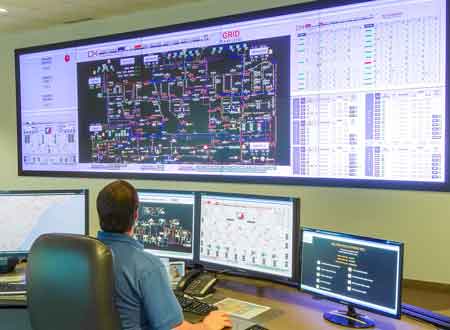
ADMS is the real-time operational intelligence platform utilities use to monitor feeder conditions, validate power flow, predict constraint risk, and optimize switching, voltage, and DER coordination across the distribution grid.
Distribution grid operation has shifted from passive monitoring to continuous operational intelligence. ADMS functions as the system of record for feeder state, switching configuration, load flow validity, and constraint risk, enabling utilities to operate increasingly dynamic networks with confidence and precision.
An advanced distribution management system consolidates telemetry, topology, asset models, and real-time measurements into a continuously synchronized operational model of the grid. This unified model allows operators and engineers to understand exactly how the distribution system is behaving, not as a static schematic but as a living electrical network subject to load variation, switching actions, and distributed resource injection.
This operational visibility changes decision-making fundamentally. Without ADMS, operators rely on fragmented telemetry, delayed reporting, and incomplete topology awareness. With ADMS, utilities operate from a validated electrical model that reflects real conditions across every monitored feeder. These capabilities form the operational foundation of modern grid management solutions, where real-time electrical awareness directly supports switching, voltage control, and outage restoration decisions.
The core engineering function of ADMS is electrical state estimation and power flow validation. Distribution telemetry is inherently incomplete. Many devices lack direct measurement, and field topology can diverge from documentation due to switching, maintenance, or system evolution.
ADMS resolves this uncertainty by combining:
• SCADA telemetry from substations and field devices
• Advanced metering infrastructure measurements from endpoints
• Geographic topology and connectivity models
• Switching state and breaker position information

Using this integrated data model, ADMS continuously calculates feeder voltage profiles, load distribution, and current flow across all network segments.
This capability was reinforced by engineering validation approaches using AMI data at scale, demonstrating that endpoint measurements can confirm and refine distribution power flow estimates. The result is a continuously validated electrical model that reflects real system conditions rather than assumed configurations. The accuracy and reliability of these calculations depend heavily on the integrity of the network model established through geospatial adms, which ensures connectivity and topology remain synchronized with field reality.
Distribution grid operation requires constant intervention. Load changes, faults, equipment outages, and distributed resource variability require continuous response. ADMS enables utilities to coordinate these actions while preserving electrical stability.
Critical operational functions include:
• Automated switching sequence validation
• Fault isolation and service restoration coordination
• Voltage profile optimization and regulator control
• Feeder load balancing and overload prevention
• Constraint detection and mitigation
Without ADMS, these actions depend heavily on manual interpretation and experience. With ADMS, operators act based on validated electrical models that predict system response before switching occurs. Utilities rely on modern adms software to continuously maintain this synchronized operational model and provide engineers with actionable electrical system awareness.
Utilities deploying ADMS platforms from providers such as Schneider Electric, Siemens, GE Vernova, and Oracle Utilities rely on these capabilities to maintain operational stability across increasingly complex distribution networks.
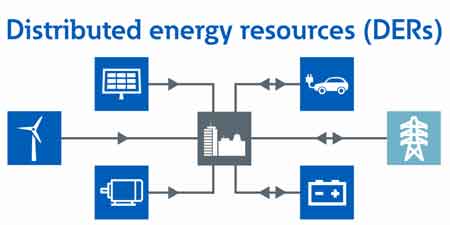
Distributed energy resources introduce operational variability that traditional grid control systems were never designed to manage. Solar generation, battery storage, and controllable loads dynamically alter feeder power flow, often in ways that cannot be predicted by static planning models.
ADMS enables utilities to monitor and coordinate DER impact in real time by continuously validating feeder electrical conditions and identifying voltage excursions, reverse power flow, and thermal loading risk. This operational coordination works alongside the distributed energy resource management system, which manages DER dispatch and flexibility while ADMS maintains grid-wide electrical stability.
Understanding how these platforms interact is critical for operational clarity, particularly when evaluating the functional boundary between grid control and resource control, as explained in adms vs derms: ADMS governs feeder-level electrical behavior, while DERMS manages individual distributed resource optimization.
The accuracy of ADMS operation depends entirely on the integrity of the underlying network model. Every feeder segment, device, and switching element must be represented correctly to ensure power flow calculations and operational decisions remain valid.
Geospatial integration ensures the electrical model reflects real network connectivity and device relationships. Utilities prioritize synchronizing GIS, telemetry, and operational systems to maintain confidence in switching and voltage-control decisions. Protecting this operational intelligence environment also requires adherence to strict security architecture practices outlined in SCADA cybersecurity, ensuring operational continuity and protection against control system compromise.
ADMS transforms grid operation from reactive response to predictive operational control. Instead of waiting for overloads, voltage collapse, or restoration delays, utilities detect and mitigate risk before customers are affected.
Key operational benefits include:
• Faster outage restoration through automated switching validation
• Reduced overload risk through continuous feeder monitoring
• Improved voltage stability and equipment protection
• Enhanced operator situational awareness
• Greater resilience against operational uncertainty
These capabilities are increasingly integrated with advanced operational support tools such as genai copilots for utility engineering, which assist engineers in interpreting ADMS model output, identifying emerging constraints, and improving decision speed during abnormal system conditions.
Download our FREE Electrical Training Catalog and explore a full range of expert-led electrical training courses.

ADMS is no longer optional infrastructure. It is the operational intelligence platform that allows utilities to monitor, analyze, and control distribution grid behavior in real time.
As distribution networks evolve with increased DER penetration, electrification demand, and operational complexity, ADMS provides the validated electrical model and operational awareness required to maintain stability and reliability.
Utilities that deploy ADMS gain continuous operational visibility, predictive awareness of system risk, and the ability to control distribution grid behavior with engineering precision. This capability defines the modern operational standard for distribution grid management.
Explore 50+ live, expert-led electrical training courses –