Overhead Power Line Sensors for Distribution Fault Intelligence
By Jack Nevida, P.E., Principal Engineer, Distribution Integration, SRP
By Jack Nevida, P.E., Principal Engineer, Distribution Integration, SRP
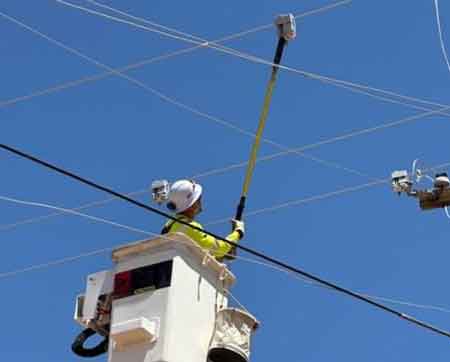

Overhead power line sensors deliver near real time fault current data, waveform capture, and feeder visibility for ADMS integration. Proper placement and governance reduce outage duration, prevent patrol misdirection, and protect high fire risk circuits.
Overhead power line sensors change how a utility answers a simple question: where did the fault occur? On long feeders with limited sectionalizing, that answer determines how far a crew must travel, how confidently operators can reclose, and how many customer minutes accumulate before restoration.
When a breaker trips at the substation, operators know that protection operated. What they do not know is the fault's location or whether it has cleared. Without intelligence along the feeder, restoration becomes a search. Each additional span that must be patrolled adds time and increases exposure, particularly on circuits already identified as high fire risk.
Utilities that install overhead power line sensors are shifting part of the diagnostic boundary out onto the line itself. Instead of relying solely on substation information, they are capturing current behavior at the point where the disturbance first appears.
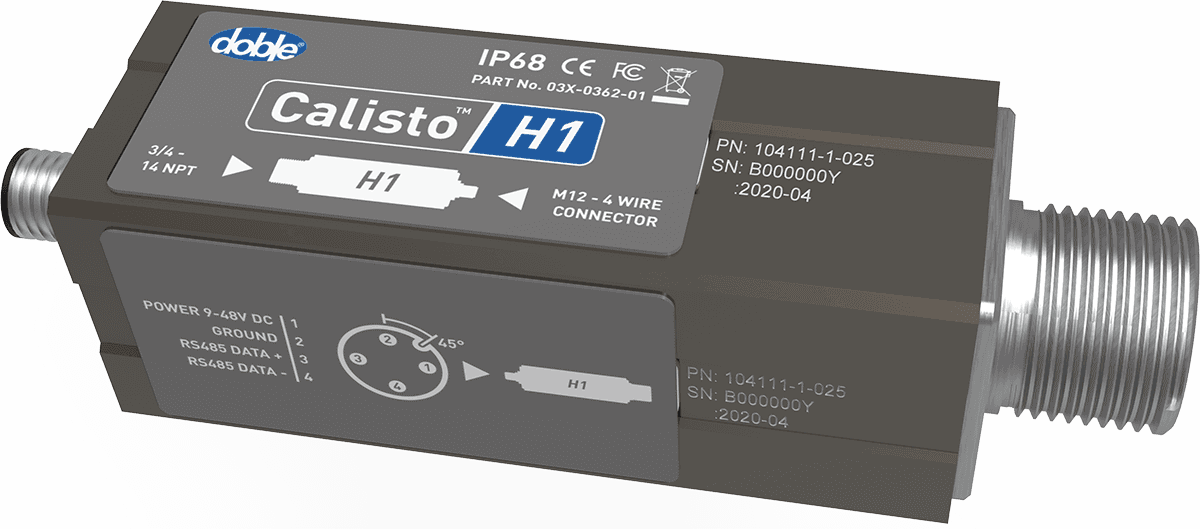
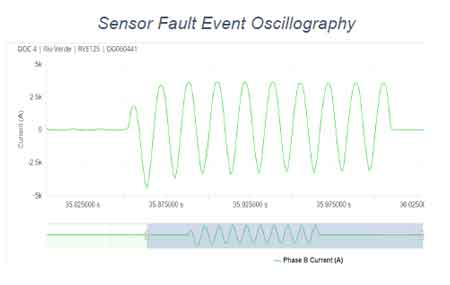
Overhead power line sensors detect rapid changes in current in either direction through internal sensing and embedded logic. Mounted with the indicator oriented toward the load, they report overcurrent events and fault magnitude via cellular communication to an analytics platform, which then passes them to ADMS. In pilot deployments, the recorded waveform duration and magnitude aligned with relay oscillography at the substation, confirming that the devices captured the event accurately.
Consider a high fire risk feeder with a three phase fault near the midpoint. Without sensors, crews had to patrol the entire section. Restoration required 185 minutes for 20 customers, or 3700 customer minutes of interruption. With sensors installed, crews began at the device that reported the fault and restored service in 130 minutes, reducing interruption by 1100 customer minutes. If restoration performance is tracked at the board level, then fault location uncertainty is no longer just a field issue. It becomes an executive risk variable. That difference reflects less patrol time and more confident switching decisions.
Download our FREE Electrical Training Catalog and explore a full range of expert-led electrical training courses.

The consequences are practical. If a crew begins at the wrong segment, it may reclose into a fault that has not been isolated. Equipment stress increases. The chance of secondary damage rises. On circuits exposed to wildfire conditions, longer fault presence increases ignition risk. What starts as uncertainty about location can expand into regulatory review and public scrutiny.
Placement requires clear engineering judgment. Utilities focus on critical circuits, areas exposed to wildfire risk, difficult-to-access locations, feeders that still rely on electromechanical relays, and circuits with repeated or unexplained outages. The aim is to reduce uncertainty where restoration time and risk are highest.
Power supply design affects where sensors can be installed. Units that harvest energy from the conductor typically require a minimum load current, often around 8 amperes. Battery powered units can operate on lightly loaded lines but introduce maintenance planning, replacement cycles, and inventory control. Harvesting designs reduce routine service work but limit installation on low load conductors. Battery designs expand coverage but increase responsibility for asset tracking.
Detection settings introduce another layer of judgment. If the overcurrent pickup is too sensitive, operators receive frequent nuisance alarms and confidence declines. If pickup is set too high, high impedance faults may not register. Settings must reflect feeder impedance, expected load range, contribution from distributed energy resources, and coordination with existing protection. The goal is not to capture every disturbance. It is to capture the events that matter.
Edge cases add complexity. Distributed energy resources can contribute fault current from the load side, changing directionality assumptions. Sensors that report current flow in both directions must be validated against ADMS feeder topology changes to ensure source contributions are interpreted correctly.
Bringing sensor data into ADMS changes its role. They move from notification devices to inputs that support operational decisions. Fault current data, waveform records, and power flow measurements can assist with model validation and support future FLISR applications. When connected through secure gateways within OT network boundaries, sensor data strengthens operator confidence in the feeder state.
Governance becomes critical at this stage. Someone must own provisioning, firmware updates, health monitoring, and cybersecurity review. Devices mounted on poles do not automatically fall under relay maintenance programs. If ownership is not defined early, fleets grow without clear accountability.
Choices between cloud integration gateways and on premise connectivity affect latency, security posture, and support requirements. Secure VPN tunnels and routing through a high security operations center improve protection but require coordination between distribution engineering, SCADA teams, and cybersecurity services.
When integrated correctly, overhead devices build on the foundation described in Line Sensors for Utilities by adding waveform data and visibility directly into ADMS. They complement the broader situational awareness discussed in Real Time Line Monitoring while providing event detail that substation telemetry alone cannot supply.
Their role also strengthens Distribution Fault Detection Sensors strategies by narrowing the probable fault segment before crews are dispatched. This supports the objectives of Distribution Line Monitoring, where measurable reductions in interruption time are central. Preserved waveform and magnitude data can be compared with practices outlined in Distribution Oscillography.
Over time, repeated event signatures feed into Predictive Grid Intelligence, where patterns may indicate vegetation contact or equipment deterioration. At the system level, these devices contribute to the broader visibility described in Grid Observability.
It is tempting to view overhead power line sensors as another visibility tool. In practice, they change where restoration begins. The core decision is not whether the devices can detect faults. It is whether the utility is comfortable continuing to rely on patrol as the primary method of locating them.
Stay informed with our FREE Asset Intelligence & Predictive Maintenance Newsletter — get the latest news, breakthrough technologies, and expert insights, delivered straight to your inbox.
If outage duration, fire exposure, and fault ambiguity remain within acceptable limits, deployment may remain targeted. If those factors exceed tolerance, sensors become part of feeder design standards, with clear ownership, defined settings, and structured ADMS integration.
As deployment expands, another question emerges. Are these devices treated as operational assets or as data services? That distinction affects capital classification, cybersecurity oversight, and how they are incorporated into long term asset intelligence planning.
Explore 50+ live, expert-led electrical training courses –