Why Commissioning Determines Long-Term BAS Performance
By Howard WIlliams, Associate Editor
By Howard WIlliams, Associate Editor
Request for Quotation Service
Buyers Submit Free RFQs to top suppliers, no obligation.
Suppliers Browse real project RFQs directly from buyers.
Trust Electricity Forum 40 years connection buyers and suppliers.
Commissioning in building automation is not a procedural hurdle or a formality at project closeout. It is the point where assumptions meet reality, where control logic is tested against real loads, real schedules, and real human behavior. When done well, commissioning reveals how systems actually behave when no one is watching. When done poorly, it leaves operators managing a building that never quite behaves as promised.
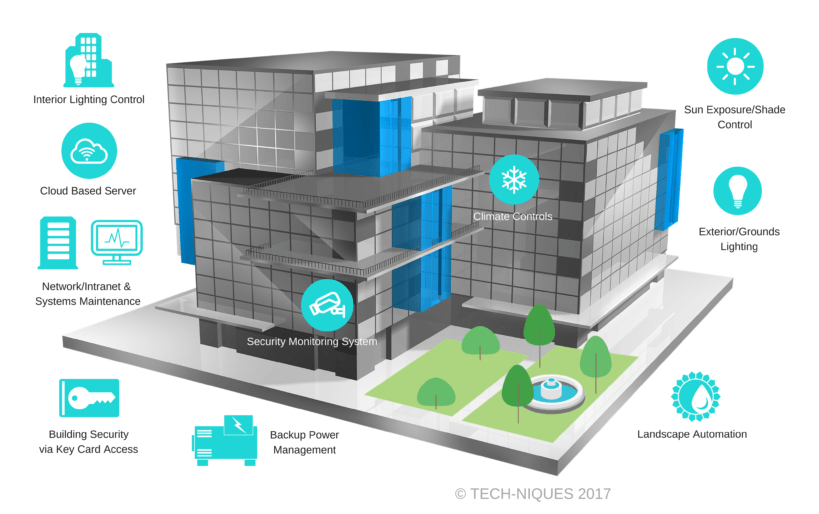
Most automation systems function correctly in isolation. Sensors report values, controllers respond, and equipment starts and stops on command. The problems emerge when those components interact across modes, schedules, and operating conditions that were never fully exercised during startup. Commissioning exists to expose those interactions before they become permanent operational problems within a broader Building Automation System.
The most persistent building automation problems rarely originate from faulty hardware. They stem from untested logic paths, conflicting sequences, or assumptions about how the building would be used. Commissioning is the only phase where those assumptions can be challenged safely.
A control sequence may appear sound until simultaneous demands occur. Morning warm-up overlaps with demand limiting. Occupancy schedules collide with manual overrides. Equipment transitions between modes faster than expected. These moments reveal whether the automation system was designed and implemented as a cohesive whole or as a collection of disconnected parts.
This is why commissioning outcomes are tightly linked to how a building automation system performs over time. Facilities that struggle with recurring overrides, unexplained alarms, or seasonal instability often trace those issues back to commissioning decisions that favored speed over depth. The same dynamics are explored in How BAS Systems Succeed or Fail, where incomplete verification leaves operators compensating for logic that was never fully validated.
Stay informed with our FREE Building Automation Newsletter — get the latest news, breakthrough technologies, and expert insights, delivered straight to your inbox.
Commissioning is frequently misunderstood as inspection. In reality, it is alignment. It aligns design intent with actual behavior, control logic with physical response, and automation expectations with human operation.
This alignment requires more than confirming point lists or watching the equipment cycle once. It involves observing how the system behaves as conditions change. Temperature swings, partial occupancy, abnormal loads, and manual interventions all test whether the automation logic holds together or fragments under pressure.
Experienced commissioning teams pay close attention to transitions. Start-up and shutdown sequences, mode changes, and failover conditions are where automation systems reveal their weaknesses. These are the moments that define whether a building runs smoothly or requires constant operator intervention, often long before formal Building Automation Failures are recognized.
When commissioning is rushed or reduced to documentation, the building inherits risk. Operators encounter systems that technically function but lack coherence. Setpoints appear correct but do not produce expected outcomes. Alarms trigger without a clear cause. Overrides become routine rather than exceptional.
Over time, this erodes confidence in the automation system itself. Operators stop trusting alarms. Temporary fixes become permanent. Energy performance drifts without a clear explanation. These are not operator failures. They are symptoms of systems that were never fully validated under realistic conditions.
Many of the patterns described in Building Automation Failures begin here. Weak commissioning does not always produce immediate breakdowns. Instead, it creates subtle instability that compounds over years of operation.
Automation systems do not operate in isolation from people. Occupants adjust thermostats. Operators intervene during unusual events. Maintenance activities temporarily alter system behavior. Commissioning that ignores these realities produces fragile systems that only function under ideal conditions.
Effective commissioning anticipates human interaction. It tests how overrides propagate through control logic. It examines what happens when schedules are bypassed or when sensors drift slightly out of calibration. These are not edge cases. They are everyday realities in occupied buildings.
This perspective connects commissioning directly to the Role of the Building Automation Operator. Operators inherit the consequences of commissioning decisions, good or bad. Clear documentation of observed behaviors, known limitations, and tested scenarios supports informed judgment long after the commissioning phase ends.
Commissioning does not guarantee flawless operation. Buildings evolve. Usage patterns change. Equipment ages. What commissioning provides is a reliable starting point, a known baseline of behavior against which future changes can be measured.
When commissioning is thoughtful, operators can distinguish between normal variation and true anomalies. When it is superficial, every deviation feels like a mystery. This distinction matters deeply for long-term energy performance, comfort stability, and system trust.
The connection between commissioning quality and performance drift is evident in Why Building Automation Systems Underperform. Systems rarely fail outright. They slowly deviate from intent, and without a solid commissioning baseline, that drift goes unnoticed until it becomes costly.
Commissioning should not be viewed as an endpoint. It is a bridge between design and operation. The insights gained during commissioning inform tuning, optimization, and future modifications. They also shape how confidently operators engage with the system rather than working around it.
In well-commissioned buildings, automation supports decision-making. In poorly commissioned ones, it becomes something to manage cautiously. That difference is not technical. It is a result of whether commissioning treated the system as a living control environment or as a checklist to be completed.
Download our FREE Electrical Training Catalog and explore a full range of expert-led electrical training courses.

Commissioning, when taken seriously, is one of the few opportunities to observe an automation system honestly, before habits, workarounds, and assumptions set in. That is its real value.
Advantages To Instructor-Led Training – Instructor-Led Course, Customized Training, Multiple Locations, Economical, CEU Credits, Course Discounts.
Request For QuotationWhether you would prefer Live Online or In-Person instruction, our electrical training courses can be tailored to meet your company's specific requirements and delivered to your employees in one location or at various locations.