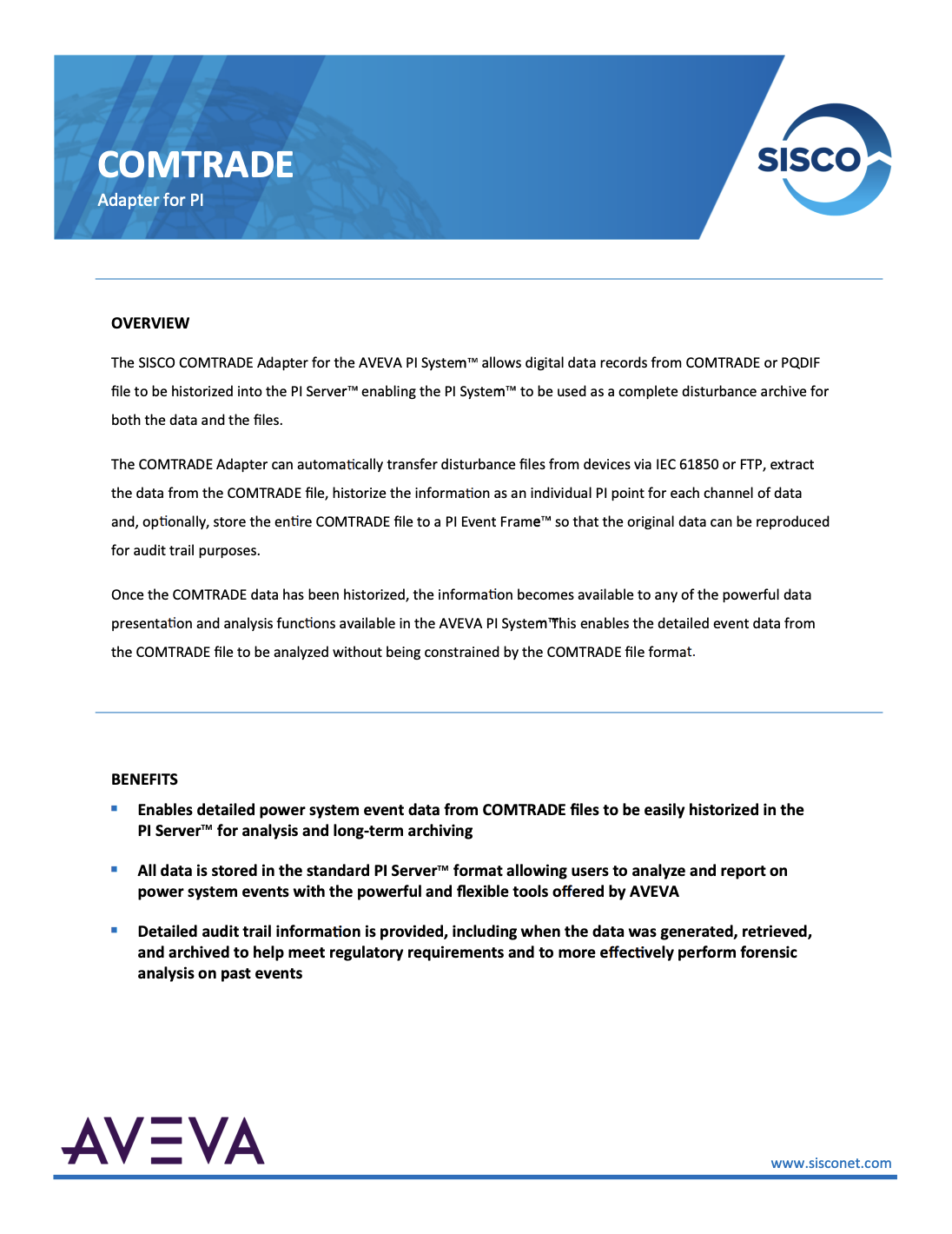
How to Test a Circuit Breaker Safely
By William Conklin, Associate Editor
By William Conklin, Associate Editor
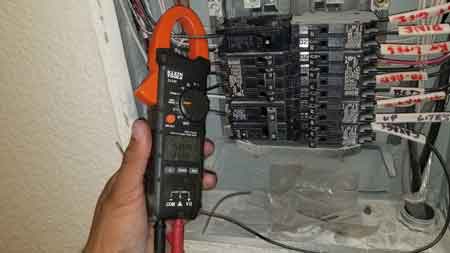
Our customized live online or in‑person group training can be delivered to your staff at your location.
Request for Quotation Service
Buyers Submit Free RFQs to top suppliers, no obligation.
Suppliers Browse real project RFQs directly from buyers.
Trust Electricity Forum 40 years connection buyers and suppliers.
Testing a circuit breaker is about judging reliability under fault conditions, not just checking continuity or voltage. A breaker can pass basic tests yet fail during overloads or short circuits, creating hidden electrical risk.
Most breaker testing occurs after a trip or during scheduled maintenance, when the system appears stable. What is often missed is that many failure modes do not produce obvious warning signs. They develop gradually, hidden behind test results that appear acceptable but reveal little about how the breaker will perform under heat, load changes, or short-circuit conditions.
The real challenge of how to test a circuit breaker is recognizing the gap between the apparent condition and the actual protective performance and knowing when test results provide insight rather than false reassurance. That gap is where judgment, not procedure, determines safety.
Basic testing can establish limited facts. It can show that a breaker closes, that voltage is present, or that a mechanical handle is not seized. What it cannot demonstrate is how the breaker will respond when fault current rises rapidly or when interruption timing becomes critical.
This limitation becomes especially important once fault levels increase due to system expansion or upstream changes. In those cases, the breaker’s apparent health must be evaluated against the realities of available fault current, not just whether continuity exists at rest.
A breaker that “tests fine” in isolation may already be operating beyond its original protective margin.
Breaker testing almost always takes place inside an electrical panel, but the implications extend far beyond the panel itself. A breaker that appears functional during inspection may still respond unpredictably when a short circuit occurs, especially as conditions within the broader electrical system change over time.
Download our FREE Electrical Training Catalog and explore a full range of expert-led electrical training courses.

Loads increase, fault energy rises, and coordination margins narrow, all of which can expose weaknesses that basic testing never reveals. This is why test results must be interpreted in the system context rather than treated as isolated confirmation of device health.
Voltage presence and continuity checks are popular because they are simple and fast. They are also frequently misunderstood. A closed contact does not guarantee adequate pressure, nor does downstream voltage confirm that the interruption capability remains intact.
These checks are particularly misleading in older panels where repeated stress has degraded internal components without leaving visible evidence. In those situations, surface readings mask deeper electrical fault behavior, which is why experienced reviewers interpret test results alongside scenarios described in what is an electrical fault, rather than assuming normal readings equal safety.
The danger is not that these tests are useless, but that they are incomplete.
Sometimes breaker testing reveals that the device itself is not the real problem. Recurrent tripping, erratic behavior, or overheating may indicate coordination issues or system conditions that the breaker was never designed to manage.
This is common in panels where multiple protective elements interact poorly or where protective assumptions no longer align with reality. Understanding this interaction requires stepping back into fault-level reasoning, the same reasoning explored in short circuit analysis, rather than focusing narrowly on the breaker.
Testing should trigger investigation, not closure.
A breaker can open and close smoothly while still failing to limit damage during an actual fault. Functional movement and protective interruption are not the same thing, and confusing them is one of the most persistent errors in breaker evaluation.
True protection depends on how quickly and decisively the current is interrupted under stress, and whether energy is limited before it propagates downstream. This distinction becomes clearer when comparing breaker behavior to devices designed specifically to constrain fault energy, such as those used in current limiting fuse applications.
Testing that ignores interruption dynamics risks approving the wrong outcome.
There are conditions where testing should stop and replacement should begin. Breakers exposed to major faults, prolonged overheating, or repeated mechanical stress often reach a point where additional testing adds confidence without reducing risk.
This decision is rarely about the breaker alone. It is about how the breaker fits into a broader protection strategy, especially in panels where diagnostic clues appear during voltage verification, such as those explored in fuse box circuit breaker voltage reader scenarios.
Knowing when testing has reached its limit is itself a professional skill.
The most reliable outcomes come when breaker testing is treated as part of a diagnostic conversation rather than a checklist. Each result should raise questions about system behavior, coordination, and fault exposure rather than simply closing the file.
This mindset aligns with how protection professionals approach breaker performance in larger systems, where responsibility extends beyond the device to the consequences of failure. In that context, testing is less about certainty and more about deciding whether the system still deserves confidence, especially when fault behavior resembles cases described in prospective fault current meaning.
The real question of how to test a circuit breaker is not whether the breaker passes a test, but whether the test result is enough to rely on.
Think you know Electrical Protection? Take our quick, interactive quiz and test your knowledge in minutes.
Repeated breaker issues often reveal limits in assumptions rather than obvious equipment failure. Distinguishing between load behavior, wiring degradation, protection sensitivity, and coordination breakdowns requires more than resetting devices or swapping components. In real installations, especially when fault levels are rising or protective margins are thin, the correct response depends on understanding how breakers, relays, and upstream sources interact when conditions become abnormal.
That level of judgment is rarely gained through trial and error. It develops through structured exposure to protective behavior under fault and nuisance conditions. Training such as Basic Protective Relay Training helps clarify how breakers and relays respond to overloads, short circuits, and coordination challenges, while advanced programs like Substation Relay Protection Training deepen the analytical skills needed to determine when breaker testing points to a device issue versus a system-level risk that demands corrective action.
Advantages To Instructor-Led Training – Instructor-Led Course, Customized Training, Multiple Locations, Economical, CEU Credits, Course Discounts.
Request For QuotationWhether you would prefer Live Online or In-Person instruction, our electrical training courses can be tailored to meet your company's specific requirements and delivered to your employees in one location or at various locations.