Medium Voltage Circuit Breaker Selection
By William Conklin, Associate Editor
By William Conklin, Associate Editor
Our customized live online or in‑person group training can be delivered to your staff at your location.
Request for Quotation Service
Buyers Submit Free RFQs to top suppliers, no obligation.
Suppliers Browse real project RFQs directly from buyers.
Trust Electricity Forum 40 years connection buyers and suppliers.
A medium voltage circuit breaker controls how faults are interrupted in 1–38 kV systems, where arc behavior, interruption medium, and coordination shape reliability, maintenance burden, and long-term protection strategy, not just short-circuit ratings.
Once a system moves into medium-voltage territory, the breaker ceases to be a background component and becomes an active determinant of system behavior. Fault energy rises sharply, recovery voltage matters, and coordination margins tighten. At this level, the question is not whether a breaker can interrupt a fault once, but how predictably it will do so across years of switching, maintenance cycles, and abnormal conditions.
Engineers who treat medium voltage breakers as interchangeable hardware often discover the consequences indirectly. Coordination becomes fragile. Maintenance intervals shrink. Relay settings grow more conservative to compensate. These outcomes are rarely traced back to the original breaker selection, but they almost always originate there.
Medium voltage is often described numerically, but the number alone is misleading. In protection terms, medium voltage marks the point where fault interruption begins to influence upstream and downstream behavior in measurable ways. Clearing time affects transformer stress, arc duration affects insulation aging, and breaker repeatability affects relay confidence.
This is why medium voltage circuit breaker decisions belong within a broader power system protection framework rather than being treated as isolated equipment choices. The breaker is part of a protection chain, not the end of it.
What distinguishes a medium voltage circuit breaker from other types is not the enclosure or operating mechanism, but the method of arc extinction. The interruption medium governs arc energy, dielectric recovery, and contact wear, which in turn influence switching endurance and coordination stability.
Stay informed with our FREE Electrical Protection Newsletter — get the latest news, breakthrough technologies, and expert insights, delivered straight to your inbox.
Vacuum, SF?, and air interruption all solve the same problem in different ways, and each solution imposes its own constraints on the system around it.
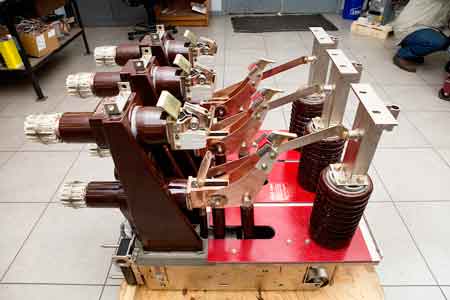
Vacuum interruption has become the dominant choice for many contemporary medium voltage systems, particularly where frequent switching and compact switchgear layouts are required. Rapid arc extinction and fast dielectric recovery allow vacuum breakers to clear faults cleanly without the cumulative degradation seen in older designs.
This behavior matters most when breakers must coordinate tightly with protective relays. Fast, repeatable interruption supports consistent relay operation, especially in systems where available fault current varies with network configuration. These device-level characteristics are examined in greater detail on the dedicated vacuum circuit breaker page, which focuses on interrupter behavior rather than selection logic.
SF6 circuit breakers remain common in legacy installations and high-duty applications, but the decision landscape around them has shifted. While SF6 offers excellent arc control, environmental policy, gas handling requirements, and long-term regulatory exposure now determine whether it remains a viable choice for new installations.
In practice, selecting SF6 today often means accepting future constraints unrelated to electrical performance. That trade-off rarely appears in simplified comparisons, yet it strongly affects medium-voltage system planning.
Air circuit breakers play a narrower role in medium-voltage systems, typically where visibility, simplicity, or specific coordination behavior outweigh footprint and maintenance concerns. Air interruption generally involves greater mechanical complexity and more frequent inspection, which limits its appeal as a default solution.
Where air breakers are used successfully, it is usually because the system design explicitly accommodates their characteristics rather than working around them.
Medium voltage breakers interact directly with fault levels and coordination margins. A breaker that clears inconsistently or slowly forces protective relays to compensate, often by widening time delays or reducing sensitivity. Over time, that compensation can undermine protection selectivity.
Understanding available fault current is therefore inseparable from breaker selection. In systems where fault levels approach equipment limits, interruption behavior becomes a primary design constraint rather than a secondary consideration.
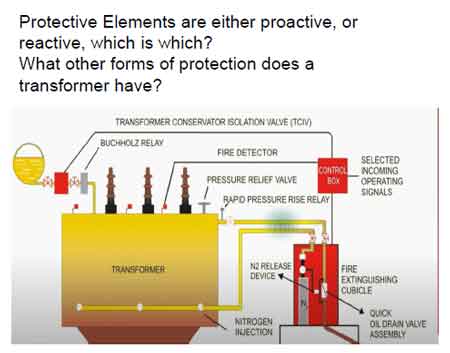
That interaction extends to transformer protection, where breaker-clearing characteristics influence mechanical and thermal stresses during faults. This relationship is central to effective transformer protection, particularly in substations serving variable or expanding loads.
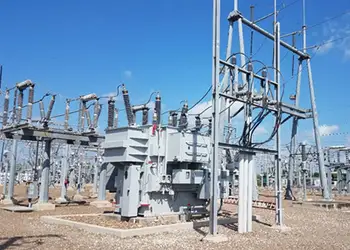
In substations, medium voltage circuit breakers must integrate with current transformers, protective relays, and bus arrangements in a way that remains stable under changing operating conditions. The breaker’s role within the overall layout affects not only fault clearing but also system recovery and operator response.
This system-level perspective is addressed in the circuit breaker in substation overview, which places breaker selection inside real substation operating contexts rather than treating it as a catalog exercise.
When coordination breaks down, early warning signs often appear elsewhere, sometimes only through upstream indicators such as a fault indicator. These signals remind designers that breaker behavior propagates through the system in ways that are not always obvious at commissioning.
Many top pages aim to summarize medium voltage circuit breakers using tables and ratings. While useful, those summaries cannot capture how interruption media shape long-term system behavior. The real cost of a medium voltage breaker is not measured at installation, but in how the system ages around it.

Selecting a medium voltage circuit breaker ultimately involves a judgment about risk, maintenance philosophy, and coordination tolerance. Engineers who frame the decision this way tend to build systems that remain predictable long after the initial fault has been cleared.
Medium voltage circuit breaker selection rarely ends in uncertainty; it usually reveals it. A breaker may interrupt a fault cleanly, yet still leave unanswered questions about coordination margins, transformer stress, recovery voltage behavior, or whether clearing times remain stable as system conditions evolve. In real substations, especially those with changing fault levels, load growth, or mixed interruption technologies, the risk lies in treating breaker performance as confirmation rather than as evidence that must be interpreted in context.
That interpretive ability does not come solely from familiarity with breaker hardware. It develops through understanding how interruption behavior interacts with relays, fault current levels, and system architecture over time. Training such as Basic Protective Relay Training helps clarify how protection elements respond to interruption speed, arc extinction, and fault magnitude, while advanced programs like Substation Relay Protection Training build the analytical depth needed to separate breaker behavior from broader coordination or system exposure.
For professionals responsible for long-term reliability, focused experience in circuit breaker maintenance adds another critical layer of judgment. Maintenance work reveals how contact wear, operating mechanisms, and insulation condition subtly alter interruption performance long before failure. That perspective reinforces why medium voltage circuit breaker decisions cannot be evaluated only at commissioning; they must be revisited as part of an ongoing substation protection strategy rather than treated as isolated equipment choices.
Advantages To Instructor-Led Training – Instructor-Led Course, Customized Training, Multiple Locations, Economical, CEU Credits, Course Discounts.
Request For QuotationWhether you would prefer Live Online or In-Person instruction, our electrical training courses can be tailored to meet your company's specific requirements and delivered to your employees in one location or at various locations.