Designing the AI-Augmented Utility Workforce: Agentic AI in T&D Operations
By Michael Vasicek, Consult Partner, Kyndryl
By Michael Vasicek, Consult Partner, Kyndryl
AI-augmented utility workforce models use agentic AI copilots to support grid operations, outage response, asset monitoring, and workforce productivity. Engineers supervise digital agents that analyze system data, coordinate workflows, and accelerate decision-making in transmission and distribution.
Utility workforce constraints are no longer just a hiring problem—they are becoming an operational risk. As grid complexity accelerates, agentic AI introduces a new workforce layer: autonomous digital agents that monitor grid conditions, orchestrate workflows, and assist engineers in making faster, higher-confidence decisions. The consequence is a fundamental redesign of how transmission and distribution organizations operate, shifting responsibility from manual execution to AI-guided supervision and orchestration.
Utilities have always depended on layered expertise. Protection engineers interpret relay events. Dispatchers coordinate crews. Asset managers evaluate equipment condition. These roles exist because grid operation requires continuous interpretation of fragmented system signals.
GenAI copilots now assist engineers by continuously interpreting electrical system conditions using waveform intelligence, asset telemetry, and protection system data. These copilots derive insight from systems such as AI fault detection, which continuously evaluate waveform behavior to identify developing electrical instability before protection devices operate.
Instead of waiting for engineers to manually review oscillography, alarms, or system events, copilots present interpreted engineering conclusions. Engineers remain in control of all decisions, but the analytical workload shifts from manual investigation to supervised validation.
The operating model evolves from human-initiated analysis to AI-prepared engineering interpretation under human authority.
The traditional organizational chart is expanding to include non-human participants. Engineers, planners, operators, and compliance managers now supervise both human teams and AI agents assigned to specific operational functions.
Stay informed with our FREE GenAI Copilots, Knowledge & Workforce Newsletter — get the latest news, breakthrough technologies, and expert insights, delivered straight to your inbox.
GenAI copilots continuously interpret this system-wide data using inputs from technologies such as electrical fault detection, which identifies abnormal circuit behavior and develops fault conditions across distribution feeders. These copilots correlate waveform behavior, protection system activity, and asset condition indicators to identify reliability risks.
These agents perform persistent, specialized tasks that previously depended on manual oversight:
Monitoring asset condition trends to predict failures before alarms trigger
Coordinating outage restoration workflows and crew assignments
Evaluating supplier performance, procurement compliance, and contract risk
Managing identity lifecycle, access permissions, and security enforcement
Supporting customer operations and outage communications
Each agent operates continuously, augmenting the human workforce without requiring shifts, rest, or manual supervision cycles.
The result is not workforce replacement. It is workforce multiplication.
Experienced engineers no longer spend time gathering fragmented data. They review synthesized conclusions and exercise judgment at the decision layer.
Outage management exposes the clearest operational consequences of agentic AI. Traditional outage restoration relies on a series of human-dependent steps: identifying the outage location, prioritizing response, dispatching crews, coordinating switching plans, and communicating restoration estimates.
Each step introduces a delay because humans must first recognize the need for action.
Agentic AI changes the sequence. Digital orchestrator agents continuously evaluate outage signals, historical reliability data, and crew availability. They prioritize restoration strategies, prepare switching recommendations, and present structured response plans to operators.
Human operators remain firmly in control, but their role continues to evolve. Instead of discovering problems and building response plans from scratch, they validate and authorize AI-prepared actions.
Restoration becomes faster not because humans work harder, but because they start further along the decision chain.
This shift directly affects key reliability metrics such as CAIDI and SAIDI, where response speed determines customer impact and regulatory performance. Over time, this becomes a measurable contributor to improved Power System Reliability at the feeder, substation, and network level.
One of the most difficult challenges utilities face is knowledge continuity. Experienced engineers carry decades of operational understanding that cannot be easily replaced. When they retire, that judgment disappears.
Agentic AI changes how operational knowledge is preserved and applied.
Digital agents learn from historical grid events, maintenance records, operational responses, and engineering decisions. They continuously refine their recommendations based on outcomes, patterns, and system behavior.
The institutional knowledge that once existed only in human memory becomes embedded in the operational system itself.
This does not eliminate the need for experienced engineers. It makes their expertise more scalable.
In practice, that knowledge layer is strengthened by early-warning intelligence from systems such as Incipient Fault Detection, which flag and contextualize subtle precursor disturbances before they become operational emergencies.
Their expertise governs the system rather than reacting to it.
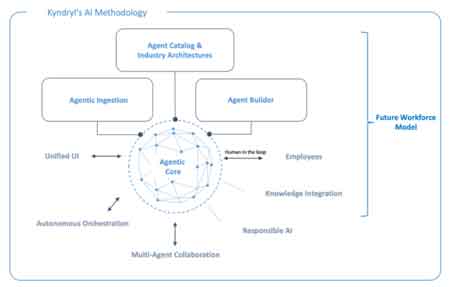
Despite its autonomy, agentic AI does not operate independently of human authority. Critical infrastructure cannot rely on uncontrolled automation. Every AI-generated recommendation must exist within defined operational boundaries and approval workflows.
Confidence scoring, policy constraints, and human-in-the-loop validation ensure that responsibility remains where it belongs.
AI expands human capability. It does not replace human accountability.
This distinction is essential. Utilities are not automating responsibility. They are automating preparation.
The final decision always remains human.
Utilities are entering a period where the most valuable operational skill is no longer manual system navigation or data gathering.
Think you know GenAI Copilots, Knowledge & Workforce? Take our quick, interactive quiz and test your knowledge in minutes.
It is orchestration.
Engineers must learn to supervise AI agents, interpret AI-generated recommendations, and govern automated workflows. Operational leadership will increasingly focus on defining policy, validating system behavior, and managing AI-assisted decision frameworks.
This represents a natural evolution of the workforce.
Previous technology waves introduced SCADA operators, protection engineers, and automation specialists. Agentic AI introduces a new role category: AI-augmented grid operators.
These professionals do not compete with AI. They direct it.
As the orchestration layer matures, utilities also need disciplined interpretation when events cross from anomaly into confirmed fault behavior, which is where structured Fault Analysis in Power System becomes operationally decisive.
Every major technology shift reshapes the workforce rather than eliminating it. The transmission and distribution sector is no exception.
Agentic AI does not remove the need for human expertise. It increases its leverage.
Utilities gain the ability to monitor more assets, respond to outages faster, manage risk more effectively, and preserve institutional knowledge across generations.
The workforce becomes more capable, more scalable, and more resilient.
The grid remains human-governed.
But humans are no longer working alone.
Advantages To Instructor-Led Training – Instructor-Led Course, Customized Training, Multiple Locations, Economical, CEU Credits, Course Discounts.
Request For QuotationWhether you would prefer Live Online or In-Person instruction, our electrical training courses can be tailored to meet your company's specific requirements and delivered to your employees in one location or at various locations.