Electrical Fault Detection Using AI and Waveform Intelligence
By Nico Payne, PE - San Diego Gas & Electric Company
By Nico Payne, PE - San Diego Gas & Electric Company

Electrical fault detection uses AI waveform analysis and system-wide monitoring to identify, classify, and locate electrical faults in distribution systems, enabling utilities to respond faster, prevent equipment damage, and improve grid reliability before outages occur.
Electrical fault detection determines when and where the electrical system is no longer behaving normally. This moment has always defined reliability. Once a fault develops, physical degradation is already underway. The conductor, cable, or equipment has entered a failure state, even if service continues temporarily. Modern AI fault detection systems extend this awareness by identifying electrical instability at its earliest stages, allowing utilities to recognize fault conditions before protection devices operate.
Historically, utilities recognized faults only after protection systems operated. The relay trip confirmed that a fault had occurred, but it did not provide advance warning. Today, electrical fault detection begins much earlier. By continuously evaluating waveform behavior, modern detection systems identify fault conditions while circuits remain energized and stable.
This earlier detection changes how reliability is managed. Fault awareness no longer begins with interruption. It begins with electrical evidence.
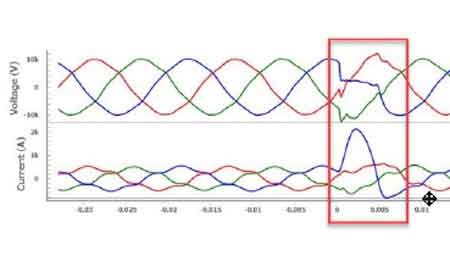
Every energized circuit produces voltage and current waveforms shaped by system conditions. When insulation weakens or mechanical integrity deteriorates, waveform structure begins to change. These early waveform disturbances often represent precursor conditions identified through advanced incipient fault detection, enabling engineers to recognize insulation degradation before sustained fault current develops.
Electrical fault detection systems continuously observe waveform stability. They identify transient irregularities, asymmetry, and abnormal electrical patterns that indicate developing faults. This allows detection to occur before sustained fault current develops.
Stay informed with our FREE GenAI Copilots, Knowledge & Workforce Newsletter — get the latest news, breakthrough technologies, and expert insights, delivered straight to your inbox.
Protection systems remain essential for isolating faults. Detection systems serve a different purpose. They identify electrical instability while corrective action is still possible.
Traditional detection depended on discrete events. Faults were recognized only when system conditions crossed defined thresholds. This approach limited awareness to the moment of failure.
Electrical fault detection now operates continuously. AI enables electrical fault detection systems to evaluate circuit conditions in real time, identifying abnormal electrical behavior across feeders, cables, and equipment. Once abnormal conditions are detected, engineers rely on structured fault analysis in power system processes to determine fault cause, equipment involvement, and required engineering response.
The ability to detect faults during early development provides utilities with critical response time. Engineers can investigate abnormal conditions before they escalate into outages.
Distribution systems produce enormous volumes of waveform data. Manual analysis cannot scale to system-wide operation. AI classification enables continuous electrical fault detection across thousands of circuit segments.
Machine learning enables electrical fault detection systems to operate continuously across the network, interpreting system behavior and identifying fault conditions without requiring manual waveform interpretation. This capability forms part of the broader transformation toward an AI-augmented utility workforce, where engineering teams rely on continuously interpreted electrical intelligence to guide operational decisions.
AI allows electrical fault detection systems to operate with both sensitivity and accuracy. Fault conditions can be identified early without generating excessive false alarms.
This transforms detection from an isolated diagnostic task into an ongoing reliability function.
Identifying abnormal electrical fault detection behavior is only the first step. Utilities must also determine where the fault is occurring. Modern electrical fault detection integrates waveform intelligence with circuit topology to resolve fault location.
By comparing waveform behavior across multiple system points, detection systems identify affected circuit sections. Engineers can focus their investigation on specific equipment rather than searching the entire feeders.
This reduces response time and improves repair efficiency. Fault location transforms detection insight into operational action.
Electrical Fault Detection systems produce continuous reliability intelligence. GenAI copilots assist engineers by interpreting this information and presenting a clear engineering context.
Instead of reviewing raw waveform data, engineers receive interpreted detection results. These results identify fault conditions, indicate likely failure mechanisms, and guide investigation priorities. This interpreted detection intelligence plays a critical role in maintaining long-term power system reliability, allowing utilities to intervene before fault conditions escalate into equipment damage or service interruption.
This allows engineering teams to respond faster and more effectively. Detection insight becomes directly actionable.
Electrical fault detection using AI waveform intelligence represents a fundamental change in grid operation. Faults are no longer discovered only after protection operates. They are detected as electrical instability develops.
This earlier awareness allows utilities to intervene before failures escalate. Equipment damage can be prevented. Outages can be reduced. Reliability becomes proactive rather than reactive.
As electrical systems grow more complex, electrical fault detection will become an essential engineering function. It provides the visibility required to maintain system stability and protect infrastructure in modern distribution networks.
Think you know GenAI Copilots, Knowledge & Workforce? Take our quick, interactive quiz and test your knowledge in minutes.
Explore 50+ live, expert-led electrical training courses –