Power System Reliability and Fault Intelligence
By Nico Payne, PE - San Diego Gas & Electric Company
By Nico Payne, PE - San Diego Gas & Electric Company
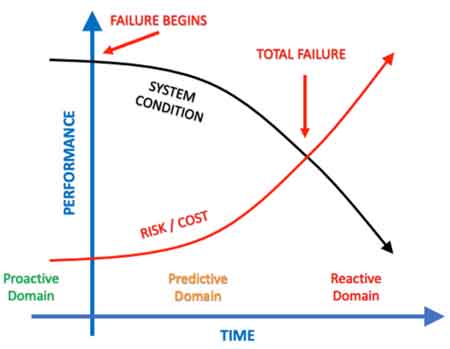

Power system reliability depends on detecting, analyzing, and predicting electrical faults using AI waveform intelligence, enabling utilities to prevent outages, protect infrastructure, improve protection coordination, and maintain continuous electrical service across distribution networks.
Power system reliability is determined by how early utilities can detect and interpret electrical faults before equipment damage or service interruption occurs. AI waveform intelligence enables engineers to anticipate failures, protect infrastructure, and maintain continuous system operation.
Historically, reliability was measured by response. Protection systems isolate faults after failure occurs, restoring service and preventing further damage. While this approach protected infrastructure, it did not prevent failure itself. Modern reliability strategies now focus on anticipating fault conditions and acting before protective intervention becomes necessary.
This shift transforms reliability from reactive recovery to predictive system management.
Electrical infrastructure operates continuously under changing load conditions, environmental stress, and equipment aging. These factors influence waveform stability and system integrity. When insulation weakens, connections loosen, or components deteriorate, electrical behavior begins to change.
Power system reliability improves when utilities can observe these changes as they occur. Continuous waveform analysis allows engineers to detect instability, identify abnormal electrical patterns, and assess system condition before failure develops. These early waveform disturbances are first recognized through advanced incipient fault detection systems, allowing engineers to identify insulation degradation before sustained fault current develops.
This visibility allows reliability management to begin at the earliest stages of equipment degradation. Instead of relying solely on the protection system response, engineers gain advanced awareness of developing reliability risks.
Early awareness is the foundation of modern reliability engineering.
Think you know GenAI Copilots, Knowledge & Workforce? Take our quick, interactive quiz and test your knowledge in minutes.
Power system reliability reflects the ability of the electrical system to withstand disturbances while maintaining a continuous power supply to customers. This capability depends on the design and operation of the generation, transmission, and distribution infrastructure working together as a coordinated system.
Reliability engineering evaluates whether sufficient energy resources, generation capacity, and transmission system capability exist to support demand under both normal and contingency conditions. Resource adequacy ensures that enough generation and power supply capacity are available over the long term, while transmission system reliability ensures that electrical energy can be delivered safely and continuously.
Transmission lines, substations, and protection systems must operate reliably to maintain system stability. Failures within the transmission system can disrupt power delivery even when sufficient generation is available.
Reliability standards defined by organizations such as the North American Electric Reliability Corporation establish engineering and operational requirements designed to protect system stability. These standards address generation performance, transmission line capability, protection coordination, and system contingency response.
Modern reliability engineering builds upon these foundations by incorporating continuous waveform intelligence through advanced electrical fault detection systems that identify electrical instability across transmission and distribution infrastructure before failure occurs.
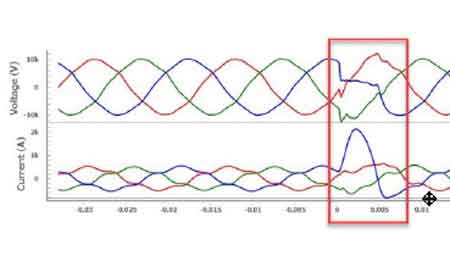
Electrical faults do not occur randomly. They develop through identifiable physical processes such as insulation breakdown, thermal stress, contamination, or mechanical failure. Each of these mechanisms produces distinct electrical signatures that can be detected and analyzed.
AI waveform intelligence enables continuous interpretation of these signatures. Advanced AI fault detection systems continuously evaluate waveform behavior and identify electrical instability across energized circuits, allowing engineers to detect failure conditions before protection devices operate.
This capability strengthens power system reliability by allowing engineers to address failure conditions before they progress. Equipment can be repaired, replaced, or isolated based on clear engineering evidence.
This prevents faults from escalating into outages and protects critical infrastructure.
Power system reliability is not determined solely by individual components. It depends on how faults interact with system topology, protection coordination, and operational conditions.
Modern reliability systems integrate waveform intelligence across feeders, substations, and distribution networks. Engineers rely on structured fault analysis in power system processes to determine fault causes, assess infrastructure impact, and guide engineering response.
This system-wide perspective enables engineers to identify vulnerable equipment, assess fault-propagation risk, and prioritize corrective actions. Reliability decisions become informed by actual system conditions rather than assumptions.
This integrated approach strengthens infrastructure protection and reduces the likelihood of unexpected failures.
Power system reliability improves when engineering teams can act on fault intelligence before failure occurs. Early intervention allows utilities to repair degrading equipment, adjust protection coordination, and prevent fault escalation. This transforms reliability from passive observation into active infrastructure protection.
As fault intelligence becomes more detailed and continuous, engineering teams must interpret large volumes of system data. GenAI copilots assist by translating fault intelligence into actionable engineering insight.
These systems interpret waveform behavior, identify fault mechanisms, and explain operational implications. This capability forms a critical part of the evolving AI-augmented utility workforce, where engineers rely on continuously interpreted electrical intelligence to guide infrastructure protection and reliability decisions.
This accelerates engineering decision-making and ensures that reliability risks are addressed quickly and accurately.
Download our FREE Electrical Training Catalog and explore a full range of expert-led electrical training courses.

GenAI copilots do not replace engineering expertise. They enhance it by providing continuous interpretation and decision support.
This strengthens power system reliability by ensuring that critical fault intelligence leads to timely engineering intervention.
Power system reliability improves when utilities can act before failure occurs. Predictive reliability systems use AI waveform intelligence and engineering analysis to identify developing faults and guide preventive action.
This approach reduces equipment damage, prevents service interruption, and improves overall system stability. Reliability becomes an active engineering function rather than a passive performance outcome.
As electrical infrastructure grows more complex, predictive reliability will become essential. Utilities must maintain continuous awareness of system condition and respond to developing fault conditions before failure occurs.
AI fault intelligence and GenAI copilots provide the tools required to achieve this capability.
Maintaining power system reliability requires both adequate infrastructure and continuous system awareness. Generation transmission coordination, transmission line integrity, and resource adequacy remain essential foundations. AI waveform intelligence strengthens these reliability principles by enabling earlier fault detection, faster engineering response, and improved operational decision-making. This allows utilities to maintain stable, reliable electrical service while reducing failure risk and protecting critical infrastructure.
Advantages To Instructor-Led Training – Instructor-Led Course, Customized Training, Multiple Locations, Economical, CEU Credits, Course Discounts.
Request For QuotationWhether you would prefer Live Online or In-Person instruction, our electrical training courses can be tailored to meet your company's specific requirements and delivered to your employees in one location or at various locations.