Agentic Operations for Electric Utilities in Deterministic Infrastructure Control
By Joksan Flores, Principal Solutions Engineer, Itential
By Joksan Flores, Principal Solutions Engineer, Itential
Agentic Operations for Electric Utilities define how deterministic orchestration, RBAC enforcement, and audit validated workflows allow AI agents to trigger remediation without surrendering OT control authority or creating cascading grid instability.
Control authority in utility OT environments cannot be delegated casually. As AI systems begin to reason across telemetry, configuration states, and change records, the central engineering decision emerges: at what point can reasoning systems be permitted to execute infrastructure actions without destabilizing regulated networks?
In large utility environments, infrastructure spans more than 100,000 assets, hundreds of substations, telecom networks, and integrated observability platforms. Automation alone cannot manage this scale. Yet unbounded agent autonomy would introduce unacceptable operational risk.
Agentic Operations for Electric Utilities is not a product feature. It is a governance maturity threshold. It defines the controlled transition from task automation to orchestrated execution to bounded reasoning inside regulated OT systems.
Task automation executes predefined instructions. Process orchestration sequences those tasks across systems with state awareness and logging. Agentic operations introduce reasoning that selects tools dynamically based on goals, telemetry, and contextual knowledge. The transition is safe only if orchestration precedes reasoning.
Deterministic workflow design, lifecycle control, and role based access enforcement create the substrate on which reasoning can act. This substrate is defined in Utility Network Automation Architecture, where change sequencing, rollback capability, and ticket integration are mandatory control layers rather than optional features.
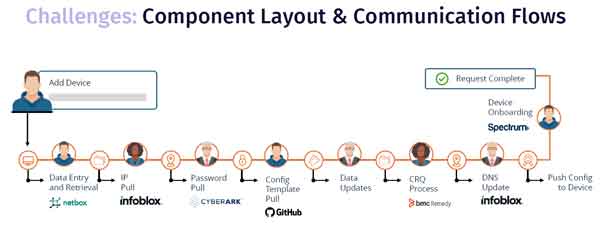
In practice, manual onboarding processes that once required 17 discrete human steps have been reduced to 6 orchestrated stages with integrated approval gates. Change ticket latency in similar deployments has been reduced by more than 40 percent while preserving audit traceability. That quantified authority signal demonstrates that efficiency gains must be anchored to governance discipline.
Stay informed with our FREE Grid Data Foundations & AI Infrastructure Newsletter — get the latest news, breakthrough technologies, and expert insights, delivered straight to your inbox.
Consider an AI agent that interprets degraded packet flow during peak DER export as a security anomaly. If the agent modifies ACL rules across multiple substations without validated topology awareness, telemetry streams feeding voltage regulation systems can become partially obstructed. Misinterpreted voltage conditions may then trigger switching sequences that amplify feeder instability. The cascading operational consequences begin with a single reasoning error but propagate through tightly coupled control systems.
This risk intersects directly with DER Cybersecurity and SCADA Cybersecurity, where distributed endpoints and supervisory systems must remain synchronized during automated remediation.
An automated remediation executed at the wrong confidence threshold can degrade the grid state faster than a delayed human response.
Agentic systems promise rapid remediation. Regulated utilities require defensible audit trails. The deployment tradeoff is explicit: faster agent execution reduces mean time to repair but compresses the window for human validation and rollback oversight.
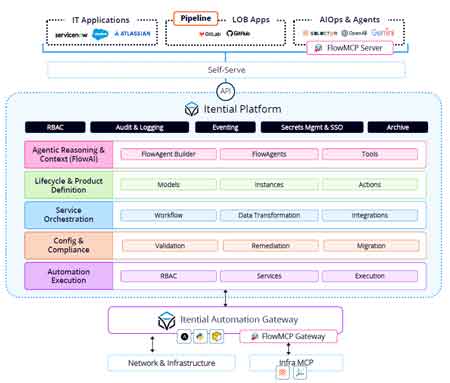
Slides in the referenced presentation show orchestration platforms integrating RBAC, audit logging, and change approval workflows before agent reasoning is permitted to commit configuration changes.
Without such integration, remediation cannot meet compliance obligations defined within Cybersecurity for Utilities.
Choosing aggressive autonomy without synchronized change management increases regulatory exposure. Over constraining agent execution negates the operational value of reasoning systems. The balance point is architectural, not philosophical.
Agent reasoning must operate inside deterministic boundaries. Agents cannot create new execution paths beyond approved workflow templates. They may select from predefined tools, but they may not invent remediation logic without governance review.
Threshold calibration becomes a control discipline. If anomaly detection confidence is set too low, false positives result in unnecessary workflow execution. If set too high, legitimate incidents are delayed. Integration with Enterprise AI Governance for Utilities ensures that model drift monitoring, approval registries, and lifecycle validation precede the granting of execution authority.
The operational edge case arises during overlapping maintenance windows. An agent evaluating telemetry against outdated configuration repositories may trigger remediation against a device already scheduled for change, creating state conflict. Orchestration layers must reconcile maintenance schedules before agent commitment.
Agentic capability without orchestration is instability. Deterministic orchestration without reasoning is limited scalability. The gateway problem is not whether agents are intelligent, but whether infrastructure control planes are mature enough to constrain them.
Integration across WAN domains, substation networks, and cloud resources demands unified orchestration described in Utility WAN Architecture. Broader convergence with telemetry pipelines and configuration validation workflows is explored in Integrated AI Driven Solutions. These architectural layers form the control perimeter within which agentic systems can operate safely.
The progression toward Autonomous Utility Networks does not eliminate human authority. It relocates human authority from manual execution to governance design.
Agentic Operations for Electric Utilities, therefore, function as a gateway capability within Grid Data Foundations and AI Infrastructure. They mark the threshold where reasoning systems may trigger execution only because deterministic orchestration, lifecycle governance, and compliance validation have already constrained the risk envelope. The unresolved engineering question remains: how much autonomy can be granted without eroding the accountability that defines regulated grid control.

Advantages To Instructor-Led Training – Instructor-Led Course, Customized Training, Multiple Locations, Economical, CEU Credits, Course Discounts.
Request For QuotationWhether you would prefer Live Online or In-Person instruction, our electrical training courses can be tailored to meet your company's specific requirements and delivered to your employees in one location or at various locations.