Electrical Commissioning In Industrial Power Systems
Our customized live online or in‑person group training can be delivered to your staff at your location.
- Live Online
- 12 hours Instructor-led
- Group Training Available
Regular Price:
$599
Coupon Price:
$499
Electric-vehicle fee debates EV tax policy, gas tax shortfalls, road maintenance funding, and mileage-based user fees, including odometer reporting for plug-in hybrids, as states seek sustainable transportation revenue solutions and equity nationwide.
Key Information
A flat annual EV charge to replace gas-tax revenue and fund road maintenance; contrasted with mileage-based user fees.
- Washington proposes $100 annual EV fee for highways
- Aims to address declining gas-tax revenue for road upkeep
- Critics favor mileage-based fees via odometer readings
Drivers of electric cars may have left the gas pump behind, but there's one expense they may not be able to shake: paying to maintain the roads.
After years of urging residents to buy fuel-efficient cars and giving them tax breaks to do it, Washington state lawmakers are considering a measure to charge them a $100 annual fee — what would be the nation's first electric-car fee.
State lawmakers grappling with a $5 billion deficit are facing declining gas-tax revenue, which means less money to maintain or improve roads.
"Electric vehicles put just as much wear and tear on our roads as gas vehicles," said Democratic state Sen. Mary Margaret Haugen, the bill's lead sponsor. "This simply ensures that they contribute their fair share to the upkeep of our roads."
Other states are trying to find solutions to the same problem, as cars become more fuel-efficient and, now, don't use any gas at all, and Colorado roads could be opened to more electric cars as part of those debates.
In Oregon, lawmakers are considering a bill to charge drivers of electric and plug-in hybrid vehicles based on the number of miles they drive. In Mississippi, lawmakers briefly considered a similar plan. In Texas, significant opposition scuttled an electric-vehicle fee proposal during earlier debates.
In Washington state, some electric-car drivers and lawmakers are against the fee, saying they prefer paying based on how much they actually drive.
"The Legislature saw electric vehicles are coming and thought, why not just put a fee on them?" said Dean West, an electric-vehicle owner who expects to receive a pre-ordered Leaf Nissan's new, battery-powered sedan this summer.
"I'm always in favor of a user fee," he said. "The more you use it, the more you pay."
Plug In America, a California-based electric-car advocacy group, has come out against the proposed flat fee and has urged the state to consider one based on odometer readings that owners would self-report each year.
"Electric vehicle drivers certainly want to pay their fair share," said Jay Friedland, the group's legislative director. "The danger you get into is if you treat electric vehicles in some radically different way than you treat the rest."
Of course, such use-based fees could end up costing drivers more, and early adopters sometimes face sticker shock when unexpected costs arise.
Washington's 37.5-cents-per-gallon fuel tax costs the average driver about $200 a year, transportation officials say. That's equivalent to driving roughly 12,000 miles in a vehicle that gets 23 mpg, though some utilities have piloted free charging programs for hybrid or electric drivers to encourage adoption.
That tax is added onto the total gasoline purchase, and is not dependent on the price of gas.
Supporters say the electric-vehicle fee would raise hundreds of thousands of dollars a year to support the state's public highway system, even as state power grids prepare for higher electric-vehicle demand in coming years.
In a report released last month, officials estimated that transportation revenues would decrease $25 million between the current biennium and the 2011-2013 budget period, largely due to dwindling gas-tax collections.
That decline has coincided with improved vehicle mileage and a drop-off in revenues from the last major round of statewide tax increases, more than five years ago, leaving lawmakers scrambling for solutions, said Sen. Dan Swecker, one of the co-sponsors of proposed fee.
"So the question is how do you account for those trends and begin to capture revenue that reflects the actual usage of the road?" said the Republican lawmaker, who estimated he pays about $400 a year in gas taxes for his Toyota Camry. "Our state doesn't change very fast. But we thought the $100 fee was a place to start, so let's start there."
Tracy Woodard, Nissan Motor Co.'s director of government affairs for North America, said her company is neutral on electric-surcharge legislation being considered in various states. She called for a larger discussion at the federal level of how to deal with reductions in gas-tax revenues.
"Obviously, we don't like to see barriers put up to getting electric cars on the road," she said. "But we understand people need to pay their fair share for using the roads."
An Oregon bill would charge drivers of electric and plug-in hybrid vehicles up to 1.43 cents for each mile they drive, beginning with cars from the 2014 model year, while some communities have opted for charging stations to support drivers as the network expands. It would cost about $172 per year for a car driven 12,000 miles about the same as the gas tax paid for a vehicle that gets 21 mpg.



Related News
Warning: Manitoba Hydro can't service new 'energy intensive' customers
Manitoba Hydro capacity constraints challenge clean energy growth as industrial demand, hydrogen projects, EV batteries,…
View more
Senate Democrats push for passage of energy-related tax incentives
Senate Renewable Energy Tax Credits face Finance Committee scrutiny, with Democrats urging action on tax…
View more
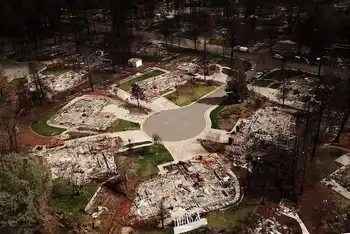
PG&E pleads guilty to 85 counts in 2018 Camp Fire
PG&E Camp Fire Guilty Plea underscores involuntary manslaughter charges as the utility admits sparking Paradise's…
View more
Tesla Expands Charging Network in NYC
Tesla NYC Supercharger Expansion adds rapid EV charging across Manhattan, Brooklyn, and Queens, strengthening infrastructure,…
View more
Power Outage Disrupts Travel at BWI Airport
BWI Power Outage caused flight delays, cancellations, and diversions after a downed power line near…
View more
Lawmakers push bill to connect Texas grid to rest of the nation
Connect the Grid Act links ERCOT to neighboring grids via high-voltage interconnections, enhancing reliability, resilience,…
View more
Sign Up for Electricity Forum’s Newsletter
Stay informed with our FREE Newsletter — get the latest news, breakthrough technologies, and expert insights, delivered straight to your inbox.
Electricity Today T&D Magazine Subscribe for FREE

Stay informed with the latest T&D policies and technologies.
- Timely insights from industry experts
- Practical solutions T&D engineers
- Free access to every issue
