Protective Relay Training - Basic
Our customized live online or in‑person group training can be delivered to your staff at your location.
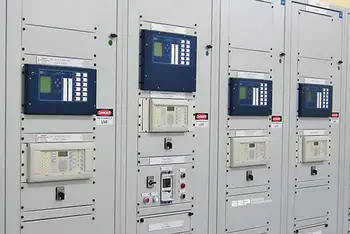
- Live Online
- 12 hours Instructor-led
- Group Training Available
Regular Price:
$699
Coupon Price:
$599
We are hooked on electricity. When we flip the switch, we expect the lights to come on and our TV sets, computers, washing machines and innumerable other gadgets to work. We're hardwired to the grid.
In B.C. we're lucky to have a reliable electrical supply that - created primarily by falling water - emits few greenhouse gases or other pollutants into the atmosphere.
Let's look at some numbers. B.C.'s electricity-generating capacity today stands at approximately 11,300 megawatts (MW). By comparison, Ontario has 25,000 MW and Alberta 12,100 MW.
Hydroelectric generating stations provide 90 per cent of our capacity. The remainder comes mostly from natural-gas stations. As BC Hydro proudly proclaims, 90 per cent of the province's electricity hydro is clean. Great, eh?
But whoa! BC Hydro has not been able to generate enough electricity to meet British Columbia's needs since 2001. The shortfall, which stands at 15 per cent and is widening, is made up by purchases, primarily from Alberta and Washington. Hydro's braggadocio that B.C.'s electricity is 90 per cent clean is, well, exaggerated. The imported energy has significant coal, natural gas and - horror of horrors! - nuclear components.
But not to worry, the Campbell government promises to fix everything. Its 2007 Energy Plan mandates that by 2016 all electricity must be "Made in BC." Furthermore, 90 per cent of the new electricity capacity must be clean and renewable.
Allowing for population and economic growth, I estimate BC Hydro will need an additional 4,400 MW capacity over what is currently installed - a whopping 40-per- cent increase.
While the government's goal is commendable, achieving it by 2016 is a Herculean task. I fear an electricity crisis is looming.
It's hard to know whether BC Hydro will meet this challenge, as their media-relations manager refused to answer questions and barred me from interviewing Hydro staff. Nevertheless, much information is publicly available and other organizations were cooperative.
Hydro's three-pronged plan can be summed up simply: conserve, buy and build. Let's examine each of these.
CONSERVE
B.C.'s Energy Plan contains a shocker: at least 50 per cent of increased demand must be met by conservation by 2020. The Minister of Energy, Richard Neufeld, says measures would include energy-efficient products, green buildings, smart metering and electricity audits. Neufeld explained that industrial electricity rates were recently changed so that cost increases as consumption increases - opposite to historical pricing - with encouraging results. Similar pricing will be introduced to residential users later this year.
"It will be tough," he states, "but we can meet this goal."
The Suzuki Foundation strongly supports conservation and feels the government's goal is doable. Per-capita electricity consumption in Scandinavia is half of that in Canada, they note, without sacrificing quality of life.
But conservation is a tough sell. Sure, light bulbs are more efficient, but houses are bigger, needing more bulbs. TVs are more efficient, but now everyone covets a giant screen. As long as the economy and standard of living are increasing, money saved in one area will simply be spent on something else. Even some members of Hydro's Electricity Conservation & Efficiency Advisory Committee said they "are not certain this goal is achievable."
I desperately want our society to live with a smaller environmental footprint, and hope that British Columbians will make the sacrifices. As a step toward changing our lifestyles and consumer mentality, Neufeld said that he is working with municipal governments to encourage smaller homes. Most worrisome is that the government is ignoring population growth. What is the gain if a 30-per-cent per-capita electricity decrease, achieved through heroic efforts, is wiped out by a 30-per-cent population increase?
BUY
BC Hydro is looking to purchase power from private companies. But how much can they generate?
Steve Davis, president of the Independent Power Producers of BC, says there is enormous potential since B.C. is blessed with small, low-impact, renewable resources, namely, run-of-river hydro, wind, biomass using underutilized wood residues including mountain pine beetle-affected timber, and geothermal energy. The Suzuki Foundation agrees, claiming nothing is missing, no new technology needed.
I only wish life were so simple and utopian. There is strong opposition to the privatization of B.C.'s electricity supply. The run-of-river projects recently proposed at Upper Pitt River, for example, ran into a maelstrom of public opposition and were cancelled. Nevertheless, private companies will need to play a large role if self-sufficiency is to be attained.
For large, urbanized populations, large plants are also needed. A natural-gas plant has been proposed by Westpac Corporation in conjunction with a liquified natural gas terminal at Texada Island. But only a miracle will allow this to proceed given government policies. If electricity shortages arise, however, all bets are off.
BUILD
BC Hydro is walking a precarious tightrope with its proposed 900 MW Site C hydro project on the Peace River. Because the reservoir would be 83 kilometres long and would flood 5,340 hectares, many are opposed. This project, a must-go for Hydro to have any chance of meeting the self-sufficiency goal, is embroiled in a consultative process that can only delay or even cancel the project. And here's the kicker: even if Site C proceeds on schedule, it will not deliver power until 2018. In other words, the government's vaunted electricity independence will be two years delayed, at best.
So here are the choices: we can tread more lightly on the good Earth; we can turn loose the private sector; Site C can be fast-tracked. Or we can pray Alberta builds enough coal and nuclear plants to spare us some electricity.
Related News
UK electricity and gas networks making ‘unjustified’ profits
UK Energy Network Profits are under scrutiny as Ofgem price controls, Citizens Advice claims, and…
View more

Diesel Prices Return to Pre-Ukrainian Conflict Levels
France Diesel Prices at Pre-Ukraine Levels reflect energy market stabilization as supply chains adapt and…
View more
Solar Becomes #3 Renewable Electricity Source In USA
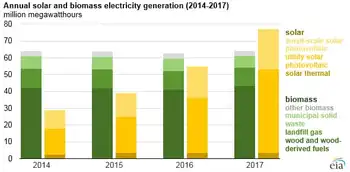
U.S. Solar Generation 2017 surpassed biomass, delivering 77 million MWh versus 64 million MWh, trailing…
View more

Why the promise of nuclear fusion is no longer a pipe dream
ITER Nuclear Fusion advances tokamak magnetic confinement, heating deuterium-tritium plasma with superconducting magnets, targeting net…
View more

Brazil government considers emergency Coronavirus loans for power sector
Brazil Energy Emergency Loan Package aims to bolster utilities via BNDES as coronavirus curbs electricity…
View more
BloombergNEF: World offshore wind costs 'drop 32% per cent'
Global Renewable LCOE Trends reveal offshore wind costs down 32%, with 10MW turbines, lower CAPEX…
View more
Sign Up for Electricity Forum’s Newsletter
Stay informed with our FREE Newsletter — get the latest news, breakthrough technologies, and expert insights, delivered straight to your inbox.
Electricity Today T&D Magazine Subscribe for FREE

Stay informed with the latest T&D policies and technologies.
- Timely insights from industry experts
- Practical solutions T&D engineers
- Free access to every issue

