CSA Z462 Arc Flash Training – Electrical Safety Compliance Course
Our customized live online or in‑person group training can be delivered to your staff at your location.

- Live Online
- 6 hours Instructor-led
- Group Training Available
Regular Price:
$249
Coupon Price:
$199
Sheland Farms started construction of a $1.5 million manure-fired power plant, and the owners expect the plant will start churning out electricity by late spring.
A 30-foot-high tank with a 30-foot diameter will be filled with cow manure, which is then heated to 100 degrees, the ideal temperature for the anaerobic bacteria that produce methane gas when they die. The methane from the dying bacteria is siphoned off the top of the tank to a methane-powered engine that runs a generator that produces electricity.
"This has been a family farm for over 40 years, and the family has owned the property over a hundred years, and this is just one more step in keeping us a viable family farm while being responsible stewards of the environment," said Douglas W. Shelmidine, who owns the 500-cow dairy farm with his father, Donald W., and his brother Todd A. "I think we're on the edge of a lot of new technology that will help us out."
Mr. Shelmidine said the system will produce 65 to 70 kilowatts of electricity an hour, just about enough to run the farm, which is on County Route 79.
"We may be a little shy in peak usage times, and we may have a little more in off-peak times," he said. "It all depends on how much gas is produced, and that's more of an art than a science."
According to the office of state Sen. James W. Wright, R- Watertown, the Shelmidines received a $438,000 grant from the New York State Energy Research and Development Authority, a $358,581 grant from the U.S. Department of Agriculture's Rural Development agency, a $366,810 grant from the Empire State Development Environmental Investment Program, a $200,000 loan from the Jefferson County Industrial Development Agency and a $200,000 loan from the Development Authority of the North Country.
Mr. Shelmidine has said his family has to pay $40,000 a month in electricity costs.
Peter E. Wright, an animal waste management specialist at Cornell University, Ithaca, said that about five digesters are in use around the state, and that the Shelmidines' digester will be the farthest north.
Mr. Shelmidine said the methane technology still needs to be tweaked to make it affordable for smaller farms, but that's partially why he has pushed forward with his project. Often, traditional banks that lend farmers money for capital projects will not lend money for cutting-edge technology.
"We have to get some wins under the belt to prove the technology out, so that way more people can get access to capital so they can install this technology," he said.
According to the Ecological Farming Association Web site, not only will the methane digester save the Shelmidines money on electricity, it will also reduce the amount of greenhouse gases in the atmosphere by burning methane and improve water quality by reducing the amount of manure that runs off into streams and rivers.
Related News
Let’s make post-COVID Canada a manufacturing hub again
Canada Manufacturing Policy prioritizes affordable energy, trims carbon taxes, aligns with Buy America, and supports…
View more
NTPC bags order to supply 300 MW electricity to Bangladesh
NTPC Bangladesh Power Supply Tender sees NVVN win 300 MW, long-term cross-border electricity trade to…
View more
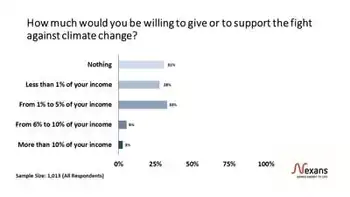
More than Two-thirds of Americans Indicate Willingness to Give or Donate Part of their Income in Support of the Fight Against Climate Change
U.S. Climate Change Donation Survey reveals Americans' willingness to fund sustainability via government incentives, electrification,…
View more
Extreme Heat Boosts U.S. Electricity Bills
Extreme Heat and Rising Electricity Bills amplify energy costs as climate change drives air conditioning…
View more
California scorns fossil fuel but can't keep the lights on without it
California fossil fuel grid reliability plan addresses heat wave demand, rolling blackouts, and grid stability…
View more
Ottawa Launches Sewage Energy Project at LeBreton Flats
Ottawa Sewage Energy Exchange System uses wastewater heat recovery and efficient heat pumps to deliver…
View more
Sign Up for Electricity Forum’s Newsletter
Stay informed with our FREE Newsletter — get the latest news, breakthrough technologies, and expert insights, delivered straight to your inbox.
Electricity Today T&D Magazine Subscribe for FREE

Stay informed with the latest T&D policies and technologies.
- Timely insights from industry experts
- Practical solutions T&D engineers
- Free access to every issue
