NFPA 70B Training - 2026 Edition - Electrical Maintenance Program Compliance
Our customized live online or in‑person group training can be delivered to your staff at your location.

- Live Online
- 12 hours Instructor-led
- Group Training Available
Regular Price:
$699
Coupon Price:
$599
More than 109 leading national and grassroots environmental organizations joined forces to urge Environmental Protection Agency (EPA) Administrator Lisa Jackson to regulate coal ash (also known as coal combustion waste or CCW).
The joint letter from the groups – including Environmental Integrity Project, Earthjustice, Sierra Club, Natural Resources Defense Council, Greenpeace, National Wildlife Foundation, Public Citizen, Environment America and the Clean Air Task Force — is sent in the wake of the Kingston, Tennessee coal ash spill and in the face of the ongoing threat posed by nearly a hundred million tons of toxic coal ash and related CCW dumped in ponds, pits and mines across the United States every year without federal regulation.
The joint letter states: “Coal combustion waste poses a serious threat to the environment and public health across the United States.… The disaster at TVA’s Kingston plant dramatized the need for federal standards for safe disposal of these wastes, which are virtually unregulated by the EPA. After eight years of counterproductive backpedaling, we are confident that you will chart a new, responsible course for the Agency by supporting the adoption of standards, whether reflected in legislation or new regulations, that reflect the gravity of the situation and are guided by a consistent set of principles.”
Noting that the “evidence is now in,” the joint letter points out that, nearly five years ago, a coalition of 125 environmental groups petitioned the Agency to commence regulatory proceedings to stop disposal of coal ash in water, including in the kind of wet “surface impoundment” that gave way in Kingston.
“The wet storage or disposal of coal combustion waste should be phased out,” according to the letter. “All containment structures around coal combustion waste surface impoundments should be examined immediately to ensure their structural stability, and contained wastes should be transferred to lined and consistently covered landfills located outside of flood plains. Active surface impoundments should be closed and emptied within two years. Monitoring and cleanup standards should be required for impoundments that have already closed, and any remaining ash should be transferred to dry disposal sites within five years.”
While the joint letter seeks phase-out of wet storage of coal ash, it also asks EPA to mandate safe disposal of dry ash, which has also caused significant environmental harm when mismanaged. The letter notes: “Regulations should apply to all forms of land disposal, not just surface impoundments, and should be designed to prevent slow leaks as well as catastrophic structural failures. EPA’s 2007 ‘Human and Ecological Risk Assessment from Coal Combustion Wastes’ documented the highest cancer risks from surface impoundments, but also found unacceptable health risks from clay-lined coal combustion waste landfills leaking arsenic into groundwater.”
The letter also notes: “Site owners and operators should assume responsibility for monitoring of disposal sites for at least 30 years after closure and for cleaning up any contamination that may result during that time. Owners or operators should be required to demonstrate that they have the financial means to meet these obligations and post appropriate financial assurance to ensure these obligations are promptly met.”
In setting out a series of principles for regulation of coal ash, the environmental groups are calling on the EPA to “assume the lead responsibility for writing the rules, as it is the federal agency with the broadest statutory mandate to protect both human health and the environment, and because it has the expertise and experience to write and enforce hazardous waste regulations.”
Related News

Net-zero roadmap can cut electricity costs by a third in Germany - Wartsila
Germany net-zero roadmap charts coal phase-out by 2030, rapid renewables buildout, energy storage, and hydrogen-ready…
View more
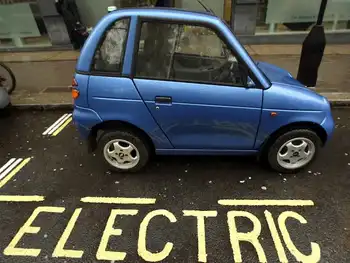
Opinion: The awesome, revolutionary electric-car revolution that doesn't actually exist
Ecofiscal Commission EV Policy Shift examines carbon pricing limits, endorsing signal boosters like subsidies, EV…
View more

Canadian nuclear projects bring economic benefits
Ontario Nuclear Refurbishment Economic Impact powers growth as Bruce Power's MCR and OPG's Darlington unit…
View more
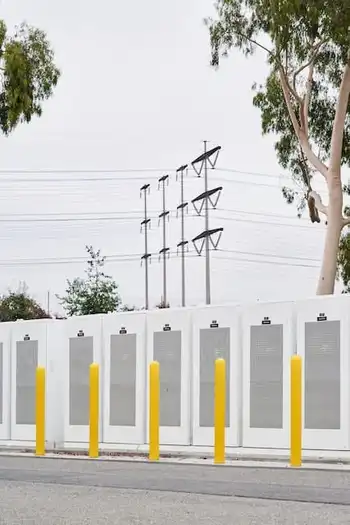
Its Electric Grid Under Strain, California Turns to Batteries
California Battery Storage is transforming grid reliability as distributed energy, solar-plus-storage, and demand response mitigate…
View more

Pandemic has already cost Hydro-Québec $130 million, CEO says
Hydro-Que9bec 2020 Profit Outlook faces COVID-19 headwinds as revenue drops, U.S. Northeast export demand weakens,…
View more

Paris Finalises Energy Roadmap for 2025–2035 with Imminent Decree
France 2025–2035 Energy Roadmap accelerates carbon neutrality via renewables expansion, energy efficiency, EV adoption, heat…
View more
Sign Up for Electricity Forum’s Newsletter
Stay informed with our FREE Newsletter — get the latest news, breakthrough technologies, and expert insights, delivered straight to your inbox.
Electricity Today T&D Magazine Subscribe for FREE
Stay informed with the latest T&D policies and technologies.
- Timely insights from industry experts
- Practical solutions T&D engineers
- Free access to every issue
