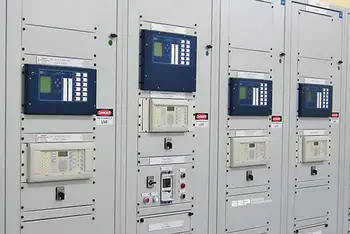
Protective Relay Training - Basic
Our customized live online or in‑person group training can be delivered to your staff at your location.
- Live Online
- 12 hours Instructor-led
- Group Training Available
Regular Price:
$699
Coupon Price:
$599
New Brunswick dam water levels spark concern as J.D. Irving's hydroelectric operations, reservoir management, and storm forecasting face scrutiny after St. Stephen's flash flooding and 172 mm rainfall, say residents and Emergency Measures Organization.
Main Details
They are reservoir levels at a J.D. Irving hydroelectric dam that residents claim are kept high, increasing flood risk.
- Committee formed to examine high reservoir levels
- MLA Rick Doucet says talks with J.D. Irving stalled
- EMO reports unprecedented rapid water rise
- 172 mm of rain fell in St. Stephen
- Residents allege levels kept high for power generation
Some flood victims in St. George, New Brunswick, are questioning whether the disaster could have been prevented if J.D. Irving had released water from its Lake Utopia hydroelectric dam before the worst of the storm.
Residents in the southwestern New Brunswick community say they believe the company left water levels too high at the dam.
Citizens formed a local committee of dam opponents to examine the high water levels several years ago.
Liberal MLA Rick Doucet said corporate officials with J.D. Irving actively participated in those meetings. But Doucet said not much has come from those meetings, even as a utilities watchdog has pressed similar issues elsewhere.
"We've worked with Irving, they've been at the table, we've had some great discussions, the Irvings are telling us what they're going to do, but it's not happening," Doucet said.
"I think people have had it now, and people are going to want some action, like an OPG project shot down by decision-makers, on this."
The company operates the southwestern New Brunswick hydro dam to generate electricity for its mill.
A spokesperson for J.D. Irving told CBC News that it manages the dam according to the weather and water level information it was given earlier.
The company's spokesperson said they were caught off guard when the storm exceeded all expectations.
Officials with the province's Emergency Measures Organization said that they have never seen water levels rise so quickly in the community.
The community's concerns with the high water levels did not just start when the area was hit by flash flooding.
Even in normal weather conditions, Bruce Jackson, who lives in the community, said the water levels at the dam are a concern.
"What has consistently been the concern is that the water has left at an artificially high level - by one-, two-, three-feet high - to generate electricity," Jackson said.
"As a result, when we do get something like this rain storm, we're behind the 8-ball before we even start."
Environment Canada said 172 mm fell in St. Stephen.
Southwestern New Brunswick was among the regions hardest hit by the floods, while in Yukon an group fighting dam plans has drawn attention to upstream risks.
Related News
Related News

US NRC streamlines licensing for advanced reactors
NRC Advanced Reactor Licensing streamlines a risk-informed, performance-based, technology-inclusive pathway for advanced non-light water reactors,…
View more

New Orleans Levees Withstood Hurricane Ida as Electricity Failed
Hurricane Ida New Orleans Infrastructure faced a split outcome: levees and pumps protected against storm…
View more

Europe's Renewables Are Crowding Out Gas as Coal Phase-Out Slows
EU Renewable Energy Shift is cutting gas dependence as wind and solar expand, reshaping Europe's…
View more

More than Two-thirds of Americans Indicate Willingness to Give or Donate Part of their Income in Support of the Fight Against Climate Change
U.S. Climate Change Donation Survey reveals Americans' willingness to fund sustainability via government incentives, electrification,…
View more
Ottawa Launches Sewage Energy Project at LeBreton Flats
Ottawa Sewage Energy Exchange System uses wastewater heat recovery and efficient heat pumps to deliver…
View more

Electrifying: New cement makes concrete generate electricity
Cement-Based Conductive Composite transforms concrete into power by energy harvesting via triboelectric nanogenerator action, carbon…
View more
Sign Up for Electricity Forum’s Newsletter
Stay informed with our FREE Newsletter — get the latest news, breakthrough technologies, and expert insights, delivered straight to your inbox.
Electricity Today T&D Magazine Subscribe for FREE

Stay informed with the latest T&D policies and technologies.
- Timely insights from industry experts
- Practical solutions T&D engineers
- Free access to every issue
