MidAmerican activates 142 Iowa wind turbines

By Knight Ridder Tribune


Arc Flash Training CSA Z462 - Electrical Safety Essentials

Our customized live online or in‑person group training can be delivered to your staff at your location.

  • Live Online
  • 6 hours Instructor-led
  • Group Training Available
Regular Price:
$249
Coupon Price:
$199
Reserve Your Seat Today
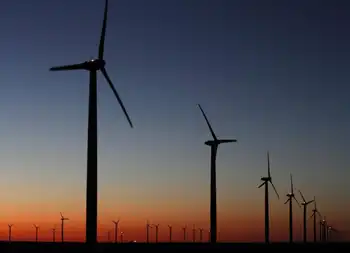
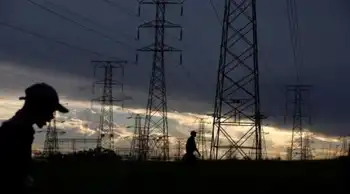
MidAmerican Energy expects to generate 25 percent of its electricity from wind by the end of this year after placing 142 additional wind turbines into service in January.

The turbines began operating in Pocahontas, Wright and Hamilton counties, bringing MidAmerican's Iowa total to 466. The Des Moines-based utility announced that it had activated the turbines at the Pomeroy Wind Project in Pocahontas County and the Century Project Expansion near Blairsburg.

By the end of 2008, MidAmerican expects to have another 260 wind turbines operating in Iowa, bringing the total to 726. They will be capable of supplying power to about 390,000 average homes. MidAmerican began building wind projects in 2004. The company operates more wind generation than any other regulated utility in the United States.

In addition to the turbines, MidAmerican is investing $400 million between 2004 and 2009 on environmental upgrades to reduce emissions at its fossil-fuel burning power plants. The work will reduce emissions of nitrogen oxides by 44 percent, sulfur dioxide by 38 percent and mercury by 35 percent.

President Bill Fehrman acknowledged the company's role in fighting climate change.

"Global climate change is a complex issue, and there are many factors over which the company has no control; however, we will continue to take responsible actions that help us do our part to economically move toward a lower-carbon society in our country," he said in a statement.

About 25 percent of the electricity produced by MidAmerican will come from non-carbon resources at the end of 2008. Officials said the company's unit price of electricity is now lower than it was in 1994, and it has pledged to keep electric rates stable until at least 2014.

Iowa has more wind generation capacity than all except three other states, according to the American Wind Energy Association. Wind developers added 337 megawatts of generating capacity in Iowa last year, bringing the total to 1,273 megawatts from 936 at the end of 2006, the association said.

The Pomeroy project developed for MidAmerican by enXco was the largest wind project developed in the state last year, the group said.

Related News

California Halts Energy Rebate Program Amid Trump Freeze

California energy rebate freeze disrupts heat pump incentives, HVAC upgrades, and climate funding, as federal uncertainty stalls Inflation Reduction Act support, delaying home electrification, energy efficiency gains, and greenhouse gas emissions reductions statewide.


Key Points

A statewide pause on $290M incentives for heat pumps and HVAC upgrades due to federal climate funding uncertainty.

✅ $290M program paused amid federal funding freeze

✅ Heat pump, HVAC, electrification upgrades delayed

✅ Previously approved rebates honored; new apps halted


California’s push for a more energy-efficient future has hit a significant roadblock as the state pauses a $290 million rebate program aimed at helping homeowners replace inefficient heating and cooling systems with more energy-efficient alternatives. The California Energy Commission announced the suspension of the program, citing uncertainty stemming from President Donald Trump’s decision to freeze funding for various climate-related initiatives.

The Halted Program

The energy rebate program, which utilizes federal funding to encourage the use of energy-efficient appliances such as heat pumps, was a crucial part of California’s efforts to reduce energy consumption and greenhouse gas emissions. By providing financial incentives for homeowners to upgrade to more efficient heating and cooling systems, the program aimed to make green energy solutions more accessible and affordable to residents. The rebate program had been popular, with many homeowners eager to participate in the initiative to lower their energy costs and improve the sustainability of their homes.

However, due to the uncertainty surrounding federal funding, the California Energy Commission announced on Monday that it would no longer be accepting new applications for the program. The agency did clarify that it would continue to honor rebates for applications that had already been approved. The pause will remain in effect until the Trump administration provides more clarity regarding the program's future funding.

The Trump Administration’s Role

This move highlights a broader issue regarding access to federal funding for state-level energy programs. The Trump administration’s decision to freeze funding for climate-related initiatives has left many states in limbo, as previously approved federal money has not been distributed as expected. Despite federal court rulings directing the Trump administration to restore these funds, states like California are still struggling to navigate the uncertainty of climate-related financial support from the federal government.

California’s decision to pause the rebate program comes after similar actions by other states. Arizona paused a similar program just a week prior, and Rhode Island had already paused new applications earlier this year. These states are all recipients of funding from a larger $4.3 billion initiative under the Inflation Reduction Act, which is designed to help homeowners purchase energy-efficient appliances like heat pumps, water heaters, and electric cooktops.

Impact of the Freeze

The pause of California's rebate program has serious implications for both consumers and the state’s energy goals. For residents, the halt means delays in the ability to upgrade to more energy-efficient home systems, which could lead to higher energy costs in the short term, a concern amid soaring electricity prices across the state.

The $290 million program was a significant step in encouraging homeowners to invest in energy efficiency, and its suspension leaves a gap in the availability of resources for those who were hoping to make energy-saving upgrades. Many of these upgrades are not just beneficial to homeowners, but they also contribute to the state’s overall energy efficiency goals, helping to reduce reliance on non-renewable energy sources, even as California's dependence on fossil fuels persists, and decrease greenhouse gas emissions.

Federal and State Tensions

The freeze in funding is just one of many points of tension between the Trump administration and states like California, which have pursued aggressive environmental policies aimed at reducing emissions and combating climate change. California has often found itself at odds with the federal government on environmental issues, especially under the leadership of President Trump. The state’s ambitious environmental policies have sometimes clashed with the federal government's approach, including efforts to wind down its fossil fuel industry in line with climate goals.

In this case, the freeze on climate-related funding appears to be part of a broader strategy by the Trump administration to limit federal spending on environmental programs, and as regulators weigh whether the state may need more power plants, planning remains complex. While the freeze impacts states that are working to transition to clean energy, critics argue that such moves undermine efforts to tackle climate change and could slow down progress toward a greener future.

The Path Forward

For California, the next steps will depend heavily on the actions of the federal government. While the state can continue to push for climate funding in the courts, the lack of clarity around the release of federal funds creates uncertainty for state programs that rely on these resources. As California continues to navigate this funding freeze, it will need to explore alternative solutions to keep its energy efficiency programs on track, such as efforts to revamp electricity rates to clean the grid, even in the face of federal challenges.

In the meantime, California residents and homeowners who were hoping to take advantage of the rebate program may have to wait until further clarification from the federal government is provided, even as officials warn of a looming electricity shortage in coming years. Whether the program can be restored or expanded in the future remains to be seen, but for now, the pause serves as a reminder of the ongoing struggles that states face when dealing with shifting federal priorities.

As the issue unfolds, other states facing similar challenges may take cues from California’s actions, and with California exporting energy policies to Western states, broader conversations about how federal and state governments can collaborate to ensure that energy efficiency initiatives and climate goals are not sidelined due to political or budgetary differences.

California’s decision to pause its $290 million energy rebate program is a significant development in the ongoing struggle between state and federal governments over climate-related funding. The uncertainty created by the Trump administration’s freeze on energy efficiency programs has led to disruptions in state-level efforts to promote sustainability and reduce emissions. As the situation continues to evolve, both California and other states will need to consider how to move forward without relying on federal funding that may or may not be available in the future.


Related News

View more

Shopping for electricity is getting cheaper in Texas

Texas Electricity Prices are shifting as deregulation matures, with competitive market shopping lowering residential rates, narrowing gaps with regulated areas, and EIA data showing long term declines versus national averages across most Texans.


Key Points

Texas Electricity Prices are average residential rates in deregulated and regulated markets across the state.

✅ Deregulated areas saw 17.4% residential price declines since 2006

✅ Regulated zones experienced a 5.5% increase over the same period

✅ Competitive shopping narrowed the gap; Texas averaged below US


Shopping for electricity is becoming cheaper for most Texans, according to a new study from the Texas Coalition for Affordable Power. But for those who live in an area with only one electricity provider, prices have increased in a recent 10-year period, the study says.

About 85 percent of Texans can purchase electricity from a number of providers in a deregulated marketplace, while the remaining 15 percent must buy power from a single provider, often an electric cooperative, in their area.

The report from the Texas Coalition for Affordable Power, which advocates for cities and local governments and negotiates their power contracts, pulls information from the U.S. Energy Information Administration to compare prices for Texans in the two models. Most Texans could begin choosing their electricity provider in 2002.

Buying power tends to be more expensive for Texans who live in a part of the state with a deregulated electricity market. But that gap is continuing to shrink as Texans become more willing to shop for power, even as electricity complaints have periodically risen. In 2015, the gap “was the smallest since the beginning of deregulation,” according to the report.

Between 2006 and 2015, the last year for which data is available, average residential electric prices for Texans in a competitive market decreased by 17.4 percent, while average prices increased by 5.5 percent in the regulated areas, even as the Texas power grid has periodically faced stress.

“These residential price declines are promising, and show the retail electric market is maturing,” Jay Doegey, executive director for the Texas Coalition for Affordable Power, said in a statement. “We’re encouraged by the price declines, but more progress is needed.”

The study attributes the decline to the prevalence of “low-priced individual deals” in the competitive areas, while policymakers consider market reforms to bolster reliability.

Overall, the average price of electricity in Texas (which produces and consumes the most electricity in the U.S.) — including the price in the deregulated marketplace, for the third time in four years — was below the national average in 2015.


Related News

View more

PG&E restoring power after intentional shut-offs affect 20,500 customers

PG&E power restoration continues across Butte and Yuba counties after PSPS shut-offs from high winds and dry weather, with crews patrolling overhead lines, repairing damage, and reopening community resource centers near Lake Berryessa.


Key Points

PG&E power restoration safely re-energizes lines after PSPS, using inspections and repairs to restore service.

✅ Crews patrolled 800 miles of overhead lines for hazards

✅ Repairs followed wind damage; gradual re-energization

✅ Resource centers offered water, outlets, air conditioning


Pacific Gas and Electric Co. field crews have begun restoring power to approximately 20,500 customers in Butte and Yuba counties after the utility shut off electricity to reduce wildfire risk because of gusty winds and dry weather conditions.

More than half of the affected customers had electricity again as of 1:47 p.m. Sunday, according to PG&E, and by 4 p.m. all of Yuba County power had been restored.

The utility also cut electricity for about 1,600 customers in parts of Napa, Solano and Yolo counties, primarily in the Lake Berryessa area, in a PSPS event separate from statewide grid conservation alerts that can trigger rolling blackouts. Power to those areas was switched off at 6:15 a.m. Saturday but was restored by the evening.

As the danger subsided Sunday, utility workers, as part of PG&E's local response planning for winter storms, worked throughout Butte and Yuba counties to re-energize power lines. The shut-offs affected areas including eastern Chico, Oroville and fire-ravaged Paradise.

Technicians checked lines for damage or fire hazards, like vegetation that could interfere with live wires, Pasion said, as part of broader pandemic grid preparedness that informed utility protocols.

PG&E “patrolled approximately 800 miles of overhead power lines,” the company said in a statement. “Crews found instances of damage to de-energized equipment caused by the extreme weather event and are making necessary repairs.”

While the shut-offs inconvenienced businesses and homeowners, they also highlighted energy inequality across impacted neighborhoods, and some called 911 with emergencies and confusion.

A half hour into the shut-off Saturday night, Butte County sheriff’s dispatchers received a call from a person requesting a welfare check on an individual whose care required electricity, according to department call logs. Two calls overnight from the Magalia area requested medical assistance because residents had oxygen concerns for medically sensitive spouses.

One woman requested an ambulance because her “husband was running out of oxygen,” according to the logs.

Around 4:11 a.m. Sunday, a resident of Hidden Valley Mobile Home Park in Oroville called about a tree falling into a trailer, causing a power line to fall, but noted that the electricity was off.

In a comparable storm-related outage, Sudbury Hydro crews worked to reconnect service after severe weather in Ontario.

And there were multiple calls asking for information about the shut-off, including one caller around midnight who was “demanding PG&E turn his power back on.”

The calls led the Butte County Sheriff’s Office to tweet a reminder Sunday afternoon that 911 is reserved for emergencies and requests for information about the power shutdown should be done through PG&E.

The utility opened a community resource center at Harrison Stadium in Oroville (Butte County) on Sunday morning to provide restrooms, bottled water, power outlets and air conditioning to residents. About 40 people showed up at the center in the first few hours, officials said.

“It’s a small but steady stream,” Pasion said.

Power was being restored to parts of Oroville as of 11 a.m. Sunday.

PG&E officials said it could take up to 48 hours for power to be restored in some areas.

For perspective, during severe storms in Ontario, Hydro One crews restored power to more than 277,000 customers within days.


Related News

View more

Ambitious clean energy target will mean lower electricity prices, modelling says

Australia Clean Energy Target drives renewables in the National Electricity Market, with RepuTex modelling and the Finkel Review showing lower wholesale prices and emissions as gas generators set prices less often under ambitious targets.


Key Points

Policy boosting low emissions generation to cut electricity emissions and lower wholesale prices across Australia.

✅ Ambitious targets lower wholesale prices through added generation

✅ RepuTex modelling shows renewables displace costly gas peakers

✅ Finkel Review suggests CET cuts emissions and boosts reliability


The more ambitious a clean energy target is, the lower Australian wholesale electricity prices will be, according to new modelling by energy analysis firm RepuTex.

The Finkel review, released last month recommended the government introduce a clean energy target (CET), which it found would cut emissions from the national electricity market and put downward pressure on both wholesale and retail prices, aligning with calls to favor consumers over generators in market design.

The Finkel review only modelled a CET that would cut emissions from the electricity sector by 28% below 2005 levels by 2030. But all available analysis has demonstrated that such a cut would not be enough to meet Australia’s overall emissions reductions made as part of the Paris agreement, which themselves were too weak to help meet the central aim of that agreement – to keep global warming to “well below 2C”.

RepuTex modelled the effect of a CET that cut emissions from the electricity sector by 28% – like that modelled in the Finkel Review – as well as one it said was consistent with 2C of global warming, which would cut emissions from electricity by 45% below 2005 levels by 2030.

It found both scenarios caused wholesale prices to drop significantly compared to doing nothing, despite IEA warnings on falling energy investment that could lead to shortages, with the more ambitious scenario resulting in lower wholesale prices between 2025 and 2030.

In the “business as usual scenario”, RepuTex found wholesale prices would hover roughly around the current price of $100 per MWh.

Under a CET that reduced electricity emissions by 28%, prices would drop to under $40 around 2023, and then rise to nearly $60 by 2030.

The more ambitious CET had a broadly similar effect on wholesale prices. But RepuTex found it would drive prices down a little slower, but then keep them down for longer, stabilising at about $40 to $50 for most of the 2020s.

It found a CET would drive prices down by incentivising more generation into the market. The more ambitious CET would further suppress prices by introducing more renewable energy, resulting in expensive gas generators less often being able to set the price of electricity in the wholesale market, a dynamic seen with UK natural gas price pressures recently.

The downward pressure of a CET on wholesale prices was more dramatic in the RepuTex report than in Finkel’s own modelling. But that was largely because, as Alan Finkel himself acknowledged, the estimates of the costs of renewable energy in the Finkel review modelling were conservative.

Speaking at the National Press Club, Finkel said: “We were conservative in our estimates of wind and large-scale solar generator prices. Indeed, in recent months the prices for wind generation have already come in lower than what we modelled.”

The RepuTex modelling also found the economics of the national electricity market no longer supported traditional baseload generation – such as coal power plants that were unable to respond flexibly to demand, with debates over power market overhauls in Alberta underscoring similar tensions – and so they would not be built without the government distorting the market.

“With a premium placed on flexible generation that can ramp up or down, baseload only generation – irrespective of how clean or dirty it is – is likely to be too inflexible to compete in Australia’s future electricity system,” the report said.

“In this context, renewable energy remains attractive to the market given it is able to deliver energy reliability, with no emissions, at low cost prices, with clean grid and battery trends in Canada informing the shift for policymakers. This affirms that renewables are a lay down misere to out-compete traditionally fossil-fuel sources in Australia for the foreseeable future.”


Related News

View more

Nigeria's Electricity Crisis

Nigeria Electricity Crisis undermines energy access as aging grid, limited generation, and transmission losses cause power outages, raising costs for businesses and public services; renewables, microgrids, and investment offer resilient, inclusive solutions.


Key Points

A nationwide power gap from weak infrastructure, low generation, and grid losses that disrupt services and growth.

✅ Aging grid and underinvestment drive frequent power outages

✅ Businesses face higher costs, lost productivity, weak competitiveness

✅ Renewables, microgrids, and regulatory reform can expand access


In Nigeria, millions of residents face persistent challenges with access to reliable electricity, a crisis that has profound implications for businesses, public services, and overall socio-economic development. This article explores the root causes of Nigeria's electricity deficit, drawing on 2021 electricity lessons to inform analysis, its impact on various sectors, and potential solutions to alleviate this pressing issue.

Challenges with Electricity Access

The issue of inadequate electricity access in Nigeria is multifaceted. The country's electricity generation capacity falls short of demand due to aging infrastructure, inadequate maintenance, and insufficient investment in power generation and distribution, a dynamic echoed when green energy supply constraints emerge elsewhere as well. As a result, many Nigerians, particularly in rural and underserved urban areas, experience frequent power outages or have limited access to electricity altogether.

Impact on Businesses

The unreliable electricity supply poses significant challenges to businesses across Nigeria. Manufacturing industries, small enterprises, and commercial establishments rely heavily on electricity to operate machinery, maintain refrigeration for perishable goods, and power essential services. Persistent power outages disrupt production schedules, increase operational costs, and, as grids prepare for new loads from electric vehicle adoption worldwide, hinder business growth and competitiveness in both domestic and international markets.

Public Services Strain

Public services, including healthcare facilities, schools, and government offices, also grapple with the consequences of Nigeria's electricity crisis. Hospitals rely on electricity to power life-saving medical equipment, maintain proper sanitation, and ensure patient comfort. Educational institutions require electricity for lighting, technological resources, and administrative functions. Without reliable power, the delivery of essential public services is compromised, impacting the quality of education, healthcare outcomes, and overall public welfare.

Socio-economic Impact

The electricity deficit in Nigeria exacerbates socio-economic disparities and hampers poverty alleviation efforts, even as debates continue over whether access alone reduces poverty in every context. Lack of access to electricity limits economic opportunities, stifles entrepreneurship, and perpetuates income inequality. Rural communities, where access to electricity is particularly limited, face greater challenges in accessing educational resources, healthcare services, and economic opportunities compared to urban counterparts.

Government Initiatives and Challenges

The Nigerian government has implemented various initiatives to address the electricity crisis, including privatization of the power sector, investment in renewable energy projects, and regulatory reforms aimed at improving efficiency and accountability, while examples like India's village electrification illustrate rapid expansion potential too. However, progress has been slow, and challenges such as corruption, bureaucratic inefficiencies, and inadequate funding continue to impede efforts to expand electricity access nationwide.

Community Resilience and Adaptation

Despite these challenges, communities and businesses in Nigeria demonstrate resilience and adaptability in navigating the electricity crisis. Some businesses invest in alternative power sources such as generators, solar panels, or hybrid systems to mitigate the impact of power outages, while utilities weigh shifts signaled by EVs' impact on utilities for future planning. Community-led initiatives, including local cooperatives and microgrids, provide decentralized electricity solutions in underserved areas, promoting self-sufficiency and resilience.

Path Forward

Addressing Nigeria's electricity crisis requires a concerted effort from government, private sector stakeholders, and international partners, informed by UK grid transformation experience as well. Key priorities include increasing investment in power infrastructure, enhancing regulatory frameworks to attract private sector participation, and promoting renewable energy deployment. Improving energy efficiency, reducing transmission losses, and expanding electricity access to underserved communities are critical steps towards achieving sustainable development goals and improving quality of life for all Nigerians.

Conclusion

The electricity crisis in Nigeria poses significant challenges to businesses, public services, and socio-economic development. Addressing these challenges requires comprehensive strategies that prioritize infrastructure investment, regulatory reform, and community empowerment. By working together to expand electricity access and promote sustainable energy solutions, Nigeria can unlock its full economic potential, improve living standards, and create opportunities for prosperity and growth across the country.


Related News

View more

Ontario Poised to Miss 2030 Emissions Target

Ontario Poised to Miss 2030 Emissions Target highlights how rising greenhouse gas emissions from electricity generation and natural gas power plants threaten Ontario’s climate goals, environmental sustainability, and clean energy transition efforts amid growing economic and policy challenges.


Why is Ontario Poised to Miss 2030 Emissions Target?

Ontario Poised to Miss 2030 Emissions Target examines the province’s setback in meeting climate goals due to higher power-sector emissions and shifting energy policies.

✅ Rising greenhouse gas emissions from gas-fired electricity generation

✅ Climate policy uncertainty and missed environmental targets

✅ Balancing clean energy transition with economic pressures

Ontario’s path toward meeting its 2030 greenhouse gas emissions target has taken a sharp turn for the worse, according to internal government documents obtained by Global News. The province, once on track to surpass its reduction goals, is now projected to miss them—largely due to rising emissions from electricity generation, even as the IEA net-zero electricity report highlights rising demand nationwide.

In October 2024, the Ford government’s internal analysis indicated that Ontario was on track to reduce emissions by 28 percent below 2005 levels by 2030, effectively exceeding its target. But a subsequent update in January 2025 revealed a grim reversal. The new forecast showed an increase of about eight megatonnes (Mt) of emissions compared to the previous model, with most of the rise attributed to the province’s energy policies.

“This forecast is about 8 Mt higher than the October 2024 forecast, mainly due to higher electricity sector emissions that reflect the latest ENERGY/IESO energy planning and assumptions,” the internal document stated.

While the analysis did not specify which policy shifts triggered the change, experts point to Ontario’s growing reliance on natural gas. The use of gas-fired power plants has surged to fill temporary gaps created by nuclear refurbishment projects and other grid constraints, even as renewable energy’s role grows. In fact, natural gas generation in early 2025 reached its highest level since 2012.

The internal report cited “changing electricity generation,” nuclear power refurbishment, and “policy uncertainty” as major risks to achieving the province’s climate goals. But the situation may be even worse than the government’s updated forecast suggests.

On Wednesday, Ontario’s auditor general warned that the January projections were overly optimistic. The watchdog’s new report concluded the province could fall even further behind its 2030 emissions target, noting that reductions had likely been overestimated in several sectors, including transportation—such as electric vehicle sales—and waste management. “An even wider margin” of missed goals was now expected, the auditor said.

Environment Minister Todd McCarthy defended the government’s position, arguing that climate goals must be balanced against economic realities. “We cannot put families’ financial, household budgets at risk by going off in a direction that’s not achievable,” McCarthy said.

The minister declined to commit to new emissions targets beyond 2030—or even to confirm that the existing goals would be met—but insisted efforts were ongoing. “We are continuing to meet our commitment to at least try to meet our commitment for the 2030 target,” he told reporters. “But targets are not outcomes. We believe in achievable outcomes, not unrealistic objectives.”

Environmental advocates warn that Ontario’s reliance on fossil-fuel generation could lock the province into higher emissions for years, undermining national efforts to decarbonize Canada’s electricity grid. With cleaning up Canada’s electricity expected to play a central role in both industrial growth and climate action, the province’s backslide represents a significant setback for Canada’s overall emissions strategy.

Other provinces face similar challenges; for example, B.C. is projected to miss its 2050 targets by a wide margin.

As Ontario weighs its next steps, the tension between energy security, affordability, and environmental responsibility continues to define the province’s path toward a lower-carbon future and Canada’s 2050 net-zero target over the long term.


Related Articles


View more

Sign Up for Electricity Forum’s Newsletter

Stay informed with our FREE Newsletter — get the latest news, breakthrough technologies, and expert insights, delivered straight to your inbox.

Electricity Today T&D Magazine Subscribe for FREE

Stay informed with the latest T&D policies and technologies.
  • Timely insights from industry experts
  • Practical solutions T&D engineers
  • Free access to every issue

Download the 2025 Electrical Training Catalog

Explore 50+ live, expert-led electrical training courses –

  • Interactive
  • Flexible
  • CEU-cerified